'This is the kind of book that troubles grey-suited committees of academic peers. It's too enjoyable. But that, given its subject, is just what it ought to be, and it treats that subject seriously . . . There isn't a "dull" page anywhere in the book.' – Professor Peter Thomson, Studies in Theatre and Performance
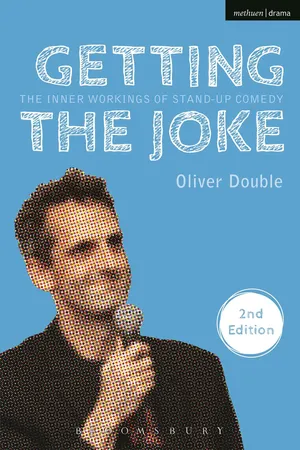
Comedy is changing: stand-up comedians routinely sell out stadia, their audience-figures swollen by panel-show appearances and much-followed Twitter feeds. Meanwhile, the smaller clubs are filling up, with audiences as well as aspirants. How can we make sense of it all? This new edition of Getting the Joke gives an insider's look at the spectrum of modern comedy, re-examining the world of stand-up in the internet age.
Drawing on his acclaimed first edition, Oliver Double focuses in greater detail on the US scene and its comedians (such as David Cross, Sarah Silverman, Louis CK, Demetri Martin and Margaret Cho); the 'DIY' comedy circuit and its celebrated apostles and visionaries, from Josie Long to Stewart Lee; the growing importance of the solo stand-up show; the role played by Twitter (including an interview with the organiser of the world's first comedy gig on Twitter), and the driving force that is the TV guest slot, be it on Mock the Week or Live at the Apollo.
With expanded sections on joke construction, as well as ways to challenge the audience, and a host of new and updated exercises to guide the aspiring comedian, this new edition of Getting the Joke is the only book to combine the history of stand-up comedy with an analysis of the elements and methods that go into its creation. Featuring a range of interviews with working comedians – from circuit veterans to new kids on the block – combined with the author's vast experience, this is a must read for any aspiring stand-up comedian.
- 531 pages
- English
- PDF
- Available on iOS & Android
eBook - PDF
About this book
Information

CHAPTER
THREE
Stand-up
USA
Vaudeville
In
America,
the
story
of
stand-up
starts
in
vaudeville,
a
form
of
popular
theatre
which
began
in
the
late
nineteenth
century.
Growing
out
of
earlier
forms
of
popular
entertainment
like
dime
museums
and
Yiddish
theatre,
the
first
proper
vaudeville
venue
was
probably
Tony
Pastor’s
New
Fourteenth
Street
Theatre,
which
opened
in
New
York
in
October
1881.
Pastor
was
the
first
to
take
this
type
of
popular
entertainment
out
of
saloons
and
present
it
to
a
respectable
audience.
Over
a
decade
later,
in
March
1894,
B.
F.
Keith
opened
his
first
theatre
in
Boston,
and
this
was
the
first
to
actually
use
the
word
‘vaudeville’
to
describe
what
it
offered
its
customers.
The
entertainment
on
offer
took
the
form
of
a
mixed
bill
of
acts,
which
might
include
singers,
dancers,
speciality
acts
and
comedy
quartets.
To
give
a
specific
example,
if
you
were
at
the
Palace
Theatre
in
New
York
in
the
week
beginning
2
May
1921,
you
could
have
enjoyed
the
following
acts:
1
Fink’s
Mules,
animal
act
2
Miller
and
Capman,
singers
and
dancers
3
Georgia
Campbell
and
Co.,
in
‘Gone
Are
the
Days’
4
Toney
and
Norman,
songs
and
talk
5
Dorothy
Jardon,
prima
donna
Table of contents
- FC
- Half title
- Title
- Copyright
- Contents
- Acknowledgements
- Foreword
- 1 Born not made
- 2 What’s the definition of stand-up comedy?
- 3 Stand-up USA
- 4 Stand-up UK
- 5 What’s new in stand-up?
- 6 Stand-up on stage
- 7 The outer limits of stand-up
- 8 Affection
- 9 The personality spectrum
- 10 Onstage, offstage
- 11 Truth
- 12 Working the audience
- 13 Sharing
- 14 References
- 15 Insiders and outsiders
- 16 Licence
- 17 Politics
- 18 Recorded live
- 19 The present tense
- 20 Conversation
- 21 Improvisation
- 22 Timing
- 23 Delivery
- 24 Instant character
- 25 Magic
- 26 Material
- 27 Performance
- 28 Why bother?
- Appendix: Exercises for teaching stand-up comedy
- Glossary of comedians
- Bibliography
Trusted by 375,005 students
Access to over 1.5 million titles for a fair monthly price.
Study more efficiently using our study tools.
Frequently asked questions
Yes, you can cancel anytime from the Subscription tab in your account settings on the Perlego website. Your subscription will stay active until the end of your current billing period. Learn how to cancel your subscription
No, books cannot be downloaded as external files, such as PDFs, for use outside of Perlego. However, you can download books within the Perlego app for offline reading on mobile or tablet. Learn how to download books offline
Perlego offers two plans: Essential and Complete
- Essential is ideal for learners and professionals who enjoy exploring a wide range of subjects. Access the Essential Library with 800,000+ trusted titles and best-sellers across business, personal growth, and the humanities. Includes unlimited reading time and Standard Read Aloud voice.
- Complete: Perfect for advanced learners and researchers needing full, unrestricted access. Unlock 1.5M+ books across hundreds of subjects, including academic and specialized titles. The Complete Plan also includes advanced features like Premium Read Aloud and Research Assistant.
We are an online textbook subscription service, where you can get access to an entire online library for less than the price of a single book per month. With over 1.5 million books across 990+ topics, we’ve got you covered! Learn about our mission
Look out for the read-aloud symbol on your next book to see if you can listen to it. The read-aloud tool reads text aloud for you, highlighting the text as it is being read. You can pause it, speed it up and slow it down. Learn more about Read Aloud
Yes! You can use the Perlego app on both iOS and Android devices to read anytime, anywhere — even offline. Perfect for commutes or when you’re on the go.
Please note we cannot support devices running on iOS 13 and Android 7 or earlier. Learn more about using the app
Please note we cannot support devices running on iOS 13 and Android 7 or earlier. Learn more about using the app
Yes, you can access Getting the Joke by Oliver Double in PDF and/or ePUB format, as well as other popular books in Media & Performing Arts & Television. We have over 1.5 million books available in our catalogue for you to explore.