The must-read summary of Ram Charan's book: "What the Customer Wants You to Know: How Everybody Needs to Think About Sales Differently".
This complete summary of the ideas from Ram Charan's book "What the Customer Wants You to Know" reveals that the traditional sales process is broken. Customers today have so many choices that if all you focus on is price, the only thing you can do is keep lowering your prices until it gets to a stage where you're not making enough money to stay in business. In this book, the author explains that a new approach to selling is needed, called "value creation selling". This summary demonstrates what this approach entails and how you can use it to develop customer relationships that deepen over time and make it difficult for customers to switch to someone else.
Added-value of this summary:
• Save time
• Understand key concepts
• Expand your knowledge
To learn more, read "What the Customers Want You to Know" and discover the key to attracting and retaining customers in today's overcrowded marketplace.

eBook - ePub
Summary: What the Customer Wants You to Know
Review and Analysis of Charan's Book
- English
- ePUB (mobile friendly)
- Available on iOS & Android
eBook - ePub
Summary: What the Customer Wants You to Know
Review and Analysis of Charan's Book
About this book
Information
Subtopic
Business SkillsIndex
BusinessSummary of What The Customer Wants You To Know (Ram Charan)
1. The problems with the traditional sales process
Your customers want you to know how their businesses work so you, as their supplier, can help them succeed in their own competitive battles. The traditional sales approach doesn’t achieve that. Instead, everyone is focused on getting the best price they can. This is a mismatch of priorities which cannot be solved with new incentives or new people.
The warning signs that the traditional sales process has broken down and no longer works well are everywhere to see:
- Your sales force interacts solely with your customer’s purchasing department – which means your sales people never meet any of the genuine decision makers. Instead, they are meeting with the order executors. Your sales people are isolated from those who make the real decisions.
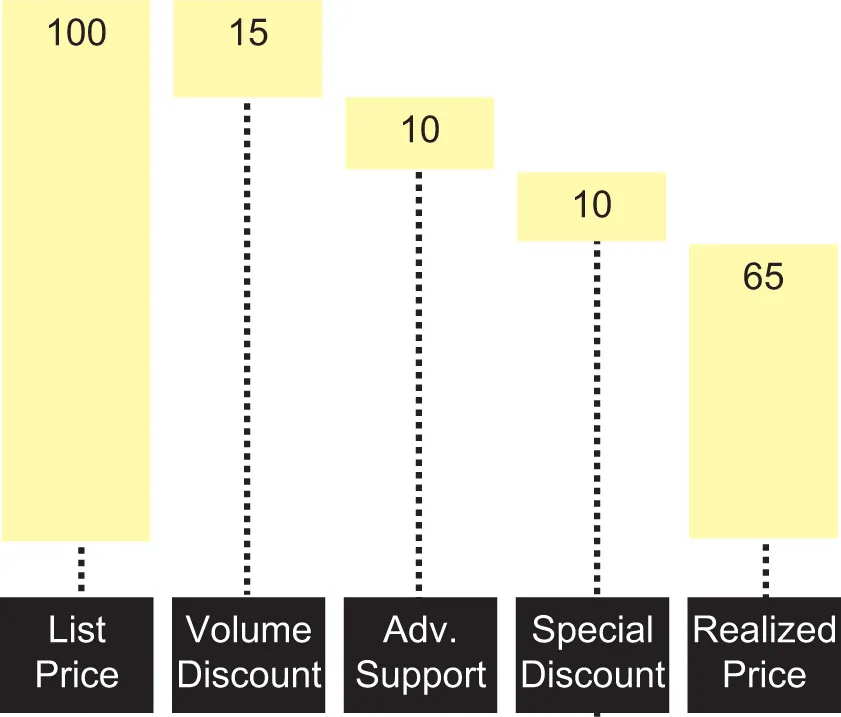
- Most sales discussions nowadays revolve solely around price – which is fine but the prices which result from these negotiations don’t stick. Instead, customers will continue to press for volume discounts, freight charges, advertising support, tooling costs, technical support, etc – all of which end up coming out of your pocket and reducing the real price you charge.
- Conventional sales training is solely technique-based – teaching your people how to avoid taking no for an answer, how to handle objections and how to make the sale. That’s all well and fine but it does little to address the real disconnect between suppliers and customers which exists.
- Top management keep fiddling with the incentives for the sales force – in the hope this will motivate them to get better prices and therefore better profit margins. That’s great but nothing that is done in this area creates value for the customer. Instead, fine-tuning the incentives piles more pressure on the sales people who already feel the impact of deadlines, quotas and so forth.
- The sales force keeps on getting reorganized – which certainly allows sales people to spend more time with customers but this often means more time is used to achieve the same results as before.
- Sales people are never included in discussions about the design of the product’s offerings – despite the fact they are the people who spend the most time face-to-face with customers.
- Little thought is given to your customer’s customers – and instead it is simply assumed your customer will be looking after their own interests. You never get around to finding out how your product fits into the overall products or services your customer offers to his customers.
- Your sales people are internally focused – they spend a significant portion of their work day doing administrative tasks and paperwork.
- Your sales management team assume they are doing a good job – because they don’t know any different. Their measures of success are booking revenue, chasing new orders, being accessible to customers and following through on post-sale requests. As long as these things are happening, they have no viewpoint on whether or not there are larger problems occurring.
Overall, the traditional sales approach is out of date because it’s too insular and focused on the wrong things. Conventional sales might have worked fine in the old days when supplies were tight and suppliers held all the cards, but today there is a glut of suppliers in almost every market imaginable. Even more important, by using the Internet your customers can find alternative suppliers very simply. Everyone has full access to prices and specifications from suppliers anywhere on earth.
Under these conditions, building long-standing relationships and having good products isn’t enough. If a new seller comes along who will get alongside your customer and work with them in ways which match their business model better, then price doesn’t remain as the sole criteria for making a decision.
“There is no quick fix. If there were, most people would have made it long ago. But those leaders who are forward looking, who have the temperament to implement value creation selling and stay with it, will enable their companies to win on a consistent basis. Suppliers that create real value for customers will stand out against the competition and get a better return on their great strategies, innovations and talented people.”
– Ram Charan
“Making a sale is not the o...
Table of contents
- Cover
- Book Presentation: What The Customer Wants You To Know by Ram Charan
Trusted by 375,005 students
Access to over 1.5 million titles for a fair monthly price.
Study more efficiently using our study tools.
Frequently asked questions
Yes, you can cancel anytime from the Subscription tab in your account settings on the Perlego website. Your subscription will stay active until the end of your current billing period. Learn how to cancel your subscription
No, books cannot be downloaded as external files, such as PDFs, for use outside of Perlego. However, you can download books within the Perlego app for offline reading on mobile or tablet. Learn how to download books offline
Perlego offers two plans: Essential and Complete
- Essential is ideal for learners and professionals who enjoy exploring a wide range of subjects. Access the Essential Library with 800,000+ trusted titles and best-sellers across business, personal growth, and the humanities. Includes unlimited reading time and Standard Read Aloud voice.
- Complete: Perfect for advanced learners and researchers needing full, unrestricted access. Unlock 1.5M+ books across hundreds of subjects, including academic and specialized titles. The Complete Plan also includes advanced features like Premium Read Aloud and Research Assistant.
We are an online textbook subscription service, where you can get access to an entire online library for less than the price of a single book per month. With over 1.5 million books across 990+ topics, we’ve got you covered! Learn about our mission
Look out for the read-aloud symbol on your next book to see if you can listen to it. The read-aloud tool reads text aloud for you, highlighting the text as it is being read. You can pause it, speed it up and slow it down. Learn more about Read Aloud
Yes! You can use the Perlego app on both iOS and Android devices to read anytime, anywhere — even offline. Perfect for commutes or when you’re on the go.
Please note we cannot support devices running on iOS 13 and Android 7 or earlier. Learn more about using the app
Please note we cannot support devices running on iOS 13 and Android 7 or earlier. Learn more about using the app
Yes, you can access Summary: What the Customer Wants You to Know by BusinessNews Publishing in PDF and/or ePUB format, as well as other popular books in Business & Business Skills. We have over 1.5 million books available in our catalogue for you to explore.