Calculus Made Easy
eBook - ePub

Calculus Made Easy

Being a Very-Simplest Introduction to Those Beautiful Methods of Reckoning Which are Generally Called by the Terrifying Names of the Differential Calculus and the Integral Calculus

  1. 316 pages
  2. English
  3. ePUB (mobile friendly)
  4. Available on iOS & Android
eBook - ePub

Calculus Made Easy

Being a Very-Simplest Introduction to Those Beautiful Methods of Reckoning Which are Generally Called by the Terrifying Names of the Differential Calculus and the Integral Calculus

About this book

Calculus Made Easy by Silvanus Phillips Thompson is an accessible and engaging introduction to the fundamental principles of calculus, offering readers a clear and simplified approach to understanding this essential branch of mathematics.

Calculus Made Easy by Silvanus Phillips Thompson is a timeless classic that makes the complex world of calculus accessible to students and learners of all levels. This book serves as a comprehensive guide to the core concepts and techniques of calculus, presented in a manner that is easy to grasp and enjoyable to read.

The book begins by providing readers with a user-friendly introduction to the basic principles of calculus, offering insights into its historical development and significance in mathematics and science. Silvanus Phillips Thompson's clear and engaging explanations set the stage for a deeper exploration of this essential subject.

Central to the book is the presentation of calculus concepts, including differentiation and integration, in a simplified and intuitive manner. Readers will find practical examples, step-by-step explanations, and exercises that facilitate learning and problem-solving.

Furthermore, the book emphasizes the real-world applications of calculus, illustrating how it is used in various fields, from physics and engineering to economics and biology. It highlights the practical relevance of calculus in solving everyday problems and making informed decisions.

Calculus Made Easy is not only a textbook but also a friendly companion on the journey to mastering calculus. It encourages readers to overcome the fear of complex mathematics and discover the beauty and utility of calculus in a straightforward and enjoyable way.
Frequently asked questions

Yes, you can cancel anytime from the Subscription tab in your account settings on the Perlego website. Your subscription will stay active until the end of your current billing period. Learn how to cancel your subscription.
No, books cannot be downloaded as external files, such as PDFs, for use outside of Perlego. However, you can download books within the Perlego app for offline reading on mobile or tablet. Learn more here.
Perlego offers two plans: Essential and Complete
  • Essential is ideal for learners and professionals who enjoy exploring a wide range of subjects. Access the Essential Library with 800,000+ trusted titles and best-sellers across business, personal growth, and the humanities. Includes unlimited reading time and Standard Read Aloud voice.
  • Complete: Perfect for advanced learners and researchers needing full, unrestricted access. Unlock 1.4M+ books across hundreds of subjects, including academic and specialized titles. The Complete Plan also includes advanced features like Premium Read Aloud and Research Assistant.
Both plans are available with monthly, semester, or annual billing cycles.
We are an online textbook subscription service, where you can get access to an entire online library for less than the price of a single book per month. With over 1 million books across 1000+ topics, we’ve got you covered! Learn more here.
Look out for the read-aloud symbol on your next book to see if you can listen to it. The read-aloud tool reads text aloud for you, highlighting the text as it is being read. You can pause it, speed it up and slow it down. Learn more here.
Yes! You can use the Perlego app on both iOS or Android devices to read anytime, anywhere — even offline. Perfect for commutes or when you’re on the go.
Please note we cannot support devices running on iOS 13 and Android 7 or earlier. Learn more about using the app.
Yes, you can access Calculus Made Easy by Silvanus Phillips Thompson in PDF and/or ePUB format, as well as other popular books in Mathematics & Calculus. We have over one million books available in our catalogue for you to explore.

Information

ANSWERS.

Exercises I. (p. 25.)

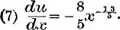
e0288-01
e0288-02
e0288-03
e0288-04
e0288-05
e0288-06
e0288-07
e0288-08
e0288-09
e0288-10
line

Exercises II. (p. 33.)

e0288-11
e0288-12
e0288-13
e0288-14
e0288-15
e0288-16
e0288-17
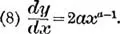
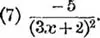
(8)
e0288-18
=αb Vb − 1, 0·98, 3·00 and 7·47 candle power per volt respectively.
e0288-19
e0289-01
e0289-02
e0289-03
line

Exercises III. (p. 46.)
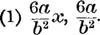
e0289-04
e0289-05
e0289-06
(4) 14110x4 − 65404x3 − 2244x2 + 8192x + 1379.
e0289-07
(6) 185·9022654x2 + 154·36334.
e0289-08
e0289-09
e0289-10
e0289-11
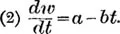
(11) b + 2ct.
e0289-12
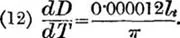
(13) 1·4340(0·000014t−0·001024), − 0·00117, − 0·00107, − 0·00097.
e0289-13
line

Exercises IV. (p. 51.)

(1) 17 + 24x; 24.
e0289-14
e0289-15
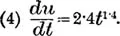
(4) (Exercise III.):
e0289-16
(2) − b, 0.
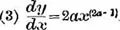
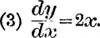
(3) 2, 0
e0290-01
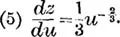
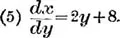
(5) 2, 0
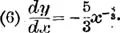
(6) 371·80453x, 371·80453.
e0290-02
(Examples, p. 41):
e0290-03
e0290-04
e0290-05
e0290-06
(5) 12x + 2, 12.
(6) 6x2 − 9x, 12x − 9.
e0290-07
line

Exercises V. (p. 64.)

(2) 64; 147·2...

Table of contents

  1. Cover
  2. Title
  3. Copyright
  4. Dedication
  5. Preface to the Second Edition
  6. Contents
  7. Prologue
  8. I. To Deliver you from the Preliminary Terrors
  9. II. On Different Degrees of Smallness
  10. III. On Relative Growings
  11. IV. Simplest Cases
  12. V. Next Stage. What to do with Constants
  13. VI. Sums, Differences, Products, and Quotients
  14. VII. Successive Differentiation
  15. VIII. When Time Varies
  16. IX. Introducing a Useful Dodge
  17. X. Geometrical Meaning of Differentiation
  18. XI. Maxima and Minima
  19. XII. Curvature of Curves
  20. XIII. Other Useful Dodges
  21. XIV. On True Compound Interest and the Law of Organic Growth
  22. XV. How to Deal with Sines and Cosines
  23. XVI. Partial Differentiation
  24. XVII. Integration
  25. XVIII. Integrating as the Reverse of Differentiating
  26. XIX. On Finding Areas by Integrating
  27. XX. Dodges, Pitfalls, and Triumphs
  28. XXI. Finding Some Solutions
  29. XXII. A little more about Curvature of Curves
  30. XXIII. How to Find the Length of an Arc on a Curve
  31. Epilogue and Apologue
  32. Table of Standard Forms
  33. Answers to Exercises