- 102 pages
- English
- ePUB (mobile friendly)
- Available on iOS & Android
eBook - ePub
How to Read Your Client's Mind
About this book
If only you could read your client's mind you would be able to sell more effectively and develop lifelong relationships. In this remarkable book by one of America's foremost business psychologists you will learn the non-verbal signals people use to communicate their intention and emotions. You will also gain valuable insights into how your customers and clients make decisions.
Discover how to:
• Increase your closing rate up to 99% with "The Touch of Persuasion"
• Recognize the "Buying Signals" people use to signal they are ready to purchase from you
• Listen between the lines using "Subtext Signals"
• Use the newest research on how to influence people
• Spot when your customers are bored or tuned out and how to bring them back
• Adapt to the different types of buyers and how they make decisions
• Triple your advertising/marketing response rates using the 12 most persuasive words to your clients
Begin now to use these powerful strategies to get inside your customer's mind and watch your sales grow.
Kerry Johnson, MBA, Ph.D. is an internationally known author and speaker who presents at least 12 programs a month to audiences from Hong Kong to Halifax, and from New Zealand to New York, traveling 8,000 miles each week. In addition to speaking, Kerry currently writes monthly for fifteen national trade and management magazines whose editors have dubbed him "The Nation's Business Psychologist."
Information
Topic
Personal DevelopmentSubtopic
SalesFour
Nuances of Communications
What I’ve been telling you so far has been oriented toward WASPs: white Anglo-Saxon Protestants. But these days we have a lot of diversity. We have Hispanics and Asians. A lot of these gestures that I’m talking about are much different with these other groups.
Asians—Japanese, Chinese, Filipinos—will make very sublimated gestures. One example is a second-generation Chinese-American friend who haltingly makes eye contact. I asked him about why he looked away a lot and he replied that his Dad chided him for staring when he was young. He thought it was rude. They may stand this far away from you, and when you look them in the eyes, they may look away a little bit. You may feel that they’re really being cold—“I don’t think this guy likes me very much”—but that’s the way they are. Even if they’re second- or third-generation, they’ve been brought up this way.
Versus the Italians and other people from Mediterranean areas—Greece and southern France. These people do things with their hands. “The house is this big. You’ll love it. The price is this big.” They give directions to a taxicab, and then run alongside: “It’s over there.”
In 1978, I got the chance to play tennis on the European Grand Prix tennis circuit. In the semifinals of the Rome stop on the Italian Grand Prix, I played the guy who had won thirty-six consecutive tournaments in a row. His name was Guillermo Vilas. That name still rings in my head and makes me frightened even when I think about it, so you can imagine the way I felt on the court.
I got the chance to play him in the semifinal match, and I was about to win the first set of a three-set match. I was about to win that point, and I served the ball. A good way to win a point is serving the ball. I served the ball, ran up to the net, and had my racket up for the volley, but he was such a hot player, he lobbed it right over my head.
I ran back to the baseline, and we rallied baseline to baseline for about fifteen shots. On a clay-court surface, that’s grueling tennis. Finally, he hit a short shot to about the midpart of my court, the service line. I ran up to the ball and hit the ball right down the line on his side. I saw the ball bounce on the line on his side away from him.
I looked to the umpire for confirmation, and the umpire stuck his finger in the air vertically, signifying it was out. I threw my racket up, and even though I hadn’t won the match yet, only the first set, I was so excited. I said, “I won this round. I won a set on Vilas.” Just then the umpire in the stand said, “Point, Vilas.”
Vilas? What are you talking about? You think John McEnroe has a bad temper. You should have seen me that day. I was outraged. Just then a friend of mine up in the stands said, “Kerry, You got it all wrong. In Italy and Europe, sticking your finger in the air is in and laying your hand flat is out.” He said, “The umpire motioned that your shot was good.”
The whole switch-around in gestures: the one that means good in America means the total opposite in Italy and other areas. Realize when you’re dealing with other people that they’re showing you different gestures. Please don’t feel intimidated when an Italian walks up to you and says, “Yes, what do you want to tell me?” “What did you say?” Or, when someone that is a little more sublimated, like an Asian, stands away from you and doesn’t make eye contact with you very much, that doesn’t mean they’re cold. That’s just a function of their culture.
Vilas did win that match. Later that morning, I couldn’t keep anything down at all. I went out in Rome for some breakfast, and as I was walking down the sidewalk, I sat down at this old café.
I was really upset. I rubbed my fingers across my forehead. This would have showed frustration and tension to anyone who paid attention. A waitress came over to me and—I don’t think she liked Americans much—said, “Hey, what do you eat?”
“I don’t need this,” I said. “Ma’am, all I want is two eggs and some kind words, please.” I was really upset.
She left. After about five minutes, she brought back the eggs. She slapped it right down in front of me and started to walk away. As she walked away, I grabbed her dress. I said, “Ma’am, what about those kind words?”
She looked at me and said, “Don’t eat them eggs.”
Don’t Drop It
Another thing we see is the “don’t touch me” or “don’t drop it” gesture. I love this one. Have you ever been walking through somebody’s house, pick up a trophy, and say, “Geez, this is a beautiful trophy”? You look back at the person, and they’re doing the “don’t drop it” gesture by putting their hands below the possession or stepping closer just in case they have to intervene with a catch.
Or people walk up to your geranium. They want to smell it, and you get very nervous they might pull it out or damage it some way.
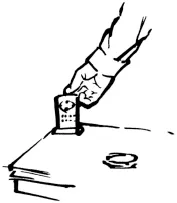
Here’s a sign that I call “pride of possession.” Remember the last time you bought a new car? You took it home, you closed the door, you locked it. You got about four or five steps away toward your house. You stopped, you looked back at your car. Isn’t that a gorgeous car?
Better yet are those people who look at their cars, and as they’re talking to somebody, they have their hands on the car. “Hands off, it’s mine!” If the other person puts his hands on it, the owner looks at his hands. Things like that happen very often with things we’re very proud of.
Headlocks and Hugging
Here’s another type of gesture. Sometimes we think of relationships as exactly what people say they are, but sometimes that’s not true.
Say I’m the broker, and you come in the office. We’re talking, and I introduce you to my assistant. I say, “Kate is my right-hand person. Boy, without Kate, my business would go down the tubes. To tell you the truth, if I wasn’t married, I’d sure ask this little lady to marry me. She’s so much help.” As they say it, an arm goes around the employee with a squeeze. Perhaps even around the upper shoulders. She’s such a warm person. Of course, I am married, and she’s just a friend.”
Sometimes we don’t see the side shoulder hug, headlock routine, but we do see people being hugged. This is possessiveness. That person thinks this individual is more than just a friend. If a man does this to another man, he is indeed a very close friend.
Signs of Overconfidence
I’d like to tell you about another thing, which I fondly call the “sergeant.” It’s a form of overconfidence, sometimes cockiness. Have you ever shown a house to somebody who has their hands locked behind their back? They walk through the house like a drill sergeant. This person is inspecting things. They’re looking for cracks. They look at wallpaper; they’ll flip the wallpaper. They’ll run their finger across the walls, and they’ll look for dirt. They might kick a wall to find out if it’s solid. They’ll kick doors, they’ll slam cabinets. This type of person is looking for something wrong.
This kind of individual is very difficult to deal with. If you say the house is 1256 square feet, and he finds out it’s 1240, he’ll call you on it. He’ll say, “You lied to me once; you’ll lie to me again.” This person is very suspicious; he’s trying to catch you in things.
Here’s my favorite along the lines of overconfidence—Mr. Superiority. You interlock your hands behind your head. You pull the chair back, and you lean back in your chair. Have you ever seen somebody like this? You’re talking to him, and the person looks as if he couldn’t care less. You really know the person is overconfident when, after he leans back in the chair, he has his hands linked behind his head. He puts his feet up on the table in front of him.
Sometimes we like confident people, because they tend to be very decisive. Here’s a way to deal with them.
Number one, find out what your client’s one-, three-, and five-year goals are. Most people, especially in places like California, are very wary of real-estate people because one out of every eighteen adults in California has a real-estate license. So it’s normal to be suspicious. You know you’re good and I know you’re good, but if these people don’t know, spend time talking and developing rapport.
Here’s something else. Find out what they want from a property, whether they want an investment, whether the wife needs a bigger house, whether they are trying to use it as a tax shelter. Find out exactly what their goals are, what they want from their financial goals for the next one, three, and five years, and try to appeal to them as trying to help them achieve their goals.
Who can resist that? You’re trying to help someone achieve their goals. You’re not trying to sell something. You’re trying to be an advisor and help them in that way. Be an advisor, be a counselor. With these people, stay away from every salesy thing you’ve ever learned. They’ll rebel against it.
Cooperation
Cooperation, or what we call enthusiasm plus, refers to people that sit on the edge of their chairs and nod their head up and down. Their pupils dilate. They smile at you as you’re talking to them. You know they like you. They’re interested in you. If they’re cooperative and they like you, they don’t have their coats buttoned. They don’t have themselves dressed as if they’re a cocoon.
To show honesty, they put their hands flat on their chests. They may even put their hands on their abdomen lower toward their stomach. It shows that they not only feel good about you, they feel honest towards you. They’re being truthful. In this age of plasticity and phoniness, sometimes we need to know this. It’s good to see words backed up by body language cues that underline their sincerity.
“You commented about that busy street being right next to your house. It’s not going to keep you up at night. There aren’t that many cars in the middle of the night. You won’t be woken up. Trust me.”
You know one other thing we see as far as these gestures go, the trust-me gesture, and people who are accepting towards us, are those individuals that touch us.
Did you ever notice that when people like you, they go up to you and touch your arm? If they want to tell you a joke, they get close to you and say, “Hey, did you hear about the lady that fell off her tricycle?” They try to reinforce that closeness.
I’ve Got a Secret
A related technique is called “moving closer,” otherwise known as “I’ve got a secret.”
Why do tend to believe things that we hear when we eavesdrop? You can imagine fourteen people at a swimming pool running off to make a million dollars on a hot tip they overheard some broker give to somebody else.
If you want someone’s attention, whisper. If you want somebody to listen, whisper. Isn’t that true?
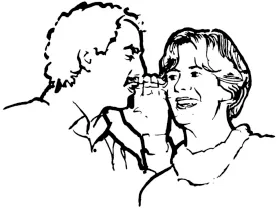
Don’t go up to your client and say, “I want you to buy this house.” If you want to do something that will really have a lot of impact, walk up to your client and say, “We’ve been looking at this one property for about two weeks now, and I know you’ve been trying to make a decision about it, and we’ve been doing a lot of work on it. To tell you the truth, just between you and me, the guy is a little bit desperate, and I think you can probably get...
Table of contents
- Cover
- Title Page
- Copyright
- Contents
- Introduction
- One How to Keep Someone’s Attention
- Two Subliminal Seduction
- Three What Their Bodies Are Telling You
- Four Nuances of Communication
- Five Persuasion as Science and Art
- Six Eight Steps to Good Listening
Trusted by 375,005 students
Access to over 1.5 million titles for a fair monthly price.
Study more efficiently using our study tools.
Frequently asked questions
Yes, you can cancel anytime from the Subscription tab in your account settings on the Perlego website. Your subscription will stay active until the end of your current billing period. Learn how to cancel your subscription
No, books cannot be downloaded as external files, such as PDFs, for use outside of Perlego. However, you can download books within the Perlego app for offline reading on mobile or tablet. Learn how to download books offline
Perlego offers two plans: Essential and Complete
- Essential is ideal for learners and professionals who enjoy exploring a wide range of subjects. Access the Essential Library with 800,000+ trusted titles and best-sellers across business, personal growth, and the humanities. Includes unlimited reading time and Standard Read Aloud voice.
- Complete: Perfect for advanced learners and researchers needing full, unrestricted access. Unlock 1.5M+ books across hundreds of subjects, including academic and specialized titles. The Complete Plan also includes advanced features like Premium Read Aloud and Research Assistant.
We are an online textbook subscription service, where you can get access to an entire online library for less than the price of a single book per month. With over 1.5 million books across 990+ topics, we’ve got you covered! Learn about our mission
Look out for the read-aloud symbol on your next book to see if you can listen to it. The read-aloud tool reads text aloud for you, highlighting the text as it is being read. You can pause it, speed it up and slow it down. Learn more about Read Aloud
Yes! You can use the Perlego app on both iOS and Android devices to read anytime, anywhere — even offline. Perfect for commutes or when you’re on the go.
Please note we cannot support devices running on iOS 13 and Android 7 or earlier. Learn more about using the app
Please note we cannot support devices running on iOS 13 and Android 7 or earlier. Learn more about using the app
Yes, you can access How to Read Your Client's Mind by Kerry Johnson in PDF and/or ePUB format, as well as other popular books in Personal Development & Sales. We have over 1.5 million books available in our catalogue for you to explore.