![]()
Part 1
Laying the CRM Foundation
IN THIS PART …
Understand the key strategies and components that make up your Complete CRM.
Get your team on board and create a data-driven culture.
Pick the best sales and marketing software for your business
![]()
Chapter 1
Embarking on Your Journey to Complete CRM
IN THIS CHAPTER
Finding out how to incorporate the R in CRM Integrating CRM into your business Understanding the terms around CRM Determining your CRM goals The first part of getting Customer Relationship Management (CRM) to work for your business is to understand what CRM really is. If you ask ten people, you’re likely to get ten different answers, each rooted in their personal experiences.
CRM has only started being taught in colleges and universities, so it’s no wonder there is fear, uncertainty, and doubt (also known as FUD) around it. Making CRM work in any business is a challenge, but it’s one you can overcome with a grasp of the strategies and tactics.
This chapter introduces the concept of Complete CRM and all the terms and technologies that make it possible. You can then apply all that knowledge to your organization with confidence.
Bringing the R in CRM to the Forefront
Every organization is built on relationships. It doesn’t matter how big or small the company is, which industry it serves, or who you are in that organization — relationships drive the success or failure of that group of people and the technology behind them.
The “R” in CRM stands for “relationship,” something that everyone — whether in sales, marketing, or operations — in your company contributes to. The more you understand how these relationships work, and how everyone in your organization influences them, the more efficiently your organization runs and the easier you generate revenue.
One key to understanding relationships in the context of CRM is knowing the difference between Complete CRM and Traditional CRM.
Traditional CRM is rooted in cataloging notes that salespeople made when they called their leads. Leads became contacts only after they bought something. These methods quickly became cumbersome and outdated when compared with the modern online, customizable, and mobile solutions available today.
Complete CRM is built for today’s business world and requires:
- A holistic view of the relationship between your business and its leads, clients, vendors, and employees
- A comprehensive approach to CRM
- A combination of strategy, practice, and software that brings together everything you know about a lead or client into a single resource
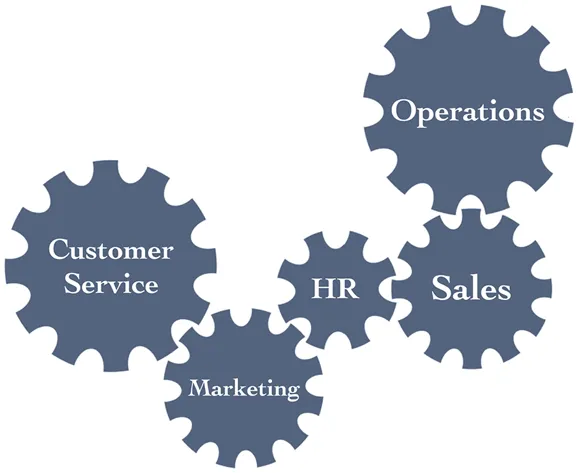
Complete CRM helps you understand what happens in the sales process, record how people engage with your marketing efforts, and track other interactions with your operations staff (for example, customer service, events, projects, and invoicing). Figure 1-1 illustrates how everything works together in a single system.
It takes an understanding of every piece of your organization to make Complete CRM work. Some concepts may be totally new to you. How some areas work may be totally new to you, and you may have to learn how different departments you’ve never ventured into work. You need to convince everyone from the top down of your vision of Complete CRM to be successful.
Transitioning to a Complete CRM mindset can give you a greater perception and empathy for those people who make your organization the best it can be.
Extending CRM to Your Entire Business
CRM is more than just software. It’s a mindset. Every business reaches a point, usually early on, when everything that’s happening can’t be held in someone’s brain. People in the organization need to take notes, or they’ll forget important things like customer issues, birthdays, or deadlines. With the aid of good tools to organize the information you need, you create a more efficient and effective business.
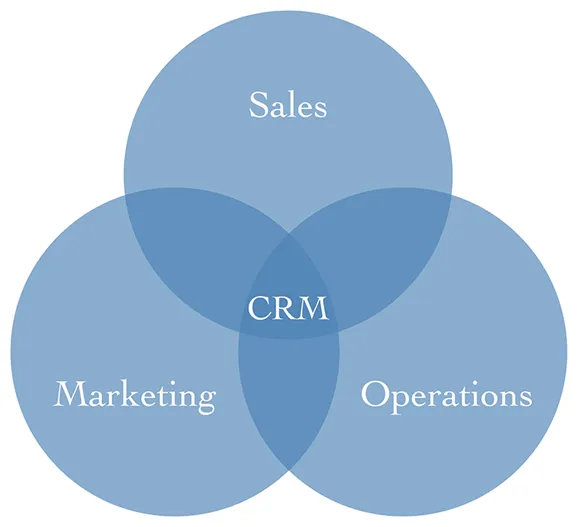
A good CRM system builds a framework for the information managed in your organization. Sales, marketing, and operations information needs to live in the same system because relationships reach across all those departments, as shown in Figure 1-2. Relationships represent the lifeblood of any organization, even those that don’t outright sell products or services. The better you can understand and learn from those relationships, the more valuable and efficient you and your organization are.
Disorganization in any business leads to missed deadlines, sloppy work, and uninformed managers. CRM is the cure for these negative effects by creating organization and defining processes, but it doesn’t just happen. It takes leadership, focus, and dedication to achieve the vision that you set.
Knowing the Buzzwords
CRM is awash in terms and buzzwords that people like to throw around. This section gives you the background you need to translate the CRM-speak.
You may be already familiar with some of these terms — for example, buyer personas are a tried-and-true marketing technique. But they may have a slightly different meaning in a CRM context than you’re used to. Get to know these buzzwords, as they come up in meetings when you communicate your vision.
Content marketing
Content marketing is marketing, except instead of telling people to buy your widget, you’re educating them on how great widgets like the ones that you sell are (oh, and by the way, this educational piece was sponsored by ACME Widget Company). It’s a subtle way of getting people to read the pieces your marketing people write.
People “consume” content that they find interesting or educational. When you write a paper, record a podcast, or record a video, it’s more likely to have an impact if you focus on providing value.
Your Complete CRM is ...