The Skilled Facilitator
eBook - ePub

The Skilled Facilitator

A Comprehensive Resource for Consultants, Facilitators, Coaches, and Trainers

  1. English
  2. ePUB (mobile friendly)
  3. Available on iOS & Android
eBook - ePub

The Skilled Facilitator

A Comprehensive Resource for Consultants, Facilitators, Coaches, and Trainers

About this book

Help groups deliver results with an updated approach to facilitation and consulting

The Skilled Facilitator: A Comprehensive Resource for Consultants, Facilitators, Trainers, and Coaches, Third Edition is a fundamental resource for consultants, facilitators, coaches, trainers, and anyone who helps groups realize their creative and problem-solving potential. This new edition includes updated content based on the latest research and revised models of group effectiveness and mutual learning. Roger M. Schwarz shows how to use the Skilled Facilitator approach to: boost improvement processes such as Six Sigma and Lean, create a psychologically safe learning environment for training, and help coaches work with teams and individuals in real-time. This edition features a new chapter that explains how to facilitate virtual teams using conferencing technology.

Facilitation skills are essential in many kinds of work, and if you are looking to bring your skills up to date it is critical that you rely on trusted information like the knowledge offered in this go-to reference.

  • Develop the facilitative mentality and skills that enable you to help groups get better results, even in the most challenging situations
  • Help groups achieve greater performances, stronger working relationships, and higher levels of individual well-being
  • Quickly develop productive and trusting work relationships with the groups you help
  • Establish the functions of your facilitative role
  • Implement a research-based, systematic approach to diagnose and intervene in groups and improve their performance and results

The Skilled Facilitator is a practical resource for corporate, government, non-profit, and educational practitioners, as well as graduate students in group-focused programs. This edition contains up-to-date material, based on recent studies, to help facilitators move beyond arbitrary tactics to utilize cutting edge, research-based strategies that improve group processes, relationships, mindsets, and outcomes.
Frequently asked questions

Yes, you can cancel anytime from the Subscription tab in your account settings on the Perlego website. Your subscription will stay active until the end of your current billing period. Learn how to cancel your subscription.
At the moment all of our mobile-responsive ePub books are available to download via the app. Most of our PDFs are also available to download and we're working on making the final remaining ones downloadable now. Learn more here.
Perlego offers two plans: Essential and Complete
  • Essential is ideal for learners and professionals who enjoy exploring a wide range of subjects. Access the Essential Library with 800,000+ trusted titles and best-sellers across business, personal growth, and the humanities. Includes unlimited reading time and Standard Read Aloud voice.
  • Complete: Perfect for advanced learners and researchers needing full, unrestricted access. Unlock 1.4M+ books across hundreds of subjects, including academic and specialized titles. The Complete Plan also includes advanced features like Premium Read Aloud and Research Assistant.
Both plans are available with monthly, semester, or annual billing cycles.
We are an online textbook subscription service, where you can get access to an entire online library for less than the price of a single book per month. With over 1 million books across 1000+ topics, we’ve got you covered! Learn more here.
Look out for the read-aloud symbol on your next book to see if you can listen to it. The read-aloud tool reads text aloud for you, highlighting the text as it is being read. You can pause it, speed it up and slow it down. Learn more here.
Yes! You can use the Perlego app on both iOS or Android devices to read anytime, anywhere — even offline. Perfect for commutes or when you’re on the go.
Please note we cannot support devices running on iOS 13 and Android 7 or earlier. Learn more about using the app.
Yes, you can access The Skilled Facilitator by Roger M. Schwarz in PDF and/or ePUB format, as well as other popular books in Business & Management. We have over one million books available in our catalogue for you to explore.

Information

Publisher
Jossey-Bass
Year
2016
Print ISBN
9781119064398
eBook ISBN
9781119064404
Edition
3
Subtopic
Management

Part One
The Foundation

img

img

Chapter One
The Skilled Facilitator Approach

This book is about helping groups get better results. If you're reading this, you may be exploring how to or are already working with groups. You may be serving as a facilitator, consultant, coach, or trainer. In any case, you want to develop facilitation skills to help groups become more effective.

The Need for Group Facilitation

Groups are the basic work unit in many organizations. Organizations are too complex for individuals alone to have all the information they need to produce products and services, or make key decisions, without creating unintended negative consequences. So, organizations create groups to get all the needed information in the same room, resolve different and conflicting views, and commit to a common course of action. Groups need to work effectively. But if you've worked with groups, you know they're often less than the sum of their parts; they make poor decisions, create mistrust and low commitment, and leave members demotivated and stressed. It doesn't need to be this way. This book will show you how to help groups achieve what they want and need to achieve.

Most People Who Need to Facilitate Aren't Facilitators

If you work with groups, you need facilitation skills. Most people who work with groups don't think of themselves as facilitators, and technically, they're not. Essentially, a group facilitator is a content-neutral third party who helps a group improve how to work together to get better results. But even if you're not a facilitator, you can still use the same approach—the mindset and skill set—that facilitators use to help groups get better results. At its core, facilitation is simply a way of thinking and working with groups that increases the chance that they'll perform well, develop strong working relationships, and maintain or improve members' well-being. It's valuable for any relationship worth your time. If you serve in any of these roles, you'll benefit from facilitation skills:
  • You're an internal or external consultant, providing expert advice to organizations. You may be an expert in the area of strategy, finance, accounting, IT, HR, marketing, logistics, organizational change, or any number of other areas. Your purpose isn't to facilitate groups, but you need to work with groups to understand your clients' challenges and needs, and propose and implement solutions.
  • You're an internal or external consultant whose purpose is to help groups improve their results by improving their process in some way. You may specialize in process improvements such as Lean, Six Sigma, value engineering, quality improvement, or other related approaches. You may feel challenged when dealing with problems that stem from the soft side of groups, like resistance to change. Or you may specialize in a key element necessary for effective groups such as managing conflict productively, building trust, increasing diversity, or demonstrating leadership.
  • You're a coach, now working with teams. You generally work with individuals but increasingly find yourself working with teams. You realize that helping a team requires more skills than working with someone one-on-one.
  • You're a trainer who helps people develop knowledge and/or skills in a group setting. You need to actively engage people as you meet their learning needs while simultaneously making sure you stay on task and on time.
If you're a member or formal leader of the group you're trying to improve, facilitation skills are also essential for your work. I've written the book Smart Leaders, Smarter Teams (Jossey-Bass, 2013) for people in your role. It uses exactly the same mindset and skill set I describe in this book, and it includes specific examples to help you in your formal and informal leadership tasks.

Is This Book for You?

This book is for anyone who works with groups to help them get better results. It provides a comprehensive approach to facilitation that you can apply in a variety of roles. When you've finished reading the book, you'll have answers to the five main questions that anyone who wants to work effectively with groups must address.

Should I Be a Facilitator, Consultant, Coach, or Trainer to a Group?

How do I decide what role to play? What do I do if I need to help the group by using more than one role? You can help a group as a facilitator, consultant, coach, or trainer. Selecting the appropriate facilitative role is important. In each role, you help a group in a different way. The role you select depends on the type of help the group needs. If you select the appropriate role, you help the group achieve its goals. If you select an inappropriate role, you hinder the group and can hamper your working relationship with them.
The Skilled Facilitator approach defines six of these helping roles, describes how you use each role to help the group, and the conditions under which it's the most appropriate role for you to use (Chapter 2). It also explains when and how to move between the roles.

What Should I Pay Attention to to Help a Group?

Do I watch who speaks to whom or how much people speak? What role each member plays in the group? How people state their views and ask questions? How group members with different personality types interact? When you're working with a group, there are so many things you might focus on to figure out what the group is doing that is productive and unproductive. It's not possible to pay attention to everything, so how do you decide what's important to pay attention to and what's not? And how do you do this in real time so that you can respond immediately, instead of figuring it out after the meeting has ended?
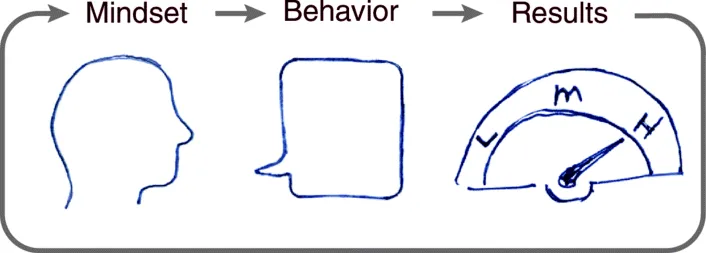
When you ask yourself these questions, you're asking for a diagnostic model to guide what you pay attention to and how you make sense of it. The Skilled Facilitator approach uses a multifactor diagnostic model that enables you to identify what is occurring in a group that is increasing or decreasing its effectiveness. The approach describes eight behaviors (Chapters 5 and 10) that you can use each time a group member speaks, to analyze exactly how he or she is making the conversation more or less productive. The approach also describes two mindsets (Chapters 3 and 4) that group members use—one effective and one ineffective—so that you can infer when group members are thinking in ways that lead them to act less effectively.
Finally, the Skilled Facilitator approach includes a Team Effectiveness Model (Chapter 6) that describes how a group or team's design, including its structures and processes, affect its results. Structure includes the group's task and goals, the ways in which group members are interdependent as they accomplish the task, and the roles that group members fill as they work together. Process includes how the group solves problems, makes decisions, and manages conflict. By analyzing a group's underlying structures and processes, you identify powerful but invisible forces that affect the group.
The Skilled Facilitator diagnostic model enables you to attend to a range of factors (that is, mindset, behavior, structures, and processes) that make significant differences in the three results that every team needs to achieve: (1) solid performance; (2) strong working relationships; and (3) positive individual well-being.

What Do I Say When the Group Isn't Working Effectively?

When should I intervene with the group? What exactly should I say? Who should I say it to? After you've diagnosed what's happening in a group, you have to decide whether to intervene; that is, whether to share what you're seeing and what you think it means for the group, and see if the group wants to change its behavior. You can't intervene every time you see something that may reduce the group's effectiveness; if you do, the group may not accomplish its work and may lock you out of the room.
When you decide to intervene, you need to decide what kind of intervention to make, exactly what to say, and to whom. To accomplish this, the Skilled Facilitator approach includes a six-step process called the mutual learning cycle (Chapters 7 and 9). The cycle is a structured and simple way for you to think about what's happening in the group and then to intervene effectively. It enables you to intervene on anything that is occurring in the group, including when group members' behavior is ineffective (Chapter 10), when group members are using some process ineffectively (Chapter 11), and when emotional issues arise (Chapter 12).

How Do I Develop an Agreement to Work with a Group?

How do I figure out who my client group is and what kind of help they need? What agreements do I need to make to increase the chance of success, and which group members need to be involved in the agreement? What do I do if group members tell me things they want me to keep confidential? Addressing th...

Table of contents

  1. Cover
  2. Additional Praise for The Skilled Facilitator
  3. Title Page
  4. Copyright
  5. Dedication
  6. Preface to the Third Edition
  7. Part One: The Foundation
  8. Part Two: Diagnosing and Intervening With Groups
  9. Part Three: Agreeing To Work Together
  10. Part Four: Working with Technology
  11. Acknowledgments
  12. About the Author
  13. About Roger Schwarz & Associates' Work with Clients
  14. The Skilled Facilitator Intensive Workshop
  15. Index
  16. End User License Agreement