- A critical investigation of the visual media and selected video artworks which contributes to the understanding of video as a medium in contemporary art
- The only study specifically devoted to theorizing the medium of video from the perspective of prominent characteristics which result from how video works deal with time, space, representation, and narrative
- The text has emerged out of the author's own lectures and seminars on video art
- Offers a comparative approach which students find especially useful, offering new perspectives
- English
- ePUB (mobile friendly)
- Available on iOS & Android
eBook - ePub
About this book
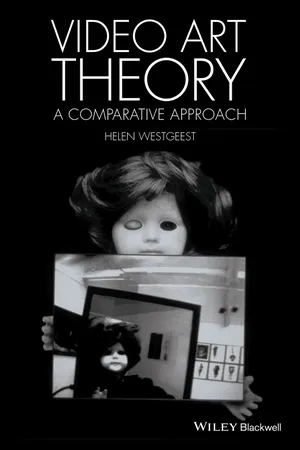
Video Art Theory: A Comparative Approach demonstrates how video art functions on the basis of a comparative media approach, providing a crucial understanding of video as a medium in contemporary art and of the visual mediations we encounter in daily life.
Information
1
Immediacy versus Memory:
Video Art in Relation to Television, Performance Art, and Home Video
Immediacy is the most often used term in descriptions of early video works. Many video artists have mentioned this characteristic in interviews to explain their preference for video as medium.1 As video artist and scholar Stephen Partridge explains in “Video: Incorporeal, Incorporated” (2006), the virtual impossibility of editing with the early videotape recorder of the late 1960s drove artistic interest and experiment away from filmic conventions, such as montage, and toward the use of closed-circuit systems and instant playback. Accordingly, artists highlighted the new technology's intrinsic properties, such as immediacy, transmission, the “live,” the closed-circuit, record-replay with time delay, feedback oddities, synthesizer manipulations, and synchronicity with sound. Some of these properties also mark video art in the new digital era, as Partridge underscores, but in particular synchronicity with sound does not. Sound is now recorded as a data stream separate from the image stream (in Hatfield 2006, 184). This chapter and the chapters that follow will establish that some of the characteristics of early video art can indeed still be observed in contemporary video art, but that some features changed significantly in the course of time, mainly as a direct result of new technological developments.
In comparisons of video with another medium, television is the one that figures most prominently. This is true in particular in essays that deal with video art from the pre-digital era, because the technology of analog video was in fact invented for the mass medium of television. Consequently, both could be defined as electronic media that can be transmitted directly or recorded on magnetic tape. This implies that immediacy was at first medium-specific for television, which was gradually introduced from the mid-1930s on. After the digitization of visual technologies, television and video became technically related more closely to photography and film. As this chapter will demonstrate, however, traces of their common roots can still be found in some contemporary video works.
If most authors stress video's technical similarities with analog television and its differences with film, video artist and scholar Chris Meigh-Andrews reminds us that we should not forget that in the early years of video many artists experimented with both video and film, and that they often did so in combination (2006, 81). Some of them recorded images on film and transferred the results to video, while others worked with video and transferred the results to film. Another common strategy was filming images off the television screen. Only gradually, toward the mid-1970s, did video art begin to forge a distinctive practice focusing on video's ability to provide instantaneous feedback. The frequently used notion of “instantaneousness” in this context has been put into perspective by new media theorist Sean Cubitt in his essay “Precepts for Digital Artwork,” where he claims that “very, very fast is still not instantaneous,” and that “the present should never be mistaken for its occupation by images of even the most recent past – the one twenty-fifth of a second required, for example, to build up an electron scan on a video monitor” (in Marchessault and Lord 2007, 308).
Regarding the perception of time in video art, video artist Davidson Gigliotti observed in the mid-1970s that when thinking of time in the everyday sense he is tempted to call it “real time.” This notion, however, which is derived from computer terminology, is almost always used to mean an abstraction of everyday temporal experience. Real time occurs only when everyday temporal experience is translated into media (in Schneider and Korot 1976, 215–216). As a result, Gigliotti rightly decides to refer to real time only when he means mediated time – time as expressed in video. He considers real time to be a media model of everyday temporal experience. In addition, he introduces “compressed time” as a second media model of the subjective experience of memory, and a third mode of mediated time, which he calls “expanded time” and which he associates with subjective contemplation. The latter would be similar to the sort of time that we experience when viewing the sea or the stars above. What is “expanded” is our sense of the present moment. As an example he mentions the use of the video technique of delay which has no programmatic beginning or end, no single point of focus, no narrative, and yet which engages a broad spectrum of our attention (216).
With regard to spectatorship, this chapter mainly concentrates on viewers' experiences of immediacy in video art and expectations based on watching television. Concerning the perception of video art as a new medium, in 1976 Robert Stearns – director of The Kitchen Center for Video – claimed that there is a sense of disorientation, due in part to the often highly personal nature of much video art, incongruous with the more familiar, formularized product of network television. Viewers experienced a sense of disturbance in particular in works that force themselves upon them by capitalizing not only on the personal but also on the repetitious and the self-reflexive. Stearns concludes that such works are often called boring because the artist, rather than seeking to manipulate the time he uses, points directly to it: by using time consciously, the artists intend to make the viewer conscious of it (in Schneider and Korot 1976, 160–161).
The central focus of this chapter pertains to insights provided by comparative research of video art – in relation to television, performance art, and home video – into video's complementary characteristics of immediacy and memorizing. This concern includes an inquiry of the consequences of explicit usage of immediacy or memorizing and references to these other media for the construction of meanings. The first section focuses on immediacy and continuous flow in video resulting from its being an electronic medium, in relation to television. In the second section I develop a connection between immediacy in video art and in performance art, putting the complex notion of “video performance” center-stage. Next, the third section discusses video's ability to record events to support our memory, while it also draws a comparison between documentary video artworks and home videos that document family life. The structure of the chapter's argument echoes the three essential areas for artistic use of video identified by art historian Wulf Herzogenrath in 1977: video as mirror (second section), video as documentary medium (third section) and video as electronic medium (first section) (in Davis 1977, 90). This chapter's theoretical framework relies on publications on video art, as well as on sources from several related disciplines: the first section in part draws on theories from television studies; in the second section I use art historical literature about performance art; and the last section relies on work by cultural theorists. But first I will address several relevant issues for my argument in this chapter by way of two case studies, one from a relatively recent date, and a video artwork from the first generation.
Gillian Wearing's Trauma (2000) Juxtaposed to Joan Jonas's Vertical Roll (1972)
On a medium-sized monitor we hear a woman say from behind a mask: “It is not true that none of the mistakes in the world are made by psychiatrists who would never admit they were wrong.” Next the voice informs us that a psychiatrist recommended her parents to send her to a boarding school, which happened to be a residential school for the maladjusted. There she became the target of bullying by the girls and the staff. This episode is one of the eight stories about traumatic experiences told by eight adults in British artist Gillian Wearing's video work Trauma (2000) (Figure 1.1). The speakers wear masks of children's faces to indicate the moment when the harrowing event took place.2 Each video is presented on a monitor in the wall of a small room only suitable for private viewing. The close-up and central presentation of the speaker evoke associations with conventions of presentations on television.
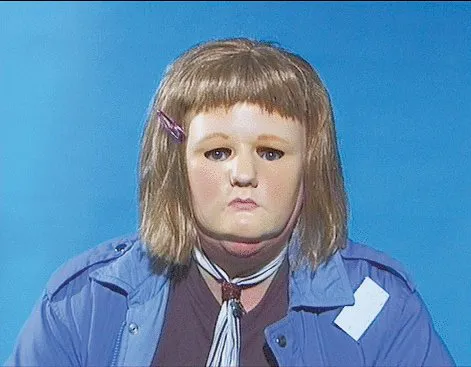
Figure 1.1 Gillian Wearing, Trauma (video still), 2000. Color video with sound, 30 minutes. © Gillian Wearing, courtesy Maureen Paley, London.
Moreover, this video series reminds one of the history of video, specifically its use as a tool for documentation or remembrance and its application as a psychological device. Film theorist Michael Renov even defines a category within video as “video confessions.” He relates this phenomenon to the organization of social life in Western society as identified by Michel Foucault in The History of Sexuality (1976). As Renov claims, our present society has become a singularly confessing society; in public contexts people are telling, with the greatest precision, whatever is most difficult to tell: “Western man has become a confessing animal” (Renov and Suderburg 1996, 80). Renov focuses on the therapy of self-examination in our confessional culture and the place we should give to video in this account, arguing for a uniquely charged linkage between “video” and “confession” in the current cultural environment. Based on Mimi White's Tele-Advising: Therapeutic Discourse in American Television (1992), Renov demonstrates how television programs not only borrow from psychological theory and clinical practice, but also construct new therapeutic relations, using the talk format of everyone confessing over and over again to everybody else: the camera has become the instrument of confession (81). Regarding the aesthetic domain, he relates this tendency to the age-old view of art as being capable of yielding “cathartic” effects for artists and audiences alike.
Moving from Wearing's Trauma to American artist Joan Jonas's video Vertical Roll (1972) involves not only bridging an interval of three decades, but also a change in socio-cultural context. How did Jonas, who belongs to the first generation of video artists, deal with the quite new medium of television at that time? Her Vertical Roll exaggerates the poor technological state of the electronic audio-visual medium of television in the early 1970s (Figure 1.2). The images shift bottom up over the screen, bounded by a black band – a disturbance familiar to television viewers, caused by disturbed simultaneity (de-synchronization) of receiver and sender frequency of the monitor. The video presents Jonas wearing an exotic theatrical dress, sometimes combined with a head mask. The staccato movements of the upward rolling images that present only fragments of Jonas's body and face prevent a clear view of the event. As an “extra layer” of the video Jonas enters the screen, resulting in the vertical bar becoming the background for Jonas's new performance in the foreground, which consists of her tapping the screen that presents the vertical roll with a silver spoon, although slightly out-of-synch (Kathy O'Dell in Hall and Fifer 1990, 146). For her representation of the woman's body - in line with the feminist art of the 1970s - Jonas uses characteristics of the electronic media of video and television, as well as aspects of the artistic medium of performance art related to time, such as tedious, repetitive actions, which renders this work a quite suitable case study for my argument throughout this chapter.
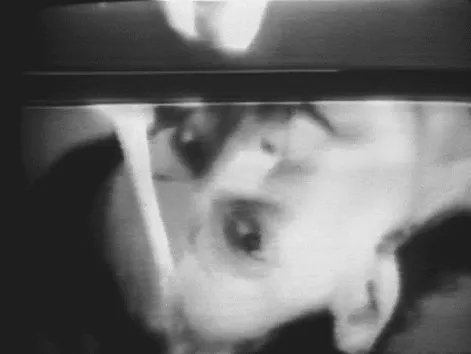
Figure 1.2 Joan Jonas, Vertical Roll, 1972. One-channel analog video, black-and-white, sound, 19:38 minutes. © Joan Jonas, courtesy Electronic Arts Intermix, New York.
Although Trauma and Vertical Roll are separated by a time span of three decades, both video works ask questions about how video deals with oppositions such as immediacy versus documentation/memory and the tension between public and private. Before addressing these opposite pairs, this chapter goes back to an important source of the videotape, the audiotape. Video is often discussed as a medium of moving images, but frequently – as underscored by the two case studies – sound figures prominently as a meaningful aspect of this medium as well.
Video Art Dealing with the Constant Movements of Audio-Visual Electronic Media, and the Immediacy and Socio-Cultural ...
Table of contents
- Cover
- Title Page
- Copyright
- Acknowledgments
- Introduction
- Chapter 1: Immediacy versus Memory: Video Art in Relation to Television, Performance Art, and Home Video
- Chapter 2: Immateriality versus Three-Dimensionality: Video Art as Sculpture, Installation Art, Projection, and Virtual Medium
- Chapter 3: Moving Images Mediating as Contemplative Images: Video's Challenge of Photography, Drawing, and Painting
- Chapter 4: Repetition and Fragmentation in Narrative: Video's Appropriation and Subversion of Classical Cinema
- In Lieu of a Conclusion
- Index
- EULA
Trusted by 375,005 students
Access to over 1.5 million titles for a fair monthly price.
Study more efficiently using our study tools.
Frequently asked questions
Yes, you can cancel anytime from the Subscription tab in your account settings on the Perlego website. Your subscription will stay active until the end of your current billing period. Learn how to cancel your subscription
No, books cannot be downloaded as external files, such as PDFs, for use outside of Perlego. However, you can download books within the Perlego app for offline reading on mobile or tablet. Learn how to download books offline
Perlego offers two plans: Essential and Complete
- Essential is ideal for learners and professionals who enjoy exploring a wide range of subjects. Access the Essential Library with 800,000+ trusted titles and best-sellers across business, personal growth, and the humanities. Includes unlimited reading time and Standard Read Aloud voice.
- Complete: Perfect for advanced learners and researchers needing full, unrestricted access. Unlock 1.5M+ books across hundreds of subjects, including academic and specialized titles. The Complete Plan also includes advanced features like Premium Read Aloud and Research Assistant.
We are an online textbook subscription service, where you can get access to an entire online library for less than the price of a single book per month. With over 1.5 million books across 990+ topics, we’ve got you covered! Learn about our mission
Look out for the read-aloud symbol on your next book to see if you can listen to it. The read-aloud tool reads text aloud for you, highlighting the text as it is being read. You can pause it, speed it up and slow it down. Learn more about Read Aloud
Yes! You can use the Perlego app on both iOS and Android devices to read anytime, anywhere — even offline. Perfect for commutes or when you’re on the go.
Please note we cannot support devices running on iOS 13 and Android 7 or earlier. Learn more about using the app
Please note we cannot support devices running on iOS 13 and Android 7 or earlier. Learn more about using the app
Yes, you can access Video Art Theory by Helen Westgeest in PDF and/or ePUB format, as well as other popular books in Social Sciences & Popular Culture. We have over 1.5 million books available in our catalogue for you to explore.