Focuses on sensor applications and smart meters in the newly developing interconnected smart grid
• Focuses on sensor applications and smart meters in the newly developing interconnected smart grid
• Presents the most updated technological developments in the measurement and testing of power systems within the smart grid environment
• Reflects the modernization of electric utility power systems with the extensive use of computer, sensor, and data communications technologies, providing benefits to energy consumers and utility companies alike
• The leading author heads a group of researchers focusing on the construction of smart grid and smart substation for Sichuan Power Grid, one of the largest in China's power system
- English
- ePUB (mobile friendly)
- Available on iOS & Android
eBook - ePub
About this book
Information
1
Introduction
1.1 The Concept and Worldwide Development of Smart Grid
1.1.1 Concept of Smart Grid
The Smart grid, driven by many factors including better environmental quality, more powerful capabilities to resist natural disasters and external disturbances, energy independence and high efficiency, is committed to creating smarter, cleaner electricity systems around the world. In a smart grid, modern monitoring, analysis, control and communication capabilities are incorporated into the electric grid, in order to improve reliability, optimize asset utilization, improve cyber security, increase energy efficiency and allow diverse generation and storage options. Therefore, the smart grid is regarded as one of the most promising solutions for sustainable development [1–3].
The traditional electric power grid was designed to operate as a vertical structure consisting of generation, transmission, and distribution and supported with controls and devices to maintain reliability, stability, and efficiency. However, system operators are now facing new challenges including the penetration of distributed energy resource (DER) in the legacy system, rapid technological change, and different types of market players and end users. The smart grid will be equipped with communication support schemes and real-time measurement techniques to enhance resiliency and forecasting as well as to protect against internal and external threats [4]. The design framework of the smart grid is based upon unbundling and restructuring the power sector and optimizing its assets [5]. The smart grid will be capable of:
- handling uncertainties in schedules and power transfers across regions;
- accommodating renewables or any other DER;
- optimizing the transfer capability of the transmission and distribution networks and meeting the demand for increased quality and reliable supply;
- managing and resolving unpredictable events and uncertainties in operations and planning more aggressively.
The smart grid represents the full suite of current and proposed responses to the challenges of electrical energy systems [6, 7]. Because of the diverse range of factors there are numerous competing taxonomies and no agreement on a universal definition. However, the basic concept of smart grid is to add monitoring, analysis, control, and communication capabilities to the national electrical delivery system to maximize the throughput of the system while reducing the energy consumption. Figure 1.1 depicts the fundamental objectives and technical implementation of smart grid [8]. The fundamental objectives of smart grid include reliability, sustainable development, efficiency, security and energy independence. And the basic technologies are information and communication technology (ICT), and control [9]. Advanced sensing and measurement technologies will acquire and transform data into information and enhance the multiple aspects of power system management [10], and hence is one of the key enablers of smart grid.
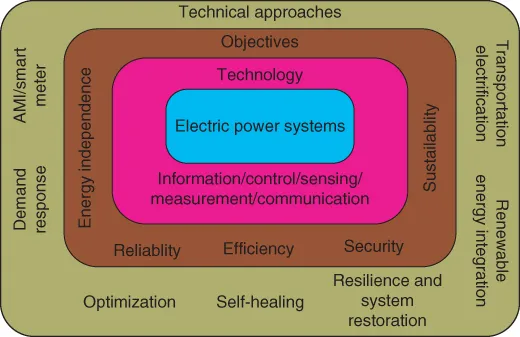
Figure 1.1 Layered smart grid architecture.
At the application level, there might be various solutions to improve or facilitate the 5 fundamental objectives mentioned above. For instance,
- Re-investment of infrastructure of power system may help improve the reliability, revolutionize electrical systems with digital technologies, and increase the efficiency of energy production, management, distribution and consumption.
- Advanced Metering Infrastructure (AMI) together with smart meter can help improving customer understanding of their electricity usage, reducing operations and maintenance costs, and improving awareness of and response to distribution system outages.
- Demand response, in which electric usage by end-use customers is dynamically changed from their normal consumption patterns in response to changes in the electric power system, is changing the over-100-year-long traditional practice in which power system operator only controls generation to match the load variation, hence increasing the flexibility of the electrical energy system.
- Taking advantage of the unique digital platform for fast and reliable sensing, measurement, communication, computation, control, protection, visualization, and maintenance of the entire transmission and distribution set of systems, some fast fault isolation or system restoration strategies can be implemented. The grid is expected to not only alert us about the potential adverse effects of disruptive events, but also to maintain a high functionality level following disruptions. Therefore, the grid isolates problems immediately as they occur, before they cascade into major blackouts, and reorganizes the grid and reroutes energy transmissions, so that services may continue for all customers, enhancing the security of the electric power system.
- For sustainable development, one direction is renewable energy integration, which advances system design, planning, and operation of the electric grid to incorporate renewable energy, distributed generation, energy storage, thermally activated technologies, and demand response into the electric distribution and transmission system. Another direction is the electrification of transportation, which is regarded as one of the main sources of carbon dioxide emission. This massive deployment of batteries in electric vehicles may provide a potential solution for distributed energy storage.
1.1.2 Worldwide Development of Smart Grid
The smart grid is generally envisioned as the platform for implementation of strategic development of power grids and optimized allocations of energy and resources [11]. It is not only a revolution of electric power industry but also the catalyst to create or breed new industries, and helps foster economic growth by helping meet the electricity requirements of industry.The smart grid is also an industry in itself which presents governments with an opportunity to invest and support initiatives that foster (a) innovation (both technological and intellectual) and (b) economic development through skills development and jobs growth, while addressing its energy security needs [12]. Not surprisingly, some governments like those of the USA, South Korea and Japan – are approaching the smart grid as the next big opportunity for their economies to become global leaders in an industry – in this case, the new energy technology sector. Also, smart grids can empower individuals to participate and even profit from the power system in a manner that was not possible before. For these reasons, particularly in times of global austerity where governments may seek to sustain economic growth levels through fiscal measures, the smart grid appears to be a particularly sound investment choice.
The development of a smart grid has become the major focus of power grid construction in worldwide. Through the application of modern metrology, communications, information, and control technologies, the country's power grid is undergoing a fundamental upgrade. Most of the countries in the world made strategic plan for development of smart grid. Smart grid projects are growing at a rapid pace around the world. According to the latest report by GTM Research, Global Smart Grid Technologies and Growth Markets 2013–2020, the global smart grid market is expected to cumulatively surpass $400 billion worldwide by 2020, with an average compound annual growth rate of over 8% [13].
From a technological view, the most important 3 characteristics of the smart grid are: (a) active distribution power network with integration of distributed generation, (b) interaction among users and power grid, and (c) bi-directional power flow and information flow. However, when implementing the smart grid, a different vision and operation model are used. Among those practices, the USA, Europe and China are most representative.
The United States of America is the pioneer in smart grid initiative. One of the fundamental perception about the traditional power system was that although the current electricity system is 99.97 percent reliable in US, yet it still allows for power outages and interruptions that cost Americans at least $150 billion each year – about $500 for every man, woman and child [14]. Support for the smart grid in the United States became federal policy with passage of the Energy Independence and Security Act of 2007. The law set out $100 million in funding per fiscal year from 2008 to 2012, established a matching program to states, utilities and consumers to build smart gridcapabilities, and created a Grid Modernization Commission to assess the benefits of demand response and to recommend needed protocol standards. The law also directed the National Institute of Standards and Technology to develop smart grid standards, which the Federal Energy Regulatory Commission (FERC) would then promulgate through official rulemakings [15]. In the USA, the infrastructure for the power market is well developed. The smart grid in USA is designed to encourage energy saving through the interaction between power grid and end users. It is estimated that just by installing a smart meter, an end user can save up to 20% in energy bill by adjusting the energy use. Therefore, in USA, the development of smart grid focuses on the deployment of smart meters and construction of AMI (advanced metering infrastructure) [16].
EU (European Union) paid a lot of the attention to the utilization of renewable energy in past practice [17]. The penetration of renewable energy in the power system in most of EU members reached more than 20%. The Kyoto Protocol came into force in February 2005 and legally binds signatories to their stated decarbonization targets. In 2007, the European Union obligated its membership to meet climate and energy targets by 2020: a 20% reduction in greenhouse gas emissions (GHG), a 20% increase in energy efficiency, and 20% of EUs energy consumption from renewable energy [18]. Through additional directives, the EU has imposed additional obligations regarding rene...
Table of contents
- Cover
- Title page
- Table of Contents
- About the Authors
- Foreword
- Preface
- Acknowledgments
- 1 Introduction
- Part One: Sensor, Measurement and Data Management
- Part Two: Advanced Test Technologies for Smart Grid
- Index
- End User License Agreement
Trusted by 375,005 students
Access to over 1.5 million titles for a fair monthly price.
Study more efficiently using our study tools.
Frequently asked questions
Yes, you can cancel anytime from the Subscription tab in your account settings on the Perlego website. Your subscription will stay active until the end of your current billing period. Learn how to cancel your subscription
No, books cannot be downloaded as external files, such as PDFs, for use outside of Perlego. However, you can download books within the Perlego app for offline reading on mobile or tablet. Learn how to download books offline
Perlego offers two plans: Essential and Complete
- Essential is ideal for learners and professionals who enjoy exploring a wide range of subjects. Access the Essential Library with 800,000+ trusted titles and best-sellers across business, personal growth, and the humanities. Includes unlimited reading time and Standard Read Aloud voice.
- Complete: Perfect for advanced learners and researchers needing full, unrestricted access. Unlock 1.5M+ books across hundreds of subjects, including academic and specialized titles. The Complete Plan also includes advanced features like Premium Read Aloud and Research Assistant.
We are an online textbook subscription service, where you can get access to an entire online library for less than the price of a single book per month. With over 1.5 million books across 990+ topics, we’ve got you covered! Learn about our mission
Look out for the read-aloud symbol on your next book to see if you can listen to it. The read-aloud tool reads text aloud for you, highlighting the text as it is being read. You can pause it, speed it up and slow it down. Learn more about Read Aloud
Yes! You can use the Perlego app on both iOS and Android devices to read anytime, anywhere — even offline. Perfect for commutes or when you’re on the go.
Please note we cannot support devices running on iOS 13 and Android 7 or earlier. Learn more about using the app
Please note we cannot support devices running on iOS 13 and Android 7 or earlier. Learn more about using the app
Yes, you can access Innovative Testing and Measurement Solutions for Smart Grid by Qi Huang,Shi Jing,Jianbo Yi,Wei Zhen in PDF and/or ePUB format, as well as other popular books in Technology & Engineering & Power Resources. We have over 1.5 million books available in our catalogue for you to explore.