Biological Sciences

G Protein-Coupled Receptors
G protein-coupled receptors (GPCRs) are a large family of cell surface receptors that play a crucial role in transmitting signals from the extracellular environment to the inside of the cell. They are involved in a wide range of physiological processes, including sensory perception, neurotransmission, and hormone regulation. Upon activation by a ligand, GPCRs initiate intracellular signaling through interaction with G proteins.
Written by Perlego with AI-assistance
Related key terms
1 of 5
10 Key excerpts on "G Protein-Coupled Receptors"
 eBook - PDF
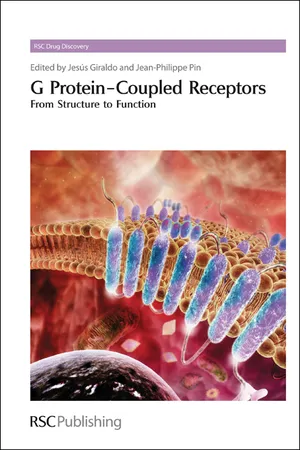
G Protein-Coupled Receptors
From Structure to Function
- Jesus Giraldo, Jean-Philippe Pin, Jesus Giraldo, Jean-Philippe Pin(Authors)
- 2011(Publication Date)
- Royal Society of Chemistry(Publisher)
Enquiries concerning reproduction outside the terms stated here should be sent to The Royal Society of Chemistry at the address printed on this page. The RSC is not responsible for individual opinions expressed in this work. Published by The Royal Society of Chemistry, Thomas Graham House, Science Park, Milton Road, Cambridge CB4 0WF, UK Registered Charity Number 207890 For further information see our web site at www.rsc.org Preface G Protein-Coupled Receptors (GPCRs) are membrane proteins that share a common structure consisting of seven transmembrane helices connected by extracellular and intracellular loops. GPCRs are at the centre of current pharmacological research, from both an academic and an industrial side. The reasons for this arise from the ubiquitous presence of GPCRs in live systems and the many cellular functions they regulate. These receptors are encoded by the largest gene family in mammalian genomes, representing more than 3% of genes. Not surprisingly, these proteins have evolved to recognize a wide variety of signals, from photons to large proteins, through various types of neurotransmitters and hormones. Not only are GPCRs expressed in every cell, but each cell type is likely to express a defined subset of these receptors, thus offering ways to precisely target specific cell types with synthetic com-pounds acting on these receptors. It is therefore not surprising that GPCRs represent 30% of all identified drug targets and remain major targets for drug development programmes. Over the last decade and particularly its second half, the GPCR field has experienced an explosion of knowledge from many of the currently available technologies. From crystallography, several structures of GPCRs either free or in complex with antagonists and agonists have been solved, providing researchers with a reliable basis for the construction of mechanistic hypothesis for the functional differentiation between ligands.
- Kenneth H. Lundstrom, Mark L. Chiu(Authors)
- 2005(Publication Date)
- CRC Press(Publisher)
Their functions are extremely diverse as they regulate many physiological processes related to neurological and neurodegenerative functions, cardiovascular mechanisms, and metabolic control. 1 GPCRs can also act as co-receptors for cellular entry of the human immune de fi ciency virus (HIV). 2 Extracellular signaling is triggered through hormones, neurotransmitters, chemokines, calcium ions, light, and odorants and leads to the activation of GPCRs, resulting in a cascade of signaling through various cellular pathways. 3 The GPCR designation relates to the intracellular signaling through guanine nucleotide-binding proteins (G proteins) although alternative mechanisms have been described recently. 4 The estimated number of GPCRs in the human genome is 800. A large number belong to the subfamily of odorant receptors. Due to their many essential physio-logical functions, GPCRs play an important role in drug discovery. More than 60% of the current drug targets are focused on GPCRs and a quarter of the 200 top selling drugs are based on GPCRs. 5 The various indications and the more detailed mecha-nisms of drug and GPCR interactions are described in subsequent chapters. Common to all GPCRs is their topology of seven transmembrane-spanning domains (7TMs) consisting of a -helical structures and they are therefore also called 7TM receptors. Each GPCR possesses an extracellular N-terminus and an intracellular C-terminus with various intracellular and extracellular loop regions connecting the transmembrane regions. This chapter will describe the different families of GPCRs, their functions, and their couplings to G proteins. Alternative signaling mechanisms for GPCRs are also discussed. Finally, the cellular traf fi cking of GPCRs is described. 2.2 FAMILIES OF GPCRs The overall amino acid sequence homology among GPCRs is rather low. Certain homologous regions arise from sequence alignment of the 7TMs within the GPCR families.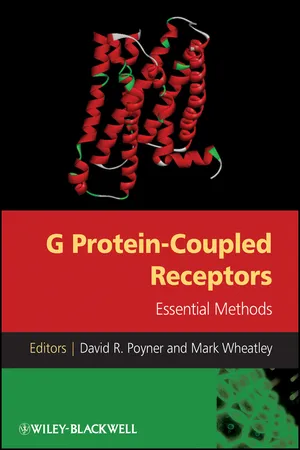 eBook - PDF
G Protein-Coupled Receptors
Essential Methods
- David Poyner, Mark Wheatley, David Poyner, Mark Wheatley(Authors)
- 2009(Publication Date)
- Wiley(Publisher)
GPCRs form complexes with various proteins from initial origins at the endoplasmic reticulum (ER) through to their degradation. The process of maturation and piloting of some GPCRs from the ER to the cell sur- face has been shown to require single transmembrane domain chaperone proteins. In addition, these proteins may influence GPCR effector function. Differential func- tional activity is displayed by the calcitonin receptor-like-receptor, as it shows different peptide-responsive phenotypes depending on the interaction with three isoforms of the receptor activity-modifying proteins (RAMP1, RAMP2/3) at the ER [1–3]. Another recently discovered single-transmembrane protein, the melanocortin receptor acces- sory protein, has been shown to be important for proper cell membrane integration and signalling capabilities of the melanocortin receptor 2 (MC2R) [4, 5]. Moreover, mutations in this protein have exhibited effects on the function of MC2R [4, 6]. The binding of ligands, such as agonists and inverse agonists, is necessary to increase G Protein Coupled Receptors Edited by David R. Poyner and Mark Wheatley 2010 John Wiley & Sons, Ltd. 112 CH 6 MONITORING GPCR–PROTEIN COMPLEXES or reduce the level of basal receptor activity respectively [7]. Upon activation of a GPCR, the onset of the deactivation/desensitization phase occurs rapidly and com- monly through the interaction with a family of kinases, the G protein-coupled receptor kinases (GRKs) [8]. These proteins phosphorylate serine and/or threonine residues on the carboxy-terminal tail or third intracellular loop and dramatically increase the binding affinity for a family of multifunctional adaptor proteins, the β-arrestins [9, 10]. Interactions with β-arrestins are being studied intensively due to their wide-ranging list of associated functions [11, 12]. Interactions between β-arrestin 1 or 2 and GPCRs are primarily implicated in desensitization and internalization of activated GPCRs. eBook - ePub
Progress, Pioneers and Process
Studies in Physiology and Genetic Medicine
- Moyra Smith(Author)
- 2018(Publication Date)
- WSPC(Publisher)
Gilman and Rodbell discovered a three-step process; the first step required activation of the specific receptor by a specific ligand or agonist that they defined as a discriminator. The final step in the process required a molecule that determined the intracellular effect of the hormone. This molecule was designated as an amplifier. Rodbell’s group discovered that a second, intermediate step occurred and that this step involved the action of a transducer. The transducer turned out to be proteins that were coupled to GTP. These proteins were referred to as G proteins.Subsequent work in the laboratories of Gilman and Rodbell involved isolation of the G proteins and analyses of their functions. G proteins were found to exist in active and inactive forms.Cyclic AMP, the earliest identified second messenger, was also shown to activate intracellular protein kinases, and this subsequently led to a signal that was transmitted to the nucleus to activate a specific protein cyclic AMP response element (CREB). Phosphorylated CREB plays a key role in activating gene transcription.7.3G Protein-Coupled ReceptorsIt is now known that G Protein-Coupled Receptors constitute a large family of proteins — almost 1000 — and that these proteins bind to and are activated by a range of molecules including ions, photons, and small organic molecules. The 2012 Nobel Prize in Chemistry was awarded to Robert Lefkowitz and Brian Kobilka for studies on the structure and function of the G Protein-Coupled Receptors.In his Nobel lecture Lefkowitz described early work in his laboratory to investigate binding of radioactive ligands to cellular receptors, specifically the beta-adrenergic receptor, and the alpha- adrenergic receptor. Their subsequent studies revealed that the binding of a ligand to the agonist receptor then stimulated binding to an intracellular protein — the G protein. The activities of G proteins could be followed using radiolabeled guanosine nucleotide.Tagging of the adrenergic receptors with a specific ligand also facilitated its subsequent purification. One complication that occurred was that the tagged receptors often also contained membrane components. Affinity chromatography ultimately proved useful in the purification of small quantities of adrenergic receptor proteins and short stretches of receptor amino acid sequence could be determined from the affinity purified proteins. The stretches of amino acid sequence were decoded into mRNA sequences and these were used to isolate cDNA clones. Ultimately the complete nucleic acid sequence that encoded adrenergic receptors was determined. The structure of these G protein-coupled adrenergic receptors was found to be highly similar to the structure of rhodopsin, the light sensing receptor in the eye. eBook - ePub
- George Fink, Donald W. Pfaff, Jon Levine(Authors)
- 2011(Publication Date)
- Academic Press(Publisher)
Fig. 2.5 , the first levels of GPCR regulation are gene transcription, translation and post-translational processing, which may be regulated by the ligand itself and by other hormones and factors that regulate the neuroendocrine system. The synthesized receptor may also be further regulated by other sets of proteins in its trafficking to the membrane of the cell. On arrival at the cell surface the GPCR may associate with numerous membrane and intracellular proteins, which will potentially alter ligand affinity, ligand selectivity, signaling, cytoskeletal and extracellular matrix interactions and internalization. In addition, GPCRs may undergo homo- or hetero-oligomerization to induce transactivation of other receptors or lead to signal modification. GPCR phosphorylation, acetylation, palmitoylation, ubiquitination and myristoylation also modify receptor functional properties. Clearly, the integrated effects of all these possibilities in regulating the neuroendocrine system are vast.FIGURE 2.5 Potential mechanisms for regulation of GPCRs. Schematic describing how GPCRs can be regulated at many levels: from their biosynthesis (gene transcription, translation and post-translational processing) through their trafficking to the cell membrane and, once at the cell surface, through oligomerization and interactions with various other non-receptor proteins or through modifications such as differential phosphorylation.Differential Receptor Phosphorylation
The effects of differential receptor phosphorylation on signaling events have recently been reviewed. 29 Using the M3 muscarinic receptor as an example, characteristic fingerprints of receptor phosphorylation were demonstrated in different cells, each with its own spectrum of kinases. Each fingerprint imparts both a different flavor of signaling and a different phenotype of effects in cells. The M3 receptor has also been mutated so that certain types of phosphorylation cannot take place, and when transgenically knocked into mice they have produced differential phenotypes, demonstrating the importance of differential phosphorylation in regulation of cellular responses to GPCR activation. 29 eBook - PDF
G Protein-coupled Receptors
Molecular Pharmacology
- Georges Vauquelin, Bengt von Mentzer(Authors)
- 2008(Publication Date)
- Wiley(Publisher)
Yet, there is increasing evidence that they form dimers and physically interact with a variety of other membrane proteins. These include other receptors as well as non-receptor membrane proteins that affect GPCR cell surface expression, binding and functional properties (Figure 139). In certain situations, this has clearly been shown to alter the pharmacological profile of the GPCR. Figure 138 G protein-dependent pathways for GPCR-mediated MAP kinase stimulation. Note that GPCRs can simultaneously employ multiple mechanisms. Figure 139 GPCR dimerization and association with chaperones may alter the pharmacological profile. Reprinted from Trends in Pharmacological Science , 20 , Mohler, H. and Fritschy, J. M., GABAB receptors make it to the top - as dimers, 87–89. Copyright (1999), with permission from Elsevier. 143 Many GPCRs contain sequence motifs that direct protein–protein interactions and, therefore, have the theoretical capacity to interact with a wide range of other proteins. The yeast-2 hybrid technique (Figure 140) is well suited to monitor interactions between cytoplasmic GPCR regions and proteins within the cell. For this purpose, intracellular loops and the C-terminal tails of GPCRs can be isolated and used as ‘bait’ for cytosolic proteins in yeast-2 hybrid–protein interaction screens. Using this approach, a considerable range of interactions (summarized in Figure 141) has been reported. Yet the full functional and physiological significance of some of them is not completely understood. However, some appear to affect the localization, signalling specificity, and in some cases, the pharmacological profile of GPCRs. GPCR dimerization GPCRs are traditionally regarded to exist and to be fully functional as monomers. Yet, recent findings suggest that they also exist as homo- as well as heterodimers (i.e. dimers between, respectively, the same and different receptor molecules).
- Gerhard Krauss(Author)
- 2014(Publication Date)
- Wiley-VCH(Publisher)
A subset of lipid rafts, the caveolae, are characterized by the presence of the protein caveolin at the cytoplasmic side. By assembling various components of the GPCR signaling path within such microdomain as supramolecular complexes, a high local concentration of the reaction partners of the signaling chain is achieved. Such supramolecular assemblies are thought to ensure a high efficiency and specificity of signaling. For example, γ-aminobutyric acid (GABA) receptors (which are GPCRs) have been shown to exist in higher complexes comprised of receptor oligomers, G i subunits, adenylyl cyclase and K + channels [17]. 7.5.4 Structural and Mechanistic Aspects of the Switch Function of G Proteins The reaction cycle of the heterotrimeric G proteins involves the formation and breaking of numerous protein–protein contacts. In a dynamic way, protein–protein interactions are formed and resolved during the cycle, defining distinct states of the G protein and leading to new functions and reactions. Currently, a wealth of structural information is available for most of the distinct functional states of the heterotrimeric G proteins. 7.5.4.1 Coupling of the Activated Receptor to the G Protein How an activated receptor activates the downstream G protein can be inferred mainly from the recent studies on the β 2 AR in complex with a G αβγ heterotrimer (Section 7.3.2.3). These studies indicate a major involvement of the transmembrane helices TM5, TM7 and the intracellular loop ICL3 in the recognition and stabilization of the complex with G αβγ. In this complex, the heterotrimer contacts the GPCR via the G α -subunit. Rhodopsin: GPCR activated by light in the vision process Light-induced activation of rhodopsin triggers reorientation of TM helices 3, 6, and 7. 7.5.4.2 Structure of the G α -subunit The switch function of the α-subunit of the heterotrimeric G proteins is founded on the change between an active G α ·GTP conformation and an inactive G α ·GDP conformation eBook - ePub
Biochemical Targets of Plant Bioactive Compounds
A Pharmacological Reference Guide to Sites of Action and Biological Effects
- Gideon Polya(Author)
- 2003(Publication Date)
- CRC Press(Publisher)
5 Plasma membrane G Protein-Coupled Receptors
5.1 Introduction – signalling via heterotrimeric G proteins
A major hormone signal transduction mechanism involves heterotrimeric guanyl nucleotide-binding protein (G protein) complexes. Hormone binding to a specific plasma membrane (PM)-located G protein-coupled receptor (GPCR) gives a hormone–receptor complex (H–R) that interacts with a PM-located heterotrimeric G protein complex (GDP–G α–G β–G γ) in which the guanyl nucleotide guanosine 5 ´-diphosphate (GDP) is bound to the G α subunit. This H–R complex–G protein interaction causes release of G βG γ, dissocia tion of GDP and replacement of GDP on G α with guanosine 5 ´-triphos-phate (GTP) to form an “activated” G α–GTP complex. The active G α–GTP complex activates downstream “effector” enzymes depending upon the specific type of G α (as detailed below). The activation process is reversed through the GTP hydrolysing (GTPase) activity of the G α subunit generating G α–GDP, w hich can then ercombine with G βG γ to re-form the inactive G α–GDP–G βG γ complex.This reversible activation/deactivation process can be summarized as follows: H +PM R¨H–R¨H–R–G α–GDP–G β–G γ interaction¨H–R +G α–GTP +G β–G γ complex¨ active G α–GTP activates effector proteins¨downstream effects; deactivation occurs via the GTPase activity of G α so that G α–GTP¨G α–GDP +Pi ¨G α–GDP binds G β–G γ¨the inactive GDP–G α–G β–G γ complex is re-formed.The activation of effector proteins by G α–GTP complexes to ultimately cause the cellular responses to the initial hormone signal depends upon the specific type of G α subunit activated. A variety of G proteins have been resolved and characterized. In addition to their effector protein specificity, the G α subunits can be distinguished by their modification by particular bacterial toxins. Thus the Vibrio cholerae (cholera) toxin adenosine 5 ´-diphosphate (ADP)-ribosylates G αs, G αt and G αolf entities, ther eby inhibiting their GTPase activity and keeping these proteins in the persistently activated G α–GTP form. The Bordetella pertussis (whooping cough) toxin (pertussis toxin) ADP-ribosylates G αi, G αo, G αg and G αt entities, thereby preventing GDP release and keeping these proteins in the inactive GDP– G αs–G β–G γ form. The effector specificities of the different G α proteins and their differential effects on membrane potential and the cytosolic levels of “second messengers” such as adenosine 3 ´,5 ´-cyclic monophosphate (cAMP), inositol-1,4,5-triphospate (IP3 ) and Ca2+ eBook - ePub
From Molecules to Networks
An Introduction to Cellular and Molecular Neuroscience
- Ruth Heidelberger, M. Neal Waxham, John H. Byrne, James L. Roberts(Authors)
- 2009(Publication Date)
- Academic Press(Publisher)
et al ., 2000). These significant structural distinctions support the idea that mGluRs evolved separately from other GPCRs. The third intracellular loop, thought to be the major determinant responsible for G-protein coupling of mGluRs is relatively small, whereas the C-terminal domain is quite large. The coupling between mGluRs and their respective G proteins may be through unique determinants that exist in the large C-terminal domain.Currently, eight different mGluRs can be subdivided into three groups on the basis of sequence homologies and their capacity to couple to specific enzyme systems. Both mGluR1 and mGluR5 activate a G protein coupled to phospholipase C. mGluR1 activation can also lead to the production of cAMP and arachidonic acid, by coupling to G proteins that activate adenylyl cyclase and phospholipase A2 (Aramori and Nakanishi, 1992 ). mGluR5 seems more specific, activating predominantly the G-protein-activated phospholipase C.The other six mGluR subtypes are distinct from one another in favoring either trans -1-aminocyclopentane-1,3-dicarboxylate (mGluR2 , mGluR3 , and mGluR8 ) or 1,2-amino-4-phosphonobutyrate (mGluR4 , mGluR6 , and mGluR7 ) as agonists for activation. mGluR2 and mGluR4 can be further distinguished pharmacologically by using the agonist 2-(carboxycyclopropyl)glycine, which is more potent at activating mGluR2 receptors (Hayashi et al ., 1992). Less is known about the mechanisms by which these receptors produce intracellular responses; however, one effect is to inhibit the production of cAMP by activating an inhibitory G protein.mGluRs are widespread in the nervous system and are found both pre- and postsynaptically. Presynaptically, they serve as autoreceptors and appear to participate in the inhibition of neurotransmitter release. Their postsynaptic roles appear to be quite varied and depend on the specific G protein to which they are coupled. mGluR1 activation has been implicated in long-term synaptic plasticity at many sites in the brain, including long-term potentiation in the hippocampus and long-term depression in the cerebellum (see Chapter 19 eBook - ePub
General and Molecular Pharmacology
Principles of Drug Action
- Francesco Clementi, Guido Fumagalli, Francesco Clementi, Guido Fumagalli(Authors)
- 2015(Publication Date)
- Wiley(Publisher)
Molecular Interventions, 2, 293–307.- Rosenfelt R., Devi L.A. (2010). Receptor heteromerization and drug discovery.
Trends in Pharmacological Sciences, 31, 124–130.Intracellular Receptors
- Gemain P., Staels B., Dacquet C., Spedding M., Laudet V. (2006). Overview of nomenclature of nuclear receptors. Pharmacological Reviews, 58, 685–704.
- Mor A., White M.A., Fontoura B.M. (2014). Nuclear trafficking in health and disease. Current Opinion in Cell Biology, 28C, 28–35. doi: 10.1016/j.ceb.2014.01.007.
- The British Pharmacological Society (2009). Nuclear receptors. British Journal of Pharmacology, 158, S157–S167.
Ligand-gated Ion Channels
- Calimet N., Simoes M., Changeux J.P., Karplus M., Taly A., Cecchini M. (2013). A gating mechanism of pentameric ligand-gated ion channels. Proceeding of the National Academy of Sciences USA, 110, 3987–3996.
- Changeaux J.P., Edelstein S.J. (1998). Allosteric receptors after 30 years. Neuron, 27, 959–980.
- Lodge D. (2009). The history of the pharmacology and cloning of ionotropic glutamate receptors and the development of idiosyncratic nomenclature. Neuropharmacology, 56, 6–21.
- Millar N.S., Gotti C. (2009). Diversity of vertebrate nicotinic acetylcholine receptors. Neuropharmacology, 56, 237–246.
- The British Pharmacological Society (2009). LGIC. British Journal of Pharmacology, 158, S103–S121. doi: 10.1111/j.1476-5381.2009.00502.
G Protein-Coupled Receptors
- Lagerstrom M.C., Schioth H.B. (2008). Structural diversity of G-protein-coupled receptors and significance for drug discovery. Nature Reviews in Drug Discovery, 7, 339–357.
- Pierce K.L., Premont R.T., Lefkowitz R.J. (2002). Seven-transmembrane receptors. Nature Reviews Molecular Cellular Biology, 3, 639–649.
- The British Pharmacological Society (2009). 7TM receptors. British Journal of Pharmacology, 158, S5–S101.
Catalytic Receptors
- Garbers D.L., Chrisman T.D., Wiegn P., Katafuchi T., et al. (2006). Membrane guanylyl cyclase receptors: an update. Trends in Endocrinology and Metabolism
Index pages curate the most relevant extracts from our library of academic textbooks. They’ve been created using an in-house natural language model (NLM), each adding context and meaning to key research topics.

