Biological Sciences

Water as a Solvent
Water is a versatile solvent due to its polar nature, allowing it to dissolve a wide range of substances. In biological systems, water's solvent properties are crucial for transporting nutrients, removing waste, and facilitating chemical reactions within cells. The ability of water to form hydrogen bonds with other molecules contributes to its effectiveness as a solvent in biological processes.
Written by Perlego with AI-assistance
Related key terms
1 of 5
12 Key excerpts on "Water as a Solvent"

- Zdzislaw E. Sikorski(Author)
- 2006(Publication Date)
- CRC Press(Publisher)
Due to the high quantity of water in the cells of all organisms, temperature fluctuation within cells is minimized. This feature is of critical biological importance because most biochemical reactions and macro-molecular structures are sensitive to temperature. The unusual thermal properties of water make it a suitable environment for living organisms, as well as an excellent medium for the chemical processes of life. 3.2.5 W ATER AS A S OLVENT Many molecular parameters, such as ionization, molecular and electronic structure, size, and stereochemistry, will influence the basic interaction between a solute and a solvent. The addition of any substance to water results in altered properties of that substance and of the water itself. Solutes cause a change in water properties because the hydrate envelopes that are formed around dissolved molecules are more organized and therefore more stable than the flickering clusters of free water. The properties of solutions that depend on a solute and its concentration are different from those of pure water. The differences can be seen in such phenomena as the freezing point depression, boiling point elevation, and increased osmotic pressure of solutions. The polar nature of the water molecule and the ability to form hydrogen bonds determine its properties as a solvent. Water is a good solvent for charged or polar compounds and a relatively poor solvent for hydrocarbons. Hydrophilic compounds interact strongly with water by an ion–dipole or dipole–dipole mechanism, causing changes in water structure and mobility and in the structure and reactivity of the solutes. The interaction of water with various solutes is referred to as hydration. The extent and tenacity of hydration depends on a number of factors, including the nature of the solute, salt composition of the medium, pH, and temperature. eBook - PDF
- Rose Marie O. Mendoza(Author)
- 2019(Publication Date)
- Arcler Press(Publisher)
The high dormant heat of evaporation provides resistance to dehydration and significant evaporative cooling. Owing to its small size, polarity, and high dielectric constant, water is an excellent solvent, particularly for ionic and polar compounds and salts (Rao, Biochemical Characteristics of Water 45 1972; Oss & Good, 1996; Van Oss, Giese, & Good, 2002; McMurry, 2014). The solvent properties of water are without any doubt so impressive that it is hard to get really pure water. Water ionizes and permits easy exchange of proton among molecules, and as such contributes to the richness of the ionic interactions in biology. Water is structured around molecules which permit them to sense as well as be sensed at a distance. The distinctive hydration properties of water towards biological macromolecules (especially nucleic acids and proteins) to a large extent help in determining their three-dimensional structures, and consequently, their functions in solution (Espinosa, Molins, & Lecomte, 1998; Espinosa, Lecomte, & Molins, 1999; Espinosa, Alkorta, Rozas, Elguero, & Molins, 2001; Campbell, Farrell, & McDougal, 2018). 2.2 STRUCTURE The molecular formula of water is H 2 0; however, the hydrogen atoms are continually exchanged owing to the processes of protonation/de-protonation. Both acids and bases act as catalysts for this process (Christian, 2014). Even when this exchange of protons is slowest (approximately at pH 7), the typical time for which a water molecule exists between losing or gaining a proton is just around a millisecond. Nevertheless, this brief period is quite longer than the timescales that come across during investigations into hydrogen bonding of water or its hydration properties; hence, the water molecule is generally treated as a permanent structure (Stanley, & Teixeira, 1980; Abramov, 1997). eBook - PDF
Water and Life
The Unique Properties of H2O
- Ruth M. Lynden-Bell, Simon Conway Morris, John D. Barrow, John L. Finney, Charles Harper, Ruth M. Lynden-Bell, Simon Conway Morris, John D. Barrow, John L. Finney, Charles Harper(Authors)
- 2010(Publication Date)
- CRC Press(Publisher)
Many proteins make use of bound water molecules as functional units, like snap-on tools, to mediate interactions with other proteins or with substrate molecules, or to transport protons rapidly to locations buried inside the protein. It seems plain that water must itself be regarded as a biomolecule—and also as a biosupermole-cule—in the sense that aggregates of H 2 O molecules perform subtle biochemical tasks in a manner comparable to the behavior of lipid membranes or protein assemblies. Here I review the case for adopting this perspective. I shall try to highlight throughout the dis-tinctions between generic and specific behaviors of biological water. That is, some of its roles and properties may be expected from any small-molecule liquid solvent. Others depend on water’s hydrogen-bonding capacity, but not in a way that could not obviously also be fulfilled by other hydrogen-bonded liquids. But some of water’s biochemical functions seem to be quite unique to the H 2 O molecule. From an astrobiological perspective, the question is then whether these latter roles are optional or essential for any form of life to be tenable. 4.1 Water as a Solvent Water is not like other liquids, but neither is it wholly different. The key characteristic that dis-tinguishes it from a typical simple liquid such as liquid argon is that hydrogen bonds link water molecules in a directional manner into a three-dimensional network. The short-ranged structure, as revealed most powerfully by neutron scattering and characterized by the radial distribution func-tion, is thus dominated by the attractive forces between molecules, whereas, in a simple liquid, it is the packing effects due to repulsive interactions that determine the local environment around each molecule. eBook - ePub
Green Sustainable Process for Chemical and Environmental Engineering and Science
Green Solvents for Environmental Remediation
- Rajender Boddula, Abdullah M. Asiri, Dr Inamuddin(Authors)
- 2020(Publication Date)
- Elsevier(Publisher)
[7] . Polar- and ionic-bonded materials are able to dissolve in water quickly under room conditions, although this dissolution slows down for polar compositions at high temperatures.Water's abundance and availability, in some geographic locations at least, makes it readily available and cheap to extract from the environment in modest quantities for industrial processes. Its widespread accessible in its natural form at various salinities, plus its nontoxic qualities, inexpensive procurement, and its inability to combust all make it a desirable and easy solvent to handle. Furthermore, because water remains in liquid form at standard pressure conditions and exists in that state over a useful temperature range (0–100 °C) it is convenient to handle and apply in many industrial-scale chemical and physical processes. Water also has substantial capabilities as a transportation medium; it is able to transport miscellaneous materials, including valuable nutrients. In addition, many important and useful biological processes are able to occur and flourish in the presence of water, indeed, many of the processes that make life possible on Earth. On a large environmental scale, water helps to stabilize temperatures in most climatic regions around the planet, a feature that many organisms exploit in helping them to survive. It is water's high heat capacity that is primarily responsible for its climatic impacts on a global scale.It is the combination of all these characteristics of water that underpin its viability as a solvent from the microscale to large industrial scales.2: Water's key characteristics as a solvent
Water has the capacity to dissolve and/or solubilize a wider range of materials and substances than most other chemicals [8] . Its solvency is specified partly through its dipole-moment properties; the numerical quantification of its dipole end and the scale of their charge (1.8546 Debyes). This is also related to its relative-permittivity property (symbol “ɛ r ”) which is a relative measure of its polarity. It is relative to free space (ɛ 0 = 1.85 × 10− 12 F/m). The relative static permittivity of water is high, about 80 at room temperature, compared to about 2 for a C6-alkane in such conditions. The polarizability property of water (symbol “π⁎ ”) also influences its capacity as a solvent. Although water is a very polar molecule, it is much less so than many hydrocarbons, such as alkanes. Polarizability is usually measured in cubic centimeters or angstroms cubed (10− 24 cm3 ) [9] and water displays some anisotropy in its values depending on its ionic constituents [10] eBook - ePub
Biomolecular Electronics
Bioelectronics and the Electrical Control of Biological Systems and Reactions
- Paolo Facci(Author)
- 2014(Publication Date)
- William Andrew(Publisher)
The recognition of the role of water as one of the main players in biology refers exactly to its role not only as the milieu of choice for life to exist, rather as an essential ingredient for biological phenomena, reactions and systems to take place. In this sense, water should really be considered itself a biological molecule as in the case of any other biomolecule or biomolecular assembly that has its own native structure and functional properties thanks exactly to the involvement of water. Water not only drives and stabilizes molecular structures, but is actively involved in biomolecular functionality, providing, probably, the simplest, paradigmatic exemplification of system biology, where biological structure and function are not inherent to the single biomolecule, but rather to the macromolecule-water system. In other terms, it is meaningless to consider native biomolecular structure and function separately from the presence and the role of water since, as such, they would be simply non-existent. Albeit a detailed analysis of the role of water in biomolecular systems is beyond the scope of this book, in the next sections we will focus on water’s controlling influence over protein and nucleic acid structure and function, neglecting that over cellular activity. The interested readers will find exhaustive readings about the role of water in cellular activity in the literature (see, e.g., Chaplin 2004). 3.4. Water and biomolecules As we have mentioned, water is an integral part of many biomolecules. In particular, water–protein interactions determine and shape the free-energy landscape that governs the folding, structure, stability and activity of proteins (Halle, 2004). In what follows we will see in some detail the role of water in these various contexts. 3.4.1. Protein folding Proteins fold rapidly into well-defined three-dimensional shapes that constitute native structures. These depend on the primary structure, or sequence, of their amino acids eBook - PDF
Water in Biological and Chemical Processes
From Structure and Dynamics to Function
- Biman Bagchi(Author)
- 2013(Publication Date)
- Cambridge University Press(Publisher)
We have also discussed how water surrounding these biomolecules facilitates easy conformational fluctuations (for proteins and DNA) and the large-amplitude motions that are often required for biological function, such as intercalation of an anti-tumor drug into DNA. In order to carry out such functions, water molecules often act in large numbers, even in a collective manner. They seem to efficiently use the enthalpy–entropy balance to minimize the free-energy barrier for such processes. Without water ’ s contribution (at a molecular level), most of the cellular processes would be impossible [1]. As the human body constantly consumes a large amount of water every day, we are constantly becoming dehydrated. No other fluid can substitute for water. Specifically, it initiates the digestion of proteins, fats, and carbohydrates through hydrolysis. Water and enzymes work together to maintain optimum digestion, nutrient absorption, and health. The scope of this chapter, in principle, is enormous. It spans from individual biological processes (whose number is almost countless) to a general view of life as articulated in Darwin’ s theory of evolution. In an individual biological process, water can actively participate (as in many enzymatic reactions dis- cussed below) or facilitate the change, as in the intercalation of a drug into DNA. Recent studies have revealed the role of water in both DNA transcription and translation through a process known as kinetic proofreading, which is a term to describe lack of error in protein synthesis. In the following we discuss these topics from a molecular perspective that has been beginning to emerge in recent years. 98 An essential chemical for life processes: water in biological functions 7.2 Role of water in enzyme kinetics Enzymes are well recognized as biological catalysts. eBook - PDF
Low Temperature Biology of Foodstuffs
Recent Advances in Food Science
- John Hawthorn, E. J. Rolfe(Authors)
- 2016(Publication Date)
- Pergamon(Publisher)
Their specific or nonspecific interactions with water molecules may alter the structure of water near them. In determining the solubility of many substances and the prop-erties of their aqueous solutions, the changes in water structure often have a more decisive effect than the direct solvent-solute interactions themselves. Depending on the nature of the forces of interaction, and on the resultant changes in water structure, one can distinguish three classes of solutes 10 : (a) electrolytes, (b) polar but unionized solutes, usually cap-able of hydrogen bonding, (c) nonpolar solutes. Many substances, of both low and high molecular weight, contain different functional groups belong-ing to two or all of these categories. They can be considered as a fourth class. Solution of electrolytes The size of inorganic ions is usually small. Simple considerations of electrostatics indicate that ions must exert a strong effect on the surround-ing water molecules. The concept that ions are hydrated, i.e. surrounded by oriented and immobilized water molecules, has been accepted for a long time. With the development of structural ideas about water, the nature of hydration and of the structure of water around ions could be elaborated in more detail. The structure of water around ions has been discussed by Frank and Wen 3 , and their ideas have served as the basis for later developments in theory 14 . According to them, water around ions is divided into three Structure of Water and of Aqueous Solutions 11 concentric regions {Figure 6). Next to the ion (region A), water molecules are strongly oriented due to the electrostatic field of the ion. The dipole axis of the water molecule (bisecting the H—O—H angle) is directed radially. Although water molecules in this region are not hydrogen-bonded to each other, they are immobilized, i.e. their entropy is low, and they also have a low energy. eBook - PDF
Reaction Rate Constant Computations
Theories and Applications
- Keli Han, Tianshu Chu, Keli Han, Tianshu Chu(Authors)
- 2013(Publication Date)
- Royal Society of Chemistry(Publisher)
The application areas outlined above require an understanding of the role of water under conditions ranging from near ambient, which are of interest for biology, biochemistry and medicine, to near critical and supercritical, import-ant for green chemistry technologies and nuclear power engineering. In the first part of this chapter we provide an overview of the physical and solvent properties of water that may influence the mechanism and kinetics of radical reactions. In many applications the role of hydrogen bonding is often ignored because of experimental difficulties in characterising the aqueous so-lution on a microscopic level. Computational tools are less limited. Com-parative molecular simulations have proved to be useful for the generation of a comprehensive view of solvent structure and dynamics depending on the con-ditions of temperature and pressure. In the second part of this chapter the methodology used in simulations to analyse hydrogen bonding is presented. Then we demonstrate how insight into the hydrogen bonding may improve our understanding of the free radical behaviour, providing a guide for experiment and modelling kinetics of radical reactions in water. In the last part we focus on the Noyes relationship and its application to the assessment of rate constants at temperatures that are important for green chemistry technologies and nuclear power engineering. Use of the Noyes equation is advantageous because one can explicitly model solvent effects on diffusion and chemical transformation of reactants. We conclude with a reference to reactions involving water as a reactant. These reactions may significantly affect the chemistry of aqueous systems at high temperatures. Role of Water in Radical Reactions: Molecular Simulation and Modelling 353 15.2 Physical and Solvent Properties of Water The physical and solvent properties of water depend strongly on temperature and pressure. eBook - PDF
- Paul J Kramer(Author)
- 2012(Publication Date)
- Academic Press(Publisher)
It is a good solvent for electrolytes because the attrac-tion of ions to the partially positive and negative charges on water molecules results in each ion being surrounded by a shell of water molecules which keeps ions of opposite charge separated (Fig. 1.8). It is a good solvent for many nonelectrolytes because it can form hydrogen bonds with amino and carbonyl groups. It tends to be adsorbed, or bound strongly, to the surfaces of clay micelles, cellulose, protein molecules, and many other substances. This charac-teristic is of great importance in soil and plant water relations. Explanation of Unique Properties It was realized early in this century that the unusual combination of properties found in water could not exist in a system consisting of individual H 2 0 mole- 10 7. Water: Its Functions and Properties Fig. 1 .7. Diagram showing approximately how water molecules are bound together in a lattice structure in ice by hydrogen bonds. The dark spheres are oxygen atoms, and the light spheres are hydrogen atoms. (After Buswell and Rodebush, 1956.) cules. At one time, it was proposed that water vapor is monomeric H 2 0 , ice is a trimer ( H 2 0 ) 3 consisting of three associated molecules, and liquid water is a mixture of a dimer ( H 2 0 ) 2 and a trimer. Now the unusual properties are ex-plained by assuming that water molecules are associated in a more or less ordered structure by hydrogen bonding. Ice is characterized by an open crystalline lattice and liquid water by increasing disorder, and in the vapor phase the individual molecules are not associated at all. The properties and structure of water have been treated in many articles and books, including Kavanau (1964), Eisenberg and Kauzmann (1969), and a multivolume compendium edited by Franks (1975). Recent views are presented by Edsall and McKenzie (1978) and Stillinger (1980). eBook - PDF
- John Crowe, John Crowe, James S. Clegg(Authors)
- 2012(Publication Date)
- Academic Press(Publisher)
I. Wate r i n Hydrate d Cell s This page intentionally left blank Dry Biological Systems OVERVIEW OF OUR UNDERSTANDING OF INTRACELLULAR WATER IN HYDRATED CELLS Keith D. Garlid Department of Pharmacology and Therapeutics Medical College of Ohio Toledo, Ohio This symposium will treat the subject of biological adaptation to environmental extremes of lowered water activity. Systems capable of such adaptation provide a stimulating and instructive contrast for the mammalian biologist who deals with systems designed to protect their tissues against such extremes. On our aqueous planet, all dried biological systems are either coming from or moving toward a state of hydration. Therefore it is appropriate to begin with a review of our knowledge of the state of water in fully hydrated cells. I. TIME AND DISTANCE SCALES In a solution of pure liquid water at 25° C, the average distance between nearest neighbor oxygen atoms is about 2.85A. Individual hydrogen bonds are breaking and reforming on a time scale of picoseconds. In a NaCl solution, the Na ion is about 1.0 A in diameter and the polar water molecules have a tendency to orient themselves in the electric field created by the ions. Again, the occupation time of a given water molecule in a given hydration shell is extremely short. Long-er times, on the order of 10 8 seconds, may come into play when water molecules interact with strong H-bonding groups on proteins and polysaccharides. It is possible to study such fast interactions by means of nuclear magnetic resonance spectroscopy, infrared spectroscopy, and other physical meth-ods. (See review by Cooke and Kuntz, 1974). This rewiew will deal with equilibrium properties of » Copyrigh t © 197 8 by Academi c Press , Inc . All rights of reproductio n i n an y for m reserved . ISBN 0-12-198080-4 4 Keit h D. Garli d biological aqueous solutions. That is, we shall focus on the time-averaged (milliseconds or longer) properties of biolog-ical water. eBook - PDF
Water Relations of Foods
Proceedings of an International Symposium held in Glasgow, September 1974
- R Duckworth(Author)
- 2012(Publication Date)
- Academic Press(Publisher)
Section I Water and its Molecular Interaction with Other Constituents of Biological Systems This page intentionally left blank Water, Ice and Solutions of Simple Molecules F. FRANKS Biosciences Division, Unilever Research Laboratory Colworth/ Welwyn, Colworth House, Sharnbrook, Bedford, England I. INTRODUCTION Most foods are composed of complex aqueous polymer mixtures. Thus the polymeric raw materials include carbohydrates, proteins and lipids and they are supplemented with minor, small-molecule components such as salts, sugars, flavours and preservatives. The properties of such mixtures, e.g. struc-ture, texture, storage life, depend intimately on the interactions of the com-ponents with one another and these interactions are in turn closely linked with the hydration properties of the individual components. It is the purpose of this introductory chapter to set the scene for more detailed discussions of the hydration properties of the individual polymeric species on the one hand and discussions of ehe behaviour of whole food products under various conditions on the other. I shall therefore be concerned mainly with small molecule and ion-water interactions and hopefully leave it to others to show how an insight into the behaviour of small solutes in aqueous solution can provide information about the behaviour of oligomers and polymers built up from such molecules and finally about complex mixtures of such polymers. In any lecture devoted to solute-water interactions it will be expected that some reference is made to the properties of water per se. This is of particular importance when the properties of food materials are considered since food processing is intimately concerned not only with liquid water but with water vapour and ice. II. ICE Much has been written on the subject of ice (Eisenberg and Kauzmann, 1969; Franks, 1972) and how its properties affect the low temperature processing of food materials (Fennema et al., 1973). We are particularly concerned with 3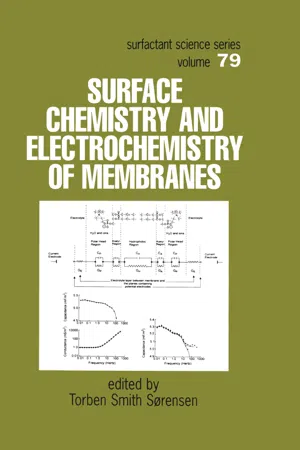
- Torben Smith Sorenson(Author)
- 1999(Publication Date)
- CRC Press(Publisher)
The solute, on the other hand, needs energy to abandon the aqueous phase by breaking the hydrogen bonds. The solvation energy of the solute in the membrane phase compensates the energy expended in the previous stages. Thus, the solubility of the solute into the membrane would be more favorable when the solvation energy of the solute in the membrane phase is higher (more negative). As the solvent-solute interactions, both in the aqueous phase and the mem-brane phase, depend on the size of the molecule, the selectivity of the mem-brane is determined by a combination of size and chemical affinity. If the membrane is homogeneous its behavior as a solubility barrier for all solutes would be directly proportional to the solubility in the membrane phase. In other words, if the membrane is considered as a nonpolar phase only nonpolar solutes would be transferred; if the membrane is hydrophilic only polar solutes would be transferred. However, experimental data of different laboratories in the most varying conditions indicate that polar solutes such as water, urea, ,ethanol or propanol, having different hydrophilic-hydrophibic characters, can permeate lipid membranes to a significant extent. The solubility of water and hydrogen-bonding molecules in the membrane decreases with the diminishing possibilities to make hydrogen bonds and the decreasing dielectrical constant of the surrounding media. In consequence, polar solutes such as glycerol would dissolve in the interface rather than in the hydrocarbon bulk. With the same argument, the diffusion coefficient will differ at the polar head group region and in the bulk nonpolar region. Thus, the mechanism of solubility and of diffusion will differ considerable in those parts of the bilayer normal. In consequence, the permeability coefficient described by Eq.
Index pages curate the most relevant extracts from our library of academic textbooks. They’ve been created using an in-house natural language model (NLM), each adding context and meaning to key research topics.

