Geography

Sustainable Water
Sustainable water refers to the responsible management and use of water resources to meet current needs without compromising the ability of future generations to meet their own needs. This involves ensuring access to clean water, minimizing pollution, and promoting efficient water use through conservation and recycling. Sustainable water practices are essential for environmental preservation and human well-being.
Written by Perlego with AI-assistance
Related key terms
1 of 5
12 Key excerpts on "Sustainable Water"
 No longer available |Learn more
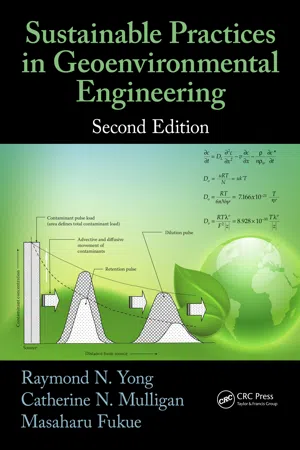
- Raymond N. Yong, Catherine N. Mulligan, Masaharu Fukue(Authors)
- 2014(Publication Date)
- CRC Press(Publisher)
Lack of water and poverty are intimately linked. The dis-cussion in this chapter will focus on the uses (and misuse) of water in the geoenvironment. It will also examine some of the main elements required to address, contain, and manage stressor impacts to water quality as a step toward water management for sustainability of water resources. 3.1.1 Geoenvironment Sustainable Water Management Sustainable Water management can be defined in a similar manner to the definition for sus-tainable development articulated in Section 1.3 in Chapter 1. Accordingly, we can define Sustainable Water management as all the activities associated with usage of water in sup-port of human needs and aspirations, which must not compromise or reduce the chances of future generations to exploit the same resource base to obtain similar or greater levels of yield. In the context of the geoenvironment, with particular focus on geoenvironmental engineering, we limit ourselves to the receiving waters in the geoenvironment, i.e., all water forms contained within the land surface, such as rivers, lakes, ponds, and ground-water (aquifer and soil porewater). 74 Sustainable Practices in Geoenvironmental Engineering 3.1.1.1 Water Availability and Quality Water availability and water quality are central issues in survivability of living species— humans, animals, plants, etc. Lack of water and unacceptable water quality are significant threats to survivability. Water availability or the lack thereof is a topic that is well covered in textbooks devoted to such a subject. The problem of threats to the quality of water in the geoenvironment constitutes the central focus of discussions in this book. It has been said previously, in Chapter 2, that soil contamination does not only mean contamination of the soil solids themselves, but also contamination of the porewater, with possible extension to groundwater and the aquifers through transport of contaminants in the subsoil. eBook - PDF
Challenges of the New Water Policies for the XXI Century
Proceedings of the Seminar on Challenges of the New Water Policies for the 21st Century, Valencia, 29-31 October 2002
- Enrique Cabrera, Ricardo Cobacho(Authors)
- 2004(Publication Date)
- CRC Press(Publisher)
Cities are both a threat to the natural environment and an important resource in their own right. It is also the place where most of people live, that means the place where human needs are the most important. Cities affect the global system through, for example, energy and resource use, waste and polluting emissions. They affect regional systems though river catchments and flows, patterns of land use and stresses on surrounding rural areas which are subject to pollution, development and recreational pressures. The challenge of urban sustainability is to solve both the problems experienced within the cities themselves (the focus of action in the past) and the problems caused by cities. 5.1.3 What is Sustainable Water management? Following the previous definitions, it could be said that Sustainable Water management is management that meets current needs without compromising the ability of future generations to meet their own needs, both for water supplies and for a healthy aquatic environment (Schilling & Mantoglou, 1999). The main objective of a sustainable management is to ensure a high quality of life by making the community's management of natural and man-made resources sustainable. Water is the natural resource that forms the basis of all life. For that reason water is central to sustainable resource management. Good local water management must includes safe water supply and disposal, conservation of water resources, managing water as an economic resource and pre-serving it as a cultural asset. Effective water management is directly linked to the issues of poverty alleviation, social equity, and environmental sustainability, and thus to democratization and the transparency of decision-making. 181
- Omid Borzog-Haddad(Author)
- 2021(Publication Date)
- IWA Publishing(Publisher)
Sustainability of water management in urban, agricultural and environmental contexts is essential for sustainable development. There are many ways to evaluate sustainable management practices. Integrating socio-economic characteristics of environmental systems should be quantified in order to represent and implement developments. Urban water management in developing regions faces challenges such as unequal distribution of water due to rapid population growth. Sustainable management plans should focus on issues such as attracting shareholders to invest in developing areas and revitalizing and reusing water in developed areas. Water reuse reduces the stresses caused by drought periods. However, there are still obstacles, including the cost of using these technologies and the risks involved in developing and developed countries alike. Improving water productivity in the agricultural sector is beneficial to all other sectors through the use of new irrigation technologies and methods, as it reduces competition between agricultural, urban and environmental sectors. Achieving water sustainability only in the environmental field could be inconsistent with other development plans, and occur as a result of a restricted and uncomprehensive approach. However, long-term economic development and social goals of societies are linked to both environmental health and environmental fracture, which is why developed countries emphasize socio-economic development. Sustainable Water management can provide sustainability in all socioeconomic and environmental sectors in areas with diverse geographies.Sustainability indices (SIs) such as reliability, resiliency, and vulnerability are indices that determine the probability of successful water allocation, probability of a system returning to its desired state after a failure, and the magnitude of damage that system receives during failures, respectively. Various types of studies in the field of Sustainable Water resources management have been carried out and have unveiled the advantages of sustainable development management of these human-natural systems. Furthermore, sustainability in the field of water management can be applied to different types of water bodies; such as sustainable groundwater management, sustainable river basins, coastal basins, and to other kinds of water bodies. Current research has introduced a wide range of applications of Sustainable Water resources research, not only making systems more sustainable but also reducing vulnerabilities in the future.There are different ways to apply sustainability in water resources management. One practical way to model Sustainable Water management is a multi-criteria decision-making process that provides higher efficiency in water allocation. Another way is the risk reduction approach in water supply, environmental protection, and economic efficiency, which ensures long-term and flexible water supply in agricultural, municipal, and industrial sectors. In addition to reliability, resiliency and vulnerability, the Water Poverty Index (WPI) summarizes the information required to evaluate the sustainability of water systems and can be used as a singular measure to assist decision-makers in determining priorities and coming up with proper development plans. eBook - PDF
- Daniel H. Chen(Author)
- 2016(Publication Date)
- CRC Press(Publisher)
161 6 Sustainable Urban Water Management Willy Giron Matute, Mohamed K. Mostafa, Daniel Attoh, Ramesh C. Chawla, and Robert W. Peters 6.1 INTRODUCTION There is no shortage of water on planet Earth, only a shortage of freshwater. Of all the water on Earth, 97.5% is salty, and of the 2.5% freshwater, two-thirds is locked in frozen states—ice caps, glaciers, and permanent snow. In a National Academy of Engineering study, A Century of Innovation : Twenty Engineering Achievements that Transformed our Lives , Constable and Somerville (2003) included urban water sup-ply in the top five engineering achievements of the 20th century. In a survey by the British Medical Journal (2007), sanitation was rated the single most important fac-tor in improving public health in the past 150 years. Sustainable and efficient water management is crucial to public health, a viable economy, and a livable urban envi-ronment (Daigger 2011). Securing adequate water resources for various uses is one of the grand challenges. The social, economic, and environmental impacts of past water resources development projects and expected future water scarcity, especially in urban areas, are driving a shift in how water resources are managed, which will increasingly rely on sustainable technologies (Chemical Engineering Progress [CEP] 2015; Uribe et al. 2015). Water is needed for domestic, commercial, industrial, and irrigation uses, and for maintaining and improving local environments, such as parks CONTENTS 6.1 Introduction .................................................................................................. 161 6.2 Components/Processes in the Water Cycle .................................................. 162 6.3 Global Water Distribution ............................................................................. 163 6.4 Sustainability ................................................................................................ eBook - PDF
- Rose Marie O. Mendoza(Author)
- 2019(Publication Date)
- Arcler Press(Publisher)
Therefore, proper planning and appropriate strategies are needed to solve the current challenges in water supply systems (Figure 1.1). Water Sustainability 5 Figure 1.1: An Infographic on facts about water supply in the world. Source: http://free-stock-illustration.com/water+crisis+facts?ima ge=1234569311 1.4. WATER SUSTAINABILITY CONCEPTS The simplest definition that can be given to the concept of water sustainability is maintaining water supplies using the limited water resources. When looking at the concept of water sustainability, there are three main components of sustainability that must be considered. These are ecological, social, and economic sustainability (Hester & Harrison, 2011). Sustainability is achieved if something is being managed so that it is indeed restored and maintained over time. Water services remain the main component that would sustain the country’s population for generations to come. Consequently, it’s the bottom-up water delivery approach which involves active participation of the residents that can deliver water services in a sustainable way. Water sustainability can be achieved in the long run by strengthening people’s capacities for making continuous improvement in the way people use water and adopting them to fit the scarce resource. In other words, the concept of sustainability must be applied to something before its meaning can become clear. Water sustainability follows concepts or dimensions. According to Hester and Harrison (2011), sustainability is measured as the ability to identify what is working or not working in water provision to repeat, extend success and solve problems through effective feedback. The water utility, alternative water actors and the community must commit their resources and efforts to make the delivery of services possible Water and Sanitation Sustainability 6 and achieve water sustainability in a community. eBook - PDF
Technological Solutions for Water Sustainability
Challenges & Prospects - towards a water secure India
- Ligy Philip, T. Pradeep, S. Murty Bhallamudi, Ligy Philip, T. Pradeep, S. Murty Bhallamudi(Authors)
- 2023(Publication Date)
- IWA Publishing(Publisher)
1.4 Sustainable Water MANAGEMENT 1.4.1 Water sustainability Resolution 64/292 of the United Nations General Assembly, passed on 28 July 2010, established the human right to water and sanitation (United Nations, 2023b). It has explicitly recognized that clean drinking water and sanitation are essential to the realization of all other human rights. Based on this, Sustainable Water availability on a global scale will be achieved only when every person in the world gets affordable access to 20–50 litres of water per day. As per the vision statement of the Water Services Regulation Authority (Ofwat) in England and Wales, Sustainable Water is described as ‘a Sustainable Water cycle in which we are able to meet our needs for water and sewerage services while enabling future generations to meet their own needs’. In general, water infrastructure systems have a long planning horizon and have to be operated and maintained over several decades. Therefore, the sustainability policy of the Environmental Protection Agency (EPA) of the United States of America mandates that drinking water and wastewater infrastructure projects be planned to ensure: (1) cost-effectiveness over the lifecycle; (2) maximization of resource efficiency, and (3) consistency with other relevant community goals. In this context, it should be recognized that there are multiple demands on water, chief among them being domestic, agriculture, industrial, energy, and ecological. Therefore, water sustainability is achieved only when Table 1.1 Future water demand in India in BCM. Year Irrigation Drinking Industry Energy Others Total 2025 910 73 23 15 72 1093 2050 1072 102 63 130 80 1447 https://www.statista.com/statistics/1111839/india-water-demand-by-sector/ downloaded on 7 January 2023. eBook - ePub
- David E. McNabb(Author)
- 2019(Publication Date)
- Palgrave Macmillan(Publisher)
sustainability needs.In their efforts to achieve Sustainable Water supply resources and systems, water-system managers are adopting new and innovative water and wastewater management practices and procedures (Lall et al. 2008 ; Cohen 2011 ). This chapter examines the some of the many ways that water suppliers are working to achieve and maintain a sustainable supply of clean, safe and affordable water.- 1. Developing and implementing long-term policies for ensuring the sustainable supply and distribution of services.
- 2. Adopting new and innovative water source governance and management models.
- 3. Seeking and adopting open and cooperative innovation.
- 4. Adapting to new and innovative sustainability goals.
- 5. Mandating water conservation practices.
- 6. Securing alternative water resources.
- 7. Applying asset management practices to ensure a resilient water infrastructure.
Box 3.1 Combination of forces threatening the global water supply
The combined effects of continued global pullulation growth, urbanization, pollution, and climate change are contributing to a rapidly approaching global water problem. “Feeding 9 billion people by 2050 will require a 60 percent increase in agricultural production (which in 2017 used 70 percent of the available resource), and a 15 percent increase in water withdrawals. Besides this increasing demand, the resource is already scarce in many parts of the world. Estimates indicate that 40 percent of the world population live in water scarce areas… By 2025, about 1.8 billion people will be living in regions or countries with absolute water scarcity. Water security is a major—and often growing—challenge for many countries today.The fragmentation of (the world’s water) resource also constrains water security. There are 276 transboundary basins, shared by 148 countries, which account for 60% of the global freshwater flow. Similarly, 300 aquifers systems are transboundary in nature, meaning 2 billion people worldwide are dependent on groundwater. The challenges of fragmentation are often replicated at the national scale, meaning cooperation is needed to achieve optimal water resources management and development solutions for all riparians. eBook - ePub
- Robert C. Brears(Author)
- 2017(Publication Date)
- Wiley(Publisher)
Freshwater resources can be considered renewable if carefully managed; however, they can be considered non-renewable and unsustainable if they are overexploited or ‘mined’ (rc/rs > 1). Meanwhile, water use can be considered sustainable if the resource is utilised at a rate in which supply is greater than the amount consumed (rc/rs < 1). With increases in climate change-induced drought and scarcity, along with increases in population, it is common for consumption to be greater than supply (rc > rs), and therefore unsustainable, in many parts of the world. 65 The most appropriate form of sustainability in urban water management is the strong sustainability viewpoint for three reasons: first, strong sustainability ensures current and future generations can meet their basic water needs; second, strong sustainability ensures there is sufficient water to produce goods and services; and third, strong sustainability ensures there is adequate quality and quantity of water resources necessary to protect ecosystems. 66 Therefore, strong sustainability reduces the potential for conflicts and tensions between the environmental, economic and social pillars of sustainable development. 67, 68, 69, 70 3.2.1 Environmental pillar in strong sustainable urban water management In strong sustainability the environmental pillar of sustainable urban water management aims to protect the quality and quantity of water necessary for the survival of both humans and nature. 71, 72 In particular, the environmental pillar recognises the need to protect the numerous services provided by ecosystems that are beneficial to humans and nature: Provisioning services : Services focused on directly supplying food and non-food products from water flows (freshwater supplies, crop production, hydropower, timber, livestock,
- Paul M. Bradley(Author)
- 2013(Publication Date)
- IntechOpen(Publisher)
Section 3 Water Resources Sustainability Chapter 8 Geospatial Analysis of Water Resources for Sustainable Agricultural Water Use in Slovenia Matjaž Glavan, Rozalija Cvejić, Matjaž Tratnik and Marina Pintar Additional information is available at the end of the chapter http://dx.doi.org/10.5772/53528 1. Introduction Global population growth has greatly increased food demand. This, in turn, has intensified agricultural production, already the biggest consumer of water in the world [1]. Development of irrigation techniques has contributed to the global food production [2]. However, climate change simulations predict repeated droughts and deteriorating crop production, illustrating the critical need for sustainable irrigation [3]. Thus, a proactive water management strategy is a priority of any government in the world. Globally, only 10% of estimated blue water (surface water, groundwater, and surface runoff) and 30% of estimated green water (evapotranspiration, soil water) resources are used for consumption. Nevertheless, water scarcity is a problem due to high variability of water resources availability in time and space [4]. Model results suggest that severe water scarcity occurs at least one month per year in almost one half of the world river basins [5]. One third of the water volume currently supplied to irrigated areas is supplied by locally stored runoff [6]. It is estimated that small reservoirs construction could increase global cereal production in low-yield regions (i.e. Africa, Asia) by approximately 35% [6]. Global water scarcity problems can now be, due to advances in hydrology science in the last decades, easily assessed on fine temporal and spatial scale [4]. Irrigation development and management in Slovenia have completely stagnated in the last decade due to financial shortages. In 1994 the Slovenian government adopted a strategy for agricultural land irrigation (i.e. National Irrigation Programme) [7]. eBook - ePub
- Donald Siegel(Author)
- 2016(Publication Date)
- WSPC(Publisher)
During the 20th century sharp growth in human population and industry swelled demand for potable water 1 placing infrastructures under severe strain (Economy & Lieberthal, 2007). On the other hand, both fluvial and pluvial flooding 2 is an increasing problem in many places due to land use modifications associated with urbanization and vegetated flood plains becoming impermeable surfaces resulting in faster discharge of stormwater 3 into river channels (Goonetillekea et al., 2005). Challenges over the effective management of water resource have been further exacerbated by climate change, pressuring current management practices (IPCC, 2014) to more effectively deal with water risks. Recognizing increasing strains on water resources and the ongoing need to maintain ecological integrity, society has begun to realize that the supply of potable water is not endless and requires more careful management (Kurland & Zell, 2009). Sustainable Water management has risen in prominence as an alternative, seeking to deliver benefits beyond conventional management approaches for current and future generations. Sustainable Water management is difficult to define but is essentially an integrated approach to water supply, stormwater management and sewerage to avoid wasting useful resources (nutrients, energy, and water) and enhance social and ecological benefits (Kennedy et al., 2007; Marlow et al., 2013). However, one size organizational approach does not fit all water sources. For example, some places like California, Perth and Sao Paulo suffer from insufficient water (drought) while others such as Shanghai, Delhi and Bangkok commonly suffer from too much water (flooding). Despite its importance, the organization and management literature has largely ignored the topic of water resources, particularly in the top journals (Kurland & Zell, 2010; Whiteman et al., 2013)
- (Author)
- 2011(Publication Date)
- IWA Publishing(Publisher)
BENEFITS OF INVESTING IN WATER AND SANITATION: AN OECD PERSPECTIVE – © OECD 2011 4. MANAGING WATER SUPPLY AND DEMAND IN A SUSTAINABLE MANNER – 79 Chapter 4 Managing water supply and demand in a sustainable manner For water services to be provided sustainably over time, it is critical to ensure that the raw material, clean water, is adequately protected and managed. This will become increasingly relevant with the threat of climate change, in both developed and developing countries, even though the latter are likely to be more exposed to variations in rainfall and overall scarcity. According to forecasts presented in the Stern report (Stern, 2007), a 2°C rise in global temperature will lead to between 1 and 4 billion people experienc-ing growing water shortages, mainly in Africa, the Middle East, Southern Europe, and parts of South and Central America. In South and East Asia, by contrast, between 1 and 5 billion people may receive more water. But as much of the additional water will be available during wet seasons, sufficient storage capacity will be needed if shortages during dry seasons are to be alleviated. Even though water consumed for municipal use represents only a small portion of the total (with agriculture taking the lion’s share) and human con-sumption is usually prioritised by law over other less essential uses, sustained demographic and economic growth, increasing water scarcity and rising unpre-dictability about rainfall patterns will increase competition over the resource. Given the priority given to drinking water in the pecking order of water uses, WSS providers are usually in a strong position to influence decisions over water resource management. In addition, in countries or river-basins with severe water scarcity, water abstractions for municipal purposes have been a primary driver for investment in schemes to divert water from distant sources. eBook - PDF
Arid Land Hydrogeology: In Search of a Solution to a Threatened Resource
Proceedings of the Third Joint UAE-Japan Symposium on Sustainable GCC Environment and Water Resources (EWR2006), 28 - 30 January 2006, Abu Dhabi, UAE (Volume IV in DARE series)
- A.M.O. Mohamed(Author)
- 2006(Publication Date)
- CRC Press(Publisher)
There are two constraints that the environmental system poses in relation to water quality. First, river flows tend to be extremely variable from season to season, and coupled with withdrawals for human use, there is a severe upper limit on assimilative capacity. Second, the increasing bioaccumu-lation of pollutants in successively higher levels of the food chain also severely limits the allowable concentration of pollutants in the water. The combination of these limiting ambient conditions, together with a high density population and economic activity, can make sustainable development very difficult to achieve. 4 ENGINEERING FOR SUSTAINABLE DEVELOPMENT If it is accepted that the engineering profession has a responsibility to respect the principles of sus-tainable development, then every engineer should acquire and maintain an understanding of the goals and issues related to sustainability and conduct his/her work in a manner which supports sus-tainability. Engineering for sustainable development cannot be achieved by engineers alone, but must evolve within the framework of a larger planning process in which many disciplines and other parties cooperate. The following steps are recommended for the planning and design process leading to proj-ects or activities which may impact on the environment (Mohamed and Antia, 1998; Mohamed, 1998); they are of particular relevance to projects or activities for which an environmental impact assessment may be required by law. Step 1: Define the objectives Defining the overall objectives should be the first task brought for discussion. This task involves many stakeholders, such as local communities potentially affected by the project or activity, the proponent, and other businesses. It is also essential to have the involvement of the decision-makers at this point – those who will decide in the end which option best meets the stated objectives. In this process, sustainability must also be declared as a principal objective.
Index pages curate the most relevant extracts from our library of academic textbooks. They’ve been created using an in-house natural language model (NLM), each adding context and meaning to key research topics.

