Geography

Sustainable Water Supplies
Sustainable water supplies refer to the management and use of water resources in a way that meets current needs without compromising the ability of future generations to access clean and adequate water. This involves practices such as water conservation, efficient use of water, and the protection of water sources from pollution and depletion. Sustainable water supplies are essential for environmental and human well-being.
Written by Perlego with AI-assistance
Related key terms
1 of 5
10 Key excerpts on "Sustainable Water Supplies"
 No longer available |Learn more
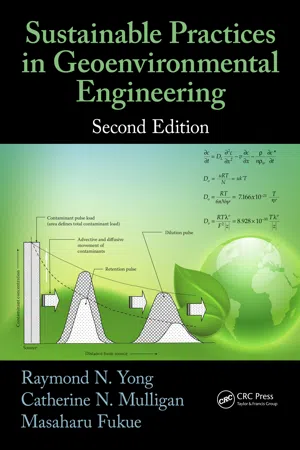
- Raymond N. Yong, Catherine N. Mulligan, Masaharu Fukue(Authors)
- 2014(Publication Date)
- CRC Press(Publisher)
Lack of water and poverty are intimately linked. The dis-cussion in this chapter will focus on the uses (and misuse) of water in the geoenvironment. It will also examine some of the main elements required to address, contain, and manage stressor impacts to water quality as a step toward water management for sustainability of water resources. 3.1.1 Geoenvironment Sustainable Water Management Sustainable water management can be defined in a similar manner to the definition for sus-tainable development articulated in Section 1.3 in Chapter 1. Accordingly, we can define sustainable water management as all the activities associated with usage of water in sup-port of human needs and aspirations, which must not compromise or reduce the chances of future generations to exploit the same resource base to obtain similar or greater levels of yield. In the context of the geoenvironment, with particular focus on geoenvironmental engineering, we limit ourselves to the receiving waters in the geoenvironment, i.e., all water forms contained within the land surface, such as rivers, lakes, ponds, and ground-water (aquifer and soil porewater). 74 Sustainable Practices in Geoenvironmental Engineering 3.1.1.1 Water Availability and Quality Water availability and water quality are central issues in survivability of living species— humans, animals, plants, etc. Lack of water and unacceptable water quality are significant threats to survivability. Water availability or the lack thereof is a topic that is well covered in textbooks devoted to such a subject. The problem of threats to the quality of water in the geoenvironment constitutes the central focus of discussions in this book. It has been said previously, in Chapter 2, that soil contamination does not only mean contamination of the soil solids themselves, but also contamination of the porewater, with possible extension to groundwater and the aquifers through transport of contaminants in the subsoil. eBook - PDF
- Larry W. Mays(Author)
- 2019(Publication Date)
- Wiley(Publisher)
Also important is the global context within which we must think and solve problems. The future of water resources thinking must be within the context of water resources sustainability. The overall goal of water resources management for the future must be water resources sustainability. Mays (2007) defined water resources sustainability as follows: Water resources sustainability is the ability to use water in sufficient quantities and quality from the local to the global scale to meet the needs of humans and ecosystems for the present and the future to sustain life, and to protect humans from the damages brought about by natural and human-caused disasters that affect sustaining life. 25 The Brundtland Commission’s report, “Our Common Future” (World Commission on Environment and Development, WCED), defined sustainability as focusing on the needs of both current and future generations. A development is sustainable if “it meets the needs of the present without compromising the ability of future generations to meet their own needs.” Because water impacts so many aspects of our existence, there are many facets that must be considered in water resources sustainability including the following: • Water resources sustainability includes the availability of freshwater supplies throughout periods of climatic change, extended droughts, population growth, and to leave the needed supplies for the future generations. • Water resources sustainability includes having the infrastructure, to provide water supply for human consumption and food security, and to provide protection from water excess such as floods and other natural disasters. • Water resources sustainability includes having the infrastructure for clean water and for treating water after it has been used by humans before being returned to water bodies. • Water sustainability must have adequate institutions to provide the management for both the water supply management and water excess management. eBook - PDF
- Rose Marie O. Mendoza(Author)
- 2019(Publication Date)
- Arcler Press(Publisher)
Therefore, proper planning and appropriate strategies are needed to solve the current challenges in water supply systems (Figure 1.1). Water Sustainability 5 Figure 1.1: An Infographic on facts about water supply in the world. Source: http://free-stock-illustration.com/water+crisis+facts?ima ge=1234569311 1.4. WATER SUSTAINABILITY CONCEPTS The simplest definition that can be given to the concept of water sustainability is maintaining water supplies using the limited water resources. When looking at the concept of water sustainability, there are three main components of sustainability that must be considered. These are ecological, social, and economic sustainability (Hester & Harrison, 2011). Sustainability is achieved if something is being managed so that it is indeed restored and maintained over time. Water services remain the main component that would sustain the country’s population for generations to come. Consequently, it’s the bottom-up water delivery approach which involves active participation of the residents that can deliver water services in a sustainable way. Water sustainability can be achieved in the long run by strengthening people’s capacities for making continuous improvement in the way people use water and adopting them to fit the scarce resource. In other words, the concept of sustainability must be applied to something before its meaning can become clear. Water sustainability follows concepts or dimensions. According to Hester and Harrison (2011), sustainability is measured as the ability to identify what is working or not working in water provision to repeat, extend success and solve problems through effective feedback. The water utility, alternative water actors and the community must commit their resources and efforts to make the delivery of services possible Water and Sanitation Sustainability 6 and achieve water sustainability in a community. eBook - PDF
Challenges of the New Water Policies for the XXI Century
Proceedings of the Seminar on Challenges of the New Water Policies for the 21st Century, Valencia, 29-31 October 2002
- Enrique Cabrera, Ricardo Cobacho(Authors)
- 2004(Publication Date)
- CRC Press(Publisher)
Cities are both a threat to the natural environment and an important resource in their own right. It is also the place where most of people live, that means the place where human needs are the most important. Cities affect the global system through, for example, energy and resource use, waste and polluting emissions. They affect regional systems though river catchments and flows, patterns of land use and stresses on surrounding rural areas which are subject to pollution, development and recreational pressures. The challenge of urban sustainability is to solve both the problems experienced within the cities themselves (the focus of action in the past) and the problems caused by cities. 5.1.3 What is sustainable water management? Following the previous definitions, it could be said that sustainable water management is management that meets current needs without compromising the ability of future generations to meet their own needs, both for water supplies and for a healthy aquatic environment (Schilling & Mantoglou, 1999). The main objective of a sustainable management is to ensure a high quality of life by making the community's management of natural and man-made resources sustainable. Water is the natural resource that forms the basis of all life. For that reason water is central to sustainable resource management. Good local water management must includes safe water supply and disposal, conservation of water resources, managing water as an economic resource and pre-serving it as a cultural asset. Effective water management is directly linked to the issues of poverty alleviation, social equity, and environmental sustainability, and thus to democratization and the transparency of decision-making. 181 eBook - PDF
- Daniel H. Chen(Author)
- 2016(Publication Date)
- CRC Press(Publisher)
161 6 Sustainable Urban Water Management Willy Giron Matute, Mohamed K. Mostafa, Daniel Attoh, Ramesh C. Chawla, and Robert W. Peters 6.1 INTRODUCTION There is no shortage of water on planet Earth, only a shortage of freshwater. Of all the water on Earth, 97.5% is salty, and of the 2.5% freshwater, two-thirds is locked in frozen states—ice caps, glaciers, and permanent snow. In a National Academy of Engineering study, A Century of Innovation : Twenty Engineering Achievements that Transformed our Lives , Constable and Somerville (2003) included urban water sup-ply in the top five engineering achievements of the 20th century. In a survey by the British Medical Journal (2007), sanitation was rated the single most important fac-tor in improving public health in the past 150 years. Sustainable and efficient water management is crucial to public health, a viable economy, and a livable urban envi-ronment (Daigger 2011). Securing adequate water resources for various uses is one of the grand challenges. The social, economic, and environmental impacts of past water resources development projects and expected future water scarcity, especially in urban areas, are driving a shift in how water resources are managed, which will increasingly rely on sustainable technologies (Chemical Engineering Progress [CEP] 2015; Uribe et al. 2015). Water is needed for domestic, commercial, industrial, and irrigation uses, and for maintaining and improving local environments, such as parks CONTENTS 6.1 Introduction .................................................................................................. 161 6.2 Components/Processes in the Water Cycle .................................................. 162 6.3 Global Water Distribution ............................................................................. 163 6.4 Sustainability ................................................................................................
- Paul M. Bradley(Author)
- 2013(Publication Date)
- IntechOpen(Publisher)
Section 3 Water Resources Sustainability Chapter 8 Geospatial Analysis of Water Resources for Sustainable Agricultural Water Use in Slovenia Matjaž Glavan, Rozalija Cvejić, Matjaž Tratnik and Marina Pintar Additional information is available at the end of the chapter http://dx.doi.org/10.5772/53528 1. Introduction Global population growth has greatly increased food demand. This, in turn, has intensified agricultural production, already the biggest consumer of water in the world [1]. Development of irrigation techniques has contributed to the global food production [2]. However, climate change simulations predict repeated droughts and deteriorating crop production, illustrating the critical need for sustainable irrigation [3]. Thus, a proactive water management strategy is a priority of any government in the world. Globally, only 10% of estimated blue water (surface water, groundwater, and surface runoff) and 30% of estimated green water (evapotranspiration, soil water) resources are used for consumption. Nevertheless, water scarcity is a problem due to high variability of water resources availability in time and space [4]. Model results suggest that severe water scarcity occurs at least one month per year in almost one half of the world river basins [5]. One third of the water volume currently supplied to irrigated areas is supplied by locally stored runoff [6]. It is estimated that small reservoirs construction could increase global cereal production in low-yield regions (i.e. Africa, Asia) by approximately 35% [6]. Global water scarcity problems can now be, due to advances in hydrology science in the last decades, easily assessed on fine temporal and spatial scale [4]. Irrigation development and management in Slovenia have completely stagnated in the last decade due to financial shortages. In 1994 the Slovenian government adopted a strategy for agricultural land irrigation (i.e. National Irrigation Programme) [7]. eBook - PDF
- Velma I. Grover, Gail Krantzberg(Authors)
- 2013(Publication Date)
- CRC Press(Publisher)
By the 21st century, it had become obvious that more comprehensive developmental approaches were needed that look beyond simply securing supplies of water and energy. Beyond the need to improve efficiencies in resource usage across sectors of activity, such paradigms are rooted in the principle that the needs of the present should not compromise those of future generations. In such a “Sustainable Development” paradigm (see Fig. 2.3) the emphasis is on balancing the immediate necessities of “People”, the need to generate “Profits” in the short to medium term, and the limitations of the ecosystems of our “Planet”. Sustainable development therefore requires that human society be viewed as a complex system subject to limitations imposed by the current state of technology and societal organization, all operating within an “Earth System”. As humans strive to reach a balance among these various interactions, they need to optimize their use of water and energy, both part of the same nexus. Figure 2.3 Sustainable Development: People, Planet, and Profits (UNEP 2007). Sustainable Equitable Eco-Efficient Liveable Profit People Planet Green Economy Sustainable Development and the Water Energy Nexus 27 The Water-Energy Nexus and Climate Change The concept of sustainable development was formulated because humanity faces climatic change. While climatic changes are common throughout Earth’s life, they are less common in human history, and even less so in the past 200 years, when human populations undertook their dramatic expansion. Anatomically modern humans appear to have originated in Africa about 200,000 years ago, and to have reached “full behavioural modernity” about 50,000 yr ago. However, for all their abilities, they were eking out a precarious existence as hunter-gatherers until the onset on the Holocene, about 12,000 yr ago.
- (Author)
- 2011(Publication Date)
- IWA Publishing(Publisher)
BENEFITS OF INVESTING IN WATER AND SANITATION: AN OECD PERSPECTIVE – © OECD 2011 4. MANAGING WATER SUPPLY AND DEMAND IN A SUSTAINABLE MANNER – 79 Chapter 4 Managing water supply and demand in a sustainable manner For water services to be provided sustainably over time, it is critical to ensure that the raw material, clean water, is adequately protected and managed. This will become increasingly relevant with the threat of climate change, in both developed and developing countries, even though the latter are likely to be more exposed to variations in rainfall and overall scarcity. According to forecasts presented in the Stern report (Stern, 2007), a 2°C rise in global temperature will lead to between 1 and 4 billion people experienc-ing growing water shortages, mainly in Africa, the Middle East, Southern Europe, and parts of South and Central America. In South and East Asia, by contrast, between 1 and 5 billion people may receive more water. But as much of the additional water will be available during wet seasons, sufficient storage capacity will be needed if shortages during dry seasons are to be alleviated. Even though water consumed for municipal use represents only a small portion of the total (with agriculture taking the lion’s share) and human con-sumption is usually prioritised by law over other less essential uses, sustained demographic and economic growth, increasing water scarcity and rising unpre-dictability about rainfall patterns will increase competition over the resource. Given the priority given to drinking water in the pecking order of water uses, WSS providers are usually in a strong position to influence decisions over water resource management. In addition, in countries or river-basins with severe water scarcity, water abstractions for municipal purposes have been a primary driver for investment in schemes to divert water from distant sources.
- Manjit S Kang(Author)
- 2010(Publication Date)
- CRC Press(Publisher)
Section I Water and agricultural sustainability challenges Chapter 1 Sustainable water systems for agriculture and 21 st century challenges Ramesh Kanwar Department of Agricultural and Biosystems Engineering, Iowa State University, Ames, Iowa, USA ABSTRACT Availability and pollution of freshwater water supplies will be the dominant issues for the global society in the 21 st century. With increasing population and climate change scenarios, the demand for water will continue to increase for agriculture, especially irrigation, and other economic uses to meet food, fiber and energy-security needs of the society. At the same time, there is good likelihood that the availability of freshwa-ter will decrease with the fast melting of world’s major glaciers. In addition, the water quality of rivers, lakes, oceans, and aquifers will further degrade from the discharge of domestic, municipal, industrial, and agricultural water. Currently, more than five million people die every year because of water-borne diseases and 1.5 billion get sick every year because of poor sanitation or use of poor quality drinking water. There-fore, water-resource management will continue to be of great importance, and global society needs to develop strategies on developing efficient methods for water use and management/reuse of poor quality water for agriculture. The objective of this chapter is to highlight some of the water challenges of the 21 st century and identify some of the innovative water management strategies and agricultural practices that can be used in agricultural watersheds to improve water quality and water availability for all needs of society. This chapter also discusses issues related to global warming, melting of glaciers, rise of sea levels, and how these issues will affect water sustainability and food security issues of the 21 st century. eBook - PDF
Arid Land Hydrogeology: In Search of a Solution to a Threatened Resource
Proceedings of the Third Joint UAE-Japan Symposium on Sustainable GCC Environment and Water Resources (EWR2006), 28 - 30 January 2006, Abu Dhabi, UAE (Volume IV in DARE series)
- A.M.O. Mohamed(Author)
- 2006(Publication Date)
- CRC Press(Publisher)
There are two constraints that the environmental system poses in relation to water quality. First, river flows tend to be extremely variable from season to season, and coupled with withdrawals for human use, there is a severe upper limit on assimilative capacity. Second, the increasing bioaccumu-lation of pollutants in successively higher levels of the food chain also severely limits the allowable concentration of pollutants in the water. The combination of these limiting ambient conditions, together with a high density population and economic activity, can make sustainable development very difficult to achieve. 4 ENGINEERING FOR SUSTAINABLE DEVELOPMENT If it is accepted that the engineering profession has a responsibility to respect the principles of sus-tainable development, then every engineer should acquire and maintain an understanding of the goals and issues related to sustainability and conduct his/her work in a manner which supports sus-tainability. Engineering for sustainable development cannot be achieved by engineers alone, but must evolve within the framework of a larger planning process in which many disciplines and other parties cooperate. The following steps are recommended for the planning and design process leading to proj-ects or activities which may impact on the environment (Mohamed and Antia, 1998; Mohamed, 1998); they are of particular relevance to projects or activities for which an environmental impact assessment may be required by law. Step 1: Define the objectives Defining the overall objectives should be the first task brought for discussion. This task involves many stakeholders, such as local communities potentially affected by the project or activity, the proponent, and other businesses. It is also essential to have the involvement of the decision-makers at this point – those who will decide in the end which option best meets the stated objectives. In this process, sustainability must also be declared as a principal objective.
Index pages curate the most relevant extracts from our library of academic textbooks. They’ve been created using an in-house natural language model (NLM), each adding context and meaning to key research topics.

