History

Battle of Lexington and Concord
The Battle of Lexington and Concord was the first military engagement of the American Revolutionary War. It took place on April 19, 1775, in Massachusetts. The conflict began when British troops attempted to seize colonial weapons and arrest Patriot leaders, leading to a skirmish that marked the beginning of the war for American independence.
Written by Perlego with AI-assistance
Related key terms
1 of 5
10 Key excerpts on "Battle of Lexington and Concord"
 eBook - ePub
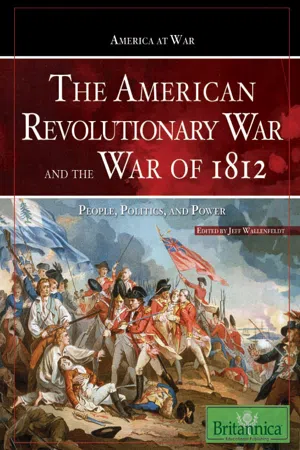
The American Revolutionary War and The War of 1812
People, Politics, and Power
- Britannica Educational Publishing, Jeff Wallenfeldt(Authors)
- 2009(Publication Date)
- Britannica Educational Publishing(Publisher)
Acting on orders from London to suppress the rebellious colonists, Gen. Thomas Gage, recently appointed royal governor of Massachusetts, ordered his troops to seize the colonists’ military stores at Concord. En route from Boston, on April 19, 1775, the British force of 700 men was met on Lexington Green by 77 local Minutemen and others who had been forewarned of the raid by the colonists’ efficient lines of communication, including the ride of Paul Revere. It is unclear who fired the first shot. Resistance melted away at Lexington, and the British moved on to Concord. Most of the American military supplies had been hidden or destroyed before the British troops arrived. A British covering party at Concord’s North Bridge was finally confronted by 320 to 400 American patriots and forced to withdraw. The march back to Boston was a genuine ordeal for the British, with Americans continually firing on them from behind roadside houses, barns, trees, and stone walls. This experience established guerrilla warfare as the colonists’ best defense strategy against the British. Total losses were British 273, American 95. The Battles of Lexington and Concord confirmed the alienation between the majority of colonists and the mother country, and it roused some 15,000 New Englanders to join forces and begin the Siege of Boston, resulting in its evacuation by the British the following March.A print by engraver Cornelius Tiebout depicting Minutemen firing on the British at the Battle of Lexington. Library of Congress Prints and Photographs DivisionBATTLE OF BUNKER HILL
The first major battle of the American Revolution, the Battle of Bunker Hill, occurred on June 17, 1775, in Charlestown (now part of Boston) during the Siege of Boston. Although the British eventually won the battle, it was a Pyrrhic victory that lent considerable encouragement to the Revolutionary cause.The British Army storming Bunker Hill in Charlestown, Mass., June 17, 1775. Library of Congress Prints and Photographs DivisionWithin two months after the Battles of Lexington and Concord (April 19, 1775), more than 15,000 troops from Massachusetts, Connecticut, New Hampshire, and Rhode Island had assembled in the vicinity of Boston to confront the British army of 5,000 or more stationed there. Gen. Artemas Ward, commander in chief of the Massachusetts troops, served as the senior New England officer. There were two obvious points from which Boston was vulnerable to artillery fire: Dorchester Heights, and two high hills, Bunker’s and Breed’s, in Charlestown, about a quarter of a mile across the Charles River from the north shore of Boston. By the middle of June, hearing that British Gen. Thomas Gage was about to occupy Dorchester Heights, the colonists decided to fortify the hills. By the time they were discovered, Col. William Prescott and his men had completed a redoubt atop Breed’s Hill (which was an indefensible decision in the eyes of many historians, since Breed’s Hill was lower and less impregnable than Bunker Hill). Despite a cannonade from British men-of-war in the harbour and from a battery across the river in north Boston, the colonists continued to strengthen their position. eBook - PDF
- Lloyd E. Chiasson(Author)
- 1995(Publication Date)
- Praeger(Publisher)
SELLING THE AMERICAN REVOLUTION Carol Sue Humphrey About four thirty in the morning of April 19,1775, British troops under the command of Major John Pitcairn approached the little town of Lexington, Massachusetts. Instead of a sleepy hamlet of empty streets, an armed group of local militia waited in the center of town for the British. Under the command of Captain John Parker, the militiamen had originally as- sembled at midnight after being alerted by Paul Revere that "the British are coming." As the redcoats approached, the untrained military men of Lexington took what seemed to be an insane action. Just over 70 of them lined up on the village green to protest the march of the six companies of British troops. When told to disperse by the British commander, the Americans hesitated, then began to leave the green. The militiamen, however, refused to leave their guns as ordered by Pitcairn. Angry words were spoken, and sud- denly someone fired a shot. The immediate response was two volleys from the British troops, with some weak fire from the Americans. When it was over, 8 Americans were dead and 10 were wounded. In the few moments it took to fight this first battle, the colonists had embarked on a journey that would end with the formation of a new, bold form of government. Following the skirmish at Lexington, the British forces continued to- ward Concord, their planned destination. They reached Concord about seven in the morning and searched the town for the munitions suppos- edly stored there. In the course of the search, the blacksmith shop and the courthouse were set on fire. Whether done deliberately or by accident, these events served to anger the colonial militia, which prior to these fires had stayed out of the way of the British to avoid a conflict. At North Bridge, however, the two opposing forces exchanged fire. Neither group 2 THE PRESS IN TIMES OF CRISIS proved well-disciplined, and they both retreated in disarray.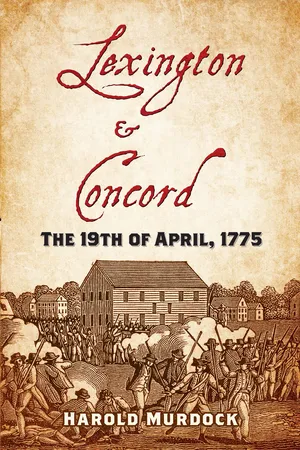 eBook - ePub
- Murdock(Author)
- 2019(Publication Date)
- Dover Publications(Publisher)
I HISTORIC DOUBTS ON THE BATTLE AT LEXINGTON Passage contains an image
I
HISTORIC DOUBTS ON THE BATTLE AT LEXINGTON
O N the 2d of September, 1824, Lafayette was a visitor in Concord, and the Honorable Samuel Hoar took occasion to remind him, in a public address, that he stood upon the spot where “the first forcible resistance” was made to the British arms. This simple assertion proved in a measure epoch-making. A half-century had passed since the great events to which Mr. Hoar referred, but his claim for Concord roused a storm of protest in Lexington. A bitter controversy ensued, and local pride and local historians were stirred to an extent that imperilled historic truth. The Town of Lexington took official cognizance of the Concord claim, and Elias Phinney, Esq., was charged with the task of demonstrating to all impartial minds that it was at Lexington, and not at Concord, that the embattled farmer fired that far-echoing shot that heralded American independence.To assist Phinney in his work, depositions were extracted from ten aged citizens of Lexington, some of whom, fifty years before, had attended that early morning roll-call on the Common. Those venerable men, whose comrades in 1775 had been anxious to prove the peaceful intent and behavior of the minutemen, were now summoned to lend color to quite a contradictory theory. The Honorable Edward Everett, who delivered the oration at Concord on the fiftieth anniversary of the battle, was placed in a delicate position, and disclaimed any intention of pronouncing “on questions in controversy.” Phinney’s pamphlet on the battle appeared in 1825. Concord had old men of her own, and they were summoned into the lists to support contentions put forth by the Reverend Ezra Ripley, who published his anti-Lexington tract in 1827.The whole dispute seems strangely trivial to us now. It is hard to account for the time and ink that were wasted in the fruitless controversy; the recriminations and bitterness of spirit, which involved the clergy of neighboring towns; the wild straining at historical gnats and the wholesale swallowing of legendary camels, and all because of the phrasing of one sentence by the Honorable Samuel Hoar. Lexington had not always been as sensitive as she was in 1824.*
Passage contains an image
I
HISTORIC DOUBTS ON THE BATTLE AT LEXINGTON
O N the 2d of September, 1824, Lafayette was a visitor in Concord, and the Honorable Samuel Hoar took occasion to remind him, in a public address, that he stood upon the spot where “the first forcible resistance” was made to the British arms. This simple assertion proved in a measure epoch-making. A half-century had passed since the great events to which Mr. Hoar referred, but his claim for Concord roused a storm of protest in Lexington. A bitter controversy ensued, and local pride and local historians were stirred to an extent that imperilled historic truth. The Town of Lexington took official cognizance of the Concord claim, and Elias Phinney, Esq., was charged with the task of demonstrating to all impartial minds that it was at Lexington, and not at Concord, that the embattled farmer fired that far-echoing shot that heralded American independence.To assist Phinney in his work, depositions were extracted from ten aged citizens of Lexington, some of whom, fifty years before, had attended that early morning roll-call on the Common. Those venerable men, whose comrades in 1775 had been anxious to prove the peaceful intent and behavior of the minutemen, were now summoned to lend color to quite a contradictory theory. The Honorable Edward Everett, who delivered the oration at Concord on the fiftieth anniversary of the battle, was placed in a delicate position, and disclaimed any intention of pronouncing “on questions in controversy.” Phinney’s pamphlet on the battle appeared in 1825. Concord had old men of her own, and they were summoned into the lists to support contentions put forth by the Reverend Ezra Ripley, who published his anti-Lexington tract in 1827.The whole dispute seems strangely trivial to us now. It is hard to account for the time and ink that were wasted in the fruitless controversy; the recriminations and bitterness of spirit, which involved the clergy of neighboring towns; the wild straining at historical gnats and the wholesale swallowing of legendary camels, and all because of the phrasing of one sentence by the Honorable Samuel Hoar. Lexington had not always been as sensitive as she was in 1824.*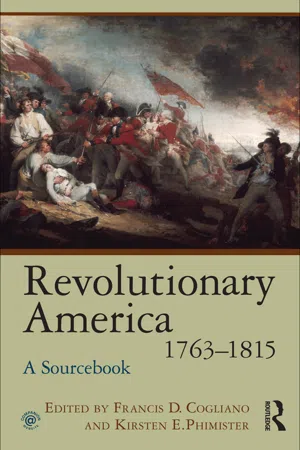 eBook - ePub
Revolutionary America, 1763-1815
A Sourcebook
- Francis D. Cogliano, Kirsten E. Phimister(Authors)
- 2010(Publication Date)
- Routledge(Publisher)
Isaac Merrill (1708–1787) was a Massachusetts militia colonel. In this letter, written on the day that the War of Independence began, Merrill wrote to John Currier, a militia captain in Amesbury, Massachusetts, providing a brief account of the skirmishing at Lexington and Concord and urging him to mobilize his troops. In the aftermath of the fighting on April 19, nearly twenty-thousand New England militia descended on Boston and undertook an impromptu siege of the British forces in the city.…this Day I have received intiligence that the ministeriel troops under the Command of General Gage did Last evening march out of Boston and marched to Lexington & there Killed a Number of our American Soldiers & thence proceed to Concord Killing and Destroying our men and interest. These are therefore to Order you forthwith to Mobilize and muster as many of your under officers and Soldiers as you can possible to meet immedially to Some Suitable place: and then to march of forthwith to Concord or Else where as in your Descretion you Shall think best to the reliefe of our Friend and Country: and also to order those who are now absent & out of the way to Follow after and ioin you as Soon as they shall be apprized of the Alaram and when you have marched your men to Some part of our army you are to appoint some officer to head them in case you return home your Self: till Some Further Order may be taken: in this Faile Not…3. Battle of Lexington, 1775 4
Among the militiamen who descended on Boston was Amos Doolittle (1754–1832), a silversmith from New Haven, Connecticut. Doolittle’s company joined the siege of Boston on April 29, 1775. Doolittle visited Lexington and Concord and interviewed survivors of the battle on the 19th before producing a series of engravings, which are the only contemporary visual representations of the fighting on the war’s firstFigure 4.1 The Battle of Lexington, 1775. Courtesy of the Granger Collection, New York.day. This image shows the Patriot militia firing on columns of British troops from behind stone walls, a practice which had deadly effect yet was disdained by the British as dishonorable (see Thomas Gage’s proclamation, document 4).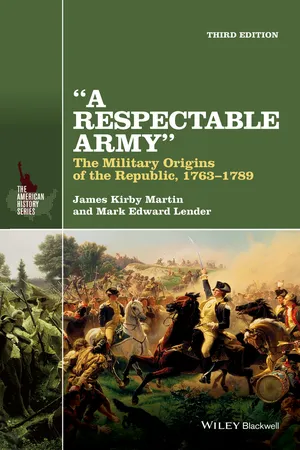 eBook - ePub
A Respectable Army
The Military Origins of the Republic, 1763-1789
- James Kirby Martin, Mark Edward Lender(Authors)
- 2015(Publication Date)
- Wiley-Blackwell(Publisher)
Citizen-soldiers organized as militia found themselves in the position of fighting defensively to protect their liberties and property. Thus the beginning of the war fit neatly into the radical whig ideological mood of the era. For the colonists, the presence of Britain’s standing army symbolized the abuse of power. The citizen-soldiers of Massachusetts personified virtuous protectors of liberty.What commentators, among them some historians, have not appreciated is that the Lexington and Concord paradigm came apart quite early. By fitting this model into the whole of the Revolutionary War, they have skewed their interpretations about the nature of the conflict that followed, including such central issues as the depth and tenacity of patriot commitment, the actual nature of the American military effort, the matter of who actually accepted the burdens of combat, and the effect of the military confrontation in establishing a sense of national legitimacy, nationhood, and republicanism. To move forward from mythology, this study must begin with the ideological roots of the American rebellion that did reflect the experience of Lexington and Concord.Of Standing Armies (Power) and Militia (Liberty)
An understanding of the ideological framework that helped structure the world view of eighteenth-century American colonists is of prime importance in reconciling treasured myth with historical reality. A key underlying assumption was that of an ongoing struggle between power and liberty, based on the view that human beings naturally lusted after power and would resort to any form of corruption to satisfy their petty, self-serving objectives. Historian Bernard Bailyn, in The Ideological Origins of the American Revolution, has pointed out that Americans, as inheritors of England’s radical whig opposition tradition, believed that power “meant the dominion of some men over others, the human control of human life: ultimately force, compulsion.” Power, indeed, was constantly juxtaposed with liberty, which was “its natural prey, its necessary victim.” While power “was brutal, ceaselessly active, and heedless,” liberty “was delicate, passive, and sensitive,” in the history of human civilizations more often the victim of power rather than the victor.1 eBook - PDF
America in Quotations
A Kaleidoscopic View of American History
- Howard J. Langer(Author)
- 2002(Publication Date)
- Greenwood(Publisher)
4 The American Revolution It was the first colonial war in the history of the world. Officially, it began in 1775 at Lexington, Massachusetts, but its origins began much earlier—in the mid-1760s with what colonists regarded as un- fair taxes. The first deaths of the war came in 1770, with the so- called Boston Massacre. Whenever the war began, it ended with British recognition of the infant United States of America and set an example for Europeans, Asians, Latin Americans, and Africans in the centuries to come. POLITICAL SLOGAN 57. Taxation without representation is tyranny! (Slogan, early 1770s.) MASSACRE—OR SELF-DEFENSE? On March 5, 1770, five Bostonians were killed and six wounded when British troops fired on what they thought was a threatening mob. The incident would become known in American history as the 28 AMERICA IN QUOTATIONS "Boston Massacre." Months later, a murder trial was held. The fol- lowing are excerpts from the concluding arguments of both sides. 58. If an assault was made to endanger their lives, the law is clear they [the British soldiers] had a right to kill in their own defense. If it was not so severe as to endanger their lives, yet if they were assaulted at all, struck and abused by blows of any sort, by snowballs, oyster shells, cinders, the law reduces the offense of killing down to manslaughter, in consideration of those passions of our nature which cannot be eradicated. (John Adams, defense attorney, address to the jury, Boston, December 7, 1770, cited in The Case for Courage, by William M. Kun- stler.) 59. [The evening of the violence] a number of soldiers had come out of their barracks, armed with clubs, bayonets, cutlasses and instruments of diverse kinds, and in the most outrageous manner were ravaging the streets, assaulting everyone they met.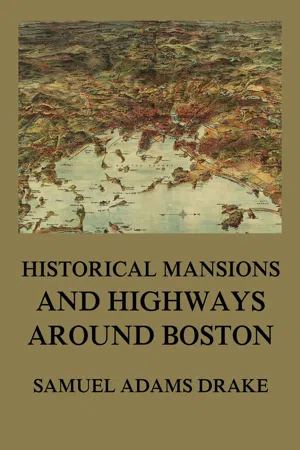 eBook - ePub
- Samuel Adams Drake(Author)
- 2017(Publication Date)
- Jazzybee Verlag(Publisher)
The sight of this host bearing down upon them might well cause the hearts of the minute-men to beat faster. There was a moment's wavering, but they did not obey the haughty command. Parker sees that resistance is madness, and gives the order to disperse without tiring. His men sullenly obey; but while in the act one of the royal officers — Heaven knows whom! — tires his pistol. Instantly two or three shots are heard, then the fatal command, " Fire! followed by a rattling volley from the British vanguard, stretched three of the minute-men dead upon the green. The remainder ran for shelter to the stone-walls behind them, from which they returned the fire. A soldier of the 10th was wounded; Pitcairn's horse struck.Edward Gibbon, member of parliament during the American War, said, "A single drop of blood may be considered as the signal of civil war."Excited by this resistance, the regular troops pursued and drove those brave fellows from their hiding-places, with the loss of five more, making the whole number of slain eight. Having thus effectually dispersed the provincials, the light infantry were reformed on the green and celebrated their victory with repeated cheers. The soldiers were so wild that their officers could hardly make them hear any orders, causing a long delay, during which Colonel Smith came up with the grenadiers.Civil war in America began on the green at Lexington. America's cause was at last sealed in the blood of her citizens. Now the tyranny under which Massachusetts had so long groaned was as nothing compared with the desire for vengeance.The wavering purpose of the colonies was fixed by this day's work. Hence Samuel Adams's memorable exclamation on hearing the British volley, "Oh, what a glorious morning is this!" Hence Jefferson's declaration, "My creed was formed on unsheathing the sword at Lexington."The regular troops, now united in one body, marched briskly off for Concord. The Lexington people took up their dead and wounded; messengers were hurried off in every direction with news of the slaughter; Parker's company rallied for action, with the bitter determination to avenge their comrades; Hancock and Adams had taken refuge before the tiring in a neighboring wood, where they remained until the troops passed on. Revere, after witnessing the firing on the green, made off for the parsonage, rejoined the fugitive patriots, and went with them to Woburn.Being a shire-town, Concord was a place of considerable importance in 1775. Besides being a seat of justice, it was the headquarters of the militia for this section of the county. Colonel James Barrett, custodian of the province stores, commanded the regiment formed from Concord and the contiguous towns of Bedford, Acton, Lincoln, Sudbury, etc. Besides this, a regiment of minute-men was in process of organization, of which Abijah Pierce of Lincoln Was colonel, Thomas Nixon of Framingham lieutenant-colonel, and John Buttrick of Concord major. The organization was, however, far from complete; nor is it probable the companies had ever paraded together under arms. Except such as had seen service in the French wars, they were soldiers only in name and in martial spirit.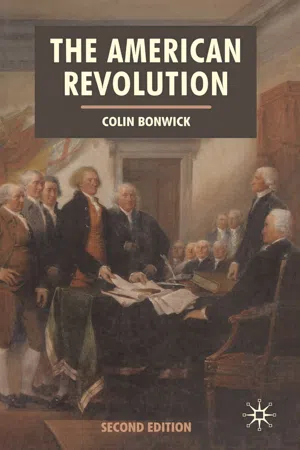 eBook - PDF
- Colin Bonwick(Author)
- 2005(Publication Date)
- Red Globe Press(Publisher)
I The first phase of the war was short. News of Lexington spread so rapidly that everywhere north of Maryland had heard within a week, 95 South Carolina had heard by 10 May, and an account was printed in Savannah, Georgia, by the end of the month. For the time being conduct of operations remained in New England hands. Leadership in Massachusetts devolved on Dr Joseph Warren, president of its Provincial Congress. Within a short time Massachusetts had sup-plied 13,000, Connecticut 6000, Rhode Island 1500 and New Hampshire 2000 men to participate in the siege of General Thomas Gage in Boston, but there was no unified command. 2 Other colonies began organising for war but most were too busy with their own problems to send assistance to New England. Further west, on the shore of Lake Champlain (in upper New York), a group of Vermonters and New Yorkers captured Fort Ticonderoga on 10 May. The men gathering round Boston were enthusiastic, but poorly trained and badly armed. They were put to the test on 17 June when Gage made an ill-considered attack on American emplacements across the Charles River. His victory at Bunker Hill (more correctly, Breed’s Hill) was Pyrrhic. He lost over 1000 men, compared to total American casualties of 400 (including Warren), and was compelled to fall back into the town. Elsewhere fighting was sporadic and local for the next 12 months. Governor the Earl of Dunmore seized the Virginia powder stock at Williamsburg, but was compelled to retreat to a British warship. British naval vessels attacked Falmouth (now Portland, Maine), Norfolk and Charleston, and in February 1776 a Loyalist force was defeated in a ferocious battle at Moore’s Creek Bridge in North Carolina. By fortunate chance the First Continental Congress had resolved in October to meet a second time on 10 May. eBook - ePub
The American Revolution
Documents Decoded
- Neil Gould(Author)
- 2018(Publication Date)
- ABC-CLIO(Publisher)
47 But the engagement did not become general until a little after noon, when their forces crossed Charles River and attempted to dislodge the Americans from the redoubt which they had erected the preceding night. The battle was severe and the British repulsed at every charge until, for want of ammunition, the Americans were compelled to retire. The awful solemnities of that day are still deeply impressed upon declarant’s mind, and the scenes of carnage and death and the inconceivable grandeur of the immense volume of flames illuminating the battlefield from the burning of Charlestown appear as vivid as if the events of yesterday . . .Source: Revolutionary War Pension and Bounty Land Warrant Application File S. 22,665. Jonathan Brigham, Continental Mass. Identifier 540550789, National Archives.Letter Written by General Burgoyne to His Nephew Lord Stanley, Boston, June 25, 177548
Boston is a peninsula . . . to the North is Charles-Town (or rather was, for it is now rubbish), and over it a large hill . . . to the South of the town is a still larger scope of ground . . . called Dorchester Neck: the heights as above described . . . command the town, that is, give an opportunity of erecting batteries that you can make against them . . . It was absolutely necessary we should make ourselves masters of these heights . . . my two colleagues and myself . . . had, in concert with Gen. Gage, formed the plan: Howe was to land the transports on one point, Clinton in the center, and I was to cannonade from the Causeway . . . this was to have been executed on the Eighteenth. On the 17th, at dawn of day, we found the enemy had pushed intrenchments with great diligence, during the night, on the heights of Charles-Town . . . every hour gave them fresh strength . . . it therefore became necessary . . . to attack . . . Howe . . . was detached with about 2000 men, and landed on the outward side of the peninsula . . . he was to advance from thence up the hill which was over Charles-Town . . . eBook - PDF
- (Author)
- 2009(Publication Date)
- The Floating Press(Publisher)
But Lord Percy must not delay. Ten miles lie between him and safety, and many hours of day remain before darkness will lend its friendly aid. Short time for rest. Beat off the fierce and persistent attacks! Speed away while yet unsurrounded! A British army must never suffer the humiliation of defeat and capture by a horde of rebel Yankees. So through the afternoon the red-coats marched quickly, sullenly, dejectedly, fighting desperately for very life. The day closed as they neared the river, and under the starlight they embarked, finding safety and rest at last—not quite yet, for as the last boat left the shore a rifle blazed out, and one more victim was sent to atone for the wanton murder on Lexington Common. The eventful day ended with a loss on the part of the British of two hundred and seventy-three, while the aggregate loss of the patriots was one hundred and five. Without discipline, and with the most reckless exposure to danger, they had inflicted a loss nearly three times as great as they had sustained. 315 The news of Lexington spread, everywhere producing wild excitement. The notes of warlike preparation were heard throughout the land. With deliberate purpose General Gage had sown the dragon's teeth, and there literally sprung up a bountiful crop of armed men. Every village and every farm-house helped to swell the number. The remotest hamlet furnished its contingent. In distant Connecticut, gallant old General Putnam heard the news while plowing. Prompt as when he dragged the wolf from its den, he unyoked his oxen, left his plow in the furrow, and, leaping to his saddle, galloped to the fray. Fiery Ethan Allen, at the head of his Green Mountain Boys, was eager to march, but paused to execute that marvelous enterprise which secured for the patriot cause the formidable fortresses of Ticonderoga and Crown Point, with all their military stores.
Index pages curate the most relevant extracts from our library of academic textbooks. They’ve been created using an in-house natural language model (NLM), each adding context and meaning to key research topics.

