History

Thomas Hobbes and Social Contract
Thomas Hobbes was a 17th-century philosopher who proposed the concept of the social contract in his work "Leviathan." He argued that in a state of nature, humans are self-interested and competitive, leading to a "war of all against all." To escape this, individuals enter into a social contract, surrendering some freedoms to a sovereign authority in exchange for security and order.
Written by Perlego with AI-assistance
Related key terms
1 of 5


12 Key excerpts on "Thomas Hobbes and Social Contract"
 eBook - PDF
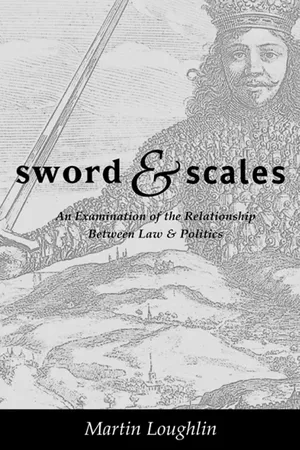
Sword and Scales
An Examination of the Relationship between Law and Politics
- Martin Loughlin(Author)
- 2000(Publication Date)
- Hart Publishing(Publisher)
The relationship between the individual and the State, in short, is one of contract. In this chapter, I propose to examine how the device of the social contract came to be invoked as a foundational principle in politics, first (with Hobbes) to establish the authority of government and later (with Locke) to impose limits on that governmental authority. I shall argue that the use of this device marks an important stage in the evolution of politico-legal thought: not only is it associated with the emergence of a belief that political power vests ultimately in individuals who consen-sually and conditionally delegate that power to the State, but it also provides the source from which springs the notion that governance is a function of law rather than of political will. The notion of the social contract thus is central both to the evolution of a modern idea of the constitution and to the elaboration of a political theory of rights, themes which are developed in the following two chapters. In this chapter, however, my main objective will be to sketch the ways in which this contractual metaphor has been used to establish a form of political authority and, given its legal connotations, to consider the extent to which it has been used for the purpose of inscribing law into the foundations of politics. NATURAL RIGHTS , COVENANTS AND POLITICAL ORDER Most of the early-modern political thinkers accepted the existence of a fundamental law of self-preservation. They believed in a law of nature which recognized the basic right of all individuals both to defend them-selves against attack and to acquire the necessities of life. They also accepted that mutual recognition of these natural rights would not, in itself, be sufficient to sustain a social order. For Hobbes, the lack of a 162 Sword and Scales 3 Jean-Jacques Rousseau, The Social Contract [1762] Maurice Cranston trans. and intro. (Harmondsworth: Penguin, 1968), Bk. I, ch. I. eBook - ePub
- J. S. McClelland, Dr J S Mcclelland(Authors)
- 2005(Publication Date)
- Routledge(Publisher)
Social contract theory in one form or another lasted from about the middle of the sixteenth century to the middle of the eighteenth century, which is a very good record for a style of political argument. Shorn of its grander pretensions, the theory has never died. The question: What would we do if we had to start society and the state all over again? has continued to be asked as a guide to the future actions of government.Notes on Sources
Social contract theory cries out to be understood in the context of religion and the rise of capitalism in Max Weber’s and Tawney’s sense. The surest short-cut to this understanding is C.B. Macpherson’s outstanding The Political Theory of Possessive Individualism_ From Hobbes to Locke (1962). Passage contains an image
11 Social Contract I
The Hobbesian version DOI: 10.4324/9780203980743-11THOMAS HOBBESHobbes was born prematurely in 1588, his mother’s labour, it is said, being brought on by news of the Armada (‘Hobbes and Fear were born twins’), but he survived all the vicissitudes of seventeenth-century English politics to die in his bed at the age of ninety-one in 1679. Hobbes was an Oxford man (Magdalen Hall) who found the prevailing Aristotelian-Scholastic philosophy little to his taste. He was recommended as tutor to the Cavendish who became the second Duke of Devonshire. He spent most of his life in the houses of noblemen. He discovered the new science on the Grand Tour in 1610, and in the early 1620s he became the friend and amanuensis of Francis Bacon. Hobbes was a staunch Royalist. By 1641, when he fled to France to escape the coming Civil War, he had met Galileo and many of the most noted scientists and men of letters of his day.Hobbes spent some of his time in exile in France (1641–51) as mathematics tutor to the future Charles II. He also worked on Leviathan, which was published in London on Hobbes’s return to England to make his peace with the Commonwealth. There is some mystery about why he actually came back when he did, though the probability is a combination of homesickness and his growing reputation in émigré eBook - PDF
The Wild West
The Mythical Cowboy and Social Theory
- Will Wright(Author)
- 2001(Publication Date)
- SAGE Publications Ltd(Publisher)
1 THE SOCIAL CONTRACT Thomas Hobbes lived from 1588 to 1679, and John Locke lived from 1632 to 1704. Both were English and lived primarily in England, but both also left England and lived in exile for certain periods of time fearing the pos-sible repercussions of their political ideas and associations. According to Ramon Lemos, Hobbes was ‘the first postrenaissance philosopher to present an original and comprehensive system of political philosophy’ (1978: 3). This was a theory of the social contract, a theory of rational indi-viduals creating a rational government, a government not based on class. Hobbes’s social contract theory became very important, but its impor-tance was soon eclipsed by the later social contract theory of John Locke. Locke’s version of the theory was influenced by Hobbes but was different in crucial ways, and Locke’s version was much more amenable to the Europe of his time. As a result, in the words of Peter Laslett, he helped ‘to change the philosophical and political assumptions of humanity’ (1960: 16). As John Dunn has observed, Locke’s career ‘ended in an extra-ordinary eminence’. It left him in his own lifetime as one of the luminaries of the European intel-lectual scene and, after his death, as the symbolic forerunner and philosophi-cal foundation of the Enlightenment and of what has become fashionable to call the Age of the Democratic Revolution. (1969, 11) Locke built on Hobbes to create a political vision, a vision of individualist government. And both Hobbes and Locke assumed in their theories an image of wilderness America; a place of ‘natural’ individuals (Indians) and thus of new beginnings. Hobbes began and Locke defined the basic individualist conception, and this conception always included the idea of a wilderness frontier. Agrarian civil society The basic individualist idea was that rational individuals would compete for private property in a context of equal laws. A limited, democratic eBook - PDF
- J. S. McClelland, Dr J S Mcclelland(Authors)
- 2005(Publication Date)
- Routledge(Publisher)
This in effect means that every man, or a majority, must give up his right of protecting himself, in so far as he can, to another. The choice of a law-giver and law-enforcer is the moment of contract. It is nothing less than the creation of political power; as Hobbes puts it, the sword is placed in the Sovereign’s hands. So far there is nothing very remarkabe about Hobbes’s argument. It sounds like any run-of-the-mill social contract argument, but there is one crucial difference: Hobbes argues that the social contract cannot put any limitation on sovereignty. The Sovereign is entirely unbound. In fact, the Sovereign is not a party to the social contract at all. Sovereignty is not created on terms; it must be absolute and undivided. The Sovereign is absolutely unaccountable to his subjects; his law is their command. It hardly needs to be stressed that this is a very remarkable conclusion for a social contract thinker to come to. Before Hobbes, the whole point about social contract theory was to argue that there was some kind of bargain between rulers and ruled which rulers could sometimes break and thus absolve their subjects from their obligation to obey. Hobbes argues the opposite: Social contract I 185 even if men could go back to the beginning and re-create the state, they would voluntarily do so in such a way that they would set up a Sovereign more absolutist than any contemporary king dared to be. A large part of the argument in Leviathan is designed to show why this must be so. The argument is fairly technical, because Hobbes is a meticulous thinker. The argument is carried on at a high level of abstraction, but it is marvellously clear. Later in this chapter we will have to stand back from Hobbes’s argument and try to give it a historical context, because none of Hobbes’s readers at the time could have doubted that a very thorough commentary on English political history lay not very far below the surface. eBook - PDF
- Henry E. Allison(Author)
- 2022(Publication Date)
- Cambridge University Press(Publisher)
The formation of such a contracts or covenant is, 13 Hobbes, Leviathan, pt. 1, chap. 13, 97. 14 Hobbes, De Cive or The Citizen, pt. 1, chap. 1, 24. 15 Ibid., 28. 16 De Cive, pt. 1, chap. 2, 32. 208 8 The Individual and the State therefore, seen by Hobbes as the means by which human beings can escape from the intolerable state of nature. A central feature of Hobbes’ contractarian thought is that covenants create obligations where none existed before; and since in the state of nature, as he conceived it, there could be no assurance that others would honor any such agreement, he maintained that in order for covenants to be valid, it is first necessary to have a sovereign power capable of enforcing them. But, according to Hobbes, this can be achieved only if the multitude covenant among themselves to surrender all their rights to such a sovereign power. By this act, which is what Hobbes understood by a social contract, the multitude of wills becomes one will. Moreover, this contract for Hobbes leads not to a limited but to an absolute sovereign, whose very will is law. The absolute nature of sovereign power follows from the absolute nature of the multitude’s surrender of their rights. In contracting among themselves, the multitude voluntarily give all their rights or powers to the sovereign, thereby creating for themselves an obligation of total obedience. Underlying this severe theory, which seems to justify the most unyielding despotism, is the conviction that sovereignty must be either absolute or nonexistent, and that if it is nonexistent, chaos and civil war will necessarily result. Having experienced civil war in England, Hobbes evidently thought that it is the greatest conceivable social evil, and hence that any form of government, no matter how oppressive, is preferable to it. 8.2 Spinoza’s Critique of Hobbes At first glance, Spinoza’s political philosophy seems to be an only slightly modified version of Hobbes’. eBook - PDF
Rousseau's 'The Social Contract'
A Reader's Guide
- Christopher D. Wraight(Author)
- 2008(Publication Date)
- Continuum(Publisher)
One of the powerful ideas expressed in this section – that a just social order may only comprise individuals of an equal moral standing and significance – will be developed and expanded upon in what is to come. And yet, even if it is easy to agree with him about the unacceptability of slavery, we may have some doubts over whether Rousseau has properly considered more reasonable versions of the idea that a society can opt to hand over significant freedoms in a covenant for their own benefit. An example of such a position is Thomas Hobbes’s, who despite Rousseau’s rather cavalier dismissal at the start of this discussion expounds a more nuanced authoritar-ian position than his reputation sometimes suggests. In Hobbes’s view, as we have briefly noted, the state of nature is a terrible place. If not carefully managed by a sufficiently powerful central authority, the scarcity and uncertainty of natural resources ROUSSEAU’S THE SOCIAL CONTRACT 32 foments endless conflict, destroying any lasting prospect of material progress or spiritual wellbeing. Accordingly, he argues, it is in the populace’s interest to sign over a large portion of their freedom to a powerful sovereign so that their affairs may be regulated more fairly and predictably. In exchange for losing certain liberties, the people gain the civil peace to go about their lawful business, to the benefit of all. As in Rousseau’s account, the idea is that the populace enters into a covenant with each other to hand over rights to a powerful sover-eign: they decide that they are better off losing their unfettered capacity to act in favour of a generally more beneficial social envi-ronment. In Hobbes’s exposition of these ideas, the sovereign authority accrues an impressive range of powers, such as control of the press, the military and the passing of laws.
- John Rawls, Samuel Freeman(Authors)
- 2008(Publication Date)
- Belknap Press(Publisher)
In the Leviathan everyone confers the use of their right on the Sover-eign by means of a contract with each other, so the Sovereign becomes their agent; and Hobbes believes that in this case one has a different and stronger sense of social community than one has in De Cive. Now, next, it is a useful exercise to try to work out what the social con-tract is supposed to say. If we think of A and B as being any two members of society, and if try to write out a hypothetical contract, it might be some-thing like the following: The first clause would be: “I, A, do hereby covenant with you, B, to au-thorize F (who is the Sovereign, or some sovereign body) as my sole politi-cal representative, and therefore I covenant to own henceforth all the Sover-eign’s actions so far as this is compatible with my inalienable right of self-preservation and my natural and true liberties” (see Leviathan, pp. 111–112; see also p. 66). In Chapter 21 Hobbes mentions certain liberties that we can-not alienate; so, what I have done here is to say that I covenant to own and support all the actions of the Sovereign except in these special cases. The second clause would be: “I covenant to maintain this authorization of the Sovereign as my sole political representative continually and in per-petuity and to do nothing incompatible with this authorization.” The third: “I covenant to recognize all the necessary powers of the Sovereign enumerated below, and therefore that the powers listed are justi-fiable and recognized as such.” And here we can go through the Leviathan [ 81 ] The Role and Powers of the Sovereign and make a list of all the powers that Hobbes says the Sovereign must have. As you can see, the list is quite extensive. The fourth clause would be: “I covenant not to release you, B, from your similar authorization of F made in your covenant to me, nor shall I ask you, B, to release me.” In other words, we are tying ourselves into this. eBook - PDF
- R.E.R. Bunce(Author)
- 2009(Publication Date)
- Continuum(Publisher)
Consequently, Hobbes was one of the rst to recognize Hobbes Today 123 that fundamentalism, rather than the state, was the chief enemy of human happiness. In spite of Gray’s claims Hobbes’s work has its own utopian avor. Hobbes believed that any country that adopted his proposals would live at peace with itself. Hobbes also believed that the laws of nature were the laws of nations (Hobbes 1994c, 182). That is to say, the rela-tionships between sovereigns should be characterized by the virtues of trust, gratitude, and humility. In this sense Hobbes, not unlike Fukuyama, holds out the possibility of a world in which every country is governed according to one set of precepts and as a result peace reigns. Moreover, Hobbes’s inuence extends beyond conservatism and liberalism and can even be found in the work of the most utopian of thinkers. French utopians, socialists, and positivists Henri Saint-Simon and Auguste Comte, for example, both looked to Hobbes for inspiration. Saint-Simon developed a notably Hobbesian solution to the problems created by the French Revolution. While Saint-Simon argued that the French Revolution served an important historical purpose he also believed that the period of revolutionary disorder must be brought to an end (Baker 1989, 323). In place of democracy Saint-Simon advocated an all powerful central authority which would guarantee social order. Saint-Simon, who seems to have believed that he was the reincarnation of Socrates, argued that he should lead the new society along with a Council of Newton, a body made up of scien-tists and industrialists. Society would be transformed: ethics and poli-tics would be set on a scientic foundation; Christianity would be replaced by a universal religion of Newton—or New Christianity; and the government of people would be replaced by the administration of things. eBook - ePub
- Jean-Jacques Rousseau(Author)
- 2014(Publication Date)
- Perlego(Publisher)
This theory was, we have seen, a commonplace. The amount of historical authenticity assigned to the contract almost universally presupposed varied enormously. Generally, the weaker a writer's rational basis, the more he appealed to history—and invented it. It was, therefore, almost inevitable that Rousseau should cast his theory into the contractual form. There were, indeed, writers of his time who laughed at the contract, but they were not writers who constructed a general system of political philosophy. From Cromwell to Montesquieu and Bentham, it was the practically minded man, impatient of unactual hypotheses, who refused to accept the idea of contract. The theorists were as unanimous in its favour as the Victorians were in favour of the "organic" theory. But we, criticising them in the light of later events, are in a better position for estimating the position the Social Contract really took in their political system. We see that Locke's doctrine of tacit consent made popular control so unreal that he was forced, if the State was to have any hold, to make his contract historical and actual, binding posterity for all time, and that he was also led to admit a quasi-contract between people and government, as a second vindication of popular liberties. Rousseau, on the other hand, bases no vital argument on the historical nature of the contract, in which, indeed, he clearly does not believe. "How," he asks, "did this change [from nature to society] come about?" And he answers that he does not know. Moreover, his aim is to find "a sure and legitimate rule of administration, taking men as they are and laws as they might be"; that is to say, his Social Contract is something which will be found at work in every legitimate society, but which will be in abeyance in all forms of despotism. He clearly means by it no more and no less than the fundamental principle of political association, the basis of the unity which enables us, in the State, to realise political liberty by giving up lawlessness and license. The presentation of this doctrine in the quasi-historical form of the Social Contract theory is due to the accident of the time and place in which Rousseau wrote. At the same time, the importance of the conception is best to be seen in the hard death it dies. Though no-one, for a hundred years or so, has thought of regarding it as historical, it has been found so hard to secure any other phrase explaining as well or better the basis of political union that, to this day, the phraseology of the contract theory largely persists. A conception so vital cannot have been barren. eBook - PDF
Thinking with Rousseau
From Machiavelli to Schmitt
- Helena Rosenblatt, Paul Schweigert(Authors)
- 2017(Publication Date)
- Cambridge University Press(Publisher)
38 This in turn is connected to an issue which is at the heart of Rousseau’s political theory, his attack on the so-called “double contract” theory of writers such as Pufendorf and Burlamaqui, to which Helena Rosenblatt in particular has drawn our attention. The double contract theory was expressly an attack on Hobbes, for the Hobbesian account of the formation of civil society made it clear that there is only one moment of general agreement, when men in a state of nature all accept that their individual judgments will henceforward be replaced by the judgment of their sover- eign. But Pufendorf denied this: what he said in his De Iure Naturae et Gentium of 1672 was that two contracts were necessary to form a fully developed civil society. The first was between the individuals “each with each in particular, to join into one lasting Society, and to concert the 36 Hobbes, On the Citizen, p. 94. 37 Ibid., p. 94. 38 It might be thought that Hobbes had abandoned this position by the time he wrote Leviathan, and indeed there is only a slender trace of it in the later work, in the remark at the beginning of Chapter XVIII that “A Common-wealth is said to be Instituted, when a Multitude of men do Agree, and Covenant, every one, with every one, that to whatsoever Man, or Assembly of Men, shall be given by the major part, the Right to Present the Person of them all, . . . every one, as well he that Voted for it, as he that Voted against it, shall Authorise all the Actions and Judgements, of that Man, or Assembly of men, in the same manner, as if they were his own . . ..” But one should not forget that he reprinted De Cive in 1668 as part of his Opera, with no emendation, so that he continued to regard it as an authoritative statement of his ideas. 54 richard tuck eBook - PDF
- James Delaney(Author)
- 2009(Publication Date)
- Continuum(Publisher)
From here, Rousseau moves to a discussion of the ‘Social Pact’ STARTING WITH ROUSSEAU 120 (which is the title of Book One Chapter 6) and returns to the notion of the state of nature. His discussion of the beginnings of society here, however, varies with the story he tells in the Second Discourse . There, we saw that Rousseau describes the process as very slow and almost unintentional; the people entering into society do not do so intentionally or consciously. In The Social Contract , Rousseau represents the move from nature to civil society as a much more deliberate process. He simply says that men have ‘reached the point at which the obstacles to their preservation in the state of nature have a resistance greater than the forces each individual can us to maintain himself in that state’. 14 The language here seems very similar to Hobbes. Basically, human beings reach a point at which their self-preservation is best maintained by joining together with others. But where Rousseau differs from Hobbes is in the way that each of the citizens now views herself once she has entered into civil society. For Hobbes, they remain individualistic and this is precisely why the sovereign must keep them in line by terror. This presents civil war. For Rousseau, there is a kind of transformation that takes place in the way each person regards herself. This is a crucial point, and helps Rousseau to deal with what he takes to be a fundamental difficulty in explaining how liberty can be preserved in a state. Above we saw him discuss this problem at length in the Third Discourse . Instead of regarding ourselves as individuals, we regard ourselves first and foremost as parts of a whole. The crucial element that a social pact needs for this to occur is equality among the parts. Each person gives herself entirely, so no one is any more or any less a part of the whole than anyone else. eBook - PDF
- Gregory S. Kavka(Author)
- 2021(Publication Date)
- Princeton University Press(Publisher)
30 It may clarify matters to note the distinction, drawn by David Gauthier and by Jean Hampton, 31 between bargain and choice versions of social contract theory. In a bargain theory, distinct parties with somewhat divergent interests make trade-offs or compromises to reach agreement. In a choice theory, such as Rawls's, the parties are conceived as being in essentially identical situations, so that the same line of reasoning leads each to choose the same outcome. 32 Our account, in contrast to that of Rawls, allows individual parties knowledge of their individual character-istics; hence there is no supposition that they will all favor the same proposals for precisely the same reasons. Rather, we sup-pose that genuine bargaining would take place, leading to a vari-ety of possible outcomes. Viewing the social contract in this way as an outcome of a bargain (rather than of shared preferences) fits better with Hobbes's idea that the State is a device created to ameliorate conflict and enable cooperation among rational indi-viduals with differing goals, aims, and interests. The Hobbesian State should not be mistaken for a Kantian kingdom of ends. Still, in focusing on the intersection of the various reasonable bargains that might emerge among state-of-nature negotiators, our argument comes to resemble those employed in choice theo-ries, for the principles in the intersection are presumably those that enough parties would have a sufficient common interest in adopting that they are never likely to be traded off. And we shall 'There are alternative grounds of political obligation which, when present, could create obligations to systems not satisfying the substantive requirements laid down by our hypothetical consent theory. See section 10-4. 31 Gauthier, The Social Contract as Ideology; and Jean Hampton, Contracts and Choices: Does Rawls Have a Social Contract Theory? journal of Philosophy 77 (June 1980): 315-38. 32 Rawls, Theory of justice, p. 139. 201
Index pages curate the most relevant extracts from our library of academic textbooks. They’ve been created using an in-house natural language model (NLM), each adding context and meaning to key research topics.

