Politics & International Relations

Thomas Hobbes
Thomas Hobbes was a 17th-century English philosopher known for his work on political theory. He is best known for his book "Leviathan," in which he argued for the necessity of a strong central authority to maintain social order and prevent the "war of all against all" that he believed would occur in a state of nature. Hobbes's ideas have had a significant impact on political thought and the development of modern political systems.
Written by Perlego with AI-assistance
Related key terms
1 of 5

12 Key excerpts on "Thomas Hobbes"
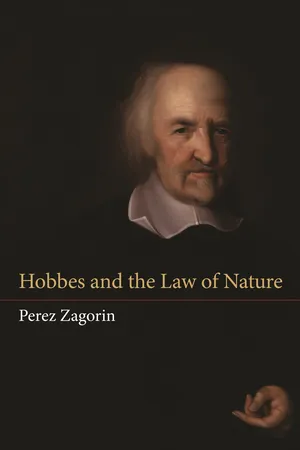 eBook - PDF
- Perez Zagorin(Author)
- 2009(Publication Date)
- Princeton University Press(Publisher)
1 C h a p t e r 1 Some Basic Hobbesian Concepts The major masterpieces of philosophy are never out of date. They continu-ally stimulate us to fresh questioning, present us with ideas about the world, mankind, and history that can enrich, clarify, and correct our own ideas, and offer us reflections, challenges, and options on living that may be of value to us in our coping with our own human problems and moral dif-ficulties. Thomas Hobbes was a great systematic philosopher and one of the foremost universal minds of the seventeenth century. 1 Although his writ-ings encompassed a wide range of subjects, including various branches of philosophy, the natural sciences, mathematics, psychology, religion, history, and other areas, his largest fame has always been due chiefly to his work as a political philosopher and as the author of Leviathan , one of the classics of Western political theory, no less important as a distinctive view of man and government than are The Republic of Plato, the Politics of Aristotle, and The Prince of Machiavelli. As a political philosopher Hobbes has most com-monly been identified especially with two ideas. The first is the concept of sovereignty. He has been considered the first thinker to achieve a clear and unambiguous comprehension of the principle of sovereignty in its vari-ous attributes as the defining characteristic of the state or commonwealth. The second is the concept of the prepolitical, antisocial state of nature as a condition of endless war and unrestricted natural right and his develop-ment of the principle of covenant, contract, and consent as the necessary presupposition and basis of the existence of the political order, sovereign power, and political obligation. eBook - PDF
- Sacha Golob, Jens Timmermann(Authors)
- 2017(Publication Date)
- Cambridge University Press(Publisher)
18 Hobbes s.a. lloyd The English philosopher Thomas Hobbes (1588–1679) is best known for his absolutist political philosophy according to which subjects are to obey the commands of an unlimited, undivided sovereign authority in all matters except those that would jeopardize immediate self-preservation or eternal salvation. That political philosophy is grounded in a moral philosophy that radically revises Hobbes’s inherited natural law tradition. 1 Basic moral requirements to regulate the interactions of people in communities, expressed in a set of natural laws discoverable through an exercise of unaided natural reason, unfold a core normative ideal of reciprocity. Applications of the core requirement of reciprocity yield a duty to submit to government, and settle both the authority of government and its limits. Although Hobbes’s moral philosophy is developed in the service of political theory, and only so far as it is needed for that purpose, it nonetheless stakes out a position original to its time and, on at least some of its interpretations, not unattractive today. “The laws of nature,” Hobbes writes, “are immutable and eternal . . . [a]nd the science of them, is the true and only moral philosophy . . . and therefore the true doctrine of the laws of nature, is the true moral philosophy” (Leviathan XV.38–40). 2 Scholarly disagreement over how to understand 1 By the term “a moral philosophy” I mean a system that orders ideas of rightness, goodness, and virtue into a more or less coherent scheme and offers an account of the justification of that scheme, including an account of its relation to human motivation. Aristotle, Kant, and Bentham each offer a moral philosophy in the sense I use the term. Rawls terms the comparative study of such systems “moral theory,” which he sees as a part of the discipline, “moral philosophy,” that seeks to understand the general and abstract properties of such systems.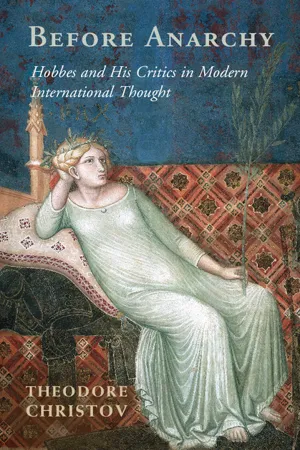 eBook - PDF
Before Anarchy
Hobbes and his Critics in Modern International Thought
- Theodore Christov(Author)
- 2016(Publication Date)
- Cambridge University Press(Publisher)
14 Before Anarchy any unattainable or disagreeable notion of a highest good, and the voluntary nature of the contract ensures rightful submission to authority. The laws of nature as applied to individuals, or the laws of nations when enacted by states, circumscribe the minimalist character of the natural rights tradition, whose thin set of rights and duties establishes universal validity. 38 In both Political Theory and International Relations, Hobbes is famously attributed the invention of the state of nature (although Hugo Grotius does make use of the idea before Hobbes), and the term has made far-reaching conceptual advances since the seventeenth century. If a single theoretical device can be claimed as equally formative for the derivation of sovereignty in both disciplines, the state of nature would surely be prized as the unanimous candidate on account of its theoretical possibilities. Within Political Theory, the analytical force of the state of nature enables the conceptual “transition” from a prepolitical condition to a political society, while International Relations merely “transfers” the conclusions drawn from the interaction of individuals and applies them to the world of states: commonwealths emerge as individuals writ large. The interpersonal state of nature blazes the trail for the international state of nature. Intensely preoccupied with domestic sovereignty, Political Theory has long championed Hobbes as an – if not the – absolutist theorist of the state in its internal organization. His entire political corpus leads to the creation of a strong state, and overwhelming evidence from his works would support this claim. Through an oversimplified view of the state of nature, the rigidity of domestic sovereignty has become the standard account of Hobbesian absolutism, while Hobbes’s actual views tend to get subsumed – if not ultimately distorted – into a grand, and less nuanced, interpretation. eBook - PDF
- Stephen J. Finn(Author)
- 2010(Publication Date)
- Continuum(Publisher)
CHAPTER 5 HOBBES'S POLITICAL PHILOSOPHY Political philosophy raises questions about the origin and legitimacy of political institutions and the rights and duties of both citizens and rulers: What is the ultimate source of political authority? Who should wield political power? What are the respective rights and duties of citizens and leaders? When is civil disobedience justified? What is the origin of the commonwealth? Hobbes tries to answer such questions in his works on political philosophy. For Hobbes, political philosophy is not simply an interesting intellectual pursuit; it also carries important practical consequences. As mentioned in the first chapter, Hobbes was witness to a civil war that was ripping his country apart. Various political and religious leaders had different ideas about who should possess political power and how it should be used. Such ideological disagreements did not remain confined to the realm of ideas, but created conflict in the real world. Hobbes believed that his own political philosophy, if accepted, would help produce and maintain a state of peace. According to Hobbes, humans could escape from civil war, metaphorically repre-sented by the 'state of nature', only by accepting a sovereign with absolute power. In this chapter, you will be introduced to the main elements of Hobbes's political philosophy. As we will see, Hobbes believes that the transition from the state of nature to an organized political settlement occurs when individuals make a political covenant with each other. While a political covenant might lead to any one of a number of forms of government, Hobbes believes peace requires the institution of an absolute sovereign - a ruler -who has the final say on all ethical, religious and political matters. In the second section, an interpretative problem concerning Hobbes's political absolutism will be presented. Although Hobbes advocates 85 eBook - PDF
- R.E.R. Bunce(Author)
- 2009(Publication Date)
- Continuum(Publisher)
Conclusion In many ways the Hobbes of the early twenty-rst century is a pale reection of the original. Hobbes believed that he could explain the science of bodies in motion, the nature of man and the citizen’s rela-tionship to the state. Yet, in a great deal of contemporary discussion Hobbes Today 125 Hobbes has been reduced to few “sound bites” shorn of their original philosophical signicance. In the early part of the twentieth century the apparent success of Nazism and Stalinism turned attention to Hobbes’s image of the state as leviathan. Humanity seemed to be fac-ing the prospect of becoming a drone species living a wholly regi-mented existence under the perpetual gaze of a monster state—the modern leviathan. 9 More recently, Hobbes’s metaphor of the state of nature has been invoked in discussion of the equal but opposite threat, the fear that civilized people will revert to barbarism; that neighbors will become enemies engulfed in a war of all against all. Treating Hobbes’s though in this way does it a signicant in justice; it is like reducing the achievements of NASA’s Apollo program to the words “The Eagle has landed.” To some extent Hobbes has been a vic-tim of his own success. His canonical status has led to the simplica-tion of his message and the use of his name to add philosophical weight to the work of journalists and policy makers. Hobbes claimed that he was misrepresented and misunderstood in his own time—the same is true today but in different ways. Fortunately, this is not the whole story of Hobbes’s recent history. Hobbes continues to inspire innovative political thinkers. Indeed, it is interesting to note a continuity between Oakeshott and Gray. Both regard Hobbes as the forefather of a skeptical and individualistic approach to politics.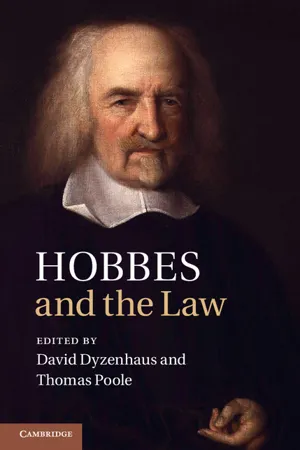 eBook - PDF
- David Dyzenhaus, Thomas Poole(Authors)
- 2012(Publication Date)
- Cambridge University Press(Publisher)
5 2 The political jurisprudence of Thomas Hobbes Martin Loughlin Introduction Thomas Hobbes was a jurist of the first rank, and his Leviathan stands as the greatest masterpiece of political jurisprudence written in the English language. Commonly regarded as a political philosopher, 1 ‘political juris- prudence’ more precisely specifies the nature of his scholarship. Hobbes was certainly a philosopher in some sense, yet he remained very critical of abstract theorizing and so-called philosophical thinking, believing that true wisdom, ‘the knowledge [scientia] of truth in every subject’, comes only from experience. 2 His speculations were continually fixed on practical matters. 3 He thought he was engaged in a thoroughly practical undertaking which he himself termed ‘civil science’ but which, given its juristic orientation, could also be called ‘political jurisprudence’. I have benefited from presentations at the seminar on Hobbes and Law at the LSE Legal and Political Theory Forum in May 2010 and at a Cardozo Law School Faculty Seminar in September 2011. In addition to the participants in those seminars, I thank Philip Cook, Neil Duxbury, Chris Foley and Grégoire Webber for their written comments. 1 See, e.g., Michael Oakeshott, ‘Introduction to Leviathan’ [1946] in Michael Oakeshott, Hobbes on Civil Association (Indianapolis: Liberty Fund, 2000), 1, 3: ‘Leviathan is the great- est, perhaps sole masterpiece of political philosophy written in the English language’. 2 See Thomas Hobbes, On the Citizen, edited by Richard Tuck and Michael Silverthorne (Cambridge University Press, 1998), 4–5 (hereafter: De Cive, DC). Noting in his introduction to De Cive that ‘the war of the sword and the war of the pens is perpetual’, Hobbes suggested that one reason was that ‘both parties to a dispute defend their right with the opinions of Philosophers’. eBook - ePub
Reading Political Philosophy
Machiavelli to Mill
- Derek Matravers, Jonathan Pike, Nigel Warburton(Authors)
- 2014(Publication Date)
- Routledge(Publisher)
In political philosophy, one of the key disagreements is over which of the properties of human nature are essential and which are accidental and so potentially specific to a space and time. Hobbes wanted to show that self-interested behaviour is essential: marxists and anarchists want to insist that such behaviour is ‘accidental’ and therefore potentially eliminable.in foro externoLiterally ‘in the external forum’. Essentially, here, Hobbes refers to activities, specifically the execution of the laws of nature. The laws of nature do not always oblige absolutely in this area.in foro infernoLiterally ‘in the internal forum’. Essentially, here, Hobbes refers to the mind of a moral agent – an area the laws of nature oblige absolutely.patriarchyLiterally ‘rule by fathers’. However, it is important to distinguish between modern and classical uses of the term. Classical patriarchalism, such as is found in Sir Robert Filmer’s Patriarcha (1680), is the view that political authority has its roots in the subjection of sons to their fathers. Political authority, therefore, is natural, and does not rely on contract or consent.sovereignHobbes’s sovereign is the person who bears the part of the purely artificial person of the state. The sovereign may be a single individual, in the case of a monarchy, or a collection of individuals, in the case of aristocracy or democracy. Hobbes’s preference was for monarchy.Further reading
- Gauthier, David P. (1969) The Logic of Leviathan (Oxford University Press). This is the standard account of Hobbes interpreted in terms of game theory.
- Hampton, Jean (1986) Hobbes and the Social Contract Tradition (Cambridge University Press). A more recent account of a game-theoretic approach to Hobbes, expanding on the criticism that his alienation argument reduces to an agency one.
- Macpherson, C.B. (1962) The Political Theory of Possessive Individualism (Oxford University Press). A contentious but stimulating account of Hobbes, Locke and the Levellers, influenced by a marxist perspective.
- Pateman, Carole (1988) The Sexual Contract
 eBook - PDF
Carl Schmitt's International Thought
Order and Orientation
- William Hooker(Author)
- 2009(Publication Date)
- Cambridge University Press(Publisher)
Thus the state supersedes the church as the conclusive political entity (although, as we have seen, Schmitt cannot credit the modern state with the same political integrity as the complexio oppositorum of the medieval Catholic church). It is precisely this internal dynamism of Hobbes’ state concept that gives rise to the need to craft and re-craft the balance. Political theory is a fundamentally different exercise for Schmitt depending on whether or not he is assuming the basic harmony of these three elements of the state. Schmitt’s Concept of the Political represents a basic analysis of the political logic of sovereigns that maintain an adequate balance of these functions – representative, authoritative and mystical. Such an exercise is easy in comparison to theorising the unravelling and potential reassembly of the tripartite structure in modern politics. Schmitt’s study of Hobbes, and the accompanying turn towards Christological history, seem to represent a recognition that one must engage in exactly this kind of historicity, if one is to recognise and restore true political authority. Once authority or mysticism are lost, the state’s inherent logic is changed. It becomes merely representative in the way, presumably, that liberal theory would anticipate and welcome. Again, Hobbes proves to be the vehicle by which Schmitt embeds this argument in historical context. The great flaw, or ‘crack’, in Hobbes’ theory was in the way in which he phrased the conventional basis of the state. In describing the contract as the foundation of the Commonwealth, Hobbes allowed for interpretation of his state theory as privileging representation above the other two poles Schmitt derived from a Clausewitzian sense of military regularity and conventional enmity between states. See B. Heuser, Reading Clausewitz, London: Pimlico (2002), p. eBook - PDF
- Gregory S. Kavka(Author)
- 2021(Publication Date)
- Princeton University Press(Publisher)
INTRODUCTION O N E METHOD —HOBBES'S AND OURS 1-1. Hobbesian Theory Though he has been more than three hundred years in the grave, Thomas Hobbes still has much to teach us. His works identify enduring problems of social and political life and suggest some promising solutions for them. Yet, at the same time, they contain important errors in method, assumptions, reasoning, and conclu-sions. To learn the most from Hobbes, we must correct or avoid these errors, while preserving and building upon the fundamen-tally sound philosophical structure that they infest. With that aim in mind, this book offers an explicitly revisionist interpretation of Hobbes's moral and political philosophy. This interpretation takes clarification of Hobbes's own position as but part of a larger process of understanding, evaluation, and modi-fication. The ultimate goal of this process is to explicate and de-fend a plausible system of moral and political hypotheses sug-gested and inspired by Hobbes. Throughout, an attempt is made to indicate clearly which of the views discussed are Hobbes's and which are proposed alterations or improvements of his position. Because the modifications offered are not trivial, it would be mis-leading to describe the theory propounded here as that of Hobbes. Even where it departs from his position, however, the theory re-sembles his in critical respects: in its adoption of a nonoptimistic view of human nature, in its analysis of the perils of anarchy, in its use of the social contract idea to ground political obligation, in its emphasis on the risks of revolution, in its attempt to reconcile morality and prudence, and so on. Thus, while not Hobbes's own M E T H O D — H O B B E S ' S AND OURS theory, the theory set forth in this book surely is a Hobbesian theory. eBook - PDF
Anatomy of Failure
Philosophy and Political Action
- Oliver Feltham(Author)
- 2013(Publication Date)
- Bloomsbury Academic(Publisher)
The name for that environment in Chapter three was the practical indeterminacy of use. In this chapter it assumes the name of the variability of human affairs. The operation of the laws of nature and their subject In classic social contract theory the role of the laws of nature is ambivalent, as noted by generations of commentators. On the one hand, the first law of self-preservation is the very foundation of Hobbes’ ‘war of all against all’, of Locke’s ‘ill condition’. On the HOBBES AND LOCKE ON POLITICS 183 other hand, the provisos attached to it – self-preservation can be secured better by cooperation, by peace, or self-preservation does not legitimate harming others – immediately provide the exit route, they lay the foundations of the social contract ( L , 91; ST , §6). These rules for action, which are supposed to be independent of any par-ticular form of society or morality, contain the modern state in germ form. They seal the fate of collective action. It is the guarantee of the state alone that allows actions be concatenated in society with-out dissolving into chaos. This is the fundamental political intuition at stake in both Hobbes’ and Locke’s versions of social contract theory. One action cannot be joined to another action without an institutional guarantee. One cannot transfer ownership of property to someone and receive money in return without the backing of the law. Individual actions are thus collectivized on the basis of the potential intervention, upon violation of contract, of the known and predictable force of written law. No collective action without a judge. No society without a state. It is on this basic point that the Leveller-agitator model of action differs: it offers an alternative account of how actions can be collectivized. The laws of nature play three roles: they bring about the state of nature, they furnish an exit from the state of nature and they ground political obligation.
- John Rawls, Samuel Freeman(Authors)
- 2008(Publication Date)
- Belknap Press(Publisher)
What is that state and what are the precepts that characterize it? On Hobbes’s view, it would be characterized, first, by the precepts of the dictates of reason, which are the Laws of Nature ( Leviathan, p. 63), and second, by the idea that those laws are effectively enforced by a Sovereign or common power who has all the necessary powers to do so. So, the laws of nature would give the background precepts, and then would come the Sovereign with these necessary and effective powers, and then of course, on top of all that there would be the Sovereign’s particular enactments, that is, civil law. Then the third thing that one would have to do would be to move to set up this mutually beneficial state. This Hobbes thinks of as being done by the Social Contract, by which is meant the establishment of the Sovereign by “institution,” or by authorization. Notice that he thinks that a Sovereign can come about also by conquest, or by “acquisition” as he puts it. This is a very important point to mention, namely the Sovereign has the same pow-ers in either case, whether brought about by conquest, or by authorization or institution via the social contract. Hobbes mentions that if we have two [ 77 ] The Role and Powers of the Sovereign countries ruled by the same Sovereign, but in one of them the Sovereign’s rule is by acquisition or by conquest, and in the other by a social contract brought about by authorization or institution, the Sovereign has precisely the same powers in both countries ( Leviathan, p. 102). There is no differ-ence. It will be effectively the same constitutional regime. (I am using the term “constitutional” here rather broadly, not as implying any bill of rights or anything of that sort.) What happens next then, is that this mutually beneficial state must be stabilized by instituting an agency which then would ensure that every per-son normally has a sufficient motive to comply with the rules and that these rules are ordinarily complied with.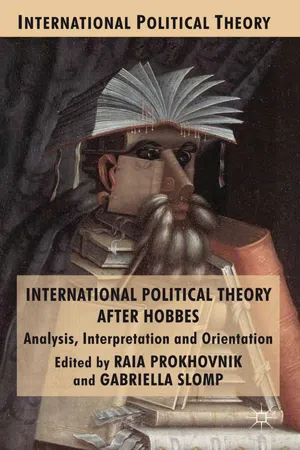 eBook - PDF
International Political Theory after Hobbes
Analysis, Interpretation and Orientation
- R. Prokhovnik, G. Slomp, R. Prokhovnik, G. Slomp(Authors)
- 2011(Publication Date)
- Palgrave Macmillan(Publisher)
On the basis of this difference, Strauss questions Schmitt’s admiration for Hobbes and proclaims the latter ‘the anti-political thinker’ (Strauss 1976, 90, emphasis original). Indeed, insofar as the Covenant marks the exit from the state of nature, Hobbes is an anti-political thinker in Schmittian terms, there being no politics in the Commonwealth, but only police, the administration of people and things for the purposes of peace and prosperity (cf. Ranciere 1998, 21–42). It is this drive for depoliticisation that ultimately leads Schmitt away from a valorisa- tion of Hobbes in the earlier work to a more critical, if still sympa- thetic, reading in the Leviathan in the State Theory of Thomas Hobbes (1996 [1938]), to which we shall return below. Sergei Prozorov 127 Yet, the difference between Hobbes and Schmitt is more intricate than a simple dichotomy of pro- and anti-political standpoints. By affirming the state of nature as the state of the political, Schmitt does not merely reiterate Hobbes’s point about the ever-present ‘most extreme possibility’ of violent conflict, in the absence of sovereign authority, but also emphasises its real manifestations in concrete politi- cal life, characterised by the presence of such authority, for example, the phenomena of dictatorship, the state of emergency, civil war, etc. It is for this reason that Agamben, whose normative points of departure are completely heterogeneous to Schmitt’s, is drawn to the latter’s theory of sovereignty. In his attempt to move beyond Hobbes’s depoliticisation of status civilis Schmitt issues the most explicit revela- tion of the arcanum of the political: the locus of the state of nature is inside the Commonwealth. With this insight in mind Agamben advances his most famous thesis on the production of bare life as the originary activity of sovereign power (Agamben 1998: 6).
Index pages curate the most relevant extracts from our library of academic textbooks. They’ve been created using an in-house natural language model (NLM), each adding context and meaning to key research topics.

