Languages & Linguistics

Cognitive Theory
Cognitive theory in the context of languages and linguistics is a psychological approach that focuses on how people acquire, process, and use language. It emphasizes the role of mental processes such as perception, memory, and problem-solving in language learning and use. Cognitive theory also explores how language is represented and organized in the mind.
Written by Perlego with AI-assistance
Related key terms
1 of 5

11 Key excerpts on "Cognitive Theory"
 eBook - PDF
Language Learning and Cognition
The Basics of Cognitive Language Pedagogy. With Contributions by Kees de Bot, Marina Foschi, Marianne Hepp, Sabine De Knop and Parvaneh Sohrabi
- Jorg Roche, Ferran Suñer(Authors)
- 2023(Publication Date)
- LIT Verlag(Publisher)
1.1.6 Summary - Cognitive linguistics distinguishes itself from other approaches by defining language as a means of conceptualizing reality. Reality is fixed by the interaction between individuals in a particular cultural context and acquired through general learning mechanisms. - Cognitive linguistics also assumes that language is a meaningful system of symbolic structures which can be explained using the principles of general cognition and cannot be generated by a fixed set of rules. Among other things, prototype effects, metaphoriza- tion, and polysemy are appropriate for explaining the lexis and the grammar of a language. - Finally, the advantages of a cognition-based language pedagogy can be explained by the cognitive plausibility of language descrip- tion as well as its high compatibility with task-based approaches. 1.1.7 Review Questions 1. What are the major differences between cognitive linguistics and generative linguistics? 2. What is the cognitive commitment in cognitive linguistics? 3. What is a prototype effect and what role does it play in grammar? 4. How would you explain the advantages of cognitive language ped- agogy over traditional language teaching methods? 35 1.2 Language and the Multilingual Brain Kees de Bot Language processing is one of the most complex tasks our brain per- forms. It is a task that requires the cooperation of parts that are connected in a network throughout the entire brain. Some parts are more strongly involved than others. While scientists used to believe that certain lan- guage functions are located in specific brain areas, there is now a con- sensus that no area of the network is solely responsible for language pro- cessing. Still, there are many areas of the network in both hemispheres that are of significance. eBook - PDF
- Lena Heine(Author)
- 2010(Publication Date)
- De Gruyter Mouton(Publisher)
Inspired by the findings from cognitive psychology, there are, nonethe-less, alternative theories from the field of Cognitive Linguistics. They do not assume that linguistic processing is based on any special cognitive mechanism, but work according to the same basic underlying principles as other forms of cognition. What this theoretical debate shows is that it is not at all clear whether we should assume a clear structural distinction between linguistic and con-ceptual knowledge. We do not need to take any strict decision for or against one or the other view here; but the research from the cognitive Processes of text comprehension 37 sciences shows that it is possible to establish a distinction between linguis-tic and conceptual knowledge on a function level. In this light I have de-fined linguistic cognitive processes as mental processes that serve the con-struction and transfer of meaning with the help of the semiotic system of language. These cognitive processes are generally called ‘understanding and pro-ducing language’. They form the traditional areas of applied linguistics such as psycholinguistics, discourse analysis, and text composition re-search, which can look back onto a long tradition of empirical research (z.B. Aitchison 1998; Dietrich 2002; Garman 1991; Pinker 1995). In the following, I will present short overviews of those basic processes of under-standing and production of speech and written texts which have been mod-elled in these areas, and see whether they can be used here. 2. Processes of text comprehension Firstly, I will take a closer look at processes of language comprehension, which I will define as the human ability to extract information from the semiotic system of language by constructing a conceptual representation through linguistically coded symbols. The reception of language has been investigated mainly on the basis of written texts and only marginally on evidence from spoken language (but cf. Jusczyk 1997). eBook - PDF
Cognitive Linguistics in the Redwoods
The Expansion of a New Paradigm in Linguistics
- Eugene H. Casad(Author)
- 2011(Publication Date)
- De Gruyter Mouton(Publisher)
For this reason, it is incorrect to define cognitive linguistics sim-ply in terms of that branch of linguistics that pays attention to related work in other cognitive disciplines (i.e., as that discipline that adheres to the cognitive commitment). But, secondly, cognitive linguistics would not, in my estimate, argue against the idea that (a) there is a mental lexicon that might be independently accessed during sentence processing, or (b) that certain syntactic information might be evaluated independently of semantics in sentence comprehension. It is important here to distinguish between two kinds of questions on the autonomy of language. First, is the language faculty autonomous of non-linguistic, cognitive abilities? Second, within the grammar, are different linguistic components truly independent of each other in their organization, function, and processing (e.g., is syntax autonomous of phonology, semantics, etc)? Both of these questions demand empirical evidence to be answered, but probably require different kinds of evidence. Part of the confusion about the role of cognitive structure in lan-guage use and processing results from the failure to distinguish be-tween different levels at which cognition and language interact. Let me suggest four possible ways that conceptual thought might influ-ence ordinary language use and understanding. (1) Conceptual thought plays some role in changing the meanings of words and expressions over time, but does not motivate con-temporary speakers' use and understanding of language. (2) Conceptual thought motivates the linguistic meanings that have currency within linguistic communities, or may have 36 Raymond W. Gibbs some role in an idealized speakers'/hearers' understanding of language. But conceptual thought does not actually play any part in an individual speaker's ability to make sense of lan-guage or to process it.
- Richard A. Geiger, Brygida Rudzka-Ostyn, Richard A. Geiger, Brygida Rudzka-Ostyn(Authors)
- 2011(Publication Date)
- De Gruyter Mouton(Publisher)
That they are cognitive-scientific means that multidisciplinarity involving the fields of linguistics, psychology and artificial intelligence is necessary. At the same time, the computational realizability and psychological reality of the approaches are essential. Together, they lead to the anteriority of process thesis, which states that process deploys and determines structure. In this light the much-debated competence-performance distinction is redefined, with competence becoming processing competence, a set of processing universale, strong psychological constraints using and creating knowl-edge structures without being determined by them. This set of con-straints defines language processing (viz. understanding) as a robust, in-cremental, lexically-driven, semantic/pragmatic interactive process. Modelling this process in a cognitive-scientific perspective has proved not only possible, but also rich in potential explanatory power. To end with a quote from Briscoe's (1987: 227) conclusion that stresses this aspect: A more detailed understanding of the psychological pro-cesses and mechanisms which underlie language acquisition, production, and comprehension offers the possibility of considerably increasing our understanding of language, both by bringing to light new facts (such as correlations between prosody, parsing strategies and ambiguity) and by offering insightful explanation for such facts. Notes 1. See Collins (1977), Norman (1981), Kintsch et al. (1984), Gardner (1985) for similar definitions of Cognitive Science. 164 Geert Adriaens 2. See e.g. Winograd (1983 and passim), Schänk & Riesbeck (1981), Mar-cus (1980) for examples of AI research in the area of natural language processing. 3. See e.g. Bresnan (1982), Berwick & Weinberg (1984), Naumann (1988) or any issue of Proceedings of the Association for Computational Linguistics (ACL), or of the International Conference on Computational Linguistics (COLING).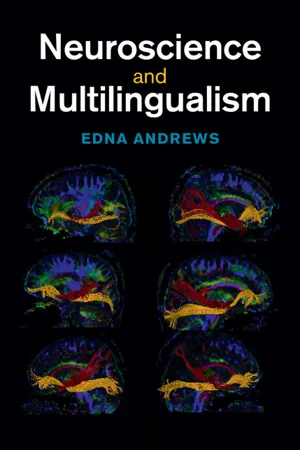 eBook - PDF
- Edna Andrews(Author)
- 2014(Publication Date)
- Cambridge University Press(Publisher)
In this regard, cognitive linguistics, a fundamentally “usage-based, not rule-based” theory (Sinha 2007: 1270), has played a central role in under- standing the interactive process-oriented nature of generating and negotiating meanings. Johnson and Lakoff (2002: 248) explain the importance of “inter- actional properties” in the following manner: “Meaning comes, not just from ‘internal’ structures of the organism (the ‘subject ’), nor solely from ‘external ’ inputs (the ‘objects’), but rather from recurring patterns of engagement between organism and environment.” As I will show in this chapter, it is through the modeling of communication acts and speech acts that we can characterize these “recurring patterns of engagement” that are critical to the construction of linguistic meaning and meanings. In the context of neurolinguistics and the study of language and brain, it is important to immediately note that language and speech are not equal, and speech (or even motor speech) is but one aspect of human language. Speech is one of the unique properties of human language and deserves special atten- tion, but it is only one aspect of the complicated network of cognitive functions that we call human language. It is not uncommon for these terms to be used interchangeably in the literature, and the delineation of their meaning is essential as we move forward to more informed theories of language and brain. Other generally acknowledged characteristics of human language include the presence of varying degrees of redundancy and ambigu- ity in all linguistic utterances. Language is not a monolith in the brain. As Poeppel and Hickok state it, “[L]inguistic domains are themselves not monolithic, but have rich internal structure with numerous subcomponents and computational requirements” (2004: 5). eBook - PDF
Process linguistics
Exploring the processual aspects of language and language use, and the methods of their description
- Thomas T. Ballmer, Wolfgang Wildgen, Thomas T. Ballmer, Wolfgang Wildgen(Authors)
- 2017(Publication Date)
- De Gruyter Mouton(Publisher)
IV. Language acquisition and cognition The actual problem we are concerned with when we confront Chomsky's language acquisition theory with cognitive psychology is that in a way the child mastering his language can be compared according to his theory with a linguist writing a grammar of that language (see also McNeill 1966). Although Chomsky formulates it carefully by saying that his discussion of the topic does not refer to conscious formulation and expression of these (rules, hypotheses, etc.) but rather to the process of arriving at an internal re-presentation of a generative system which can be appropriately described in these terms (Chomsky, 1965, p. 46), the present comparison has been taken too literally many times in actual research. Chomsky's above quoted remark, however, is vague in the sense that it either emphasizes that the linguist's and the child's activity differs in terms of resp. conscious and uncon-scious or it states that the processes of arriving at an internal representation of a generative system can be described both for the child and the adult in the same terms. It is clear that a linguistic theory is only explanatorily valid if the processes as meant by Chomsky are appropriately described, that is to say are also cognitively validly described. The very 206 question now is whether one can maintain that the processes - whether conscious or unconscious - of the child's language learning are identical to those of an adult and professional linguist describing a language or in other words that the child's discovery procedures are identical to those underlying the lingu-ist's professional and systematic linguistic intuitions. If not, then Chomsky's linguistic theory is only psychologically valid inasfar as it describes correctly the ultimate products of different kinds of psychological operations.
- Julia Herschensohn, Martha Young-Scholten(Authors)
- 2013(Publication Date)
- Cambridge University Press(Publisher)
Some sociolinguists view the language learner in a similar way to cog- nitivists, as an individual mind whose task is to acquire the rules of the L2, albeit its sociopragmatic rules in this case, rather than its grammar or vocabulary (see Chapter 23, this volume). In order to study the acquisi- tion of these rules, they make use of (socio)linguistic or psycholinguistic methodologies. Ethnographers, on the other hand, focus on the learner as a social being situated within a specific context, affording different oppor- tunities for learning linked to specific communities of practice, involving unequal power relationships which shape the interactional practices taking place. Learners in this view are very much seen as active social partners within complex social settings and the focus of this approach is on how they negotiate their learning in situated contexts, as well as on how their identity is shaped by these encounters (for more details, see Chapter 12, this volume). Interactionists, as outlined above, pay attention to the interactional pat- terns learners engage in, and how they affect language learning. Their view of the learner is primarily as an individual engaging with conversational partners in order to develop an interlanguage system, and making use of internal cognitive and linguistic mechanisms for so doing (see Chapter 10, this volume). Within this broad theoretical family, the view of the language learner varies substantially according to the approach adopted, from an individual making use of psycholinguistic tools to assist learning, to the learner as a primarily social being negotiating new identities and power relationships. eBook - PDF
Teacher's Handbook
Contextualized Language Instruction
- Judith Shrum, Glisan, Judith ShrumGlisan(Authors)
- 2015(Publication Date)
- Cengage Learning EMEA(Publisher)
What factors influence an individual’s ability to acquire language? ■ You have now learned about the cognitive factors that are involved in language acquisi-tion, as well as how input, interaction, and output play a role in acquisition as an individ-ual achievement. What the individual learner does cognitively to acquire language is only part of the story. Firth and Wagner’s (1997) seminal article served as a catalyst for much debate in the field concerning the question of whether SLA should be reconceptualized to acknowledge the role of language use in social contexts as contributing to acquisi-tion. More recently, Ellis (2008) has acknowledged the emergence of “sociocultural SLA” as the major theoretical development in SLA in the last decade. Of importance to foreign language teachers is that the SLA community has increasingly recognized the pivotal role of language use in social interaction in facilitating language acquisition. This viewpoint that the mediation provided by others in social interaction is the key to second language acquisition is the foundation of Teacher’s Handbook and will be defined and explored in the following section of this chapter. This concept will also be examined and exemplified in further detail throughout the themes presented in each chapter. Language Learning as a Collaborative (Social) Achievement Much of the research explored in the previous sections focuses on how L2 input is negotiated by individual learners by means of their own cognition and made more com-prehensible. Although many of these studies acknowledge the importance of collab-orative interaction in the learning process, they offer an incomplete picture of learners’ interaction in an L2 classroom setting. The cognitivist and interactionist views have been challenged by researchers examining the nature of sociocultural theory. According to Copyright 2016 Cengage Learning. All Rights Reserved. May not be copied, scanned, or duplicated, in whole or in part. eBook - PDF
Cognitive Approaches to Pedagogical Grammar
A Volume in Honour of René Dirven
- Sabine De Knop, Teun De Rycker, Sabine De Knop, Teun De Rycker(Authors)
- 2008(Publication Date)
- De Gruyter Mouton(Publisher)
Cognitive linguistic theories of grammar and grammar teaching Cristiano Broccias Abstract This paper first briefly examines some of the most important theoretical approaches to grammar within the cognitive linguistic paradigm, Langacker’s Cognitive Grammar, Goldberg’s Construction Grammar, Croft’s Radical Construction Grammar and Fauconnier and Turner’s Blending Theory. It points out that there is a striking similarity between the development of (theoretical) cognitive linguistics (against the background of generative grammar) and the recent history of language teaching. Cognitive approaches to grammar are converging towards a usage-based/network model of language (i.e., a bottom-up, maximalist approach to lan-guage), which contrasts with the decontextualized view of language (i.e., a top-down, minimalist approach) espoused by generative grammarians. Similarly, lan-guage teaching in general and the teaching of grammar in particular have moved from decontextualized drilling activities to more meaningful, communica-tive/context-based methods, i.e., a usage-based model of language teaching. The second part argues that one obvious drawback of the usage-based model, both in language theorizing and in language teaching, is “data overload”. For example, it is not possible to say how many senses prepositions – a staple topic in discussions about applied cognitive linguistics – have or, more in general, how many exten-sions constructions have. Networks are in part arbitrary constructs by the linguist rather than fine-grained reflections of the language user’s mind. Consequently, approaches which try to implement network analyses in grammar teaching (as is usually done in the case of prepositions) may in fact turn out to be detrimental. They impose on the non-native speaker the burden of having to also learn how (alleged) extensions came into being while no psycholinguistic and/or diachronic evidence for such extensions is offered in the first place. eBook - PDF
Language and Reality
Selected Writings of Sydney Lamb
- Sydney Lamb, Jonathan J. Webster(Authors)
- 2004(Publication Date)
- Continuum(Publisher)
298 LEARNING SYNTAX: A NEUROCOGNITIVE APPROACH Of course, there has to be some internal system that accounts for what people are able to say and to understand. But it need not be assumed to have the form of rules used in classifying utterances, nor is there any a priori reason for assuming that it contains the categories and other devices that may be employed by those attempting to describe them. And such attempts are particularly suspect as formulated by those who attempt to describe them in the most economical possible way, hence with the broadest possible categories and what have erroneously been called linguistically significant generalizations. The discrepancies between the results of such taxonomic thinking and a more realistic view of the cognitive reality may be seen at all levels of linguistic structure, but they are nowhere more evident than in the area of syntax. An alternative is to treat most syntactic information, or even all of it, as attached to individual lexical items. In that case, the acquisition of syntactic knowledge is part and parcel of the acquisition of lexical knowledge and therefore occurs little by little as individual lexemes are learned. This view has become increasingly attractive in recent years. Yet there is also a lot of evidence for the existence in our cognitive systems of some kind of constructions, for example the argument-structure constructions described by Goldberg (1995). Such construc-tions, to be considered below, evidently make use of syntactic categories. And so we have a problem. Tomasello and Brooks (1999), who accept the cognitive existence of constructions of this kind (cf. Tomasello 1998), identify areas that require further investigation for developing a viable theory of syntactic learning, stating that the various psychological processes involved in early syntactic development [...] need to be identified and charac-terised (1999: 185). eBook - PDF
Cognitive Linguistics and Translation
Advances in Some Theoretical Models and Applications
- Ana Rojo, Iraide Ibarretxe-Antuñano, Ana Rojo, Iraide Ibarretxe-Antuñano(Authors)
- 2013(Publication Date)
- De Gruyter Mouton(Publisher)
Em-bodied and situated cognition depicts meaning as shaped by bodily action and provides a framework for the development of a realistic theory of action-oriented imagination in translation. Social and distributed cognition focuses on the colla-borative construction of meaning, and on the off-loading of cognitive workload on cultural artefacts, both important dimensions of professional translation. 2 Classical paradigm: The neutral manipulation of symbols The classical paradigm describes human cognition as manipulation of symbolic representations, a process that follows the rules of a mental language (e.g. New-ell and Simon 1976; Fodor 1983). This internal language of thought is viewed as independent from natural languages, which are considered as instruments of communication, not of thought. But, at the same time, natural languages are used as models for the description of the mental language, which is depicted as sequential and guided by syntactic rules. For the classical paradigm, the sym-bols of mental language are abstract, amodal and arbitrary, and meaning arises from the syntactic combination of these symbols (Glenberg and Roberston 2000). Mental language symbols are arbitrary because there is no formal rela-tionship between them and their referents, and they are amodal because they are independent of sensorial modalities, that is, because there is no correspon-dence between their structures and the perceptual states that caused them to exist (Barsalou 1999). The syntactic rules that guide the manipulation of mental symbols are also arbitrary and amodal (de Vega 2002). Bruner ([1991] 2006) reports how he and other researchers who took part in the cognitive revolution against conductism at the end of the 1950s tried to give the concept of meaning a central position in the new cognitive paradigm, and how this concept was quickly replaced by the concept of information . The emphasis went from meaning construction to information processing .
Index pages curate the most relevant extracts from our library of academic textbooks. They’ve been created using an in-house natural language model (NLM), each adding context and meaning to key research topics.

