Politics & International Relations

Indian Reorganization Act
The Indian Reorganization Act, also known as the Wheeler-Howard Act, was passed in 1934 and aimed to reverse the assimilationist policies towards Native American tribes. It encouraged tribal self-government and provided funding for economic development and land acquisition. The Act also sought to preserve Native American culture and traditions, marking a shift towards a more respectful and inclusive approach to tribal sovereignty.
Written by Perlego with AI-assistance
Related key terms
1 of 5

9 Key excerpts on "Indian Reorganization Act"
- Lee D. Baker(Author)
- 2010(Publication Date)
- Duke University Press Books(Publisher)
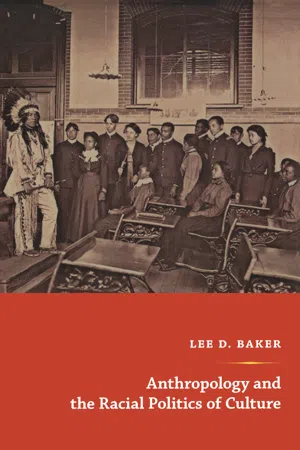
With the help of John Collier, Franklin D. Roosevelt’s politi-cally savvy commissioner of Indian affairs, many of the recommendations Meriam and his staff made found their way into the Wheeler-Howard Act of 1934. Better known as the Indian Reorganization Act (ira), this was sweeping New Deal legislation that was meant to curtail future al-lotments, empower tribal governments, and put structures in place to 2 INTRODUCTION enable improved health, education, land acquisition, and cultural preser-vation (Medicine 1998:254). Broadly construed, this tumultuous period of explicit vanishing policies began with the passing of the Indian Religious Crimes Code (1883) and ended with the Wheeler-Howard Act (1934). By employing stark and macabre metaphors, proponents of assimila-tion barely veiled their desires for the complete destruction of American Indian beliefs and cultural practices, albeit couched in the name of prog-ress and the advance of Christian civilization. A generation later, however, cultural preservation and self-determination became the watchwords of federal policies governing Native Americans. Although the ultimate suc-cesses of the ira varied, one can view this shift in terms of the federal government’s promulgating of policies to first destroy and then protect American Indian culture. The dramatic shift in the policies of the Bureau of Indian Affairs (bia) mirrored shifts in American popular culture, aes-thetics, and attitudes toward traditional or authentic Native American cultures. The ascendancy and import of ideas like tradition and culture among American Indian groups, within state and federal governments, in vehicles of popular culture, and among philanthropists were congru-ent with the development of Americanist anthropology as it moved from embracing ideas of social evolution to articulating ideas of historical par-ticularism and cultural relativism.
- Brendan Hokowhitu, Aileen Moreton-Robinson, Linda Tuhiwai-Smith, Chris Andersen, Steve Larkin, Brendan Hokowhitu, Aileen Moreton-Robinson, Linda Tuhiwai-Smith, Chris Andersen, Steve Larkin(Authors)
- 2020(Publication Date)
- Routledge(Publisher)
The exact time in which this story may be referring to is not important to me here. Rather, the story generates insights we can all discuss about different periods of time in which colonialism occurred in North America. Sometimes in these periods, settlers and other exploiters showed the face of kinship as a way to induce Indigenous persons to help them avert real or perceived crises. The Meriam Report in the United States (1928) declared an emergency regarding the impact of poverty on Indigenous peoples, blaming, Indigenous ‘lack of adjustment’ but also US agricultural and land tenure policies and the funding for the Indian Service. One response, however, was for the Bureau of Indian Affairs under then director John Collier to rescue Tribes by corporatising Tribal governance. One of the vehicles of such corporatisation in the 1930s was the Indian Reorganization Act. The corporations were intended to facilitate the Tribally controlled lease of Indigenous lands, broker deals with extractive industries, and replace diverse Indigenous forms of governance with a one-size-fits-all American form of corporate governance. These measures were phrased as reform, economic development, and wealth generation, and partly inspired by forms of colonialism practiced in other parts of the world (Hauptman 1986). Of course, the outcomes of the Indian Reorganization Act, depending on the Tribe, often involved the undermining of valuable traditional forms of governance, increasing dependence on extractive industries and commercial agriculture, and instigating divisions within Tribal societies between the interests and privileges of elected officials and Tribal citizens. The policies of this era are in some cases looked at as affirming dimensions of self-determination that have been denied under previous US regimes. And Collier is a complicated historical actor to interpret, given their advocacy of Indigenous cultures and Tribal sovereignty (Rusco 1991). Yet today it is true that some Tribal governments struggle to diversify their economies, protect health, and implement culturally relevant programs and forms of governance due to some of the barriers to self-determination that can reasonably be attributed to the Indian Reorganization Act period (and evolving since then through other policies) (Rusco 2000; Clow 1987; Ranco and Fleder 2005). In terms of the Indian Reorganization Act, the crisis of the impacts of poverty served as a basis for some settlers to show themselves (problematically) as kin or allies. Under the guise of addressing poverty, it can be argued that US settler society expanded its control over Indigenous peoples. eBook - ePub
Roads In The Sky
The Hopi Indians In A Century Of Change
- Richard O. Clemmer(Author)
- 2018(Publication Date)
- Routledge(Publisher)
also Kelly 1975:298). 60 Its primary political and administrative implement was the Indian Reorganization Act. The Indian Reorganization (IRA) was John Collier's brainchild. After a decade of launching a continuous critique against Indian policy, Collier had gotten himself appointed Commissioner of Indian Affairs in FDR's "New Deal" administration in 1933. Collier vowed to dictate Indian policy after establishing power. 61 The Indian Reorganization Act intended to "reorganize" Indians on two levels: economically, according to a cooperative and corporate model; and politically, as a government for which the Secretary of the Interior would provide checks and balances. But it also protected indigenous law, culture, religion, language, education, and artistic and symbolic expression by uniformly lifting any and all bans and barriers on these aspects of Indian life. Administratively, the BIA began to encourage perpetuation and revival of Indian arts, crafts, cultures, and religions. Thus, "reorganization" envisioned maintenance of much of Indians' traditions, but also clearly envisioned their adoption of a complex of new traits and behavior patterns in economy and politics. Implementation: General. Collier did not anticipate bringing the actual law to Indians for their approval; he somehow thought it automatically represented Indians' interests. But Oliver La Farge, head of the Association on Indian Affairs and the man selected by Collier to bring "Reorganization" to the Hopi, was more realistic: "The Indians didn't think this up," he said (La Farge 1936b). It was Congress that finally decided to insert a provision that, in order for the IRA to apply to a specific group, the group must approve the Act by majority vote of adults in a referendum. The Act would take effect only if a majority of tribes approved it eBook - PDF
The Indians in American Society
From the Revolutionary War to the Present
- Francis Paul Prucha(Author)
- 1985(Publication Date)
- University of California Press(Publisher)
These tribal governments, with councils and tribal chair-men elected by majority vote, were Anglo-American in-ventions, which did not accord with traditional Indian ways. Many traditional spiritual leaders of the tribes today and their adherents consider the Indian Reorganiza-tion Act governments as subservient to the Bureau of Indian Affairs and speak of the incumbents as BIA Indians. Collier, in his sincere attempt to restore Indian self-government and self-determination, may well have saddled tribes with forms of government and forms of economic organization that did not really fit. His actions could be viewed—as some Indians did indeed view them—as particularly crass instances of continuing gov-ernment paternalism. The Indian Reorganization Act, it is true, did contain strong paternalistic elements in the heavy federal supervi-sion of the Indians that it directed. The law gave the initiative to the secretary of the interior for carrying out the law or required his approval of Indian actions. Even a partial listing of the authority given the secretary shows the abiding federal influence in tribal matters: to sell or transfer tribal lands; to purchase lands for tribal use; to proclaim new Indian reservations; to make rules and regulations for management of Indian ranges and forests; to spend appropriated funds to defray the expenses of organizing Indian corporations; to make loans from the revolving credit fund; to establish standards for employ-ment of Indians outside of civil-service rules; to call elections for voting on acceptance of the Indian Reorgani-zation Act; to establish rules for elections to ratify con-stitutions; to approve legal counsel engaged by the tribes; and to charter Indian corporations. Indian Rights 67 The present-day Indian writer Vine Deloria, Jr., re-ports the frequent charge that the Bureau of Indian Affairs set up puppet governments on the reservations and somehow mysteriously governs all aspects of tribal life by remote control. eBook - ePub
Tribal Territory, Sovereignty, and Governance
A Study of the Cheyenne River and Lake Traverse Indian Reservations
- Erin Fouberg(Author)
- 2018(Publication Date)
- Routledge(Publisher)
13Commissioner Collier and the BIA sought comments about the Wheeler-Howard legislation from the tribes. Collier held ten regional meetings with the tribes to discuss what came to be known as the Indian Reorganization Act (IRA). One of these regional meetings in Rapid City, South Dakota drew eighteen tribes and hundreds of official and unofficial delegates over the course of four days in March, 1934. Reportedly, the Indians who were party to the Rapid City Congress were at first reluctant to believe that Collier’s goal was to create positive change for the tribes. During the deliberations, the tribes expressed great interest in ending the allotment policy and a growing interest in self-government.14 When the Rapid City Congress closed, tribal members returned to their tribes to explain and to further consider the act. The act was translated into the Lakota and Dakota languages and distributed among tribal members for their consideration.Between March and June, 1934, the IRA was pushed through the congressional committee structure. The bill was amended several times:One section provided statutory authority and procedural direction for Indian tribal courts. This section was eliminated in committee. Another section empowered the Secretary of the Interior to consolidate the allotted lands and fractionated allotments, within limitations which safeguarded all property rights. This section, too, was eliminated in committee. The substance of the remaining three sections became law. Two important provisos, not in the bill as introduced, were added. One of these was a requirement that tribes which should bring themselves under the Act should conserve their vegetative, soil, water, and timber resources. The other proviso, initiated by Representative Howard, Chairman of the House Indian Committee, imported into Federal statute-making a new element; it made the Indian Reorganization Act operative, after enactment, only when a given tribe, at a formal referendum of all its male and female adult members, voted to make it operative.15
- Alice Hearst(Author)
- 2012(Publication Date)
- Cambridge University Press(Publisher)
32 Indian Reorganization Act, supra n. 28. 33 John Leiper Freeman, Jr., “A Program for Indian Affairs: Summary of the Report of the Hoover Commission Task Force on Indian Affairs,” American Indian 7 (Spring 1954): 48–62. The IRA has not been repealed – in fact, its provisions (as amended) continue to form the basis for Indian self-governance. 112 Children and the Politics of Cultural Belonging needed the “protection” they had been accorded by virtue of their independent political status. Of course, as mentioned earlier, termination entailed its own complications. Many tribes had never been recognized by federal law: today, Indians may belong to recognized tribes, tribes whose recognition was termi- nated, or tribes whose status was never recognized, which further muddies the water in determining who is an Indian child. Terminating tribal recognition rendered Indians “subject to the same laws and entitled to the same privileges and responsibilities as are applicable to other citizens of the United States.” 34 In consequence, numerous tribes were de-recognized and jurisdiction over tribal lands was accorded to state govern- ments. These changes were coupled with an exodus from reservations follow- ing World War II, as Indians sought to escape the grinding poverty endemic in Indian Country. By the 1950s, almost two-thirds of Indians had moved outside of reservation boundaries. Indian families both on and off reservations found themselves under the direct jurisdiction of state social welfare bureaucracies, who were quick to respond to any perceived family dysfunction by removing children and placing them in non-Indian homes. eBook - ePub
Presidential Rhetoric and Indian Policy
From Nixon to the Present
- Anne F. Boxberger Flaherty(Author)
- 2022(Publication Date)
- Routledge(Publisher)
Collier served in the role from 1933 to 1945 and was a trained sociologist with an ongoing interest in Native nations and particular concerns about the negative impacts of allotment policies. Collier worked to end allotment, revise many aspects of federal involvement and life on reservations, and renew federal commitment to tribal authority (Champagne 2009, 154–155; Trafzer 2009, 27). Collier’s ambitious plan for reform sought to replace almost all of federal Indian policy. The Indian Reorganization Act (IRA) passed by Congress in 1934 took a somewhat different shape than Collier had envisioned, but created a profound shift in national policy (Deloria and Lytle 1984). Despite this major policy change in his administration, President Roosevelt himself had fairly little to say publicly on Indian policy. The IRA, also known as the Wheeler–Howard Act for its congressional sponsors, didn’t restore Indian land, but halted further land losses. The IRA allowed the Secretary of the Interior to reclaim land into trust on behalf of Native nations. The law had a wide range of provisions, including the official end of allotment, supporting economic reforms, and supporting education and employment for Native peoples. The IRA recognized limited authority for tribes and created standard expectations for political organization. The provisions of the IRA gave tribes a year to vote on whether or not to accept the provisions, later extended to a second year. Out of 258 elections, 181 tribes agreed to the IRA provisions and 77 rejected. The votes were controversial, however, as the IRA was adopted unless a majority of adults actively voted against it; those who didn’t cast a vote were considered in favor. Voting was allowed only once, and was conducted by reservation rather than nation eBook - ePub
Neither Settler nor Native
The Making and Unmaking of Permanent Minorities
- Mahmood Mamdani(Author)
- 2020(Publication Date)
- Belknap Press(Publisher)
75The centerpiece of Collier’s policy was the Indian Reorganization Act (IRA) of 1934, an ambitious package of reforms designed to halt and reverse the destruction of Indian communities. Collier won supporters in Congress, who proposed the IRAto grant the Indians living under Federal tutelage the freedom to organize for the purposes of local self-government and economic enterprise; to provide for the necessary training of Indians in administrative and economic affairs; to conserve and develop Indian lands; and to promote the more effective administration of justice in matters affecting Indian tribes and communities by establishing a Federal Court of Indian Affairs.76One important effect of the bill lay in preferential hiring of Indians by the BIA. The number of permanent Indian employees in the service rose from a few hundred in 1933 to 4,682 in 1940. These included 8 superintendents, 251 professionals, 935 clerical workers, and approximately 3,475 in other skilled jobs. By 1980, 78 percent of all BIA employees were Indians and Alaska Natives. Tribes were encouraged to organize their own governments and to establish business corporations, with capital available from a $10 million federal loan fund. But this vision of tribal autonomy was extremely limited: every important decision was subject to approval by the secretary of the interior.77The IRA augmented administrative paternalism by deputizing Indians to the cause of BIA control. The IRA’s first major detractor, the BIA’s Scudder Mekeel, was clear on this point. In a critique published in the mid-1940s, he noted that while “the native political and social organization is strengthened by utilizing it for administrative purposes,” Indians did not thereby attain autonomy. Even if “many ‘Tribal Councils’ have been organized under Indian Office sponsorship,” they “have been almost completely controlled by the reservation superintendent.” In effect, the bureaucracy was being Indianized, but the decisions were still made by the BIA. “Practically all tribes, aside from certain groups in the Southwest, have seen their native form of government disintegrate and disappear under the bureaucracy of the Indian Service,” Mekeel wrote. The IRA, then, did not devolve governance to locals; rather, it “closely resemble[d] the British policy of ‘indirect rule’ ” in which locals were drafted to implement colonial governance on the basis of supposedly customary law and supposedly traditional forms of administration. Mekeel also rightly pointed out that “the Indian Reorganization Act continues the policy of segregating the Indian population from the white—a policy inherent in the reservation system itself.”78 eBook - PDF
Indigenous Peoples and the Law
Comparative and Critical Perspectives
- Benjamin J Richardson, Shin Imai, Kent McNeil(Authors)
- 2009(Publication Date)
- Hart Publishing(Publisher)
The influence of the IRA still lingers, for many tribes possess governmental forms that remain heavily influenced by this Act. While 77 tribes rejected the boiler-plate IRA constitutions, a total of 181 tribes adopted them (by choice or pressure). Getches and others, however, also suggest that the IRA created an opportunity for ‘resurrecting and revitalizing’ 111 older tribal forms of self-government, a trend which has been intensified greatly since the 1970s. 2. Indian Claims Commission The Indian Claims Commission (ICC), as Coyle examines in his Chapter in this book, was another institutional innovation that provided a new process outside the courts for resolution of outstanding Indian grievances. The Meriam Report US Indian Law 65 107 GD Taylor, The New Deal and American Indian Tribalism: The Administration of the Indian Reorganization Act, 1934–1945 (University of Nebraska Press, 1980). 108 Getches et al , above n 1, 188. 109 Pub L No 97-459, 96 Stat 2517 (1983). 110 Harvard Project, above n 5, 4. 111 Getches et al , above n 1, 192. had recommended establishment of a new procedure, 112 which eventually hap-pened in 1946 through the Indian Claims Commission Act (ICCA). 113 While the Commission set a precedent that would later inspire similar reforms in Canada and New Zealand, it arguably failed to do enough to bring closure to many injus-tices and claims. 114 Prior to the ICC, Native Americans had few legal options for making claims against the federal government, owing to the core American constitutional prin-ciple that gave it sovereign immunity against suit in a US court. The government had, however, selectively waived its sovereign immunity pursuant to various legislative enactments. 115 Indian tribes with a grievance against government agents could also petition Congress directly for a remedy.
Index pages curate the most relevant extracts from our library of academic textbooks. They’ve been created using an in-house natural language model (NLM), each adding context and meaning to key research topics.

