Psychology

Bowlby Theory of Maternal Deprivation
Bowlby's Theory of Maternal Deprivation suggests that a child's separation from their primary caregiver, particularly the mother, can lead to long-term psychological and social difficulties. According to Bowlby, the absence of a nurturing and consistent maternal figure during early childhood can result in attachment issues, emotional instability, and behavioral problems in later life.
Written by Perlego with AI-assistance
Related key terms
1 of 5
10 Key excerpts on "Bowlby Theory of Maternal Deprivation"
 No longer available |Learn more
- (Author)
- 2014(Publication Date)
- The English Press(Publisher)
Attachment theory revolutionised thinking on the nature of early attachments and extensive research continues to be undertaken. According to Zeanah, ethological attachment theory, as outlined by John Bowlby ...1969 to 1980 ... has provided one of the most important frameworks for understanding crucial risk and protective factors in social and emotional development in the first 3 years of life. Bowlby's (1951) monograph, Maternal Care and Mental Health, reviewed the world literature on maternal deprivation and suggested that emotionally available caregiving was crucial for infant development and mental health. Beyond that broad statement, which is now generally accepted, little remains of the underlying detail of Bowlby's theory of maternal deprivation that has not been either discredited or superseded by attachment theory and other child development theories and research, except in the area of extreme deprivation. The opening of East European orphanages in the early 1990s following the end of the cold war provided substantial opportunities for research on attachment and other aspects of institutional rearing, however such research rarely mentions maternal deprivation other than in a historical context. Maternal deprivation as a discrete syndrome is a concept that is rarely used other than in connection with extreme deprivation and failure to thrive. Rather there is consideration of a range of different lacks and deficiencies in different forms of care, or lack of care, of which attachment is only one aspect, as well as consideration of constitutional and genetic factors in determining developmental outcome. Subsequent studies have however confirmed Bowlby's concept of cycles of disadvantage although not all children from unhappy homes reproduce the deficiencies ________________________ WORLD TECHNOLOGIES ________________________ in their own experience. No longer available |Learn more
- (Author)
- 2014(Publication Date)
- College Publishing House(Publisher)
Indeed, a secure attachment is associated with independent exploratory behaviour rather than dependence. Bowlby developed attachment theory as a consequence of his dissatisfaction with existing theories of early relationships. Maternal deprivation The early thinking of the object relations school of psychoanalysis, particularly Melanie Klein, influenced Bowlby. However, he profoundly disagreed with the prevalent psychoanalytic belief that infants' responses relate to their internal fantasy life rather than real-life events. As Bowlby formulated his concepts, he was influenced by case studies on disturbed and delinquent children, such as those of William Goldfarb published in 1943 and 1945. ______________________________ WORLD TECHNOLOGIES ______________________________ Prayer time in the Five Points House of Industry residential nursery, 1888. The maternal deprivation hypothesis published in 1951 caused a revolution in the use of residential nurseries. Bowlby's contemporary René Spitz observed separated children's grief, proposing that psychotoxic results were brought about by inappropriate experiences of early care. A strong influence was the work of social worker and psychoanalyst James Robertson who filmed the effects of separation on children in hospital. He and Bowlby collaborated in making the 1952 documentary film A Two-Year Old Goes to the Hospital which was instrumental in a campaign to alter hospital restrictions on visits by parents. In his 1951 monograph for the World Health Organisation, Maternal Care and Mental Health , Bowlby put forward the hypothesis that the infant and young child should experience a warm, intimate, and continuous relationship with his mother (or permanent mother substitute) in which both find satisfaction and enjoyment, the lack of which may have significant and irreversible mental health consequences. This was also published as Child Care and the Growth of Love for public consumption. eBook - ePub
Attachment Theory and Research
A Reader
- Tommie Forslund, Robbie Duschinsky, Tommie Forslund, Robbie Duschinsky(Authors)
- 2021(Publication Date)
- Wiley-Blackwell(Publisher)
3 Attachment Mary D. Salter Ainsworth“Attachment” is a term inextricably linked to the contribution of John Bowlby. His theory of attachment, although focused on the nature and development of affectional bonds, is a comprehensive psychological theory encompassing issues of motivation, emotion, and cognition as well. Although in his earliest statements it appeared to be concerned primarily with the normal course of development, his aim from the beginning was to account for individual differences in intimate relationships and the way they are handled, including some developmental outcomes that may be clearly identified as pathological. It is an open‐ended theory that, from its earliest formulations, has stimulated research which in turn has influenced later theoretical formulations. Both theory and research have had an impact on child‐care practices, especially in hospitals, residential institutions, and social agencies. It is the intent of this chapter to present the essentials of attachment theory and to consider the findings of some of the research to which it has given rise. This review has to be highly selective; the literature has become so voluminous that it is impossible in one chapter to refer to all the relevant research or to consider reformulations of attachment theory stemming from other theoretical paradigms.Deprivation and Separation
Bowlby’s starting point was research stemming from the hypothesis that separation from the mother in early childhood could lead to pathological outcomes that were difficult to reverse (Bowlby, 1944 ). Subsequent reviews of the literature (Ainsworth, 1962 ; Ainsworth & Bowlby, 1953 ; Bowlby, 1952 ) led to a distinction between “maternal deprivation” as insufficiency of interaction of a child with the mother figure and “mother–child separation” as discontinuity of the bond of child to mother after it had become established. Although prolonged deprivation beginning before an infant had become attached to its mother was shown to have a very adverse effect on development (e.g., Goldfarb, 1943 ), in most of the research literature deprivation and separation were confounded, dealing with infants and young children removed from home and parents to whom they had already become attached and placed in an unfamiliar environment among unfamiliar caregivers, none of whom had sufficient interaction with the child to substitute as an adequate mother figure. Noting similar adverse effects, Bowlby directed research that shifted its main focus from outcome to process in an attempt to understand the sequence of responses a young child shows when separated under depriving circumstances and, also, to account for the sequence of readjustments in the child’s behavior toward his or her family when eventually they are reunited. These responses are reviewed in the introductory sections of each of the three volumes of his Attachment and Loss series (Bowlby, 1969 , 1973 , 1980 No longer available |Learn more
- (Author)
- 2014(Publication Date)
- The English Press(Publisher)
Over time, orphanages were abandoned in favour of foster care or family-style homes in most developed countries. Formulation of the theory Following the publication of Maternal Care and Mental Health , Bowlby sought new understanding from the fields of evolutionary biology, ethology, developmental psychology, cognitive science and control systems theory. He formulated the innovative proposition that mechanisms underlying an infant's emotional tie to the caregiver (s)emerged as a result of evolutionary pressure. He set out to develop a theory of ________________________ WORLD TECHNOLOGIES ________________________ motivation and behaviour control built on science rather than Freud's psychic energy model. Bowlby argued that with attachment theory he had made good the deficiencies of the data and the lack of theory to link alleged cause and effect of Maternal Care and Mental Health . Infant exploration is greater when the caregiver is present; with the caregiver present, the infant's attachment system is relaxed and he is free to explore. The formal origin of the theory began with the publication of two papers in 1958, the first being Bowlby's The Nature of the Child's Tie to his Mother, in which the precursory concepts of attachment were introduced. The second was Harry Harlow's The Nature of Love. The latter was based on experiments which showed that infant rhesus monkeys appeared to form an affectional bond with soft, cloth surrogate mothers that offered no food but not with wire surrogate mothers that provided a food source but were less pleasant to touch. Bowlby followed up his first paper with two more; Separation Anxiety (1960a), and Grief and Mourning in Infancy and Early Childhood (1960b). At the same time, Bowlby's colleague Mary Ainsworth, with Bowlby's ethological theories in mind, was completing her extensive observational studies on the nature of infant attachments in Uganda.
- Tricia Johnson(Author)
- 2018(Publication Date)
- Routledge(Publisher)
It was recog- nised that the most important attribute of this significant other person was that they had to be able to be in tune with the needs of the baby. Bowlby, in his later papers, used the terminology of ‘mother or permanent substitute mother’ (Bowlby 1965/1990). 48 Attachment theory Bowlby’s research on attachment centred on the impact of a child’s removal from its ‘mother or permanent substitute mother.’ There are three reasons why Bowlby chose to research the effects of ‘the removal of a child from home to a resi- dential nursery or hospital’ ■ He believed it could have serious ill-effects on a child’s personality development ■ There could be no debate as to whether it had occurred or not ■ It appeared to be a field in which preventative measures might be possible. (Bowlby 1979 and 2005 p. 4) These three reasons demonstrate that Bowlby was very aware that he should pre- sent substantive evidence to support his theory and that this would, ultimately, help to improve the lives of many children by identifying and responding to their emotional needs following bereavement, periods of separation and abuse. The effects of separation Bowlby’s (1991) initial research was linked to the experiences of homeless chil- dren, as stated above, and children who had lost their Mothers. However, soon his focus became observing children who had been placed in residential children’s homes or with foster carers for short stays of approximately two weeks’ duration or had been hospitalised. The children were observed by James Robertson who, with his wife Joyce Robertson, also fostered children in their own home. The reasons for the children being placed in a residential home or with a foster carer were often linked to illness of the Mother or the birth of a new baby in the family. An example as shown in a video (watched by this author and used during teaching/lecturing between 1990 and 2006) and outlined below shows the effect of such a separation.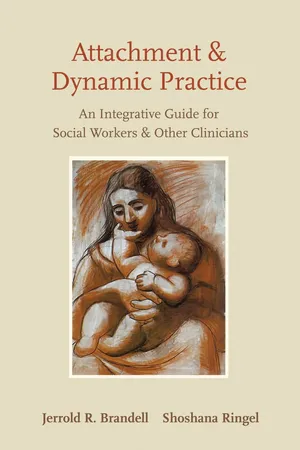 eBook - ePub
Attachment and Dynamic Practice
An Integrative Guide for Social Workers and Other Clinicians
- Jerrold R. Brandell, Shoshana Ringel(Authors)
- 2007(Publication Date)
- Columbia University Press(Publisher)
Bowlby’s empirical study involved recorded observations of forty-four children from the London Child Guidance Clinic, where many of his subjects had been engaged in antisocial behavior such as stealing and aggression (Bowlby, 1944). From 1936 to 1939, he collected data on these boys, whose ages ranged from six to sixteen. The children, whom Bowlby termed “affectionless,” had been accused of stealing and displayed behaviors ranging from depression to hyperactivity and detachment. Bowlby explained in his paper that the cause of theft and aggressive behavior lay in the child’s attempts to get something that represented his mother’s love: “The food they stole was no doubt felt to be the equivalent of love from the mother whom they had lost, though probably none was conscious of the fact” (Bowlby, 1944, p. 121). The children’s mothers were found to have disturbed attitudes and behaviors, such as violence, anxiety, mental illness, and alcoholism. Bowlby’s perspective was that the children were expressing their need for love, and their anger over its absence, through their aggressive and delinquent behavior. He suggested that they were difficult to work with because they had developed a tough exterior in order to protect themselves against further rejection and loss (Bowlby, 1944).In 1948 the World Health Organization (WHO) commissioned Bowlby to do a study on the psychiatric problems of homeless children. In 1950 he started to gather data from social workers and child psychiatrists in France, Sweden, Switzerland, Holland, and the United States, and a short time later he published the Maternal Care and Mental Health (1951) report. He found that professionals, despite living in different countries, made very similar observations: that babies abandoned by their mothers and subsequently institutionalized, suffered developmental deficits and a greatly diminished capacity to relate to others. Many of these children were incapable of forming meaningful or lasting relationships. On the basis of his findings, Bowlby started to advocate that mothers, despite their poverty, receive as much support as possible in order to keep their children. Bowlby’s report had a significant impact on international public policy, particularly in adoption, social work, and hospital practices. It also contributed to a new understanding of the causes and prevention of child delinquency (Karen, 1998).In his next paper, “The Nature of the Child’s Tie to His Mother” (1958), Bowlby used findings in ethology to show that both animal and human off-spring have a need to be close to their mothers and this need for proximity supersedes the need for feeding. He compared human babies to the ducklings in Lorenz’s experiment, who followed whatever object they saw first after hatching, whether or not that object was capable of meeting their needs for sustenance. eBook - PDF
- B.J. Casey(Author)
- 2008(Publication Date)
- American Psychiatric Association Publishing(Publisher)
2 DEVELOPMENTAL PSYCHOBIOLOGY studying early development of the parent–infant interaction, have stimulated increasing interest in early attachment among psychiatrists over the past decade. Historically, the place of the infantile attachment concept has been an uncertain one, not only in psychiatry but also in developmental psychobiology itself. John Bowlby was knighted by the Queen of England but disre- garded by his psychoanalytic colleagues. His ideas did not fare much better among those studying the behavioral and biological processes of early development. I cannot recall using the word at- tachment in my research or hearing it from my colleagues in de- velopmental psychobiology during my first 20 years in the field. The concept was too global and did not readily suggest research questions that would advance our understanding of its nature and how it functioned. Outside of psychoanalysis and develop- mental psychobiology, however, Bowlby’s attachment theory (Bowlby 1969) inspired remarkable changes in the treatment of infants, young children, and their parents and gave rise to an enormous body of research by developmental psychologists based on Mary Ainsworth’s (Bowlby’s colleague and successor) research instrument known as “The Strange Situation.” Bowlby’s great accomplishment was to dispel the misconcep- tion that existed among professionals in the first half of the twen- tieth century—that the only functions of the mother for the infant were to provide nutrition and protection. Too much time spent with the mother in trivial play, it was thought, would only serve to delay the development of independence and reason. But it was Harlow’s experiments (Harlow 1961), carried out under con- trolled conditions in the laboratory, that compelled the skeptics to take Bowlby’s revolutionary ideas seriously. The problem with Bowlby’s conceptual structure was not its limitations but that it explained too much. eBook - PDF
Different Faces of Attachment
Cultural Variations on a Universal Human Need
- Hiltrud Otto, Heidi Keller(Authors)
- 2014(Publication Date)
- Cambridge University Press(Publisher)
This was a classic predemographic transition pattern, one in which high fertility was driven by an untamed rate of infant and child mortality. A high expectancy of loss and the normalization of infant death were a powerful shaper of maternal attachments to infants and to the fathers of those infants. Classic mother–infant attachment (Bowlby, 1969) and maternal bond- ing (Klaus, Jerauld, Kreger et al., 1972) theories posited essentialist, uni- versal, innate maternal scripts on the basis that the survival of neonates simply depended on it. A bioevolutionary perspective on human attach- ment predicted the aspects of human life that were most likely to entail innate, unlearned components (see also Johow and Voland, this volume). The more critical the behavior was to “species survival,” the more likely that “innate” features would be present. Thus, one would expect that innate factors would play a significant role in reproduction, in court- ing and mating, and in mother–infant relationships. Because the human 232 Nancy Scheper-Hughes infant is far more immature at birth than other species, intense and pro- longed care by mothers is essential to their survival (see also Meehan and Hawks, this volume). Human mothers, like other higher primates, are an infant-carrying and prolonged infant-feeding species. Following his clinical work with traumatized babies in a British hospital at the end of World War II, John Bowlby, strongly influenced by ethology, argued that human infants, like other primates, searched for security by cling- ing, hugging, and sucking. The infant’s innate drive for attachment is the stimulus for mother–infant attachment. Maternal attachment is a kind of emotional-sensorial call and response, led by the infant. eBook - ePub
- (Author)
- 2012(Publication Date)
- M&K Publishing(Publisher)
The transition to motherhood and the childbirth experience are viewed as very special experiences that make a mother uniquely capable of caring for her child (Nystedt et al., 2008). Success in this long-term psychological process is associated with positive life-long outcomes for both the parenting mother and the child, and it is essential for the normal development of children and their maturation into competent adults. Evidence indicates that attachment begins as a result of dynamic psychological and physiological events during pregnancy, while the child is a fetus (Cranley, 1981). Mercer and Ferketich (1990) assert that the process of attachment in which a parent develops a lifetime’s emotional commitment to an infant is an interactive process that involves seeking and maintaining close proximity and exchanging fulfilling experiences. Ainsworth et al. (1978) contribute that in building the attachment relationship, infants need to be close to their mothers to cue their needs and mothers need to be close to their infants in order to respond to those needs. Mothers who are capable of responding appropriately to their infants cues and establish a mutual, reciprocal and synchronous relationship with their infants will build a secure attachment. Sensitive nurturing care is thought to be the basis of a secure attachment (Carlson et al., 1989), while insecure attachment is associated with unresponsive, rejecting and insensitive parenting (Teti et al., 1995). Insecurely attached children, compared with securely attached ones, are less competent in relationships with both peers and adults, more fearful of strangers, more likely to have behaviour problems (including social anxiety and withdrawal) and are more dependent on both peers and adults (Radke-Yarrow et al., 1985). A child’s attachment to a primary caregiver is believed to reflect the prior quality of interaction with that caregiver and to predict later socioemotional competence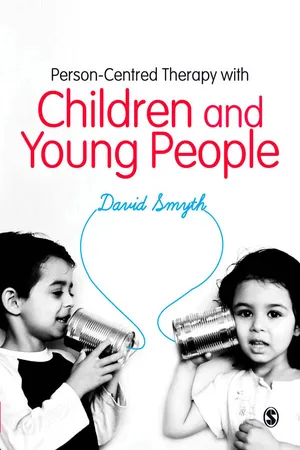
- David Smyth, SAGE Publications Ltd(Authors)
- 2013(Publication Date)
- SAGE Publications Ltd(Publisher)
The image I formed was that home (the centre of Jessica's physical world) was disrupted when her father went off to work. When she started school, I sensed Jessica felt she was being ‘sent away’ from home. I described what Jessica might be experiencing and how her mother might address this. I suggested that before going to school, my client might agree with Jessica what they would do afterwards and it was important for Jessica's mother to remember the daily plan. In this way, Jessica would be able readily to ‘reconnect’ her attachment to her mother and override her sense of disruption that school seemed to present. I was pleased to hear this suggestion quickly proved effective.A study by Heinicke and Westheimer (1966) identified two forms of disturbance of emotional behaviour found in separated children: one of emotional detachment; the other its apparent opposite, an unrelenting demand to be close to mother. Quoting this study Bowlby says, of ten children, six ‘showed strong and persistent hostile behaviour to mother and negativism after their return home: no such behaviour was seen in the non-separated children’ (2005: 95). It is my sense that Jessica's short-lived episodes of intense hostility within an otherwise secure relationship suggested her early school experience upset her equilibrium.Magda Gerber, who was born in Budapest, believed that adults in Western countries had become too interested in doing everything to or for a baby rather than allowing the baby the personal freedom to find their own way (Gerber, 2002). She shared with other theorists a passionate desire to encourage practices supportive of children and families. My eyes alighted on Mooney's (2010) description of an occasion when she (Gerber) called a doctor (Emmi Pikler) to visit her daughter Erika who became ill with a sore throat. Gerber began to tell Pikler about Erika's condition and the doctor ‘shushed’ her and focused on the child. Respectfully, she asked the young child what hurt. Two things amazed Gerber: ‘how cooperative her daughter was with a stranger when she was feeling so poorly, and how serious and respectful the paediatrician treated her young patient’ (Mooney, 2010: 35–6).Attachment can predominate at times throughout an individual's life. In times of crisis, early attachment figures (such as parents), whose importance may have diminished as the individual moved towards adulthood, can once more become significant attachment figures.Children – the Expectations of others
Rogers (1961) describes the locus of evaluation in terms of it being external or internal (see also Chapter 2
Index pages curate the most relevant extracts from our library of academic textbooks. They’ve been created using an in-house natural language model (NLM), each adding context and meaning to key research topics.

