Psychology

Psychosurgery
Psychosurgery is a form of neurosurgery that involves the selective destruction of specific areas of the brain to treat severe mental disorders. It was primarily used in the mid-20th century to alleviate symptoms of conditions such as schizophrenia and severe depression. However, due to ethical concerns and the development of alternative treatments, psychosurgery is now rarely performed.
Written by Perlego with AI-assistance
Related key terms
1 of 5
9 Key excerpts on "Psychosurgery"
 eBook - ePub
Psychiatry in Dissent
Controversial issues in thought and practice second edition
- Anthony Clare(Author)
- 2012(Publication Date)
- Routledge(Publisher)
The dispute is hardly helped by the fact that there is even some confusion over the precise definition of Psychosurgery itself. A World Health Organization publication (1976) defined Psychosurgery as ‘the selective removal or destruction … of nerve pathways… with a view to influencing behaviour.’ This definition provoked a critical response from Bridges and Bartlett (1977) who point out that much modern Psychosurgery is concerned with the treatment of intractable affective illnesses without any intended effect on behaviour at all and they suggest as an alternative definition ‘the surgical treatment of certain psychiatric illnesses by means of localized lesions placed in specific cerebral sites.’ However, this too seems an inadequate definition for it fails to account for those operations which are intended to modify behaviour and for those where there does not appear be any specific cerebral target. The recent report of the US National Commission for the Protection of Human Subjects of Biomedical and Behavioral Research (1977) acknowledged these difficulties and eventually adopted the following definition for use in its exhaustive survey of the available literature and its final assessment of the efficacy of operative procedures:‘Psychosurgery means brain surgery on (1) normal brain tissue of an individual who does not suffer from any physical disease, for the purpose of changing or controlling the behavior or emotions of such individual, or (2) diseased brain tissue of an individual, if the primary object of the performance of such surgery is to control, change or affect any behavioral or emotional disturbance of such individual.’Within the terms of this definition, surgery with a dual purpose, for example the relief of epileptic seizures as well as relief of emotional disorder, would be classifiable as Psychosurgery if the predominant reason for performing the operation was to affect the behavioural or emotional disturbance.Historical DevelopmentIn 1875 the British neurologist Sir David Ferrier described how the removal of a large portion of the frontal lobes of the brain in monkeys appeared to have little or no effect on sensory or motor abilities but produced a remarkable change ‘in the animals’ character and disposition’, the monkeys becoming more tame and docile (Ferrier 1875). The first published account of a psychosurgical intervention in man was that of Dr Gottlieb Burckhardt, who in 1890 attempted to interrupt the connecting nerve fibres between the frontal lobes and the remainder of the brain in severely disturbed and actively hallucinating patients (1891). His results were poor – some of the patients while reportedly more easy to manage on their hospital wards remained acutely psychotic and Burckhardt encountered fierce opposition from medical colleagues. Twenty years later the Russian neurosurgeon Ludwig Puusepp severed the fibres connecting the frontal lobe on one side of the brain with the remainder of the organ in three patients adjudged to be suffering from manic-depressive disorder. In his report he admits to producing a miserable result and declared that as a consequence he would not perform any more operations. eBook - PDF
- Stephen Honeybul(Author)
- 2020(Publication Date)
- Cambridge University Press(Publisher)
18.4.7 Potentially Controversial Uses of Psychosurgery The list of possible and imaginable developments and applications of Psychosurgery is long and complex. Many of its elements would undoubtedly evoke controversy, and 186 Paul A. Komesaroff and Jeffrey V. Rosenfeld many would stimulate demands for outright rejection. If it were possible – as some people have claimed – to identify neural pathways subserving particular attitudes, beliefs, or emotional states, surgical interventions could be applied to interfere with or direct these. Racist attitudes and criminal dispositions could be identified and corrected. Specified emotional states could be created or abrogated. Highly traumatic memories of the past could be eliminated. Cognitive abilities could be stimulated, enhanced, or reduced. Particular needs could be implanted. Personality traits could be created or eliminated. Dispositions favouring participation in certain professions or social roles could be supported or inhibited. 31,42,56,57 While these examples may seem fanciful, at least some of them have been the subject of serious discussion in the scientific literature. It is likely that over time they will need to be considered comprehensively and in full detail, and whether they exceed the legitimate ethical purposes of medicine will need to be determined. 18.5 Some Principles for the Ethical Regulation of Psychosurgical Research and Practice The novel, potentially powerful techniques of neuroscience combined with Psychosurgery raise the possibility not only of beneficial but also of harmful and ethically troubling applications. Whatever opinion or views might exist about the ethical and philosophical issues listed above, it is clear that there is a strong basis for concern about their potential impact on society. The seriousness of the questions asked and the risk of harm is sufficient to justify the establishment of a formal process of review and regulation. eBook - ePub
- John Kleinig(Author)
- 2022(Publication Date)
- Routledge(Publisher)
It is this latter assumption which vitiates Peter Breggin’s unrelenting attack on Psychosurgery (for example, see Breggin, 1980). He rightly recognises the importance of emotions to our life as reasoning, choosing beings, and he recognises that Psychosurgery diminishes emotional responsiveness. A non sequitur is involved, however, if it is concluded from this that Psychosurgery undermines personal sovereignty; for the presupposition of personal sovereignty is not merely having but having the ability to control one’s emotional responsiveness, an ability that is seriously restricted in the case of those for whom Psychosurgery is best indicated. Their problem is one of emotional hyper-responsiveness, and the purpose of Psychosurgery in such cases is the restoration of control. Psychosurgically treated patients are not deprived of emotionality but, if successfully treated, are restored to a level of emotional sensitivity which is consistent with their retaining control over their lives. In those operations for which Psychosurgery is best indicated, there is not a general lowering of emotional responsiveness but a more selective moderation. Some have likened it to a restoration of homeostasis between limbic and neocortical structures. Breggin refuses to recognise this, because he insists that psychosurgical operations are directed at normally functioning brains, and that what are considered to be mental disorders are ‘mere’ social constructions, saying more about the labellers than the labelled. This insistence may be misguided, however, at least in those cases where Psychosurgery is most successfully employed. Structural wholeness (where it exists) does not guarantee functional normality. Even if Breggin is right about the brain, he is wrong about the freedom and sovereignty of those for whom Psychosurgery is appropriately indicated. Given the ‘high value’ he places on these, if the destruction of some neural tissue will enable the recovery of control, there is reason to consider it.(5) Even if it is not the immediate purpose of other surgical procedures to initiate personality changes, there are nevertheless other treatments with this as their purpose. Psychotherapy, hypnotherapy, drug therapy, ECT and ESB also seek to effect personality change of some kind, albeit via the treatment of some psychiatrically defined disorder. Yet, with the possible exception of ECT and ESB, they do not usually stir up the same strong reactions as Psychosurgery. This suggests that it is not the end result of Psychosurgery which alone excites concern, but also features of the change-producing procedure. One important consideration may be the relative passivity of patients with respect to such changes in the case of Psychosurgery, in contrast to their more active involvement in psychotherapeutic treatment. Where changes to personality are brought about gradually with the conscious participation of the patient, it makes sense to see the latter as an instrument of his or her own renewal, but with Psychosurgery it is said to be quite different. The patient enters the theatre as one person and emerges as another. On top of that, there is the problem of irreversibility. To varying degrees, other therapeutic procedures are reversible, and may be halted should unpredicted and unwanted reactions occur, but brain tissue once destroyed - is not regenerable. eBook - ePub
Coercion as Cure
A Critical History of Psychiatry
- Frank Villafana, Thomas Szasz(Authors)
- 2017(Publication Date)
- Routledge(Publisher)
The neuromythological rationalizations and justifications for lobotomy reflect the blind commitment of Western science and society to the belief that the troublesome behaviors of persons called “mental patients” are due to diseases of the brain, and that the relationship between abnormal brains and abnormal behaviors is of the same kind of cause-and-effect relationship as that between, say, atrophy of the optic nerve and blindness. The term “Psychosurgery”—the proper, scientific expression for describing the mutilation of the brains of mental patients—is itself a symptom of this belief. It is a misleading term that must not be allowed to remain unexamined and unchallenged.When a surgeon operates on the brain of a person with a brain disease , he calls it “neurosurgery.” When he operates on the brain of a person without a brain disease , he calls it “Psychosurgery.” It is a convenient arrangement, legitimizing brain surgery regardless of whether the subject has or has not a brain disease . Inasmuch as most persons destined for Psychosurgery are considered legally incompetent because of severe mental illness, the arrangement allows the surgeon to oper ate regardless of whether his ostensible patient accepts or rejects the operation.Plastic surgery changes the way a person looks. Psychosurgery changes the way he thinks and behaves. Unwanted physical (facial) appearance (ugliness) and unwanted thoughts and behaviors (mental illness) are not medical diseases; interventions to change them, even if performed by physicians and even if performed with the subject’s consent, are not medical treatments.5Seventy years have passed since the introduction of lobotomy, a long period in the brief history of psychiatry. There is a vast literature on the subject, for and against the procedure, which the interested reader should consult. Suffice it to say that the critics’ claim that lobotomy causes brain damage is tautological: lobotomy is the surgical destruction of healthy brain tissue.If there is no mental illness, the truth about the therapeutic value of lobotomy cannot be sought in weighing the claims and counterclaims of the contending parties. It must be sought, instead, in understanding the uses and consequences of lobotomy: What problem is the operation expected to remedy? Who decides that a person should have the operation? Who grants permission for it? Who pays for it? Who benefits or suffers from its consequences? eBook - ePub
- Ronald S. Laura, Adrian F. Ashman(Authors)
- 2018(Publication Date)
- Routledge(Publisher)
Chapter FivePsychosurgery and the Mentally Retarded
John KleinigSomatic therapies have a long history, but the contemporary interest in Psychosurgery is usually associated with the work of a Portuguese neurologist, Antonio Egas Moniz, who in 1936 reported favourably on the results of destroying portions of white matter in the anterior part of the frontal lobes of patients suffering from intractable psychotic disorders. Vigorously promoted by others, the procedure was used extensively in the treatment of severely disturbed World War II veterans, with sufficient apparent success for Moniz to be awarded (along with Walter Hess) the Nobel Prize for Physiology/Medicine in 1949. Many of the patients treated by Moniz and those who followed him were suffering from what was then broadly referred to as ‘schizophrenia’, though nowadays schizophrenia strictly defined is not well indicated for Psychosurgery. The term ‘schizophrenia’ now is generally reserved for affective rather than cognitive disorders - for endogenous depression, severe obsessive-compulsive neuroses and debilitating phobias.In the mid-1950s, there was a significant decline in the use of Psychosurgery. Much of this decline is attributable to the development of antipsychotic and antidepressant drugs. Nonetheless, there was a growing concern about the value of Psychosurgery. Although early clinical reports had been enthusiastic, the advent of less partisan and longer-term studies cast a somewhat different complexion on the usefulness of the procedure. It became clear that in many cases the benefits of Psychosurgery had been purchased at considerable cost.But though the use of Psychosurgery declined, it did not cease. There were important advances in brain physiology, operative technique and the siting of lesions, and these markedly decreased the likelihood of adverse sequelae. The dangers of destroying neocortical tissue began to be recognized, and the development of stereotactic instruments and pneumoencephalography enabled a much more precise location of lesions - in particular their siting in the circuits of the limbic system, which was rapidly assuming importance as the functional centre for emotion, motivation and memory. This was not the only factor which perpetuated the use of Psychosurgery. Drug and other therapies did not always live up to what was expected of them, and there remained a group of patients for whom only Psychosurgery (if that) seemed to offer any hope. This group was augmented by those suffering from other disorders for which less dramatic therapies had proved ineffective or insufficient. Of particular significance were patients given to episodes of uncontrollable rage and aggressive behaviour. In the late 1950s, following earlier animal studies and a modicum of human research, some of these patients began to be psychosurgically treated.[1 eBook - PDF
A History of Neurosurgery
In its Scientific and Professional Contexts
- Samuel H. Greenblatt, T. Forcht Dagi, Mel H. Epstein, Samuel H. Greenblatt, T. Forcht Dagi, Mel H. Epstein(Authors)
- 1997(Publication Date)
- Thieme Publishers New York(Publisher)
There was also the fear in some quarters that if the operation were delayed too long, patients would deteriorate beyond the point of being helped. Psychosurgery, therefore, was often used as a treatment for patients who exhibited intense and exaggerated emotional states, patients for whom the prognosis was not always as hopeless as portrayed. Although the introduction of psychopharmaco-logical treatments in the mid-1950s led to a sub-stantial drop in the amount of Psychosurgery per-formed, it did not take long to discover that drugs did not help all mental patients. A relatively low level of Psychosurgery continued to be performed through the 1960s on patients with seriously debili-tating mental disorders who did not respond to drugs or electric shock treatment. Psychosurgery was performed in relatively few centers, and a large number of psychiatrists were not even aware that it was still being practiced. Nevertheless, there were probably between 350 and 550 psychosurgi-cal operations performed annually in the United States during the 1960s. 512 A History of Neurosurgery A Second Look at Psychosurgery In the early 1970s, two opposing forces interact-ed to influence the practice of Psychosurgery. On the one hand, several neurosurgeons had conclud-ed that the time was right for taking a “ s e c o n d l o o k ” at Psychosurgery. It was argued that knowl-edge of the anatomy and function of fronto-limbic-diencephalic pathways had increased significantly and that modern stereotactic techniques made it possible to produce small focal brain lesions. The insertion of electrodes into the brain could be monitored with on-line viewing of x-rays, allowing greater precision in making lesions, most com-monly with use of radiofrequency current but at a few institutions using cryogenics, radioactive cobalt, or yttrium. While not completely eliminat-ed, Psychosurgery performed with hand-held leukotomes was increasingly regarded as a vestigial technique from a past era. eBook - PDF
- Alvaro Pascual-Leone, Vilayanur Ramachandran, Jonathan Cole, Sergio Della Sala, Tom Manly, Andrew Mayes, Narinder Kapur(Authors)
- 0(Publication Date)
- Cambridge University Press(Publisher)
Chapter 17 The paradox of Psychosurgery to treat mental disorders Perminder S. Sachdev Summary The creation of lesions in healthy brain tissue in order to treat psychiatric disorders is paradoxical in view of the frequent occurrence of psychiatric disorders after focal and diffuse brain lesions. Thus, the introduction of neurosurgery for psychiatric disorders, or Psychosurgery, in the 1930s was seen as a bold, indeed desperate, attempt in the face of a therapeutic impasse. The rationale for Psychosurgery was based on very modest evidence, and while the evidence base has grown in subsequent years, it remains a controversial treatment, limited in its scientific base and unable to shrug off the legacy of its early days of over-enthusiastic application. The recent introduction of neuromodulatory techniques, in particular deep brain stimulation, has altered the tone but not the nature of the debate, and better empirical evidence as well as theoretical rationale are necessary before the paradox underlying Psychosurgery can be readily explained. The history of paradoxical treatments in psychiatry Psychiatric treatment is no stranger to paradoxes, and its history is littered with examples of counter-intuitive strategies, and bold attempts to heal the fractured mind. One ancient treatment that can be traced to prehistoric times is the practice of trepanation, or the creation of holes in the skull to treat diseases (Restak, 2000). When performed for mental illnesses or epilepsy, the rationale was to permit malevolent spirits to escape the skull. The practice of seemingly antithetical treatments continued into the twentieth century, although the scientific grounding of some of these treatments had improved. A much celebrated treatment was malarial therapy for general paralysis of the insane, which resulted in the first Nobel Prize for a psychiatric treatment being awarded to Julius Wagner von Jauregg in 1927.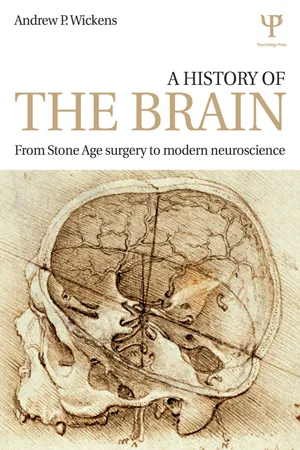 eBook - ePub
A History of the Brain
From Stone Age surgery to modern neuroscience
- Andrew P. Wickens(Author)
- 2014(Publication Date)
- Psychology Press(Publisher)
9 The procedure also became commonplace in the United States, with estimates suggesting it was performed on some 50,000 patients during the 1940s and 1950s. More than 3000 of these would be supervised by Freeman alone before his retirement in 1970. His patients included 19 children, one of whom was four years old.Unlike neurosurgery, which is accepted as a legitimate branch of medicine, the use of Psychosurgery for the treatment of mental illness has always been controversial – both for ethical reasons (not least because it is undertaken in the absence of any neuropathology) and for its alleged rate of success. Indeed, fierce criticism and public debate during the 1950s and 1960s prompted the formation of several governing bodies to evaluate the viability and effectiveness of psychosurgical procedures with an eye to encouraging stricter legislation. Yet, the benefits of Psychosurgery were often reported positively. For example, a survey in England and Wales showed over 10,000 patients had undergone a form of Psychosurgery from 1942 to 1954, with over two-thirds exhibiting improvement. However, it also became clear in other studies that these operations often produced a variety of mental and behavioural impairments not immediately apparent after surgery. While the patient could often lead some type of independent existence, they were otherwise apathetic, lacked initiative, and acted without social restraint. It also emerged, as psychological testing became more sophisticated, that many lobotomised patients had difficulty following instructions, solving problems and making plans. Fortunately, by the late 1950s, the need for Psychosurgery markedly declined as effective drug treatments became available. Consequently, by the 1970s, a number of countries had banned Psychosurgery, including several US states, although this has not happened in the United Kingdom where the practice is rare but legal (perhaps one or two instances each year). For some it remains a barbaric practice, merely transforming an insane person into a more idiotic one, and therefore an unnecessary mutilation of the brain.
- Jonathan S. Abramowitz, Dean McKay, Eric A. Storch, Jonathan S. Abramowitz, Dean McKay, Eric A. Storch(Authors)
- 2017(Publication Date)
- Wiley-Blackwell(Publisher)
38 Neurosurgical Treatments for Obsessive Compulsive Disorder Sarah M. Fayad and Herbert E. Ward Neurosurgery for psychiatric disorders has a long, tenuous history, which has changed significantly in the past decade. Psychosurgery began in 1935 with prefrontal lobotomy for psychoses and the Nobel Prize for Physiology or Medicine awarded to Antonio Egas Moniz for his work in this (NobelPrize.org). This procedure was later adapted by Walter Freeman and became infamous (Diefenbach, Diefenbach, Baumeister, & West, 1999). It later lost favor due to lack of evidence about its efficacy, poorly defined clinical indications, and a multitude of severe side effects (Mashour, Walker, & Martuza, 2005). round the same time that Moniz won the Nobel Prize for the prefrontal lobotomy, Psychosurgery was transitioning to a different era, with new procedures as well as a new name: functional neurosurgery for psychiatric disease (Mashour et al., 2005). The excessive and often inappropriate use of prefrontal lobotomy that was popularized by Walter Freeman and later criticized and condemned made it difficult for functional neurosurgery for psychiatric disease to become successful. In the late 1940s, stereotactic neurosurgical devices were developed (Spiegel, Wycis, Marks, & Lee, 1947). Figure 38.1 demonstrates a picture of a modern stereotactic neurosurgical device in use. These devices and stereotactic surgery allowed patients to have lesions much more precisely targeted and led to less morbidity and mortality (Mashour et al., 2005). The targeting for specific brain structures related to emotion were clarified through the work done by Papez (1937), which was further explored and confirmed by MacLean (1949). Despite these advances, society remained wary of surgery for psychiatric disease, and a prolonged ethical debate regarding the use of surgery for psychiatric indications ensued
Index pages curate the most relevant extracts from our library of academic textbooks. They’ve been created using an in-house natural language model (NLM), each adding context and meaning to key research topics.

