"Theory offered us a way of understanding the world that, like so many youthful exuberances, was both vital and ridiculous."
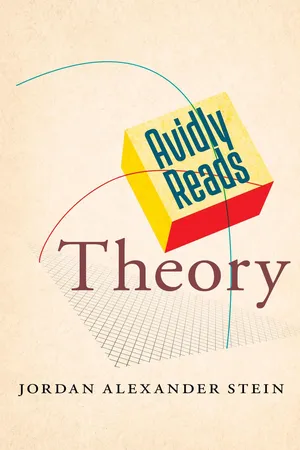
As an avowed "theory head," Jordan Alexander Stein confronts a contradiction: that the abstract, and often frustrating rigors of theory also produced a sense of pride and identity for him and his friends: an idea of how to be and a way to live. Although Stein explains what theory is, this is not an introduction or a how-to. Organized around five ways that theory makes us feel—silly, stupid, sexy, seething and stuck—Stein travels back to the late nineties to tell a story of coming of age at a particular moment and to measure how that moment lives on now.
Avidly Reads is a series of short books about how culture makes us feel. Founded in 2012 by Sarah Blackwood and Sarah Mesle, Avidly—an online magazine supported by the Los Angeles Review of Books—specializes in short-form critical essays devoted to thinking and feeling. Avidly Reads is an exciting new series featuring books that are part memoir, part cultural criticism, each bringing to life the author's emotional relationship to a cultural artifact or experience. Avidly Reads invites us to explore the surprising pleasures and obstacles of everyday life. This is a story about the emotional lives of ideas.
- English
- ePUB (mobile friendly)
- Available on iOS & Android
eBook - ePub
Avidly Reads Theory
About this book
Information
1
Silly Theory
Some years ago, I found myself at a twenty-four-hour vegetarian diner in a California college town, breakfasting with a dear friend. We had ordered coffee, but the main course was psychoanalysis. “You can’t read Lacan without Hegel,” I assured her earnestly. She broke into a grin, paused for a brief, dramatic moment, and then sang my words back to me, to the tune of Keith Richards and Mick Jagger’s “You Can’t Always Get What You Want,” hitting the second syllable of “Hegel” in a flat F.
College brimmed with capital-T theory: that interdisciplinary set of literary and critical writings that blend Continental philosophy with qualitative sociology and theories of “the text.” As generations of college students have noted, theory is often stylistically difficult and menacingly abstract, as obscure to the uninitiated as any other kind of heavy thinking, and yet way too cool to be called simply “philosophy.” My friends and I were theory heads. We elected to read the Germanic sentences penned by French absurdists, and we had a great time doing so. We were young and smug and deconstructed. In the classrooms and bookshops of fin-de-siècle California, we staked the foundation for our educations in an incisive critique of foundationalist thinking. We saw the irony, and we embraced it with the kind of reflexive detachment that today’s fashionistas could only hope to conjure when they declare that something is “so Nineties.”
Detached as it may have been, our experience of reading theory was far from dry. As the Jagger-cum-Lacan anecdote suggests, my college years embraced theory as though participating in what Lauren Berlant (in an essay I read over and over) called “a counter-politics of the silly object.” We had a million puns (Kristeva? Whateva! Bourdieu? Bored me too! Understand deconstruction? You de Man!) We plotted the names of bands (Foucault’s Hos, The Heidegrrrls) and cocktails (notably the Pink Freud, whose recipe I don’t think we ever perfected but nearly all of whose iterations involved a banana). I wrote the treatment for a play called “Rendt: A Musical about AID,” which replaced the transvestite character in Jonathan Larson’s Broadway smash with a young, bohemian Hannah Arendt (also played by a transvestite). We created Lacanian drinking games for our favorite movies (“sip your Pink Freud when being and having are confused in a condition of lack”). And in perhaps my most starstruck celebrity sighting ever, I one day had the thrill of walking through a Longs Drugstore three paces behind Angela Davis, who (perhaps unaware of me, perhaps all too used to being followed) appeared to be doing nothing more revolutionary than buying cold medicine.
Playing silly games with serious ideas provided us with a way to lavish attention on the scene of our learning. It seems clear in retrospect that the actions of my college friends and me were not about theory, the object, but about creating a reflexive awareness of the context in which that object could (in fact did) circulate: through the space of early-morning diners and late-night parties, through the hands of amateur mixologists and bargain shoppers, and through the educational transformations of public school graduates into fledgling intellectuals. We aimed for some reciprocity between the serious things we were learning in school and rather less serious register in which we were living our lives outside of it.
It’s in the same silly spirit that my students and their peers now turn highbrow theoretical ideas into goofy memes. Tired puns (advertisements for Freudian slippers) and doctored images (Friedrich Engels on the cover of “Cosmarxpolitan” magazine) occupy whole pages or feeds on platforms like Facebook, Tumblr, and Twitter. I read them with a burning sense of having missed out on their expansion into a visual domain of the kind of bad jokes that require a considerable education for one to earn the pleasure of finding them resoundingly stupid. Still, other contemporary attempts at silliness are more direct and more reminiscent of the jokes my friends and I made in college. Or, as a very bright young woman once wrote, unbidden, on her final exam for my intro theory course, “Your mama’s so classless, she could be a Marxist utopia.”
***
The grand alchemy for turning ideas into lives began, in my case, entirely inauspiciously. Introduction to Literary Theory was the only required class for my undergraduate major. It was offered every term, though the course varied by instructor, usually combining some elements of a survey—that is, some background in twentieth-century theories of language and representation—with emphasis on the particular professor’s specialty. In the spring of my sophomore year, the professor happened to be a specialist in Russian modernism, and we spent half of the ten-week quarter studying theories of Russian formalism, which, for all their avant-garde provocation, had lost more than a little something in translation.
For the in-class midterm, our professor, straining for relevance to our contemporary situation, screened the video for the even-then-ignoble pop band Hanson’s fourth single, “Weird,” to be followed by an analytical essay in blue book. If this was an effort to connect theory to life, it faltered considerably. What I learned was, rather, an astonishing lesson in the coordination of formal and critical incoherence, because none of it made any sense. (The Hanson brothers, whatever more generous interpreters might find their merits to be, bear precious little on the theories of Viktor Shklovsky.) As pedagogical tragedies go, it was ordinary enough. Though when the class implausibly screened the very same benighted Hanson video again in the last week of the term, at the behest of a guest lecturer who seemed not to know we’d already been asked to view and analyze it, what had once been tragedy was now clearly farce. It all felt pretty silly, but not in a good way. If there was a lesson here, it had to do with how not to live.
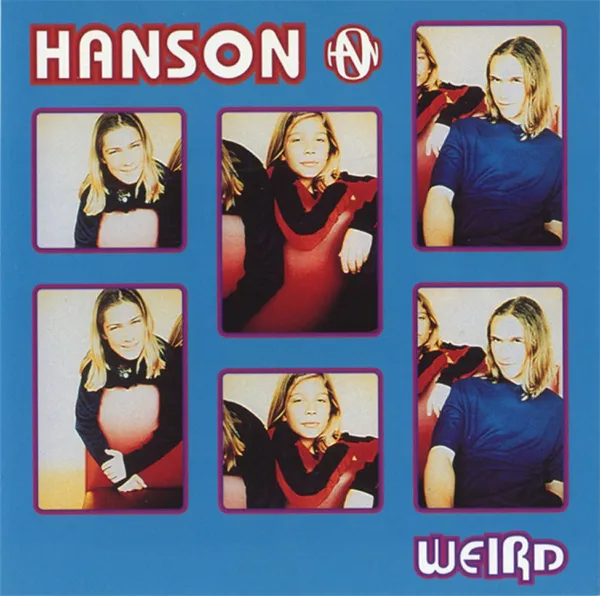
Hanson, “Weird,” cover art for the Europe and UK single, 1998 (Courtesy Mercury Records)
The thing that piqued my interest that term had nothing to do with all these things we were focusing on. It was instead a reading sneaked into the sixth or seventh week, an essay by Jacques Derrida called “White Mythology.” In what I now recognize as a classic of poststructuralist high theory, Derrida’s sixty-page tour de force presents a rigorous deconstruction of the distinction between content and style in philosophical writing, showing how you can’t have content without style and vice versa, how the two concepts fundamentally depend on each other, and ultimately going so far as to suggest that there is only a delusive difference between the language we use to represent reality and reality itself.
But I missed all that. I didn’t walk away from the essay appreciating Derrida’s critique of representation, which, arguably, is the whole point. What intrigued me, instead, was the operation of deconstruction. It fascinated me to think about dependence in Derrida’s terms. Though generally unconcerned with how philosophical discourse worked, I was alive to the possibility that reality and the representation of reality depend on each other, such that reality is not meaningful without representation, and therefore that reality is not better than representation, for each constitutes the other.
My imagination moved from representation to infinity. All around me, conceptual hierarchies began to crumble. Men weren’t better than women; humans weren’t superior to animals; civilization was no better than barbarism. The arbitrariness of it all felt wild and enabling. Here was a use for the fin-de-siècle ennui that I spent the Nineties feeling anyway. Here was a version of the absurd and studied detachment that my friends and I cultivated during our off hours. Here was an account of the arbitrariness that I was pretty sure governed our world, but elevated and turned back on the world in a way that made the world as I found it a pretty silly place. Here was some justification that it really didn’t matter whether you prioritized the authority of your teachers and their books or the dreams and longings of your peers. If you’d asked me as a college sophomore what “White Mythology” was about, I would probably, sincerely, have told you it was a manifesto for Revolution. My reading was a misreading, but what it lacked in precision it sure gained in verve. Here was a way to be.
It was not an accident, perhaps, that the scene of my seduction by theory was more or less extracurricular. Though “White Mythology” was on the syllabus, the class didn’t much discuss it, and certainly not with the rigor that I now know it would require. On first reading, I didn’t properly understand what I was reading and so was able to do that most magical thing that one sometimes does as a student or reader: I made it mean what I needed it to mean. This, I think, was one of the keys to “theory.” To read rigorously, precisely, clearly—these things were among our aspirations, yet they were not what we as student readers usually accomplished. Instead, the imprecisions in our reading and learning were the story—they were a big part of what we meant by “theory.” We were on a road toward abstract thinking, but the real fun was getting there. And we had a lot of fun.
***
Derrida’s were not the only theories we were reading in college that had anticipated the possibility that we might get silly with serious ideas. Doing the opposite of what was intended with an idea was, at the least, a storied tradition for certain strains of critical thinking. I’m referring here to dialectics, that ancient mode of tripartite argument that reached its apex with German idealism and therefore remains associated for modern readers with Hegel and Marx. By definition, dialectical arguments have three steps: a thesis, wherein an idea is posited, an antithesis, wherein the thesis is negated, and a synthesis, wherein the contradictions between the thesis and the antithesis are suspended and blended into a new proposition. (“What’s a Marxist?” asks an old joke. “Someone who can only count to three!”) The second step, the antithetical move or dialectical negation, was best loved by twentieth-century Marxism, and it certainly jived with the ways that we irreverent theory heads wanted to negate the seriousness of theory and make it into something more fun.
At the time, however, we largely failed to make the connections between dialectical negation and just goofing. This failure back in the day surely had something to do with the day itself, as my college years fit squarely in that scant decade between the fall of the Berlin Wall in November 1989 and the fall of the Twin Towers on September 11, 2001. Between these two falls there came a glorious spring of optimism around globalization in both its economic and multicultural forms. These were victories for capitalism and, thereby, were understood as blows to the possibilities of actually existing socialism. Many Marxists doubled down and tried hard to rethink how human emancipation might look in an age that Susan Buck-Morss characterized as “the passing of mass utopia in east and west.” Marxists, in other words, got more serious.
Not that they’d exactly been jokesters. In fact, few theorists of any persuasion were ever more legendarily serious than the famed Frankfurt School Marxist Theodor Adorno. He had been born the only child of a well-to-do German family in 1903, with a secular Jewish father and a Catholic mother. Adorno was her family name, and its original hyphenation to the patronymic—Wiesengrund-Adorno—was mutilated in the son’s Nazi-fleeing application for US citizenship, rechristening him Theodor W. Adorno when he was already well into his thirties. The family name was far from the only thing Adorno lost in the war, but the episode rather neatly allegorizes the collapse of his turn-of-the-century idyllic upbringing when one realizes that the sacrificed name, Wiesengrund, literally means “meadow land.” How could Adorno’s mature thought be anything but marked by an almost fatal seriousness?
To add to the ignominy of having to seek exile for the offense of being only technically Jewish, Adorno had the complicated misfortune to end up in Pacific Palisades in the 1940s, down the coast from Malibu, where he could view the rise of capitalist techno-modernity from the belly of the Hollywood beast. His most famous exposition from the period is Dialectic of Enlightenment, a book of essays he coauthored with his friend, former teacher, and fellow émigré Max Horkheimer. It’s core theoretical chapter, “The Culture Industry,” distills in no uncertain terms how the industrial products of the postwar United States threaten human culture as we know it.
Culture, after all, is the shared activity of people, while industry is large-scale and profit-driven manufacturing. When culture becomes industry—when we buy recorded music instead of learning to play or when we pay for a movie ticket instead of escaping into our own reveries—we reside in a world where there is little difference between a rom-com and a bomb. Both, Adorno and Horkheimer argue, are industrial products fitted for mass consumption, designed to make money regardless of what they destroy. With a take-no-prisoners pessimism equaled only by the authors’ rhetorical skill, “The Culture Industry” manages to pack a whole dialectical argument into its three-word title.
Serious problems require serious solutions, yet the best shield Adorno and Horkheimer have against the machinations of the culture industry is to identify the problem, to name it, to expose it to view. Adorno and Horkheimer place faith in exposure. Though they stop short of saying so, their essay itself is about the only kind of resistance they can muster, insofar as the rarefied critical and philosophical writings of intellectuals do not, by design, accede to the level of mass appeal. And, as far as they are concerned, mass appeal has ruined just about everything else; or, in their own concluding words, even “personality scarcely signifies anything more than shining white teeth and freedom from body odor and emotions.”
While Adorno and Horkheimer are not trying to be silly (witty, perhaps, but never silly), the wonderful pathos of juxtaposing BO and emotion, held in common by the fact that one might equally want to be free of each, is the kind of comparison one might expect from the likes not of a critic but of a comic, say an Amy Schumer (perhaps only coincidentally also a secular Jew whose comparatively idyllic early life was disrupted by major losses of wealth and prestige). Yet the temptation to smile or even laugh when reading a sentence like this from Adorno’s corpus (and there are lots of them) has something to do with the fantastic accuracy of his diagnoses, which so successfully expose the pitfalls of capitalist techno-modernity. Adorno calls an unbearable world by its name, and we laugh not because we fail to believe him but because we believe him entirely. One of the functions of humor, after all, is to make bearable something that basically isn’t or shouldn’t be.
***
Had Adorno lived that long, he would perhaps have directed his truth-telling powers to elucidate how life in the Nineties became unbearable. Instead it has been largely in retrospect that other analysts came to see clearly the decade’s patterns of economic redistribution, as dot-com and real estate booms made speculators rich, while welfare reforms and mass incarceration stripped many Americans of what remained of their social safety net. On the ground, however, the great indicator of trouble was the widespread cultivation of a certain attitude. When one left the house in the Nineties, it was not while sporting an Adornian faith in exposure but rather outfitted in the grand defensive armor of irony.
Irony was so everywhere in this decade that Alanis Morissette topped the charts in 1996 with a song called “Ironic” (which, ironically, had a patently incorrect definition of irony as its central conceit—you cannot make this up). Germane to our story, moreover, is the way that all this irony had a particularly blunting effect on the force of Marxist critique and, especially, on its faith in exposure. What could revealing the secret machinations of ideology possibly mean for people so détaché that they couldn’t be shocked? Insights like Adorno’s began to sound hollow in the ears of some more ironically attuned readers.
Looking at the Nineties through irony-colored glasses allowed us to feign boredom with the more unbearable aspects of the truths to which we were exposed. So, for example, when the button fell off a college friend’s jacket, she joked about how they don’t make child labor like they used to; or as people wondered about the safety of newly marketed gadgets like cell phones, my friends began to call them “brain cancer phones”; or again when a multiplex theater opened up opposite the independent local movie theater in our college town, we poked out of our ennui long enough to ask whether tonight we’d go to see a real movie or a corporate one. The examples sound trivial, juvenile, and a bit callous, and our irony was all of those things. Moreover, directing our irony (as in these actual examples from my youth) at economic and technological aspects of our globalizing world positioned irony neatly, if unintentionally, as a force opposed to Adornian exposure-based insight. We weren’t critiquing the ascent of late capitalism; we were finding the language that would let us live in it.
Perhaps it was a function of coming of intellectual age in ironic times, but I never managed to identify myself as a Marxist. I was, nonetheless, very drawn to the writings of Marx and his inherit...
Table of contents
- Cover
- Title Page
- Copyright Page
- Dedication
- Contents
- Preface
- 1. Silly Theory
- 2. Stupid Theory
- 3. Sexy Theory
- 4. Seething Theory
- 5. Stuck Theory
- Coda
- Acknowledgments
- Works Consulted
- About the Author
Trusted by 375,005 students
Access to over 1.5 million titles for a fair monthly price.
Study more efficiently using our study tools.
Frequently asked questions
Yes, you can cancel anytime from the Subscription tab in your account settings on the Perlego website. Your subscription will stay active until the end of your current billing period. Learn how to cancel your subscription
No, books cannot be downloaded as external files, such as PDFs, for use outside of Perlego. However, you can download books within the Perlego app for offline reading on mobile or tablet. Learn how to download books offline
Perlego offers two plans: Essential and Complete
- Essential is ideal for learners and professionals who enjoy exploring a wide range of subjects. Access the Essential Library with 800,000+ trusted titles and best-sellers across business, personal growth, and the humanities. Includes unlimited reading time and Standard Read Aloud voice.
- Complete: Perfect for advanced learners and researchers needing full, unrestricted access. Unlock 1.5M+ books across hundreds of subjects, including academic and specialized titles. The Complete Plan also includes advanced features like Premium Read Aloud and Research Assistant.
We are an online textbook subscription service, where you can get access to an entire online library for less than the price of a single book per month. With over 1.5 million books across 990+ topics, we’ve got you covered! Learn about our mission
Look out for the read-aloud symbol on your next book to see if you can listen to it. The read-aloud tool reads text aloud for you, highlighting the text as it is being read. You can pause it, speed it up and slow it down. Learn more about Read Aloud
Yes! You can use the Perlego app on both iOS and Android devices to read anytime, anywhere — even offline. Perfect for commutes or when you’re on the go.
Please note we cannot support devices running on iOS 13 and Android 7 or earlier. Learn more about using the app
Please note we cannot support devices running on iOS 13 and Android 7 or earlier. Learn more about using the app
Yes, you can access Avidly Reads Theory by Jordan Alexander Stein in PDF and/or ePUB format, as well as other popular books in Literature & Social Science Biographies. We have over 1.5 million books available in our catalogue for you to explore.