- 180 pages
- English
- ePUB (mobile friendly)
- Available on iOS & Android
eBook - ePub
Information
Topic
MedicineSubtopic
Occupational TherapyPart 1
Theory and Context
Chapter 1
What is Practice Education?
Carole Lawrie and Tracey Polglase
Introduction
This chapter will define practice education and explore how it is incorporated into the curriculum. It will also discuss where practice education currently takes place and potential developments.
Practice placements are a ‘highly important component of each course’ (McClure, 2004 p. 7), preparing ‘all health and social care professionals for academic award and registration to practice’ (Turnock et al., 2005 p. 219). In occupational therapy education the World Federation of Occupational Therapy stipulates that the practical element must be a minimum of 1000 assessed hours (Hocking and Ness, 2002). Each university has a set number of placements that the student needs to successfully achieve. The number and length of placements may differ between the universities, but all need to meet the 1000 assessed hours.
Practice placements are undertaken in order to ensure that all students, at the end of their degree programme, are not only educationally well grounded in the theory of the profession but are also recognised as being competent, safe and fit to practise in order to be registered (Health Professions Council, 2005 (Health and Care Professions Council (HCPC) from 1 August 2012); Christiansen and Bell, 2010).
What is Practice Education
in Occupational Therapy?
Occupational Therapy education is delivered as either an undergraduate degree or post-graduate diploma/Masters programme to prepare students to become dynamic occupational therapists to develop the future of the profession. See Table 1.1 below for the overall outcomes.
Table 1.1 Overall outcomes
The overall outcomes are:
The development of students into competent, reflective occupational therapists able to:
•adapt and respond to current and future patterns of service delivery
•analyse, select, adapt and use occupation and activity as therapeutic tools
•adopt a problem solving approach to service users’ needs
•use theoretical frameworks of occupational therapy to guide and inform practice
•understand and use the principles of evaluation and research to ensure best practice
•view the delivery of occupational therapy in an holistic manner working in partnership with the service user
•continue self development throughout their professional life.
Practice education comprises a significant proportion of the curriculum in pre-registration education programmes. This is the practical element when students undertake their learning in an area of service provision. Students must have a range of experiences in a variety of settings which may include health, social care and the third sector (College of Occupational Therapists, 2008). Each placement has specific essential learning outcomes that must be achieved in order to progress through the programme and on to the next placement. Responsibility for assessment within these settings lies with the practice educator. This person is qualified to supervise students while they are on practice placement and has usually undergone some form of training offered by the Higher Education Institution (College of Occupational Therapists, 2008) (see Chapter 4 for details on APPLE accreditation and preparation of educators). The practice educator must be a qualified occupational therapist, however, in some settings, particularly role emerging, they may not be on-site (Hocking and Ness, 2002).
Practice education provides the opportunity for students to experience occupational therapy in practice, to develop their therapeutic skills and to communicate with service users, carers and colleagues. McKenna et al., (2001) suggest that practice placements provide students with valuable opportunities to adopt the core values of the occupational therapy profession and Kasar and Muscari (2000) support that they enable the ongoing development of professional behaviours. Practice education involves a dynamic partnership between the practice educator and the student. The student is responsible for taking up the learning opportunities on offer whilst the supervisor should ensure that all such opportunities are made available. It offers an opportunity for rehearsal and reflection on practice and complements academic studies. It allows the students to achieve competence in the reality of practice, supported and assessed by the practice placement educator. Practice education is the most effective arena for students to learn about working with service users and their carers, and is the appropriate sociocultural environment where professional competence can be assessed. (See Chapter 2 for further detail on socio-cultural focused learning.) Practice education is also an arena where the development of the profession is taking place. Occupational therapy practice is emerging into new and innovative areas, and students are able to identify and analyse the potential emerging roles through the forum of practice education. This is discussed in more detail in Chapter 8.
There should always be regular formal supervision in practice education where there needs to be a fair and non-judgemental exchange of ideas, reflections and realistic objective setting. Informal supervision should take place on an ad hoc basis to include briefing and debriefing of tasks carried out with service users.
A summary of the aims of practice education is presented in Table 1.2.
Table 1.2 Aims of practice education
The aims of practice education are to:
•provide an opportunity to learn new techniques, further knowledge, and experience working with a variety of people and develop professional working relationships;
•enable students to transfer learning of core knowledge and skills in new and contrasting situations;
•integrate academic and practice education and ensure the transfer of individually identified learning needs supported by academic staff via tutorials before, during and after placement;
•develop reflective skills within the workplace.
How Practice Education is Incorporated into the Curriculum
Practice education must form an integral part of the occupational therapy programme (HPC, 2009) so that practice informs curriculum content and in turn the students inform practice in addition to learning from it. The synthesis and integration of academic and placement based modules are essential for the education of a competent, inquiring and creative practitioner (Hocking and Ness, 2002).
Within the curriculum undergraduate, pre-registration students will study at levels 4, 5 and 6 in England, Wales and Northern Ireland (The Quality Assurance Agency for Higher Education, 2008) and 8, 9 and 10 in Scotland (QAA Scotland, 2001). The placement learning outcomes must progressively increase in complexity in order to reflect these levels and indicate the students developing knowledge and skills. There is an expectation that the students will take responsibility for their own learning and transfer knowledge and skills from one placement to the next in a developmental manner akin to andragogy principles (Knowles, 1984) (see Chapter 2 for further detail on learning theory).
Practice education comprises of a tripartite relationship between the university, the student and the placement educator. For this to be successful, all parties must contribute equally to the process.
Figure 1.1 below illustrates the inter-relationship between all three parties.
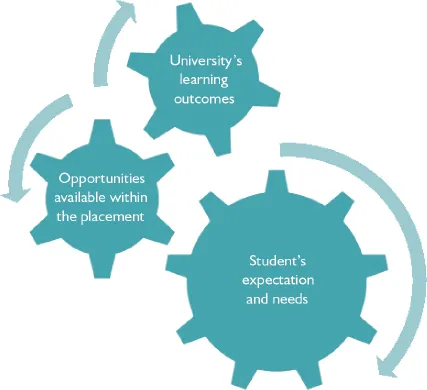
Figure 1.1 Inter-relationship between the three parties.
The university has set criteria (essential learning outcomes) that the educator must be familiar with and able to interpret into practical opportunities within the setting for the student to meet.
The student will also bring their individual expectations and needs to the learning process and these should be reflected back to the educator to be incorporated into the learning experience in order to meet the university’s essential learning outcomes.
The three parties will also have specific learning and teaching styles/approaches that must be considered for an effective placement experience (see Chapters 3 and 4 for further information on learning styles and approaches). Figure 1.2 below illustrates the importance of fusing all three components in order to produce effective learning and teaching.
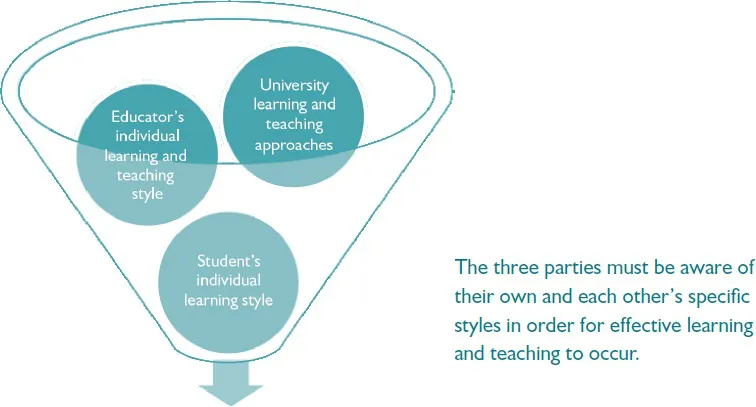
Figure 1.2 Interaction of learning and teaching styles between key stakeholders
Funding Sectors, Areas of Practice and Service Settings
Occupational therapists can be employed in a wide diversity of settings, and the pool of potential employers across sectors is exponentially increasing. Figure 1.3 below seeks to illustrate the diversity of funding sectors that may employ occupational therapists, the areas of practice that they may work in and the multitude of service settings. The symbols linked to the areas of practice and service settings indicate the inter-relationship between the three areas. The figure illustrates that different service settings may be funded by different sectors, e.g. an occupational therapist working in a community team could be funded by Health, Local Authority or the third sector. Within each of these areas, the occupational therapist may work wit...
Table of contents
- Cover Page
- Other books from M&K include:
- Title Page
- Copyright
- Contents
- List of Tables
- Preface
- About the Authors
- Part 1. Theory and Context
- Part 2. Knowledge and Skill Development on Placement
- Part 3. Looking Ahead
- Glossary
- Index
Trusted by 375,005 students
Access to over 1.5 million titles for a fair monthly price.
Study more efficiently using our study tools.
Frequently asked questions
Yes, you can cancel anytime from the Subscription tab in your account settings on the Perlego website. Your subscription will stay active until the end of your current billing period. Learn how to cancel your subscription
No, books cannot be downloaded as external files, such as PDFs, for use outside of Perlego. However, you can download books within the Perlego app for offline reading on mobile or tablet. Learn how to download books offline
Perlego offers two plans: Essential and Complete
- Essential is ideal for learners and professionals who enjoy exploring a wide range of subjects. Access the Essential Library with 800,000+ trusted titles and best-sellers across business, personal growth, and the humanities. Includes unlimited reading time and Standard Read Aloud voice.
- Complete: Perfect for advanced learners and researchers needing full, unrestricted access. Unlock 1.5M+ books across hundreds of subjects, including academic and specialized titles. The Complete Plan also includes advanced features like Premium Read Aloud and Research Assistant.
We are an online textbook subscription service, where you can get access to an entire online library for less than the price of a single book per month. With over 1.5 million books across 990+ topics, we’ve got you covered! Learn about our mission
Look out for the read-aloud symbol on your next book to see if you can listen to it. The read-aloud tool reads text aloud for you, highlighting the text as it is being read. You can pause it, speed it up and slow it down. Learn more about Read Aloud
Yes! You can use the Perlego app on both iOS and Android devices to read anytime, anywhere — even offline. Perfect for commutes or when you’re on the go.
Please note we cannot support devices running on iOS 13 and Android 7 or earlier. Learn more about using the app
Please note we cannot support devices running on iOS 13 and Android 7 or earlier. Learn more about using the app
Yes, you can access Occupational Therapy Handbook by in PDF and/or ePUB format, as well as other popular books in Medicine & Occupational Therapy. We have over 1.5 million books available in our catalogue for you to explore.