Wig Making and Styling: A Complete Guide for Theatre and Film, Second Edition is the one-stop shop for the knowledge and skills you need to create and style wigs. Covering the basics, from styling tools to creating beards, it ramps up to advanced techniques for making, measuring, coloring, and cutting wigs from any time period. Whether you're a student or a professional, you'll find yourself prepared for a career as a skilled wig designer with tips on altering existing wigs, multiple approaches to solving wig-making problems, and industry best practices.
- 322 pages
- English
- ePUB (mobile friendly)
- Available on iOS & Android
eBook - ePub
About this book
Information
chapter one
Wig-Making Terms, Tools, and Techniques
Before you can begin your quest to become a wig expert, you must learn some of the basic lingo and assemble the proper tools. In this chapter, we have provided an extensive glossary of hair wig terms. Familiarize yourself with these definitions before beginning to work on your wig-making and wig-styling skills. We will also discuss what tools are essential for wig making and styling and the different types of tools used. We will also go over different types of hairpins and brushes and when to use each, as well as a few basic techniques for handling a wig.
Glossary of Wig and Hair Terms
There are many different terms used in wig making and styling. It is really helpful to know these terms before beginning work on your wig. Reading through these terms will help you understand many of the explanations in the rest of this book.
3/4 Wig A type of wig that is meant to sit a few inches back from the wearer’s hairline. The front of the wearer’s own hair is then brushed back over the front of the wig in order to conceal the edge and make the wig look natural. 3/4 wigs are usually best if they are a very good color match to the wearer’s own hair color.
Afro A hairstyle popularized in the 1960s and 1970s. Many African-Americans let their hair grow out in its natural, tightly curled texture. The hair was then picked out with a comb to form a round shape or silhouette.
Alopecia A medical condition that causes the subject to lose their hair; the hair loss can be partial or total.
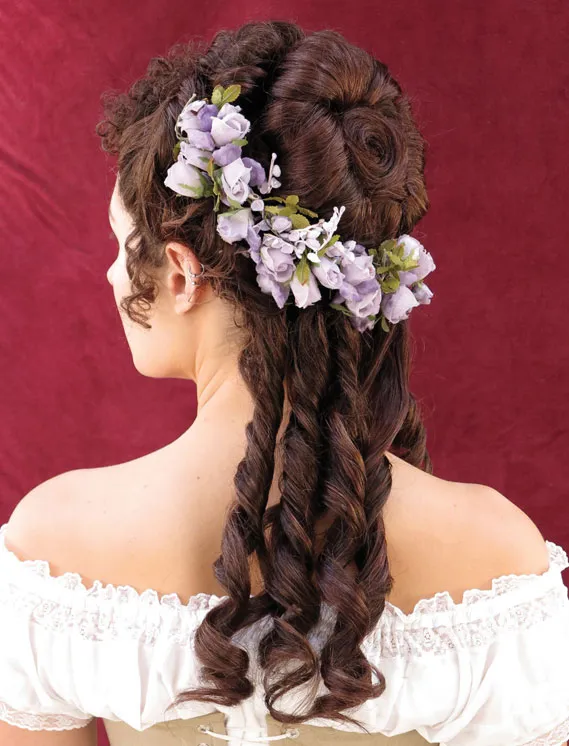
Figure 1.1 Kristen Weller models an 1880s wig styled by Emily Robertson.
“Amazon” Pins Large, heavy hairpins that are used to pin wigs onto the wearer’s head. They are often sold as “3-inch hairpins.” These pins are best used for pinning heavy wigs that require extra support or for pinning on heavy hats.
Angora/Mohair The fine silky hair from either an angora goat or rabbit. This hair ties into very small knots and is often used for the fronts of film wigs.
Baby Hairs Fine delicate hairs along the hairline of a wig that help conceal the edge of the wig.
Backcombing Another term for teasing hair. The hair is combed down towards the scalp in order to create more volume.
Beehive A hairstyle that became popular in the 1960s. The hair was teased, sprayed, and smoothed into a cone shape that resembled a beehive.
Bleached Knots Knots that have been bleached from the underside of a wig so that it looks more like the hair is growing from the scalp. Lightening the knots makes them less visible.
Blocking a Wig The act of securing a wig to a wig block so that the wig is ready to be worked on.
Blocking Pins Round-headed pins, usually called quilter’s pins, that are used to secure the wig to the wig block.
Blocking Tape A strip of ribbon, bias tape, hem tape, or twill tape that is used to hold the lace edge down flat when blocking a lace-front wig.
Blunt Cut A haircut in which all of the hair is cut to one equal length. Boardwork The European term for the art of wig making.
Bob A haircut in which all of the hair is cut to chin length. This hairstyle became very popular in the 1920s.
Buckle A term for the side rolls/curls at the temples of an eighteenth-century wig.
Cascade A type of hairpiece, usually rectangular in shape, that consists of rows of curls that “cascade” down.
Caul Net A type of wig-making net that is characterized by its large, open, diamond-shaped holes. It is often used in wig foundations when the wig needs to have a little stretch or where the wig needs to be easily pinned through. Also called cawl net, cowl net.
Chignon A roll of hair worn at the nape of the neck.
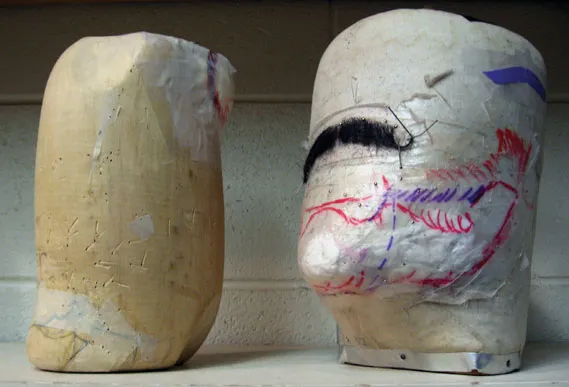
Figure 1.2 Examples of two different kinds of chin blocks.
Chin Block A type of wig block that is specially made for building, styling, and cutting on facial hair. They are shaped like a chin and are made of either wood or canvas stuffed with sawdust (Figure 1.2.
Chin Tuft A name for the small, usually triangular patch of hair that grows just beneath the lower lip. Also called a soul patch or French dot.
Cleaning the Lace The act of cleaning the glue and makeup residue off of a lace-front wig or facial hair piece.
Clippies A term for small, hinged hair clips that are used as a styling aid. They can have either one or two prongs. Also called roller clips.
Cornrows A style of hair where the hair is divided into sections and braided into small braids that sit very close to the scalp.
Cranial Prosthesis A medical term for a wig that is worn when hair has been lost for medical reasons, such as alopecia or chemotherapy.
Crepeing Hair The act of weaving hair through a set of strings and then boiling the hair so that it has a permanently frizzed texture.
Crepe Wool Wool that has been through the crepeing process. It is often used for creating facial hair directly on the face.
Cuticle A term used to describe the shaft of a strand of hair. Human hair has a cuticle that looks like scales or the shingles on a roof. Cuticle hair refers to hair that has been harvested with all of the shingles going in the same direction. This allows the hair to lie smoothly and prevents tangles (Figure 1.3).
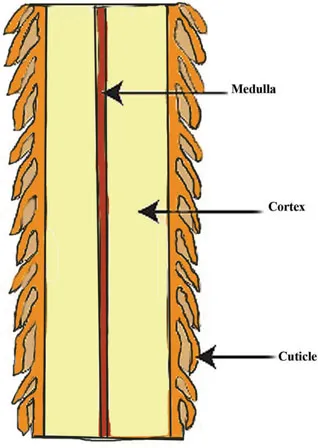
Figure 1.3 A diagram of the structure of a strand of human hair.
Drawing Cards A pair of cards used for organizing hair that is being used on a wig project. These cards keep the roots and tips of the hair organized and make it easy to transport the hair for a wig-making project (Figures 1.4, 1.5).
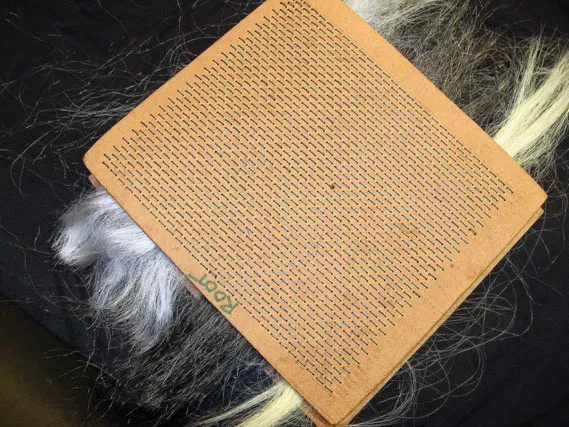
Figure 1.4 A Drawing Cards
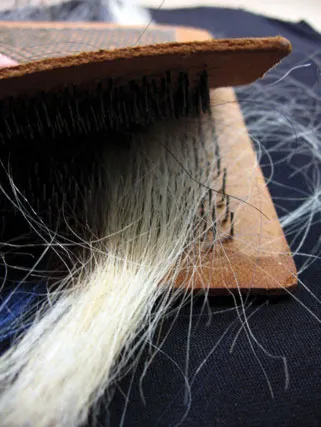
Figure 1.5 The drawing card opened so that the teeth are visible.
Dreadlock A natural hairstyle that is formed when hair becomes matted and eventually twists itself into a column or “lock”.
Duckbill Clip A type of clip, used in styling, that is about 3 inches long and opens like a duck’s bill to clamp onto the hair. Also known as an alligator clip.
End Papers Also somet...
Table of contents
- Cover
- Half Title
- Title Page
- Copyright Page
- Dedication
- Table of Contents
- Acknowledgments
- Chapter 1 Wig-Making Terms, Tools, and Techniques
- Chapter 2 Wig Application and Removal
- Chapter 3 Care and Maintenance of Wigs
- Chapter 4 Wig-Making Basics: Learning to Ventilate
- Chapter 5 Measurements and Tracings
- Chapter 6 Facial Hair
- Chapter 7 Working With and Adapting Commercial Wigs and Weft
- Chapter 8 Fronting and Other Adaptations of Commercial Wigs
- Chapter 9 Building a Wig from Scratch
- Chapter 10 Balding Wigs, Partial Wigs, Toupees, and Hairpieces
- Chapter 11 Wig-Styling Techniques
- Chapter 12 Creating a Hairstyle
- Chapter 13 Choosing, Cutting, Coloring, and Perming the Hair
- Chapter 14 Hair that Isn’t Hair: Wigs Made from Other Materials
- Chapter 15 The Business of Wigs and Hair
- Appendix 1 Wig-Making and Styling Resources
- Appendix 2 Blank Forms for Shop Use
- Index
Trusted by 375,005 students
Access to over 1.5 million titles for a fair monthly price.
Study more efficiently using our study tools.
Frequently asked questions
Yes, you can cancel anytime from the Subscription tab in your account settings on the Perlego website. Your subscription will stay active until the end of your current billing period. Learn how to cancel your subscription
No, books cannot be downloaded as external files, such as PDFs, for use outside of Perlego. However, you can download books within the Perlego app for offline reading on mobile or tablet. Learn how to download books offline
Perlego offers two plans: Essential and Complete
- Essential is ideal for learners and professionals who enjoy exploring a wide range of subjects. Access the Essential Library with 800,000+ trusted titles and best-sellers across business, personal growth, and the humanities. Includes unlimited reading time and Standard Read Aloud voice.
- Complete: Perfect for advanced learners and researchers needing full, unrestricted access. Unlock 1.5M+ books across hundreds of subjects, including academic and specialized titles. The Complete Plan also includes advanced features like Premium Read Aloud and Research Assistant.
We are an online textbook subscription service, where you can get access to an entire online library for less than the price of a single book per month. With over 1.5 million books across 990+ topics, we’ve got you covered! Learn about our mission
Look out for the read-aloud symbol on your next book to see if you can listen to it. The read-aloud tool reads text aloud for you, highlighting the text as it is being read. You can pause it, speed it up and slow it down. Learn more about Read Aloud
Yes! You can use the Perlego app on both iOS and Android devices to read anytime, anywhere — even offline. Perfect for commutes or when you’re on the go.
Please note we cannot support devices running on iOS 13 and Android 7 or earlier. Learn more about using the app
Please note we cannot support devices running on iOS 13 and Android 7 or earlier. Learn more about using the app
Yes, you can access Wig Making and Styling by Martha Ruskai,Allison Lowery in PDF and/or ePUB format, as well as other popular books in Media & Performing Arts & Fashion Design. We have over 1.5 million books available in our catalogue for you to explore.