![]()
CHAPTER
Using ICT in mathematics
Teachers and pupils using ICT: right here, right now!
For one particular Year 3 class in an inner-city primary school in London’s East End, the oral-mental starters have taken on a new dimension since the addition of the wireless voting system to the already well-established interactive whiteboard. The scene resembles the ‘Ask the Audience’ lifeline offered to contestants on the popular television programme Who Wants to Be a Millionaire. Each pupil has their own hand-held keypad which is used to select one of the six options, A to F. Once the selections have been made, they are beamed to the interactive whiteboard so that the teacher can, at the click of a button, display a bar chart showing the frequency of each response. The teacher is amazed at the impact the system has had on the pupils, particularly the way in which it has captured the imagination of the reluctant learners, who are now prepared to be more actively involved in the oral-mental starters. The voting system is also used during the main part of many maths lessons to promote discussion and cooperative learning. This time the teacher distributes only one keypad to each small group of two or three pupils and asks them to ‘think-pair-share’ for a minute before making a collaborative response. The teacher has also used the system to assist with her pupil assessment by setting it up to log the responses of individual pupils so that she can analyse the data afterwards.
Now let’s switch our attention to Scotland to see what’s happening in the upper Key Stage 2 classroom of a small rural primary school. In fact, we could observe this maths lesson at either of two schools that are communicating via a video-conferencing link. They belong to a cluster of rural primary schools that are exploring the possibilities of using video-conferencing across the curriculum. In this maths lesson, the pupils in each school have created a model of a three-dimensional shape and are using mathematical language to describe it to the pupils in the other school. They can ask and respond to questions about the model and the aim is to deduce precisely what it is and draw it on the interactive whiteboard, in full view of the pupils in the other school. The teachers involved in the initiative have found that video-conferencing has had a significant impact on motivation and on levels of interaction amongst pupils. The technology has also enabled the teachers in the cluster to collaborate and share good practice in relation to planning, teaching and assessment.
Meanwhile, in the West Midlands, another Key Stage 2 class is looking at different ways of representing data, using a variety of charts and graphs, but there is not an exercise book or sheet of graph paper to be seen. Instead, each pupil has a tablet PC, which, in case you are not familiar with the technology, is rather like the screen of a notebook computer. It can be used in portrait or landscape view and it has a touch-sensitive surface so that pupils can write or draw on it with a digital pen. It has a handwriting-recognition facility, which turns the pupils’ handwritten work into word-processed text. In this lesson, the tablet PCs have squared paper as a background and each pupil is drawing a bar chart to represent a set of data that was collected earlier. The pupils can wirelessly beam their work to the teacher and she can quickly display any pupil’s work on the interactive whiteboard to discuss with the whole class. Teachers have found tablet PCs to be more interactive than traditional notebooks or desktop computers because the pupils can enter information far more quickly by hand than with a keyboard. As well as raising levels of motivation they have also improved many pupils’ handwriting, particularly the boys’, because tablet PCs are unable to recognise untidy work.
Now across to a primary school in a small seaside town on the east coast of England where a class of Key Stage 1 pupils is using web-based interactive resources during the main part of the maths lesson. The pupils are in their normal classroom and are sitting at their tables with one notebook computer per pair of pupils; that makes 14 notebook computers, each one with high-speed internet access, but there is not a trailing wire in sight. Battery-powered notebook computers are hardly cutting-edge technology, but the wireless network that is available throughout the school is. It means that pupils and staff can switch on a notebook computer and access the internet from anywhere in the school. They can also access the files stored locally on the school’s network server and can transfer files from one notebook to another. This means that the teachers don’t have to book a slot in the computer suite every time they want the pupils to use computers in maths; all they have to do is give out the notebook computers, just like any other piece of maths equipment. This has meant that using ICT across the curriculum has become a natural part of teaching and learning rather than being a gimmick or something only for special occasions. The staff have also found the wireless network invaluable in terms of planning, preparation and general administration because they can access everything they need from virtually anywhere in the school – even in the playground!
It is early evening now in a suburb of Manchester, and Laura, a Year 6 pupil, is continuing a piece of work on the computer at home that she started at school earlier in the day. The work is stored on the school’s password-protected intranet, which is essentially a website that can be accessed by staff, pupils and parents from any location with internet access. The school uses the intranet to disseminate information to parents and they, in turn, can use it to communicate with the school. Laura can use the intranet to access her work, save it when it’s finished and also to share ideas with other pupils. The school has seen a massive improvement in homework completion rates since it started to work in this way and it believes that links with parents are stronger and that parents are becoming more involved in their children’s learning.
All of these examples illustrate just some of the ways in which ICT is enhancing the quality of maths teaching and learning across the length and breadth of the country and what is really encouraging is that they are not just isolated pockets of innovation. You could be forgiven for thinking that you are not going to get the opportunity to work in these ways for many years to come, but your chance could be just around the corner. In fact, if you’re not reading this book ‘hot off the press’ then the opportunity may have already arisen, such is the rapid rate of change in our technological world. What is initially just an expensive dream soon becomes a relatively cheap reality, as demonstrated by the mobile phones, digital cameras, DVD recorders and other high-tech gadgets that we all take for granted as part of our everyday lives. Only a few years ago, buying just one of these gadgets would have put a serious dent in your monthly income, but now they have become affordable. The same rapid technological progress can be seen in our schools. Five years ago most teachers hadn’t even heard of interactive whiteboards but by 2004 63 per cent of primary schools had at least one and 26 per cent had three or more (DfES 2004). Within a couple of years they are likely be a standard feature in every primary classroom along with many of the other developments described earlier.
Using ICT past and present
Information and communication technology has come on by leaps and bounds during the last twenty-five years (see information panel about the BBC microcomputer, overleaf), but it is fair to say that this exponential growth has not been matched by the ways in which teachers have used the technology in the classroom. In 1982 (the same year that the first BBC microcomputer was launched) the government published a report by the committee of inquiry into the teaching of mathematics in schools, more commonly known as The Cockcroft Report, named after the chairman of the committee (DES 1982). One section of this report states that:
There can be no doubt that the increasing availability of microcomputers in schools offers considerable opportunity to teachers of mathematics both to enhance their existing practice and also to work in ways which have not hitherto been possible.
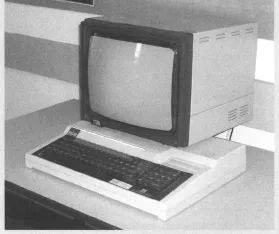
Thanks for the memory – all 32KB of it!
The BBC microcomputer was the first computer to become widely available in primary schools. The BBC Model B was launched in summer 1982 and was equipped with 32 KB of memory, compared with the 512 MB (i.e. 16 000 times more) of a typical PC today. The processor operated at a speed of 2 MHz, whereas an entry-level PC today is 1500 times faster at 3 GHz. The text and graphics comprised a maximum of eight colours and resembled the primitive Teletext or Ceefax pages we still see on analogue terrestrial television. Programs and data were loaded and saved via an audio cassette deck or a 5¼” floppy disk drive. A snip at just £399, excluding the monitor and cassette/disk drive! Very low-spec by today’s standards but the BBC B and the B+ (launched in 1985 with 64 KB of memory for £499) proved to be a massive success, particularly in the field of education, selling over a million units before they were replaced by the BBC Master in 1986. The Master still operated at only 2 MHz but was equipped with 128 KB of memory and could display 16 colours. Even today there are some of these groundbreaking computers being used in schools. Don’t rush to throw them in the skip, though – they’re sure to become collectors’ items in the near future and sell for a small fortune on eBay!
However, the report also points out that:
Although these possibilities exist and are at the present time being exploited by a very small number of teachers, we are still at a very early stage in the development of their use as an aid to teaching mathematics.
Twenty-five years on, Sir Wilfred Cockcroft may well be looking down from above (he died in 1999) and thinking that in the case of many primary schools things have not moved on at all. At one end of the spectrum are the sorts of school described in the opening paragraphs of this chapter and at the opposite end are schools that are not using ICT at all. In its report, The National Literacy and Numeracy Strategies and the Primary Curriculum, published in 2005, Ofsted states that:
Overall, too few teachers use ICT as an integral part of their teaching. Six in ten daily mathematics lessons make little or no use of it. Where it is used, its contribution to teaching and learning is good or better in nearly half of the lessons. It is very good and occasionally excellent in over one lesson in eight. Last year, the overall picture of ICT was mixed, with a widening gap between the best and the weakest provision. There is little change this year.
However, the report does indicate some promising developments:
Some of the most successful work involves the development of work with interactive whiteboards.
and:
The training teachers have received has had a positive impact on their use of interactive whiteboards.
So, despite some pockets of excellence and the promising recent developments in the use of interactive whiteboards, the overall picture is a variable one and the final judgement has therefore got to be ‘could do better’.
So where do you start if you want to do better? Right here with this book, of course! The aim of this book is to provide you with creative ideas for incorporating ICT into your maths teaching. Don’t worry if you haven’t got all of the high-tech gadgetry described in the opening paragraphs; not many schools have at the moment. Those examples were included to illustrate what is possible, not what are realistic expectations for all schools right now. If you haven’t used ICT in your maths teaching at all then you have to start small, but the important thing is that you do make a start of some kind. Go on, take the bull by the horns, give it a try, see what happens and if it works – which I’m sure it will – then make sure you tell your colleagues about it so that they can try it out for themselves. This book will give you lots of ideas to enable you to have a dabble, many of them requiring nothing more than the desktop computer that is lying idle, gathering dust in the corner of your classroom for large parts of the day. If you have access to other equipment in school, for example, a digital projector, then that opens up new possibilities. Similarly, if you have access to a computer suite, there will be new opportunities here as well. Yes, occasionally you will have to put yourself out and spend a bit of time rearranging the classroom furniture, moving the classroom computer so that everyone can see, setting up the digital projector, organising resources in the computer suite and so on, but that little bit of extra effort will be worthwhile when you see the impact it has on your pupils’ motivation and learning. I can remember spending many a playtime in my first year of teaching (coincidently, the same year that the Cockcroft Report and the BBC microcomputer both appeared) wheeling a large television from the school hall to my classroom so that I could connect it to an Acorn Electron microcomputer – a scaled-down, budget version of the BBC microcomputer aimed at the consumer market – to use with the whole class. The activities and the technology were both primitive by current standards: blocky text and graphics displaying randomly generated objects and numbers for the pupils to add or subtract quickly against the clock, all in glorious black and white! But the pupils were completely captivated by this and I could see that it was clearly making a contribution to their learning of number facts.
That conveniently leads to the final point that needs to be made at this stage: the question ‘why?’ Why should we be using ICT in the teaching of mathematics and indeed every other area of the curriculum? The simple answer is that it can have a positive impact on the quality of teaching and learning, which, as teachers, is what we are all concerned with. However, there is much more to it than this and so the important question of ‘why use ICT?’ is considered in greater detail below, before subsequently moving on to the more exciting issue of ‘how?’ throughout the remainder of this book.
Why use ICT?
Twenty-five years ago the principal teaching resource for virtually every teacher in the land was a blackboard and chalk. This was a time when innovation meant using coloured chalks in addition to the standard white. Of course all good teachers used a range of visual aids to enhance their teaching but by today’s standards these were limited. Producing handouts for pupils was a chore. First, you had to write with a ballpoint pen or type with a typewriter onto specially coated waxy paper with carbon paper underneath, remembering to press the pen or thump the typewriter keys as hard as you could. The sheet was then attached to a spirit-fuelled banda machine (Oh, that smell!), which you would then crank by hand to produce multiple copies for the pupils. The alternative, a primitive photocopying machine, was available only in those schools prepared to sacrifice the annual salary of a member of staff, such was the cost. Mathematical visual aids and resources for the pupils were largely paper-based, together with some practical apparatus such as interlocking cubes, counters, wooden or plastic shapes. The principal tool for teacher assessment was a red pen, the results were recorded by hand in a mark book, any analysis was done manually or with the aid of a calculator and reports to parents were entirely the handwritten work of the teacher.
The increasing availability of ICT over the last twenty-five years has completely transformed the ways in which the majority of teachers now work, to such an extent that even the most ardent traditionalists are likely to be using ICT in their professional role in some way or another. At every stage there are opportunities to reap the benefits offered by ICT; from preparation and planning, through to teaching and learning in the classroom, through to assessment, recording and reporting to parents. However, there may still be teachers who remain unconvinced or who are simply unaware of the benefits, and so the aim here is to present a persuasive argument in favour of using ICT in the primary classroom with particular reference to the teaching of mathematics.
The first point to make about the use of ICT relates to the nature of the high-tech world in which we live. Most aspects of our everyday experiences provide evidence of this, for example, the wealth of electronic gadgetry that we have in our homes and carry around with us in our pockets, as well as the technology we encounter when we go through the supermarket checkout, fill the car with petrol, withdraw money from the bank, order a meal or pay for a round of drinks in the pub, borrow a book or CD from the library, and so on. The list is almost endless and that’s before we’ve even considered the world of work; nowadays there are very few occupations that do not involve the use of ICT in some form. So we owe it to pupils to prepare them to be citizens in a technology-rich world and this should start in the earliest stages of their schooling. This alone should be sufficient justification for ensuring that all pupils see and experience ICT in a very positive way, not just in maths but in all areas of the curriculum.
The nature of the technology itself provides additional support for its use in schools. Computers and electronic calculators are fast and powerful and can therefore carry out low-level mechanical chores very efficiently, thus freeing up time for the user to spend on higher-level skills. One example of this is a teacher employing a spreadsheet to analyse pupils’ marks; another is pupils using a data-handling program to sort, search and graph data that they have collected. In both cases the computer does the tedious work so that the user can concentrate on analysis, interpretation and problem-solving. As well as being fast and powerful, computers can store and retrieve huge quantities of information, both locally, for example using hard disks, CD-ROMs and memory sticks, and remotely, via networks, intranets and the internet. Consequently, teachers, pupils and parents are able to access rich and varied resources that were simply not available a few years ago, and all at the click of a few buttons without even having to get up from their seats. Technology also al...