Fashion Promotion is an inspiring and practical guide to promoting a brand. It addresses the new ways in which brands engage with customers, through the latest digital channels as well as traditional methods. Topics covered include developing a brand from an original idea, the impact of influencers and street style sites, digital fashion, online and offline marketing techniques, creating the vision behind a brand, and public relations. From marketing, PR and collaboration to creating brand visuals, Fashion Promotion guides readers through the ways in which any brand - large or small - can embrace the opportunities brought about by developments in digital communication, in order to engage with consumers in new and exciting ways. The new edition covers the impact of mobile on fashion retail transactions and marketing, the role for virtual and augmented reality and the increasing importance of sustainable production and distribution.
- 168 pages
- English
- ePUB (mobile friendly)
- Available on iOS & Android
eBook - ePub
About this book
Information

1
Industry and context
The fashion industry is extremely fast-paced, consuming new ideas and trends at an astonishing rate. What is considered fashionable one day can be seen as passé the very next. It is vital for any brand to keep ahead of these changes and successfully communicate new ideas and designs to build a loyal following of customers.
Global and economic factors influence what the world consumes and wears, and fashion brands must consider the global audience more than ever before.
An increased focus on sustainable fashion and a more circular supply chain of clothing means brands are also now considering more than just how to produce the new but also how to preserve and reuse existing materials.
In this chapter we will take a look at how fashion brands can face the challenge of communicating with this wide, international audience, and how to stand out to a savvy and demanding consumer increasingly interested in reducing the human impact on the planet.
Brand building
Building a strong identity is key for any fashion brand. It allows for representation of a clear idea of what’s being sold, the concept and ethos behind it, the underlying principles of the brand and the way in which it is retailed. These elements create a background for the brand and a picture of what it is about – what it stands for, its attributes and values, and ultimately why the customer will want to buy into it. A brand is a company’s personality and what it hopes to represent to the customer.
There remains, of course, a need for good design and quality construction of clothing, materials and accessories, a brand name, logo and visual identity. As consumers become more connected, however, and awareness is heightened around the process of fashion manufacturing and issues around sustainability, the demand for brand transparency, provenance and authenticity is increasing. Customers are seeking a connection with a brand, where they feel their principles are represented, understood and valued.
Brand identity should be built around a number of elements, including the reasons the brand was developed in the first place and what the target audience is looking for; this is determined by conducting market research. It is also about how the products or services are devised, produced and made available and, ultimately, what the brand wants to be known or ‘famous’ for.
It is crucial to understand that there can be little promotion or communication of a brand if there is no story to tell or background regarding why it exists in the first place.
‘What I did as a fashion designer for both Gucci and Yves Saint Laurent was to create a character and then costume that character throughout her life.’
Tom Ford
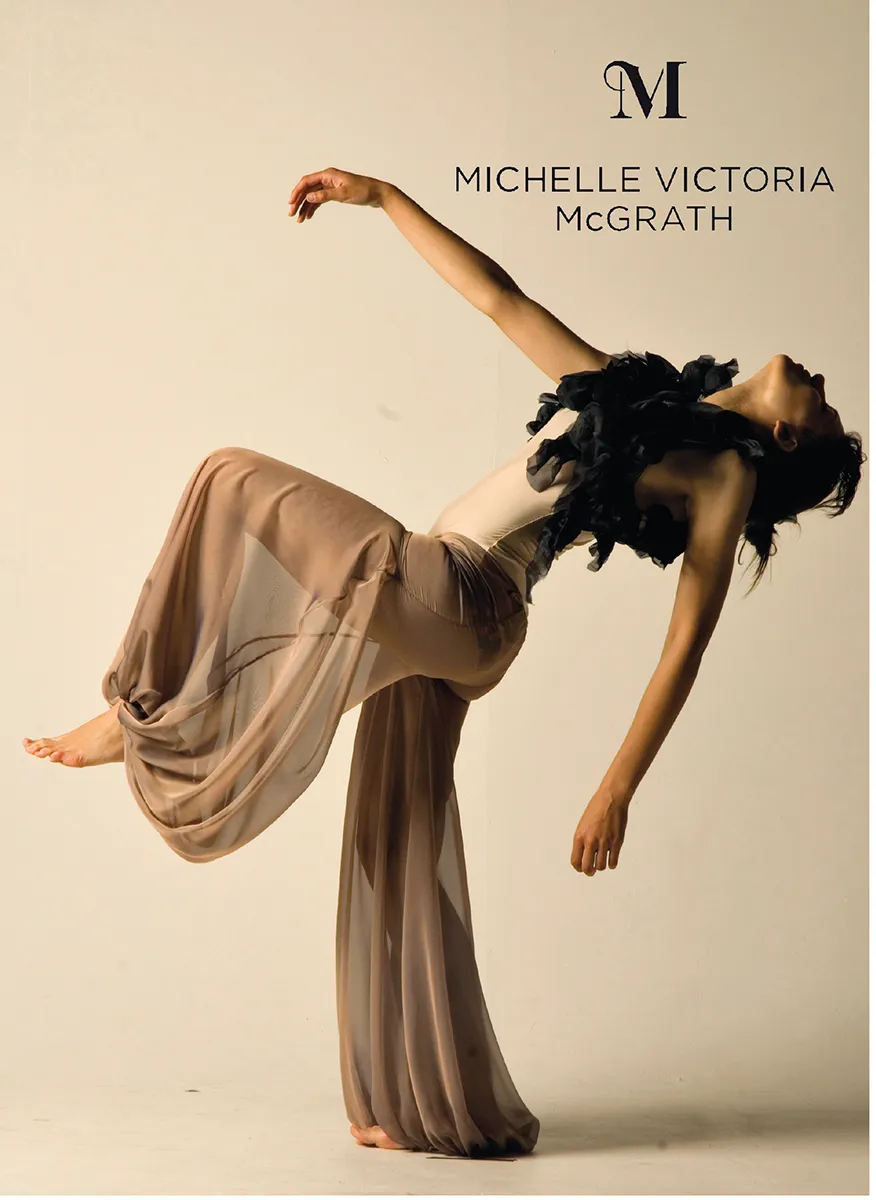
1.2MVM
Designer Michelle McGrath chose a simple, text-based logo, and used muted tones to represent her brand MVM.
The brand still matters
While routes to market have developed considerably and communication channels are now many and varied, there remains a need to offer a strong ‘story’ or background to a brand that compels the customer to find out more. It is, therefore, crucial to have a clear vision of what the brand should mean to the customer.
Consumers gather information about brands from a number of different sources. These will include looking at the visual identity and associated imagery and content, the stores and clothes themselves, as well as all of the other elements of the brand and the background that the company presents to the audience. We learn about Topshop, for example, from the retail stores, the website, the products, adverts, digital content, catwalk and events, online campaigns, social media and influencer collaborations. All of these elements combine to build a picture of what the brand stands for, believes in and strives to create.
It is not enough just to design and make great clothes; a fashion brand has to create a complete story behind the ideas so that the consumer can both differentiate it from the competition and feel a connection with the brand.
HIGH-STREET BRANDS
High-street retailers such as Topshop and H&M focus on having an overall mass-market appeal to a mainly young audience. Collaborations with luxury brands such as Versace (H&M) and Jonathan Saunders (Topshop) offer a more aspirational offering to their customers. The opportunity for luxury or more traditional brands is that they are exposed to a wider audience. Collaborations increasingly include working with online influencers who have built an audience around their own personal style and may also reflect the target audience of a high-street brand.
‘When you think of the blur of all the brands that are out there, the ones you believe in and the ones you remember, like Chanel and Armani, are the ones that stand for something. Fashion is about establishing an image that consumers can adapt to their own individuality.’
Ralph Lauren
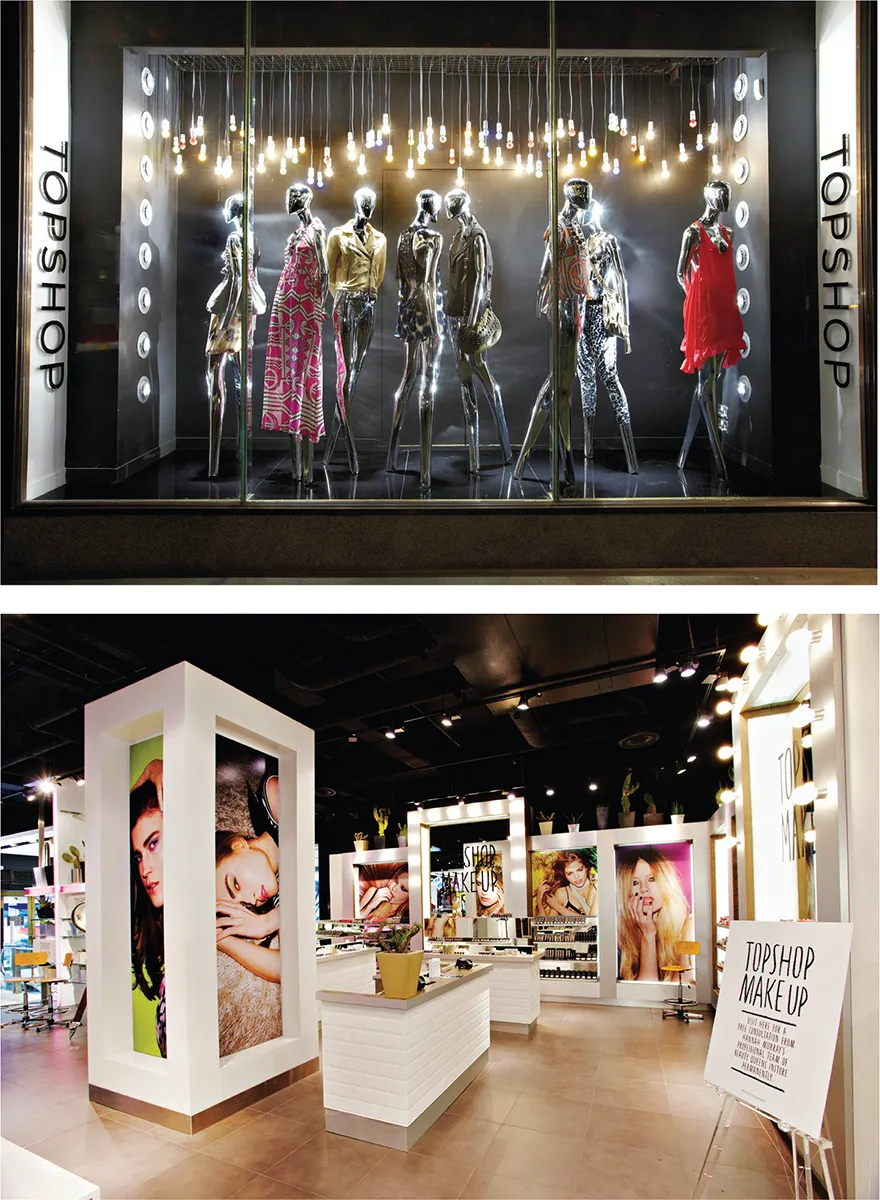
1.3TOPSHOP BRANDING
High-street giant Topshop presents each element of the brand consistently across all customer contact points, from shop window to store interior and digital presence.
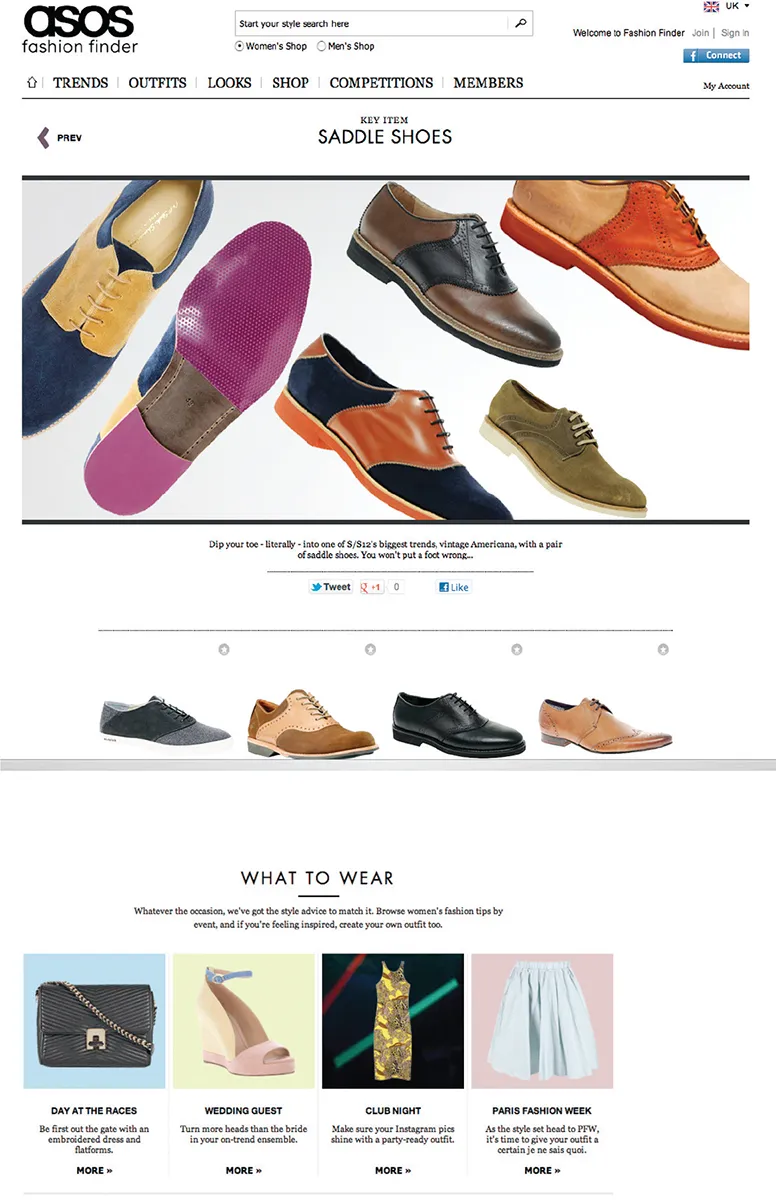
1.4ASOS
Online fashion retailer ASOS caters to the demands of varied fashion consumers, embracing new ways of communicating brands and products.
Adapting for the new consumer
With global markets, the explosion of digital communication, the growth of the independent influencer, a more demanding consumer and greater levels of competition, it is becoming increasingly difficult for fashion brands, large and small, to compete. Differentiators that enable brands to have a unique selling point (USP) are becoming harder to define as local markets develop to include global audiences and luxury brands continue to expand their offering to mass markets.
However, the growth in communication channels and access to two-way conversations with the customer means it is still possible to create a strong, focused brand that appeals to the modern consumer. More than ever before, brands are required to listen to the customer and respond accordingly, which also means that product development can be efficiently targeted, and marketing and promotional campaigns can be bespoke and responsive.
The gathering of data, use of Artificial Intelligence (AI) and the need to respond to consumer feedback at speed all play a significant role in brand survival. Gathering data and customer information of spending habits, product and services feedback, responsiveness, preferences and a whole host of valuable interactions allows brands to create a more compelling and complete customer experience.
Fashion collections and the people and creativity behind them are gaining more attention from the consumer, and the industry is still attracting enthusiastic apprentices and interns across most disciplines. The fashion and creative industries are receiving more attention, recognition and funding from official bodies and some governments. The challenge is to ensure the market remains customer-focused and commercial as well as creative and innovative.
Market research, creativity, strong brand stories, well-developed products, and responsiveness to customer feedback are all key to the creation and survival of a brand that is appealing to the new fashion consumer.
UK FASHION INDUSTRY REPORT
In 2010, the British Fashion Council commissioned a report into the value of the UK fashion industry. The report analysed the indust...
Table of contents
- Cover
- Title Page
- Contents
- Introduction
- 1
- 2
- 3
- 4
- 5
- 6
- Conclusion
- Glossary
- Picture credits
- Useful websites
- Contributor websites/contacts
- Acknowledgements
- Index
- eCopyright
Trusted by 375,005 students
Access to over 1.5 million titles for a fair monthly price.
Study more efficiently using our study tools.
Frequently asked questions
Yes, you can cancel anytime from the Subscription tab in your account settings on the Perlego website. Your subscription will stay active until the end of your current billing period. Learn how to cancel your subscription
No, books cannot be downloaded as external files, such as PDFs, for use outside of Perlego. However, you can download books within the Perlego app for offline reading on mobile or tablet. Learn how to download books offline
Perlego offers two plans: Essential and Complete
- Essential is ideal for learners and professionals who enjoy exploring a wide range of subjects. Access the Essential Library with 800,000+ trusted titles and best-sellers across business, personal growth, and the humanities. Includes unlimited reading time and Standard Read Aloud voice.
- Complete: Perfect for advanced learners and researchers needing full, unrestricted access. Unlock 1.5M+ books across hundreds of subjects, including academic and specialized titles. The Complete Plan also includes advanced features like Premium Read Aloud and Research Assistant.
We are an online textbook subscription service, where you can get access to an entire online library for less than the price of a single book per month. With over 1.5 million books across 990+ topics, we’ve got you covered! Learn about our mission
Look out for the read-aloud symbol on your next book to see if you can listen to it. The read-aloud tool reads text aloud for you, highlighting the text as it is being read. You can pause it, speed it up and slow it down. Learn more about Read Aloud
Yes! You can use the Perlego app on both iOS and Android devices to read anytime, anywhere — even offline. Perfect for commutes or when you’re on the go.
Please note we cannot support devices running on iOS 13 and Android 7 or earlier. Learn more about using the app
Please note we cannot support devices running on iOS 13 and Android 7 or earlier. Learn more about using the app
Yes, you can access Fashion Promotion by Gwyneth Moore in PDF and/or ePUB format, as well as other popular books in Business & Advertising. We have over 1.5 million books available in our catalogue for you to explore.