This innovative volume introduces readers to a variety of disciplinary and methodological approaches used to examine the intersections of religion and migration. A range of leading figures in this field consider the roles of religion throughout various types of migration, including forced, voluntary, and economic. They discuss examples of migrations at all levels, from local to global, and critically examine case studies from various regional contexts across the globe. The book grapples with the linkages and feedback between religion and migration, exploring immigrant congregations, activism among and between religious groups, and innovations in religious thought in light of migration experiences, among other themes. The contributors demonstrate that religion is an important factor in migration studies and that attention to the intersection between religion and migration augments and enriches our understandings of religion. Ultimately, this volume provides a crucial survey of a burgeoning cross-disciplinary, interreligious, and global area of study.
Jennifer B. Saunders, Elena Fiddian-Qasmiyeh and Susanna Snyder (eds.)Intersections of Religion and MigrationReligion and Global Migrations10.1057/978-1-137-58629-2_1
Begin Abstract
1. Introduction: Articulating Intersections at the Global Crossroads of Religion and Migration
Jennifer B. Saunders1 , Susanna Snyder2 and Elena Fiddian-Qasmiyeh3
(1)
Stamford, CT, USA
(2)
University of Roehampton, London, UK
(3)
University College London, London, UK
End Abstract
Immigration crises dominate much of the news around the world as we are writing in 2016: a makeshift, and yet increasingly permanent, camp in Calais, France, houses the nearly 7000 refugees and migrants who are desperately trying to reach Great Britain; thousands of others are dying on overloaded boats crossing the Mediterranean Sea from Africa and West Asia to Europe; and Rohingya Muslims are being turned away from Southeast Asian countries unwilling to accommodate these refugees, who, as members of an ethnic and religious minority, are facing persecution in Bangladesh and Myanmar.1 Policy debates have depicted migrants as criminals or potential drains on society rather than focused on the causes of the migrants’ desperation such as war, neo-liberal economic policies, and religious persecution. Migrants and refugees have been vilified in some discourse to the point where at least one Republican presidential hopeful in the USA has suggested ending birthright citizenship, which is written into the 14th Amendment of the US Constitution.2
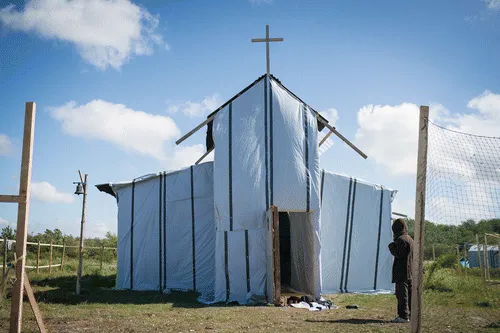
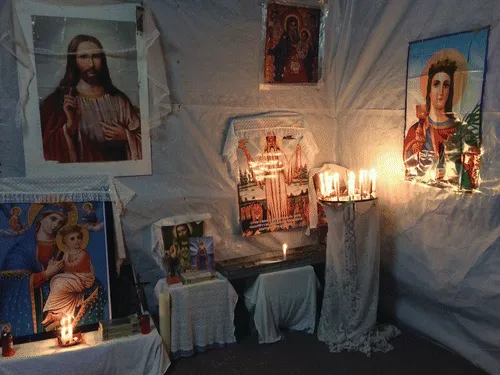
The camp in Calais demonstrates several noteworthy aspects of international migration, from the problems inherent in conceptualizing immigrants as a homogeneous group of people, to the desperation that drives migrants to risk their lives to settle in far-from-hospitable environments.3 Refugees and migrants from across the global South continue arriving in Calais as European governments reinforce fencing to prevent them from crossing the English Channel.4 In addition to this fencing, the camp in Calais has repeatedly been demolished by the French authorities, and the camp’s inhabitants continue to face the reality and risk of eviction and dispossession. European political leaders frame this crisis as a threat to European security and identity while humanitarian groups try to provide basic necessities and alleviate the suffering of those living in the camps. Throughout these processes of ongoing and overlapping insecurity, refugees and migrants continue to make interim lives for themselves and the temporary communities they are creating in the camp, including by building shelters and places of worship (see Figs. 1.1 and 1.2).5
Questions about the role of religion in Calais and other immigration contexts often reveal answers that deepen and broaden our understanding of human migration. Furthermore, their answers demonstrate that religion can be central to migration at a variety of levels and across diverse spaces, from the individual, family, and community practices of migrants and those they leave behind, to the social and political contexts that characterize sites of origin, transit, and destination. Demographics show that religious minorities are more likely to migrate, activists and organizations working to aid migrants throughout their journeys are often motivated by religious narratives and ethical principles, and religious identities can shape migrants’ experiences of interacting with local populations in receiving sites.6
Despite these multiple dynamics, academics have often overlooked the intersections of religion and human mobility due to secular biases.7 As scholars of religion have long been aware, however, for people who inhabit a religious tradition, every aspect of life may be connected to something beyond the measurable world, something that can be called “the sacred.”8 In effect, it is “the sacred” that motivates many people to act, feel, and think in certain ways that are not always comprehensible to those on the outside. It could, perhaps, have been academics’ skepticism or even rejection of the sacred that has until recently pushed religion to a corner in the study of migration.
In spite of this skepticism and at times explicit mistrust of religion, the 1990s witnessed an increasing interest in exploring religion in a broad range of fields of enquiry.9 In part, this coincided with widespread debates taking place within social theory throughout the 1990s and 2000s that extensively critiqued the long-standing assumptions that modernization and modernity would be characterized by the decline of religion and the corresponding entrenchment of rationality and secularization.10 This teleological vision assumed that modernization would lead societies away from the pre-modern “sacred” toward the modern “secular,” a vision that has been effectively disproved in light of the continued, and many would argue increasing, importance of religious belief, identity, and practice around the world.
Recognizing religion’s continued relevance, especially since the mid-2000s, migration scholars have examined the intersections between religion and migration from disparate theoretical, methodological, and religious perspectives, although, in disciplinary terms, this sub-field has arguably been dominated by social science frameworks.11 In turn, scholars of religion, theologians, and ethicists have also explored the multiple connections between religion and migration in increasing numbers.12 In addition to increasingly visible religious diversity brought to “traditional” countries of immigration after a series of new immigration laws were passed in the mid-1960s, religion was brought to the forefront of migration studies—at least in the USA—by seminal studies including R. Stephen Warner and Judith G. Wittner’s Gatherings in Diaspora: Religious Communities and the New Immigration. The formation of a “Religion and Migration” program unit at the American Academy of Religion in 2007 is but one example of the growing attention paid to this important, complex, and often politically charged issue.
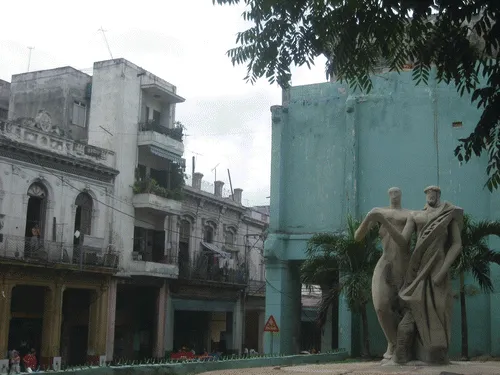
As observers of the development of this field of research and practice, we argue that sustained consideration of the myriad ways in which religion and migration intersect allows us to examine simultaneously the complex roles that religion plays in shaping migration patterns and experiences, and, equally to recognize the malleability of religious traditions and practices in processes of (im)mobility and migration (see Figs. 1.3 and 1.4). Importantly, by centralizing the importance of religion in this volume, and in the Religion and Global Migrations Book Series of which it is a part, we neither intend to reify religion, nor to argue that religion is the only, or even necessarily the most important, factor underpinning experiences of or responses to migration.13 Rather, by exploring the ways in which religious identity, belief, and practice intersect, for instance, with race, ethnicity, gender, and sexuality throughout diverse processes of migration, the volume aims to redress the abovementioned imbalances by examining migration with religion at the center. As Ager and Ager write in Chap. 12, “religious dynamics [determine] the fundamental experience of migration” and should thus “be integrated with analyses of the migrant trajectories and experience, not seen as epiphenomenal to them.”
By integrating research undertaken by leading scholars working from within and about a range of religious traditions and disciplinary perspectives, this volume suggests that there are alternative ways of understanding the relationships, processes, and responses that characterize global migration. In this regard, we start from the premise that not all types of migrants, levels or directionalities of migration, and, indeed, not all religions are equally represented in studies of migration or in policy responses designed to address these.14 Importantly, these diverse traditions have different positions of power in different geopolitical spheres.15 Therefore, we suggest ways in which study of these under-represented issues and dynamics can expand our knowledge and deepen our understanding. The next section highlights the diversity of forms of migration while what follows attends more specifically to the power imbalances that are inherent in these varieties of migration as well as in their study. The remainder of this introduction highlights significant ways in which reading different approaches to religion and migration together can aid us to see global migration in new ways. One of the overarching aims of this book and the broader book series is to advocate in favor of an interdisciplinary and multi-perspectival approach to the study of migration (and, indeed, of religion) that benefits from placing different theoretical, ontological, epistemological, and methodological viewpoints in conversation with one another.
Types and Directionalities of Migration
By 2013, the United Nations estimated there were over 232 million international migrants worldwide, including those who cross international borders for employment, education, tourism, family reunification, and asylum.16This figure does not include the people who have migrated within—rather than across—their national borders, such as rural migrants looking for work in urban areas, migrants displaced by public works projects or changing climates, or professionals in search of better opportunities. Bearing all of these categories and “types” of migration in mind, it is clear that not all people(s) who move across national and transnational spaces are equally “visible,” or of equal “interest” to different stakeholders as migrants per se.17 In effect, dominant academic and policy perspectives have framed the terms of discussions and debates about migration and migrants, with diverse bureaucratic labels having been imposed upon migrants.18 In contrast, the ways in which migrants conceptualize these processes, including the significance of religious identity, belief, and practice, and experiences, have largely remained invisible or unexplored to date.
For instance, state policies label and constitute certain migrants, including those at the camp in Calais, as hypervisible, deviant others whose moving bodies (and concomitant religious beliefs and practices) are to be controlled and/or feared. Indeed...
Table of contents
Cover
Frontmatter
1. Introduction: Articulating Intersections at the Global Crossroads of Religion and Migration
1. Religion and Experiences of Migration
2. Approaches to the Study of Religion and Migration
3. Religion and Responses to Migration
Backmatter
Trusted by 375,005 students
Access to over 1.5 million titles for a fair monthly price.
Study more efficiently using our study tools.
Frequently asked questions
Yes, you can cancel anytime from the Subscription tab in your account settings on the Perlego website. Your subscription will stay active until the end of your current billing period. Learn how to cancel your subscription
No, books cannot be downloaded as external files, such as PDFs, for use outside of Perlego. However, you can download books within the Perlego app for offline reading on mobile or tablet. Learn how to download books offline
Perlego offers two plans: Essential and Complete
Essential is ideal for learners and professionals who enjoy exploring a wide range of subjects. Access the Essential Library with 800,000+ trusted titles and best-sellers across business, personal growth, and the humanities. Includes unlimited reading time and Standard Read Aloud voice.
Complete: Perfect for advanced learners and researchers needing full, unrestricted access. Unlock 1.5M+ books across hundreds of subjects, including academic and specialized titles. The Complete Plan also includes advanced features like Premium Read Aloud and Research Assistant.
Both plans are available with monthly, semester, or annual billing cycles.
We are an online textbook subscription service, where you can get access to an entire online library for less than the price of a single book per month. With over 1.5 million books across 990+ topics, we’ve got you covered! Learn about our mission
Look out for the read-aloud symbol on your next book to see if you can listen to it. The read-aloud tool reads text aloud for you, highlighting the text as it is being read. You can pause it, speed it up and slow it down. Learn more about Read Aloud
Yes! You can use the Perlego app on both iOS and Android devices to read anytime, anywhere — even offline. Perfect for commutes or when you’re on the go. Please note we cannot support devices running on iOS 13 and Android 7 or earlier. Learn more about using the app
Yes, you can access Intersections of Religion and Migration by Jennifer B. Saunders, Elena Fiddian-Qasmiyeh, Susanna Snyder, Jennifer B. Saunders,Elena Fiddian-Qasmiyeh,Susanna Snyder in PDF and/or ePUB format, as well as other popular books in Social Sciences & Cultural & Social Anthropology. We have over 1.5 million books available in our catalogue for you to explore.