NEXT BIG IDEA CLUB's November 2023 Must Read Books • LIBRARY JOURNAL EDITOR PICK •
“A groundbreaking book, both bold in its premise and precise in its exploration of systemic racism in the workplace. This could not be a more urgent and necessary blueprint for progress.”—Bakari Sellers, New York Times bestselling author of My Vanishing Country
“Provides a trailblazing antiracist framework for us all.”—Ibram X. Kendi, #1 New York Times bestselling author of How to Be an Antiracist
"This vital and accessible study is a must-read for anyone concerned with workplace equality."—Publishers Weekly (Starred Review)
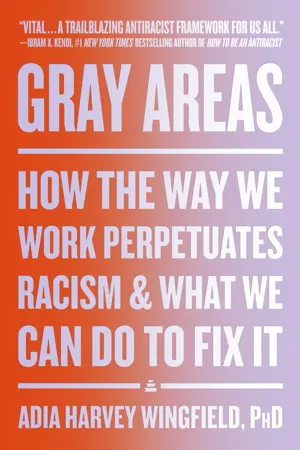
A leading sociologist reveals why racial inequality persists in the workplace despite today’s multi-billion-dollar diversity industry—and provides actionable solutions for creating a truly equitable, multiracial future.
Labor and race have shared a complex, interconnected history in America. For decades, key aspects of work—from getting a job to workplace norms to advancement and mobility—ignored and failed Black people. While explicit discrimination no longer occurs, and organizations make internal and public pledges to honor and achieve “diversity,” inequities persist through what Adia Harvey Wingfield calls the “gray areas:” the relationships, networks, and cultural dynamics integral to companies that are now more important than ever. The reality is that Black employees are less likely to be hired, stall out at middle levels, and rarely progress to senior leadership positions.
Wingfield has spent a decade examining inequality in the workplace, interviewing over two hundred Black subjects across professions about their work lives. In Gray Areas, she introduces seven of them: Alex, a worker in the gig economy Max, an emergency medicine doctor; Constance, a chemical engineer; Brian, a filmmaker; Amalia, a journalist; Darren, a corporate vice president; and Kevin, who works for a nonprofit.
In this accessible and important antiracist work, Wingfield chronicles their experiences and blends them with history and surprising data that starkly show how old models of work are outdated and detrimental. She demonstrates the scope and breadth of gray areas and offers key insights and suggestions for how they can be fixed, including shifting hiring practices to include Black workers; rethinking organizational cultures to centralize Black employees’ experience; and establishing pathways that move capable Black candidates into leadership roles. These reforms would create workplaces that reflect America’s increasingly diverse population—professionals whose needs organizations today are ill-prepared to meet.
It’s time to prepare for a truly equitable, multiracial future and move our culture forward. To do so, we must address the gray areas in our workspaces today. This definitive work shows us how.
Gray Areas includes 15 black-and-white images and a photo insert.