In her latest book, Angélique du Toit goes beyond the techniques and goals explored in most coaching texts to examine the process of coaching and the importance of sense-making for creating meaning and encouraging self-reflection. In doing this, the coaching experience emerges as a type of transformational learning, in which the individual is guided through a journey of discovery and revelation. Theories are drawn together in a fresh and original way which will cause readers to question how coaching should be defined and practised.
Dr Angélique du Toit is an academic practitioner and is involved in the delivery of academic programmes and publications related to coaching. She is also an Executive Coach supporting senior executives in their personal development in both the public and private sectors.
- 200 pages
- English
- ePUB (mobile friendly)
- Available on iOS & Android
eBook - ePub
Making Sense of Coaching
About this book
Information
Publisher
SAGE Publications LtdYear
2014Print ISBN
9780857025616
9780857025609
Edition
1eBook ISBN
9781446297308
| INTRODUCTION | 1 |
CHAPTER OBJECTIVES
• Set the scene
• The Coaching Cycle model
• Introducing the underlying ontology and epistemology of the text
• Outlining the structure of the text
SETTING THE SCENE
I invite you, the reader, to enter into a dialogue with me for the purpose of making sense of coaching. You may share some of the ideas I put forward and you will no doubt also hold views that differ from mine. In the pages to follow I hope I will be able to contribute to your understanding of coaching and challenge some of the assumptions you may currently hold as to the nature of coaching. Coaching as a developing field remains in its infancy, both in terms of research as well as its practice. The diversity of techniques and intellectual traditions that underpin its disparate practices reflects the eclectic views on what constitutes coaching. It is for this reason that coaching is perceived as having a long way to go in establishing itself as a profession (Brockbank and McGill, 2006; Cox et al., 2010). This can be perceived as both a strength and a weakness. The weakness is reflected in the questions raised from different quarters as to the credibility of the emerging profession. The strength is the immense flexibility of coaching, with its array of creative intervention strategies to meet the individual needs of the coachee. I will explore the tension between these two positions, namely the desire for proper professional status complete with agreed standards and the appeal offered by the freedom of manoeuvre, supported by a critical approach as put forward by postmodernism.
Coaching has its roots buried in education, psychology, therapy, counselling, sports coaching and organizational development, all contributing to the eclectic nature of coaching. The extant literature of coaching would suggest that it has developed along two parallel paths. One path favours the models- and techniques-based approach, with its assumptions based on the behaviourist tradition. This perspective is particularly evident in executive and management coaching, which is dominated by a need to achieve goals and objectives and bring about visible changes in behaviours (du Toit, 2010). However, this approach ignores the unconscious and cognitive elements that shape the behaviours and performance of individuals. The second path, according to Stober (2006), has its philosophical foundation based in a humanistic psychology with human growth and change at its core. Stober (2006) also suggests that many of the approaches to coaching, such as the person-centred approach, therapies that include practices such as Gestalt, existentialism and psychotherapy, all have their roots in the humanistic perspective. However, this perspective is embedded in a therapeutic environment that deals with varying levels of dysfunction and pathology whereas coaching endeavours to work with functional individuals with an emphasis on the future.
Irrespective of the approach to coaching, it requires deep reflection by both the coach and coachee and the necessity to explore the values and beliefs that drive the individual while at the same time having a consideration of the wider system in which the coachee operates. In the chapters to follow I put forward the argument that the transformational power of coaching needs to be much more informed by a critical perspective than has been the case hitherto. Within the coaching space the role of the coach is both to support and challenge the individual to engage in a process of retrospective sensemaking. It is often in the space of silence created by coaching that the individual is able to become aware of the very essence of who they are, the values and beliefs which drive their behaviours and the contribution they have made to the particular set of circumstances they find themselves in. I argue that coaching at the highest level challenges the participants to take responsibility and ownership for their role in any situation or experience they encounter. The coaching space therefore has the ability to challenge the rhetoric that has informed the reality the coachee is experiencing at a given time.
The audience for this book is first and foremost aimed at the systemic eclectic end of the mature or maturing coach as identified by Clutterbuck and Megginson (2011), who offer four stages of development for the aspiring coach to journey through. These are as follows:
1. Models-based coaches. This identifies the aspiring coach who sets off on their development journey and who seeks the comfort and security of tried and tested models. Their approach is mechanistic as the model drives the intervention and conversations with the client.
2. Process-based approach. There is more flexibility in the coach’s approach and they draw on a number of different tools and techniques, although their repertoire remains limited. The approach continues to be wedded to a solutions focus.
3. Philosophy or discipline-based mindset. The coach begins to apply a much wider portfolio of responses to the needs of the client and their approach is identified by the ability to reflect on their practice.
4. The systemic eclectic. This is the most liberated approach and the coach has a wide-ranging portfolio that includes knowledge and expertise from different disciplines. Their approach is non-mechanistic and they have internalized the array of tools and techniques which enables them to identify the most appropriate approach to meet the needs of the client.
However, for those of you embarking on the coaching journey and currently at the beginning of exploring what coaching might mean to you, the debates I put forward in this text will give you an alternative view of coaching and one mainly based on an underlying philosophy of coaching. This book therefore does not offer any new tools or techniques, nor does it favour any one in particular. It does, however, endeavour to explain what transpires within the coaching space, irrespective of the technique or approach employed by the coach. It aims to transcend the mechanistic input of coaching and instead addresses the black box of coaching; the conversion of the intervention strategy which leads to the output. The assertions are supported by vignettes offered by individuals and their particular experiences of coaching, whether as a coach or coachee.
There has been an explosion of the coaching literature in recent years. Whatever the desired outcome there are a vast array of existing and growing models and techniques put forward with which to achieve these outcomes. This text will focus on the theories and concepts not hitherto associated with coaching, but which helps to explain the process between the inputs and the outputs. This text therefore transcends the need to engage in what Clutterbuck and Megginson (2011) define as the motivations of different schools of thought who seek to marginalize the views of alternative approaches, which in my view is counter-productive and serves no purpose other than to discredit the profession. I believe that any of the models and techniques thus far promoted in the literature all have a place in the toolbox of the coach. The challenge arises when any of these is hailed as the holy grail of coaching. As Clutterbuck and Megginson (2011) point out, the truly mature coach is able to elegantly and seamlessly select the right tool or technique for the specific situation presented by the coachee or, in certain circumstances, no tool at all. The structure of the book is guided by the model described below which reflects the key stages of coaching as I perceive it.
COACHING AND MENTORING
Some readers will no doubt come to the subject of coaching with the unanswered question as to the differences and similarities between coaching and mentoring and I suggest it would be of value to attend to this question at the outset. Two of the key authoritative figures on coaching and mentoring, Clutterbuck and Megginson (2005: 14), suggest that any attempts at polarizing coaching and mentoring is, in their terms, ‘futile, and undermines the credibility of both coaching and mentoring’. Furthermore, the subject of coaching is dynamic and constantly in the process of changing and evolving, and I share the view of the authors that any attempt at categorizing coaching and mentoring is unhelpful. As Garvey et al. (2009) identify, there are distinct schools of thought in both camps and some of these vigorously protect their respective territories.
The reference, both directly and indirectly, to mentoring can be traced back thousands of years, beginning with Plato and Aristotle with some tentative links to classical times associated with coaching, namely that of Socrates and the Socratic dialogue in particular. I conclude the brief foray into the debate of the distinction between coaching and mentoring by suggesting that there is probably more that unites rather than separates the two practices. Any attempt at providing a definitive position on the differences or similarities between coaching and mentoring is beyond the scope or purpose of this book. The discussions and debates that follow are therefore levelled at the practice of coaching, some of which will no doubt apply to mentoring as well.
THE COACHING CYCLE
The following model, which I suggest goes some way to define the coaching process, acts as a map by which the book is structured. The first stage of the coaching journey is defined by identifying the client or clients and establishing a contract for the duration of the coaching relationship. The contract should include the agreed outcomes and should determine specific and clear boundaries as to the type of coaching, how a successful outcome will be achieved, identify the expectations of different stakeholders, etc. This stage should also reflect the particular approach and underlying philosophy of the coach. As will be discussed in subsequent chapters, there are many routes into the provision of the coaching intervention and it is important for both the coach and coachee that there is clarity about the particular approach and the tools and techniques that might be employed.
Stage two of the coaching journey is what I define as the ‘black box’ of coaching. The focus of the existing literature seems to be on either the inputs, namely the models and techniques with the GROW model as probably the most well known, or the outputs, i.e. performance and achievement of goals. There appears to be little by way of addressing the stage in between and its contribution to what would be identified as coaching. As there is an absence in the literature on making this stage explicit, it remains an enigma – a black box that is complex and difficult to define. It is for this reason that this book deliberately excludes the positioning of different models or techniques. There are other texts that specifically provide a description of the various approaches available to the coach and the endless models and techniques associated with various traditions. Instead, the purpose is to focus on the actual process of coaching in an attempt to make the black box more transparent.
As one coachee mentioned to me, it is a ‘sacred space or bubble’, which is not necessarily defined by a physical place but rather refers to a psychological space that can equally be established within a busy public place or a quiet environment dedicated to coaching. It is also seen as a place the coachee can return to in their mind during the periods between the actual coaching sessions. Irrespective of the approach or techniques employed by the coach, I will suggest that certain key practices are associated with this stage of the coaching process and these will be discussed at length throughout the book. The final stage is identified as the outputs of the coaching intervention, which will, of course, be different for different individuals although there appears to be some common benefits identified by coachees. Irrespective of the individual benefits, one such common theme is that of personal development and change.
PHILOSOPHY OF THE COACH
I will argue throughout the book that it is necessary for coaching to be supported by an overall philosophy on behalf of the coach. As I perceive it as the underpinning of the coaching practice, irrespective of the models or techniques an individual coach employs, I will begin my discussions with exploring how philosophy can inform the practice drawing on some examples for discussion. Having an overarching philosophy to one’s practice of coaching allows for congruence in how the coach engages in their practice and it enables the coach to navigate through the sometimes challenging and turbulent waters encountered during the coaching intervention. One such philosophy, which I argue is well suited to the practice of coaching, is that of scepticism, which has its roots in critical theory and which I discuss in depth in Chapter 3.
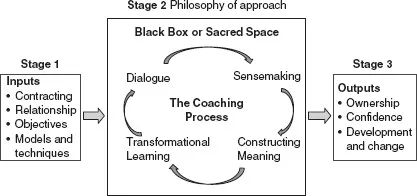
FIGURE 1.1 The Coaching Cycle, adapted from du Toit (2010)
Unlike many other discourses, which allow the researcher, author and reader to indulge in the joy of pure intellectual debate and pontification, coaching is the application of the many theories and concepts that have all played a role in shaping what we have come to understand as coaching. Unlike the student of many other subjects, learners on various coaching programmes are engaged in the learning journey for the express purpose of becoming a better and more developed coach. The applied application of theory has been a passion of mine and has underpinned the long journey of learning I embarked on many years ago and which supports all my activities, whether it is coaching, research, writing, designing of programmes or engaging in debates at conferences. I have therefore endeavoured to address the needs of both the academic community, drawing on relevant theories and concepts supported by the appropriate references. At the same time I have also endeavoured to demonstrate how these ideas could inform the practice of coaching and to provide a map to the potential coachee who wants to better understand what coaching may or may not offer them.
ORGANIZATION OF THE BOOK
The book is organized in the following chapters.
Chapter 2 provides a critical overview of the current coaching literature for the purpose of positioning the ideas that follow within current thinking and practices of coaching. It is true to say that coaching has been greatly influenced by psychology, but it remains without wider philosophical principles to underpin its practice. The practice of coaching that has received most attention and focus has been executive and business coaching with the explicit goal of seeking to improve the performance of the individual and the organization. Coaching has yet to address wider social debates, challenging the fundamental and corresponding social beliefs that underpin and condone organizational practices. Instead, it has historically reflected the organizational obsession with performance and goals or on the opposite end of the continuum, life coaching, which in its extreme is devoid of challenge and realism.
To lend credibility and substance to coaching, many of the models and concepts have been borrowed and adopted from psychology. Psychology has traditionally focused on the dis-ease within individuals and groups, seeking ways of ‘fixing’ what is perceived to be wrong with the individual. There is a lack of reference to a wider philosophical underpinning to truth and reality in both the literature as well as the practice of coaching, which I endeavour to address in this text.
Chapter 3 introduces the role of philosophy in coaching and that of critical theory in particular, which promotes the virtues of scepticism. As I perceive the support of a coaching philosophy to be fundamental to the personal approach of the coach, I begin the journey of exploration of what coaching is with a debate and discussion as to the contribution of philosophy to the practice of coaching. The sceptical bias of recent critical theories, namely that of poststructuralism and postmodernism, is introduced and its implications for coaching are emphasized. Scepticism particularly encourages radical and ongoing assessment of belief systems and their received wisdom; the dominant ideology. Of significance to coaching is the emphasis of difference in poststructuralist thought. Poststructuralist thinkers challenge the perceived homogeneity subscribed to by those in power and instead argue that the world around us was characterized by difference. This is a point of view shared by postmodernism, which sets out to undermine the grand narratives of our culture. Jean-François Lyotard in particular encouraged the rejection of institutional authority, suggesting that it invariably includes the suppression of divergent viewpoints. Psychologically this may be challenging to an individual who prefers to stay loyal to the status quo due to the emotional energy that has been invested in particular institutions, such as an organization, over the years. Coaching supported by critical theory provides the mechanism by which such power structures can be challenged. Critical theory is rich in concepts enabling the user to construct new narratives thereby furthering the debate in a particular field.
As we argue in our book, a coaching practice more geared to scepticism would be a significant step towards challenging the fundamentalism that has created so many problems in the business world at the time of writing (du Toit and Sim, 2010). One of the key values of coaching is that it is powerful in assisting the individual to address both their own internal barriers as well as the collective barriers that exist in organizations. Coaching addresses the worldview of the individual and their place in that world. Coaching offers the mechanism through which to challenge the stories and narratives that come to dominate an organization and, by default, the behaviours of those ...
Table of contents
- Cover Page
- Halftitle
- Advertisement
- Title
- Copyright
- Contents
- About the Author
- Acknowledgements
- 1 Introduction
- 2 An Overview of the Coaching Literature
- 3 Critical Theory: A Philosophy of Coaching
- 4 The Prerequisites of Coaching
- 5 The Tools of Sensemaking
- 6 Narrative and Storytelling
- 7 Constructionism
- 8 Coaching and Adult Learning
- 9 Conclusion
- References
- Index
Trusted by 375,005 students
Access to over 1.5 million titles for a fair monthly price.
Study more efficiently using our study tools.
Frequently asked questions
Yes, you can cancel anytime from the Subscription tab in your account settings on the Perlego website. Your subscription will stay active until the end of your current billing period. Learn how to cancel your subscription
No, books cannot be downloaded as external files, such as PDFs, for use outside of Perlego. However, you can download books within the Perlego app for offline reading on mobile or tablet. Learn how to download books offline
Perlego offers two plans: Essential and Complete
- Essential is ideal for learners and professionals who enjoy exploring a wide range of subjects. Access the Essential Library with 800,000+ trusted titles and best-sellers across business, personal growth, and the humanities. Includes unlimited reading time and Standard Read Aloud voice.
- Complete: Perfect for advanced learners and researchers needing full, unrestricted access. Unlock 1.5M+ books across hundreds of subjects, including academic and specialized titles. The Complete Plan also includes advanced features like Premium Read Aloud and Research Assistant.
We are an online textbook subscription service, where you can get access to an entire online library for less than the price of a single book per month. With over 1.5 million books across 990+ topics, we’ve got you covered! Learn about our mission
Look out for the read-aloud symbol on your next book to see if you can listen to it. The read-aloud tool reads text aloud for you, highlighting the text as it is being read. You can pause it, speed it up and slow it down. Learn more about Read Aloud
Yes! You can use the Perlego app on both iOS and Android devices to read anytime, anywhere — even offline. Perfect for commutes or when you’re on the go.
Please note we cannot support devices running on iOS 13 and Android 7 or earlier. Learn more about using the app
Please note we cannot support devices running on iOS 13 and Android 7 or earlier. Learn more about using the app
Yes, you can access Making Sense of Coaching by Angelique Du Toit,Author in PDF and/or ePUB format, as well as other popular books in Business & Mentoring & Coaching. We have over 1.5 million books available in our catalogue for you to explore.