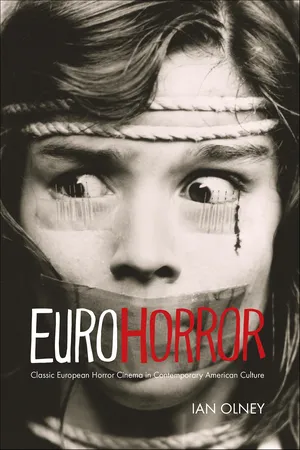
Beginning in the 1950s, "Euro Horror" movies materialized in astonishing numbers from Italy, Spain, and France and popped up in the US at rural drive-ins and urban grindhouse theaters such as those that once dotted New York's Times Square. Gorier, sexier, and stranger than most American horror films of the time, they were embraced by hardcore fans and denounced by critics as the worst kind of cinematic trash. In this volume, Olney explores some of the most popular genres of Euro Horror cinema—including giallo films, named for the yellow covers of Italian pulp fiction, the S&M horror film, and cannibal and zombie films—and develops a theory that explains their renewed appeal to audiences today.
- 259 pages
- English
- ePUB (mobile friendly)
- Available on iOS & Android
eBook - ePub
About this book
Information
Subtopic
Film History & CriticismPART ONE
Toward a Performative Theory
of Euro Horror Cinema
ONE
Academic Hot Spots and Blind Spots
There has been an explosion of interest in horror cinema among film scholars in recent years; in the first decade of the twenty-first century especially, the genre received unprecedented attention in the field of Film Studies. Perhaps the most visible sign of the current scholarly fascination with horror cinema is the record number of books on the subject being published by academic presses in the United States and abroad. Scores of monographs and edited volumes on seemingly every aspect of the genre, from its nature and history to its cultural and ideological dimensions to its notable directors and producers to its reception and fandom, now crowd the shelves. There is even a growing number of texts on horror cinema geared toward the film student – introductory guidebooks that offer overviews of the genre, as well as critical anthologies that collect the most important and influential essays on the subject – indicating that horror film studies has truly arrived as an area of academic inquiry. While the extraordinary number of books on horror cinema available today may be the most visible sign of scholarly interest in the genre, it is not the only one. Hundreds of articles on the horror film have appeared in a wide range of highly respected academic journals. Many of these journals have devoted entire issues to horror, and at least one – Horror Studies, a periodical published in the United Kingdom – has dedicated itself exclusively to the exploration of the genre. One might also point to the countless papers on horror cinema delivered at conferences sponsored by professional organizations like the Society for Cinema and Media Studies and the Popular Culture and American Culture associations. And this boom in horror film scholarship seems likely to continue for the foreseeable future: according to the Dissertation Abstracts Online database, dozens of doctoral dissertations on horror cinema were submitted at universities all over the world during the first decade of the 2000s, suggesting that a new generation of scholars with a substantial investment in the genre has now entered the field.
This represents a remarkable reversal of fortune for the horror film, which was at one time regarded within Film Studies as something of a bête noir – primarily because of its status as popular cinema. In the 1960s, scholars fighting to establish Film Studies as a legitimate academic discipline tended, out of necessity, to marginalize popular forms of cinema like horror. Against the notion – widespread in academia at the time – that movies were mass culture kitsch unworthy of serious attention, they argued, adopting the tenets of the newly imported auteur theory, that a film can constitute art if it expresses the unique vision of an individual “author.” By creating a pantheon of auteur directors – including John Ford, Howard Hawks, Alfred Hitchcock, Fritz Lang, Jean Renoir, and Orson Welles – and differentiating the “personal” work of these masters from the “impersonal” (that is, generic or formulaic) dross of popular cinema, film scholars were able to generate cultural capital for a certain kind of “highbrow” cinema and mobilize crucial institutional support for their emerging discipline. In the process, though, they effectively placed horror and other forms of “lowbrow” cinema beyond the bounds of academic study.
Horror’s standing in the field was further diminished during the 1970s with the rise of “Screen theory,” a potent combination of semiotics, structuralism, psychoanalysis, Marxism, and feminism forged in the pages of the British film journal Screen. Screen theory argued, in essence, that popular cinema buttresses the power relations underpinning the dominant culture by symbolically “suturing” spectators into predetermined viewing positions that reflect and reinforce the social positions they occupy in real life – all under the guise of catering to their voyeuristic and narcissistic fantasies. Horror movies were mainly seen as pernicious examples of the way in which popular cinema caters to the male gaze, taking women’s sexual difference as the basis both for their fetishization and for their punishment. Progressive readings of the genre were rare. True resistance to the dominant social order, it was generally agreed at the time, could only come from outside popular film – preferably in the form of a forbidding avant-garde cinema that would, in Laura Mulvey’s memorable formulation, strive for the “total negation of the ease and plenitude of the narrative fiction film” (16) and destroy “the satisfaction, pleasure, and privilege” (26) of the spectator.
It was not until the 1980s and 1990s that film scholars learned to stop worrying and love the horror movie, largely because of the growing influence of Cultural Studies in academia. Often described as being less a unified academic field than an eclectic methodology that cuts across disciplinary lines, Cultural Studies deemphasized traditional, ahistorical textual analysis in favor of an examination of the diverse cultural contexts in which texts are created and received. Crucially, it also privileged the notion that mass culture products are worthy of study because their production and consumption involve not only processes of ideological manipulation or indoctrination, but also acts of resistance and appropriation on the part of both producers and consumers. This led to a reassessment of previous attitudes toward popular cinema and the horror film, in particular, during the last two decades of the twentieth century. Academic writing on the genre displayed a new sensitivity to the ideological gaps, contradictions, and ambiguities inherent in horror cinema, as well as to the ability of viewers to resist or recast the “dominant,” or intended, meaning of horror movies. The horror film was reconceptualized as a dialogical text: a network of competing and conflicting discourses not reducible to a single ideological imperative. Furthermore, the experience of watching horror movies was refigured as an active and lively dialogue between spectator and screen, an intense form of negotiation not reducible to a simple process of normalization. What had been a critically ignored or maligned genre, seen simply as the province of revolting bodies, was now viewed as the home of bodies in revolt. If, in the 1960s and 1970s, horror cinema was a bad neighborhood to be avoided by film scholars at all costs, by the turn of the twenty-first century, it had been almost completely gentrified and made safe for academia. Today, it is a vital hot spot in the field of Film Studies – perhaps the single most written-about genre in the discipline.
It is all the more surprising, then, that despite its explosive growth, horror film scholarship remains quite narrowly focused in one crucial way. The vast majority of the books, articles, and papers on horror cinema focus exclusively on Anglo American horror. Relatively little has been written in English not only about non-Western – say, Latin American, Asian, or African – horror movies, but also about Western horror movies made outside the United States and the United Kingdom in countries like Italy, Spain, and France. The scholarly neglect of non-Western horror, while absolutely lamentable given the unique genre traditions in question, is perhaps not totally unexpected. As Steven Jay Schneider and Tony Williams comment, it can be seen as the result of a certain amount of Western prejudice combined with “difficulties accessing films from other parts of the globe, as well as the relative lack of interest shown by several national cinemas in this genre until the last decade or so” (1). More mystifying is that classic European horror cinema of the 1950s, 1960s, 1970s, and 1980s – Euro horror, as many of its contemporary American fans call it – has suffered such neglect. Clearly there is no cultural prejudice at work here, since other forms of European cinema dating from the same era have received much attention in Film Studies. Nor is there any shortage of films to discuss, as horror movies emerged from Europe in staggering numbers from the 1950s – when the postwar recovery of European film industries, an international surge in the popularity of horror cinema, and the decline of the old Hollywood studio system triggered a boom in horror film production on the Continent – to the 1980s, when a combination of factors, including declining movie attendance in Europe, the rise of new Hollywood blockbuster cinema, and the diminishing American market for foreign films, conspired to end Euro horror’s golden age. Nor has it been particularly difficult to see these films in the years since their original theatrical releases – especially in the twenty-first century, as I will demonstrate in a moment.
There are several readily apparent reasons that classic European horror movies deserve the consideration of film scholars. In the first place, they differ markedly from British and American horror movies of the same period. As Cathal Tohill and Pete Tombs note, Euro horror drew upon a wide range of distinctly European cultural sources, including “surrealism, romanticism, and the decadent tradition, as well as early 20th century pulp-literature, filmed serials, creaky horror-movies and sexy comic strips” (5). The result was a new type of horror cinema that dispensed with the artistic unity and narrative logic privileged by Anglo American genre films, prizing the “pictorial, the excessive and the irrational” (ibid.) instead. Euro horror movies also “blended eroticism and terror” (ibid.) in a novel fashion, exploring the boundary between sex and violence in ways that were rare in the more puritanical British and American horror movies being made at the time. Finally, Euro horror produced an array of unique directors, stars, and genres completely unknown in Anglo American horror cinema. In short, to quote Tohill and Tombs: “Compared to the U.S. and U.K. [horror] scene, the developments in Europe were wild and untamed” (6). Clearly, then, an examination of Euro horror could expand our understanding of the genre and deepen our appreciation for its richness and diversity. Similarly, it could allow us to better understand and appreciate other forms of European cinema dating from the same time that have already enjoyed a great deal of attention from film scholars.
This is especially true in the case of European art cinema, which has a special, reciprocal relationship with Euro horror. Both arose from the same cultural, economic, and political milieu and responded to the same historical traumas: World War II, the Holocaust, the Cold War, and the process of decolonization, for example. Both often made use of the same production facilities and creative personnel. Studios like Rome’s Cinecittà – which hosted the production of not only Federico Fellini’s La dolce vita (1960) and Luchino Visconti’s La caduta degli dei (The Damned, 1969), but also Dario Argento’s Il gatto a nove code (The Cat o’ Nine Tails, 1971) and Jorge Grau’s Non si deve profanare il sonno dei morti (The Living Dead at Manchester Morgue, 1974) – turned out both European art films and Euro horror films. Stars like Barbara Steele – whose credits include Riccardo Freda’s Lo spettro (The Ghost, 1963) and Antonio Margheriti’s Danza macabra (Castle of Blood, 1964), as well as Fellini’s 8½ (1963) and Volker Schlöndorff’s Der junge Törless (Young Törless, 1966) – worked both in Euro horror cinema and in European art cinema, as did a variety of producers, writers, cinematographers, art directors, and other craftspeople. Both drew inspiration from earlier forms of European avant-garde cinema like Expressionism and Surrealism, as well as from classical Hollywood cinema of the studio era. Finally, the character of European art cinema is not so different from that of Euro horror cinema. Both tend to favor loosely structured plots and intense psychological subjectivity, and both push the envelope of what was then considered acceptable with regard to the onscreen depiction of sex and violence. Moreover, both share a tendency toward bold experimentation with design, color, lighting, camerawork, editing, and sound. In fact, the line between art cinema and Euro horror can be difficult to discern. Art films were often directly influenced by Euro horror, as when Fellini’s Toby Dammit, a segment of the omnibus film Histoires extraordinaires (Spirits of the Dead, 1968), borrowed key imagery – the figure of a pretty little blonde girl with a bouncing ball as the embodiment of evil – from Mario Bava’s Operazione paura (Kill, Baby . . . Kill!, 1966). In turn, Euro horror movies were often inspired by art films, as when Argento’s Profondo rosso (Deep Red, 1975) again cast David Hemmings, the star of Michelangelo Antonioni’s Blow-Up (1966), in the role of an artist who witnesses a murder and becomes obsessed with solving it. The result, as Joan Hawkins has observed, is that many European pictures of the period – she offers Georges Franju’s Les yeux sans visage (Eyes without a Face, 1960) as a key example – occupied “double niches” as art films and horror movies, effectively blurring the boundary between the two categories (72–85). A serious consideration of Euro horror thus reveals, among other things, not only how horror cinema participated in art cinema’s “high” culture project of exploring new means of formal and narrative expression, but also how art cinema, in its quest for the shock of the new, was partly defined by its kinship with “low” culture genres like horror.
Euro horror cinema has also had a considerable impact on other films both within and outside the horror genre. The rise of Euro horror in the mid-1950s heralded the worldwide renaissance of the genre after a fallow period in the years following World War II, a time when, as Wheeler Winston Dixon writes, the horror film in Britain and America was “truly dead”: “The classic monsters . . . had been recycled, teamed with other of their brethren, and finally relegated to foils for burlesque comedians, and no one seemed to have any idea of how to restore them to ‘life’” (History of Horror 63–64). Although the gothic revival movies made by Hammer Film Productions in Britain or the horror teen-pics made by American International Pictures in the United States are often credited for resurrecting horror in the late 1950s, they were actually preceded by landmark Euro horror films like Henri-Georges Clouzot’s Les diaboliques (Diabolique, 1955) and Riccardo Freda’s I vampiri (1956), both of which not only helped jump-start the genre, but also exerted a powerful influence on the subsequent direction of its development. Indeed, Euro horror has often played a key role in determining the course of the horror genre over the years. The giallo, or Italian murder mystery film, pioneered by Mario Bava with La ragazza che sapeva troppo (The Girl Who Knew Too Much, 1963) and Sei donne per l’assassino (Blood and Black Lace, 1964), is widely regarded as an important catalyst of the original slasher film cycle in the United States during the late 1970s and early 1980s. Euro horror has also been identified by film critic David Edelstein as a major influence on what he calls “torture porn” – a new, ultraviolent type of horror cinema that includes such hit movies as Saw (2004) and Hostel (2005) (par. 2). Another measure of Euro horror’s impact on the genre is the number of Euro horror films that have inspired remakes. Bava’s atmospheric sci-fi/horror movie Terrore nello spazio (Planet of the Vampires, 1965) served as the basis for Alien (1979), while his rural giallo Reazione a catena (Bay of Blood, 1971) inspired Friday the 13th (1980). At the time of this writing, it is being reported that David Gordon Green, the director of George Washington (2000) and Pineapple Express (2008), is preparing to remake Dario Argento’s occult thriller Suspiria (1977), one of the most popular and well known of all Euro horror films. When Euro horror movies have not been remade outright, they have frequently been the subject of elaborate homages that speak to their currency within the genre. Hostel: Part II (2007) features two Euro horror stars, Edwige Fenech and Luc Merenda, in key roles and gives Euro horror director Ruggero Deodato a cameo. Grindhouse (2007), Quentin Tarantino and Robert Rodriguez’s retro horror double feature, heavily references Euro horror movies like Umberto Lenzi’s Incubo sulla città contaminata (Nightmare City, 1980), Lucio Fulci’s Zombi 2 (Zombie, 1979), and Argento’s The Cat o’ Nine Tails. The same is true of contemporary European horror movies like Amer (2009), Ubaldo Terzani Horror Show (2010), and Masks (2011), all of which quote liberally from classic giallo cinema. Euro horror’s influence has not been limited to the horror genre, however. As I have already noted, it had a significant impact on the European art cinema of its time. Likewise, many recent “extreme” European arthouse films – such as Claire Denis’s Trouble Every Day (2001), Gaspar Noé’s Irréversible (Irreversible, 2002), Michael Haneke’s Funny Games (1997 and 2007), Lars von Trier’s Antichrist (2009), and Pedro Almodóvar’s La piel que habito (The Skin I Live In, 2011) – have been strongly influenced by Euro horror, as I discuss in more detail in the conclusion of this book.
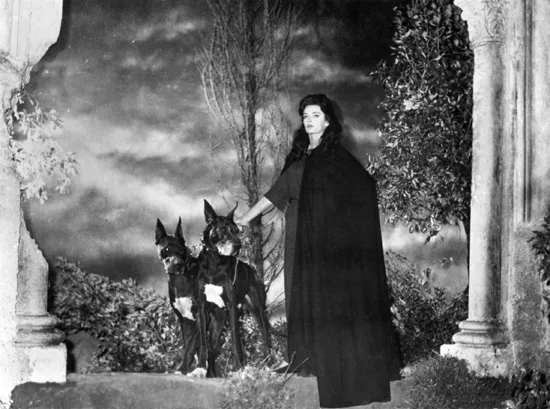
Barbara Steele in Black Sunday. The “Queen of Horror” also appeared in contemporaneous art films like 8½ (American International Pictures). Courtesy of Jerry Ohlinger Archives
Despite all this, Euro horror’s distinctive films, directors, genres, stars, and conditions of production and reception have remained largely unexplored in English-language horror film studies. While a volume by Mikel J. Koven, La Dolce Morte: Vernacular Cinema and the Italian Giallo Film, surveys an important genre of Euro horror, there has been no scholarly monograph offering a holistic examination of Euro horror cinema. The closest thing to a comprehensive, book-length study of Euro horror cinema hitherto produced by an academic press is Steven Jay Schneider’s 100 European Horror Films, an entry in the British Film Institute’s Screen Guide series that offers brief reviews of a hundred popular Euro horror movies – not a sustained, in-depth exploration of the subject. A few edited compilations – Ernest Mathjis and Xavier Mendik’s Alternative Europe: Eurotrash and Exploitation Cinema since 1945, Steven Jay Schneider and Tony Williams’s Horror International, and Robert G. Weiner and John Cline’s Cinema Inferno: Celluloid Explosions from the Cultural Margins, among them – have attempted to begin a dialogue about previously unexplored forms of horror, but they do not focus exclusively on Euro horror cinema. In fact, only a handful of essays on Euro horror have been collected in the numerous anthologies of horror film criticism and theory published since the 1980s. The majority of articles written on Euro horror thus far have appeared in a single scholarly journal, Kinoeye. Thi...
Table of contents
- Cover
- Title
- Copyright
- Contents
- Preface
- Acknowledgments
- Note on Film Titles
- Part 1: Toward a Performative Theory of Euro Horror Cinema
- Part 2: Case Studies in Euro Horror Cinema
- Conclusion: From the Grindhouse to the Arthouse: The Legacy of Euro Horror Cinema
- Works Cited
- Index
Trusted by 375,005 students
Access to over 1.5 million titles for a fair monthly price.
Study more efficiently using our study tools.
Frequently asked questions
Yes, you can cancel anytime from the Subscription tab in your account settings on the Perlego website. Your subscription will stay active until the end of your current billing period. Learn how to cancel your subscription
No, books cannot be downloaded as external files, such as PDFs, for use outside of Perlego. However, you can download books within the Perlego app for offline reading on mobile or tablet. Learn how to download books offline
Perlego offers two plans: Essential and Complete
- Essential is ideal for learners and professionals who enjoy exploring a wide range of subjects. Access the Essential Library with 800,000+ trusted titles and best-sellers across business, personal growth, and the humanities. Includes unlimited reading time and Standard Read Aloud voice.
- Complete: Perfect for advanced learners and researchers needing full, unrestricted access. Unlock 1.5M+ books across hundreds of subjects, including academic and specialized titles. The Complete Plan also includes advanced features like Premium Read Aloud and Research Assistant.
We are an online textbook subscription service, where you can get access to an entire online library for less than the price of a single book per month. With over 1.5 million books across 990+ topics, we’ve got you covered! Learn about our mission
Look out for the read-aloud symbol on your next book to see if you can listen to it. The read-aloud tool reads text aloud for you, highlighting the text as it is being read. You can pause it, speed it up and slow it down. Learn more about Read Aloud
Yes! You can use the Perlego app on both iOS and Android devices to read anytime, anywhere — even offline. Perfect for commutes or when you’re on the go.
Please note we cannot support devices running on iOS 13 and Android 7 or earlier. Learn more about using the app
Please note we cannot support devices running on iOS 13 and Android 7 or earlier. Learn more about using the app
Yes, you can access Euro Horror by Ian Olney in PDF and/or ePUB format, as well as other popular books in Media & Performing Arts & Film History & Criticism. We have over 1.5 million books available in our catalogue for you to explore.