This book is available to read until 23rd December, 2025
- 182 pages
- English
- ePUB (mobile friendly)
- Available on iOS & Android
eBook - ePub
Available until 23 Dec |Learn more
Fan Phenomena: Batman
About this book
From his debut in a six-page comic in 1939 to his most recent portrayal by Christian Bale in the blockbuster The Dark Knight Rises, Batman is perhaps the world's most popular superhero. The continued relevance of the caped crusader could be attributed to his complex character, his dual identity or his commitment to justice. But, as the contributors to this collection argue, it is the fans who, with the patience of Alfred, the loyalty of Commissioner Gordon and the unbridled enthusiasm of Robin, have kept Batman at the forefront of popular culture for more than seven decades.
Fan Phenomena: Batman explores the worldwide devotion to the Dark Knight, from his inauspicious beginnings on the comic book page to the cult television series of the 1960s and the critically acclaimed films and video games of today. Considering everything from convention cosplay to fan fiction that imagines the Joker as a romantic lead, the essays here acknowledge and celebrate fan responses that go far beyond the scope of the source material. As the gatekeepers of Gotham, fans have stood vigil over a seventy year mythos, ensuring their icon has become more than a comic book character, cartoon hero or big-screen star. As this collection will demonstrate, through the enthusiasm of fans Batman has become what Ra's al Ghul predicted in Batman Begins: a legend.
Packed with revealing interviews from all corners of the fan spectrum including Paul Levitz, who rose through the ranks of fan culture to become the president of DC Comics, and Michael E. Uslan, who has executive produced every Batman adaptation since Tim Burton's blockbuster in 1989, as well as film reviewers, academics, movie buffs, comic store clerks and costume-clad convention attendees, this book is sure to be a bestseller in Gotham City, as well as everywhere Bruce Wayne's alter-ego continues to intrigue and inspire.
Tools to learn more effectively

Saving Books

Keyword Search

Annotating Text

Listen to it instead
Information
Being Batman
Chapter
2
2
Dark Hero Rising: How Online Batman Fandom Helped Create A Cultural Archetype
Jennifer Dondero

– Batman: The Return of Bruce Wayne
From popularity to myth
Congratulations, Batman fandom; you have created a legend. With the exception of Superman, no other comic book character has achieved the epic status currently enjoyed by Batman in terms of popularity or societal relevance. More than a mere character, Batman has become a cultural juggernaut and an immediately recognizable beacon of justice worldwide. While comic creators, television producers, and film-makers share the credit, Batman owes perhaps the greatest debt to fandom, which has been remarkably instrumental in shaping Batman as an archetypal icon.
In the last 25 to 30 years, Batman has dramatically risen in popularity and undergone a major character overhaul. Historically, Batman was portrayed as a crime-fighter avenging his parents’ death and a hero defeating campy villains with gadgets and sidekicks. In the 1980s, however, Batman graphic novels such as Frank Miller’s 1986 comic mini-series The Dark Knight Returns, and Tim Burton’s 1989 Batman film, began an era of portraying the darker side of Batman by revisiting the pulp roots of the character. However, Batman’s resurgence in the 1980s marked the first character exploration of Batman in terms of psychological depth and purpose as a superhero. As Frank Miller states in his introduction to the 2006 edition of The Dark Knight Returns, ‘Much of what I was after was to use the crime-ridden world around me that needed an obsessive, half-maniac genius to bring order’. What Miller gave Batman fans was authorial intent about the nature of Bruce Wayne as a character, and we can thank Miller for the idea that Batman is the kind of hero who responds to the needs of the people, even if it means walking a darker path.
Comic book fans and mainstream media embraced this new version of Batman. Tim Burton’s Batman was one of the highest grossing films of 1989. Batman merchandise flew off the shelves, the colour palette for Batman comics became bleaker as the Bat Symbol became an icon of vigilante justice. Fans began to replace Adam West and brightly coloured comic panels with a darker hero. By the early 1990s, old and new fans embraced Batman as a hero for a new era, a champion who – more so than his comic book contemporaries – could represent justice in a corrupt, post-Vietnam world. Subsequently, Batman has transcended canonical material to become an enduring cultural archetype. To put it another way, Batman is no longer just a fictional character we see in fictional stories. He is a cultural icon that fans and creators have turned into an archetypal hero who represents mortal justice and humanity.
Archetypes, according to Swiss psychologist Carl Jung, are meaningful figures and symbols in our culture that represent our collective ideas of the best and worst parts of humanity. We see these figures in our own lives and celebrate them in our stories. For instance, the Wise Old Man figure is a Jungian archetype that emerges time and again in traditional storytelling to offer wisdom and guidance to the main characters. Obi-Wan Kenobi from Star Wars and Gandalf from The Lord of the Rings are two basic examples. In real life, many people consider elder family members or professional mentors Wise Old Man figures. In addition to traditional Jungian archetypal figures, highly celebrated popular culture characters can sometimes be thought of as modern Jungian archetypes in that they oftentimes represent what we value as a society. The ‘All-American Hero’ is an example of a modern cultural archetype. Pop culture, media and especially fans might build up characters such as Superman or real-life sports heroes to embody this archetype. As a collective, we create these archetypes because we like the idea of them; we want to invest in what this archetype represents for us. For a fictional character to become a permanent archetypal fixture in culture, you need more than canon material and authorial intent about that character. You need fans, and you need those fans to celebrate and spread the ideas they love about their character until these ideas seep into our cultural consciousness.
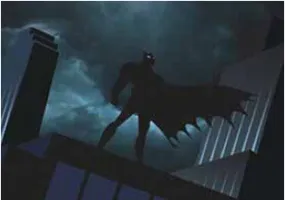
Fig. 1: Batman’s inner and outer world is much darker than that of his superhero counterparts.
Which brings us to Batman. From a traditional Jungian perspective, Batman most readily fits in with The Shadow archetype, which can be defined as an archetypal figure who represents the things we want to keep hidden from our conscious selves, such as immoral tendencies or things that we find emotionally painful. As comic creators and film-makers devote more attention to Bruce Wayne’s tragic childhood and moral struggles, the more fandom and scholarly literature understands Batman as a modern ‘Dark Knight’ who faces and even utilizes the darker side of his nature to fight crime. As noted by Batman scholar Will Brooker in his 2000 book Batman Unmasked, Batman is so prevalent in our cultural imagination he has become a mythic figure who embodies what we want to see in a modern heroic archetype: a champion who grapples with the dark, emotionally troubling side of his humanity to rise as a hero next to godlike, morally upstanding figures such as Superman.
Of course, none of this would be part of the cultural landscape without Batman gaining popularity as a character. Since his conception, Batman’s presence in pop culture is staggering. From the ‘Batmania’ in the 1960s that surrounded the Adam West television show to the present-day, Batman is, in terms of numbers, the most popular superhero. This is evident in how completely the Batman brand has leaked into mainstream culture. With the advent of the Internet, fan culture has become even more immediate and participatory. As of this writing, a quick Google search of Batman currently yields around 322,000,000 results, which easily outnumbers Superman (164,000,000), the X-Men (162,000,000), and the recently popular Marvel Avengers (262,000,000). Batman also continually generates high volumes of fan-driven content on websites like fanfiction. net and Tumblr, where memes, fanfiction and fanart are present for nearly every incarnation of Batman.
The rise of Batman in popular culture is noteworthy in that fandom is largely responsible for the popularity of the current, darker version of Batman. The last three decades have seen a symbiotic relationship between fans and creators of Batman comics, television and film. With the advent of geek culture and digital media, the opportunity for Batman fans to celebrate and generate content related to Batman has dramatically increased, and the results are telling. Internet fan videos, memes, and other such media collectively demonstrate what Batman represents to his fans, and it is easy to see some of those concepts reflected in current canon material. This type of back-and-forth relationship between fans and creators is common enough in any fandom, but Batman seems to be a special case where authorial intent and fan response have evolved together. Beginning with Frank Miller’s influence in the 1980s, Batman has been built up as a paragon of justice in a corrupt world. The overwhelmingly positive fan response to this aspect of Batman has led to canonical material that almost exclusively explores Batman through this lens to the point where the themes about Batman as a character often take precedence over the narrative of the story being told. From a cultural standpoint, this puts Batman among the ranks of the few iconic pop culture creations that transcend existence as individual characters. To fans, Batman is a cipher, a modern mythic figure, where the brand and idea of Batman are just as powerful as the character himself.
How memes and fandom help make cultural icons
An exploration of the significant influence of the Batman fandom must begin with a brief overview of how fandom can influence culture. The word ‘meme’ almost immediately brings to mind the popular macro images and videos that are virally passed around the Internet, but memes are also an area of study in the social sciences. People who study memes are interested in seeing what ideas groups of people replicate and pass around to one another. In essence, memes indicate what ideas we, as a culture, want to evolve and survive. The same concept holds true in fandom. The ideas we have about stories or characters are inspired by canonical material and given life through fan participation. Some ideas in fandom deviate so far from canonical material, they have to exist on in the ‘mind canon’ or ‘head canon’ of fans. This could include supporting a relationship between two characters that want nothing to do with each other in canonical material, producing fan material that brings dead characters back to life, or fan material that redeems a canonically unredeemed villain. Batman fans are lucky in that some of the main ideas celebrated in popular fandom material – ideas having to do with Batman dominating his teammates and enemies while having very human struggles – are reflected in canon.
If we agree to loosely define memes as ideas and images that are replicated and widely spread, an examination of some of the more prevalent Batman memes and pictorial representations will reveal the ideas fandom has about Batman as an archetypal character. Specifically, Batman memes and videos seem to call attention to the idea that Batman is a harbinger of justice and that Batman is fundamentally mortal. Most superheroes explore these themes in one way or another, but Batman is the only one who has leaked into our collective unconscious as a cultural representative of these themes. While Superman, for example, is a moral beacon who famously represents ‘Truth, Justice, and the American Way’, Batman is celebrated in fandom for his fortitude in dispensing justice while grappling with his own humanity.
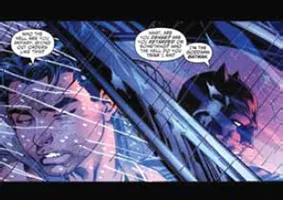
Fig. 2: The original comic panel that introduced ‘The Goddamn Batman’ into the cultural lexicon.
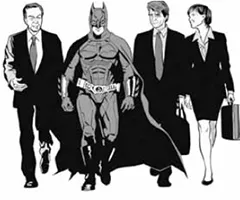
Fig. 3: Law and Order Batman.
The legend of Batman in fandom: justice and (super-)humanity
Superheroes by definition exist to defeat villains. Crime, after all, isn’t going to fight itself, especially when one is dealing with criminals as colourful and dangerous as the Joker or Two-Face. From a storytelling perspective, Batman is no exception to this rule. Like all his cape and spandex counterparts, Batman primarily exits to take down the bad guys. However, Batman is clearly more than this to his fans. In looking at Internet fan creations, it seems Batman fandom wants to highlig...
Table of contents
- Cover
- Title Page
- Copyright
- Contents
- Foreword: Will Brooker
- Introduction: Liam Burke
- A Fan's History: Liam Burke
- Part 1: Being Batman
- Part 2: Embracing the Knight
- Part 3: Representations of Fandom
- Part 4: Inspirations and Adaptations
- Contributor Biographies
- Image Credits
Frequently asked questions
Yes, you can cancel anytime from the Subscription tab in your account settings on the Perlego website. Your subscription will stay active until the end of your current billing period. Learn how to cancel your subscription
No, books cannot be downloaded as external files, such as PDFs, for use outside of Perlego. However, you can download books within the Perlego app for offline reading on mobile or tablet. Learn how to download books offline
Perlego offers two plans: Essential and Complete
- Essential is ideal for learners and professionals who enjoy exploring a wide range of subjects. Access the Essential Library with 800,000+ trusted titles and best-sellers across business, personal growth, and the humanities. Includes unlimited reading time and Standard Read Aloud voice.
- Complete: Perfect for advanced learners and researchers needing full, unrestricted access. Unlock 1.4M+ books across hundreds of subjects, including academic and specialized titles. The Complete Plan also includes advanced features like Premium Read Aloud and Research Assistant.
We are an online textbook subscription service, where you can get access to an entire online library for less than the price of a single book per month. With over 1 million books across 990+ topics, we’ve got you covered! Learn about our mission
Look out for the read-aloud symbol on your next book to see if you can listen to it. The read-aloud tool reads text aloud for you, highlighting the text as it is being read. You can pause it, speed it up and slow it down. Learn more about Read Aloud
Yes! You can use the Perlego app on both iOS and Android devices to read anytime, anywhere — even offline. Perfect for commutes or when you’re on the go.
Please note we cannot support devices running on iOS 13 and Android 7 or earlier. Learn more about using the app
Please note we cannot support devices running on iOS 13 and Android 7 or earlier. Learn more about using the app
Yes, you can access Fan Phenomena: Batman by Liam Burke in PDF and/or ePUB format, as well as other popular books in Social Sciences & Popular Culture. We have over one million books available in our catalogue for you to explore.