Extrastatecraft is the operating system of the modern world: the skyline of Dubai, the subterranean pipes and cables sustaining urban life, free-trade zones, the standardized dimensions of credit cards, and hyper-consumerist shopping malls. It is all this and more. Infrastructure sets the invisible rules that govern the spaces of our everyday lives, making the city the key site of power and resistance in the twenty-first century.
Keller Easterling reveals the nexus of emerging governmental and corporate forces buried within the concrete and fiber-optics of our modern habitat. Extrastatecraftwill change how we think about cities-and, perhaps, how we live in them.
- 256 pages
- English
- ePUB (mobile friendly)
- Available on iOS & Android
eBook - ePub
About this book
Information
Topic
Scienze socialiSubtopic
InfrastruttureCHAPTER 1
Zone
Promotional videos for the free zone invariably follow the same template. A zoom from outer space locates a spot on the globe. Graphics indicating flight times to major cities argue that this spot, wherever it is, is the center of all global activity. While the soundtrack for low-budget versions of these videos may be a tinny, canned fanfare, many have high production values. Stirring music, appropriate for an adventure film or a western, is ethnically inflected to suit the culture at hand. A deep movie-trailer voice describes the requisite infrastructure. As the zoom continues, clouds part to reveal multiple digital sun flares and a sparkling new skyscraper metropolis.
The zone has not always been the world’s global urban addiction. Once relegated to the backstage, it has, in the space of a few years, evolved from a fenced-off enclave for warehousing and manufacturing to a world-city template. Yet the wild mutations of the form over the last thirty years only make it seem penetrable to further manipulation.
Free ports have handled global trade for centuries, but the mid-twentieth-century development of the Export Processing Zone, or EPZ, as a more formalized economic and administrative instrument, marks the beginning of the modern zone. With persuasive arguments about nation-building and free trade, the United Nations and the World Bank promoted the EPZ as a tool that developing countries should use to enter the global marketplace and attract foreign investment with incentives like tax holidays and cheap labor. Although intended as a temporary experiment and judged to be a suboptimal economic instrument, the zone spread widely during the 1970s even as it also spread new waves of labor exploitation. There were, however, unexpected consequences: rather than dissolving into the domestic economy, as was originally intended, the EPZ absorbed more and more of that economy into the enclave.
The next generations of the form, incubated in China or the Middle East, essentially became entire cities or city-states, rendering urbanism as a service industry. In the late-1970s, China’s experiment with the zone as a free market tool was so successful that it generated its own global trading networks, which in turn accelerated zone growth worldwide. For Dubai, the zone was a fresh form of entrepôt not unlike those that had figured in its longer history. As zones multiplied they also upgraded, breeding with other increasingly prevalent urban forms like the campus or office park. Merging industrial and knowledge economies, the zone has begun to incorporate a full complement of residential, resort, educational, commercial, and administrative programs—a warm pool to spatial products that easily migrate around the world, thriving on incentivized urbanism.
Having swallowed the city whole, the zone is now the germ of a city-building epidemic that reproduces glittering mimics of Dubai, Singapore, and Hong Kong. While in the 1960s there were a handful of zones in the world, today there are thousands—some measured in hectares, some in square kilometers. No longer in the shadow of the global city as financial center (New York, London, Tokyo, São Paulo), the zone as corporate enclave is the most popular model for the contemporary global city, offering a “clean slate” and a “one-stop” entry into the economy of a foreign country. Now major cities and even national capitals, supposedly the centers of law, have created their own zone doppelgängers, like Navi Mumbai; Astana, the newly minted capital of Kazakhstan; or New Songdo City, a Seoul double that developer Stanley Gale considers to be a repeatable “city in a box.” Economic analysts chase after scores of zone variants, even as they mutate on the ground, oscillating between visibility and invisibility, identity and anonymity.
As the zone mutates, it also resembles history’s various intentional communities with their mixtures of withdrawal and aspiration—mixing ecstatic expressions of urbanity with a complex and sometimes violent form of lawlessness. Maintaining autonomous control over a closed loop of compatible circumstances, the isomorphic zone rejects most of the circumstance and contradiction that are the hallmark of more familiar forms of urbanity. In its sweatshops and dormitories it often remains a clandestine site of labor abuse.
For all of its efforts to be apolitical, the zone is often a powerful political pawn. While extolled as an instrument of economic liberalism, it trades state bureaucracy for even more complex layers of extrastate governance, market manipulation, and regulation. For all its intentions to be a tool of economic rationalization, it is often a perfect crucible of irrationality and fantasy. And while as spatial software, the zone is relatively dumb—the urban equivalent of MS-DOS—it has quickly spread around the world. Yet, for all these reasons, the zone is ripe for manipulation, and its popularity makes it a potential multiplier or carrier of alternative technologies, urbanities, and politics.
The Zone Is Ancient and New
The zone is heir to the mystique of ancient free ports, pirate enclaves, and other entrepôts of maritime trade. The Roman port of Delos in Greece is frequently cited as the primordial moment of the free port.1 The Mediterranean fostered free ports for trade along Italian, Phoenician, Armenian, and Muslim trade routes. From the thirteenth to the seventeenth century in the Baltic and the North Sea, the Hanseatic League established a network of “free cities.” Fiercely independent, the Hansa traders created a quasi-monastic society, living and dining together in their trading halls and factories where, in foreign cities, they were also sometimes confined. Hansa cities like Hamburg and Bremen traded with London, Lübeck, Rostock, Gdańsk, Königsberg, Brügge, Köln, and Novgorod.2 In the Mediterranean, Marseille, Genoa, and Livorno were early free ports. By the seventeenth century, the European free cities or free ports included Naples, Venice, Trieste, Porto, Dunkirk, and Copenhagen. Hamburg would remain a prominent free port for centuries, able to evade the jurisdictional power of monarchies and national regulation.3
In the late eighteenth and early nineteenth centuries, as trade began to include the Americas in a truly global network, Spain, Portugal, Holland, and Great Britain established free ports in South America and the Caribbean. British and French free ports in Hong Kong (1841), Singapore (1819), Djibouti (1859), and Aden (1853) followed.4 While the usefulness of the Caribbean ports declined, the Asian ports, notably Hong Kong, endured, and both Hong Kong and Hamburg continued to be global models into the twentieth century. When Hamburg joined the German Empire in 1871, the city refused to become a member of the German Customs Union, for fear of losing its various trading freedoms, and only joined in 1888, when it was allowed to fence off an area that remained outside of the union’s control. Within this area, the city was granted increased freedom for sorting, manipulating, and manufacturing warehoused goods before re-export.5
In 1934, after sending delegations to Copenhagen and Hamburg, the United States passed the Foreign Trade Zone Act. Based in part on the Hamburg model, Foreign Trade Zones (FTZs) allowed for the sorting and manipulation of goods.6 The first FTZs in the United States were in New York, New Orleans, San Francisco, and Seattle. In 1950, FTZ law was amended to allow for manufacturing. Yet until the 1970s only three more zones—in Toledo, Ohio; Honolulu, Hawaii; and Mayagüez, Puerto Rico—were created.7
A number of installations, specially tailored to enable manufacturing, appeared around the world after World War II and served as forerunners of the Export Processing Zone—the formula that arguably spawned a global proliferation of zones. Although diminished after World War II and the Korean War, Hong Kong rebounded as a member of this new species of free port in part because of its own high volume of exported goods.8 When Shannon Airport in Ireland was no longer needed for refueling, it began a deliberate campaign to attract both manufacturing and service industries with laws that established a Customs Free Airport (1947) and the Shannon Duty Free Airport Development Company (1959).9
In 1947, Puerto Rico, already a duty-free supplier for the United States during wartime, ventured to build manufacturing and warehousing facilities tailored to US businesses. A ten-year tax holiday and prebuilt modular buildings attracted almost 500 US firms by 1963. One promoter of the program characterized it as the “first significant effort to alleviate human suffering in the Caribbean.” The development organization staff were trained to deliver clients to their new building, turn on the lights, step aside, and say “This is your factory, señor.”10
The Colón Free Trade Zone in the Republic of Panama, established in 1948, was also designed to take advantage of existing relationships with the United States that had been forged during World War II. Plans for an international free zone had been discussed since 1917, three years after the opening of the Panama Canal, and investors from New York were interested in financing the project. By 1946, Panama had hired the executive secretary of the US Foreign-Trade Zones Board, Thomas E. Lyons, to study the feasibility of the project.11
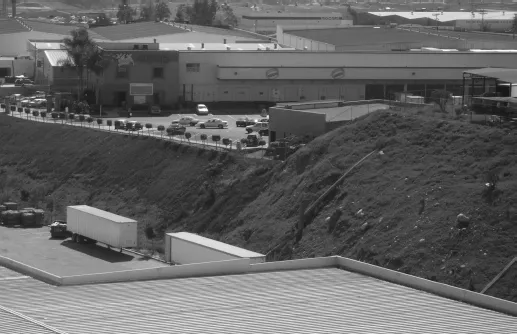
In 1964, Mexico inaugurated the Border Industrial Program (BIP) just as the US-Mexican Bracero (or guest-worker) program was expiring.12 The BIP allowed foreign companies to operate maquiladoras (or factories) within a twenty-mile strip along the border between Mexico and the United States, and by 1972 these factories could be established anywhere in the country. Taking advantage of cheap, mostly female labor, these zones were essentially inexpensive twins of factories in the home country.
These early outposts prompted experiments in other countries. Hong Kong and Shannon were models for Taiwan’s Kaohsiung Export Processing Zone in 1965. All of these served as templates for zones in Africa, South America, the Middle East, and other parts of Asia.13 South Korea established six free-trade zones, three in Seoul and three in Incheon in 1965.14 India established Kandla in the same year.15 Brazil established Manaus in 1967.16 Prefiguring their later use as a market experiment in China, in 1963 the socialist country of Yugoslavia legislated trade zones along the Danube.17
Although descended from historic free ports, since the 1970s the zone had become a more thoroughly abstracted and formulaic instrument now distinct from the maritime spaces that had previously shaped trade. As container shipping became the global standard, wherever a plane could land or a truck could travel, new diasporic centers of global trade could develop—even in inland areas, borderlands, and backwaters that would never have sponsored the cosmopolitanism typically associated with global trade. Yet, as it opened its door to manufacturing and to new populations of workers, the zone also began to develop its own peculiar form of urbanity.
Keller Easterling
Maquiladoras, Tijuana, 2009
The Zone Is Extrastatecraft
Perhaps the most important factor contributing to the exponential growth of zones in the 1970s was an endorsement from the United Nations Industrial Development Organization (UNIDO). Established in 1966, UNIDO began to study and disseminate data and economic statistics about the zone as a prescription for developing countries. It established a Free Zone Unit to work with the Shannon Free Airport Development Company, Kaohsiung, and the World Bank to instruct potential zon...
Table of contents
- Cover Page
- Halftitle Page
- Title Page
- Copyright Page
- Contents
- Acknowledgements
- Introduction
- Chapter 1: Zone
- Chapter 2: Disposition
- Chapter 3: Broadband
- Chapter 4: Stories
- Chapter 5: Quality
- Chapter 6: Extrastatecra
- Aferword
- Index
Trusted by 375,005 students
Access to over 1.5 million titles for a fair monthly price.
Study more efficiently using our study tools.
Frequently asked questions
Yes, you can cancel anytime from the Subscription tab in your account settings on the Perlego website. Your subscription will stay active until the end of your current billing period. Learn how to cancel your subscription
No, books cannot be downloaded as external files, such as PDFs, for use outside of Perlego. However, you can download books within the Perlego app for offline reading on mobile or tablet. Learn how to download books offline
Perlego offers two plans: Essential and Complete
- Essential is ideal for learners and professionals who enjoy exploring a wide range of subjects. Access the Essential Library with 800,000+ trusted titles and best-sellers across business, personal growth, and the humanities. Includes unlimited reading time and Standard Read Aloud voice.
- Complete: Perfect for advanced learners and researchers needing full, unrestricted access. Unlock 1.5M+ books across hundreds of subjects, including academic and specialized titles. The Complete Plan also includes advanced features like Premium Read Aloud and Research Assistant.
We are an online textbook subscription service, where you can get access to an entire online library for less than the price of a single book per month. With over 1.5 million books across 990+ topics, we’ve got you covered! Learn about our mission
Look out for the read-aloud symbol on your next book to see if you can listen to it. The read-aloud tool reads text aloud for you, highlighting the text as it is being read. You can pause it, speed it up and slow it down. Learn more about Read Aloud
Yes! You can use the Perlego app on both iOS and Android devices to read anytime, anywhere — even offline. Perfect for commutes or when you’re on the go.
Please note we cannot support devices running on iOS 13 and Android 7 or earlier. Learn more about using the app
Please note we cannot support devices running on iOS 13 and Android 7 or earlier. Learn more about using the app
Yes, you can access Extrastatecraft by Keller Easterling in PDF and/or ePUB format, as well as other popular books in Scienze sociali & Infrastrutture. We have over 1.5 million books available in our catalogue for you to explore.