- 4 pages
- English
- ePUB (mobile friendly)
- Available on iOS & Android
About this book
Best-selling guide for over 25 years and an essential companion for students taking biology courses of any level, this six page guide is a must-have for reference throughout science courses as a serious study tool and quick refresher for the core concepts, terms, diagrams, cycles and stages in the study of life. Author, scientist, and university biology professor Randy Brooks, PhD has streamlined the complicated subject of biology by selecting the need-to-know answers that will boost test scores and grades in science. At this price and durably laminated to last a lifetime this guide has improved student confidence and success for over 25 years.
6 page laminated guide includes:
- Basic Concepts
- Evolution
- Cytology: The Study of Cells
- Energy & Life
- Cell Transportation
- Cell Reproduction
- Organismal Reproduction & Meiosis
- Genetics & Mendel
- Molecular Genetics
- Population Genetics
Trusted by 375,005 students
Access to over 1 million titles for a fair monthly price.
Study more efficiently using our study tools.
Information

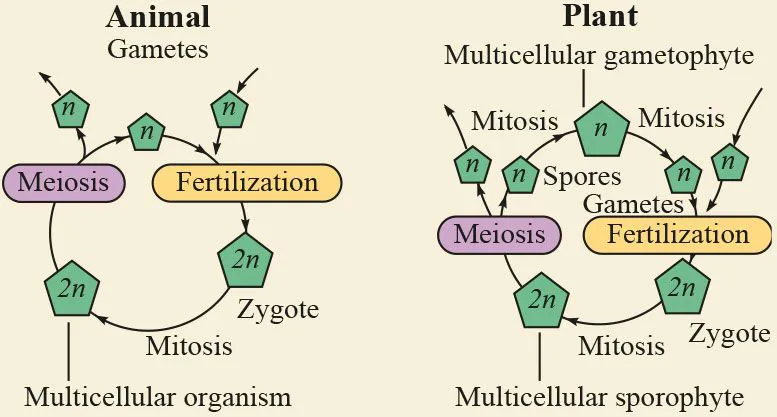
- Sexual reproduction involves the fusion of genetic material (gametes) from two parental organisms
- To ensure the proper chromosomal numbers in the zygote (fertilized egg), each gamete must have haploid, or half (N, or one set of chromosomes), of the original diploid (2N, or two sets of chromosomes) amount of DNA
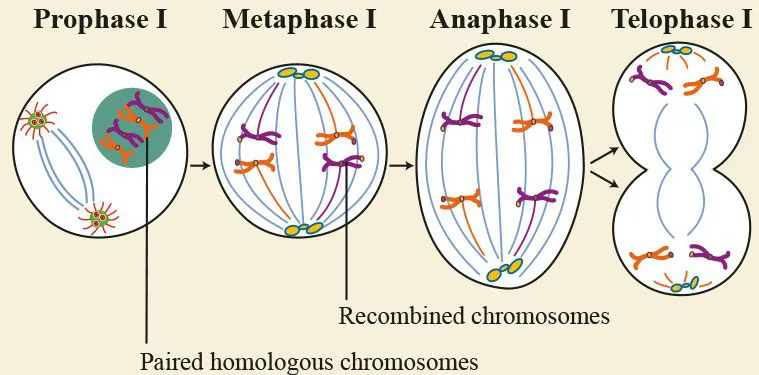
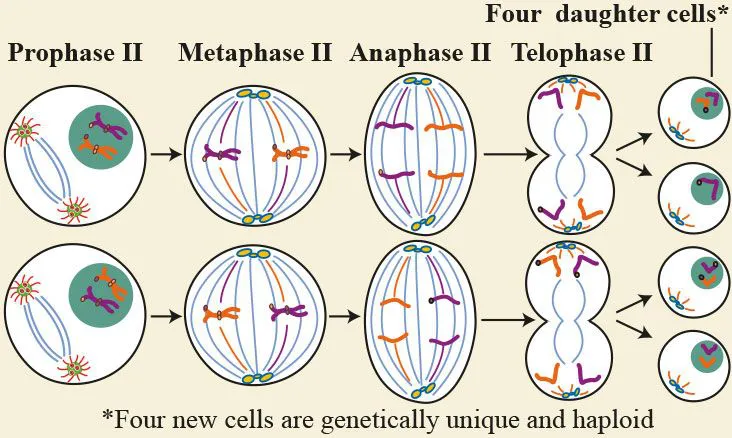
- Meiosis: The process by which the chromosome number is reduced by half, resulting in new genetic combinations in the gametes


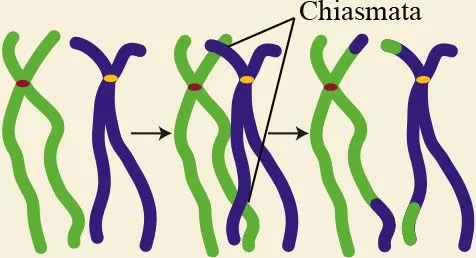
- Prophase I: Chromosomes condense and organize; matched, or homologous, chromosomes (one maternal and one paternal in each pair) are physically paired; segments of chromatids can cross over at breakage points called chiasmata within each chromosome pair Crossing Over

- Metaphase I: Homologues line up at equator
- Anaphase I: Homologues are separated into two groups, with each group having a mixture of maternal and paternal chromosomes
- Telophase I: New haploid nuclei form for two new daughter cells
- Interkinesis: No replication of DNA occurs because each chromosome is still duplicated and consists of two chromatids (although crossing over results in some chromatids with maternal and paternal segments)


- In animals, meiosis occurs in germinal tissues and is called spermatogenesis in males and oogenesis in females; each results in gametes
- In plants, the process is similar, except that more mitotic divisions may follow meiosis to produce gametes


- Hormones
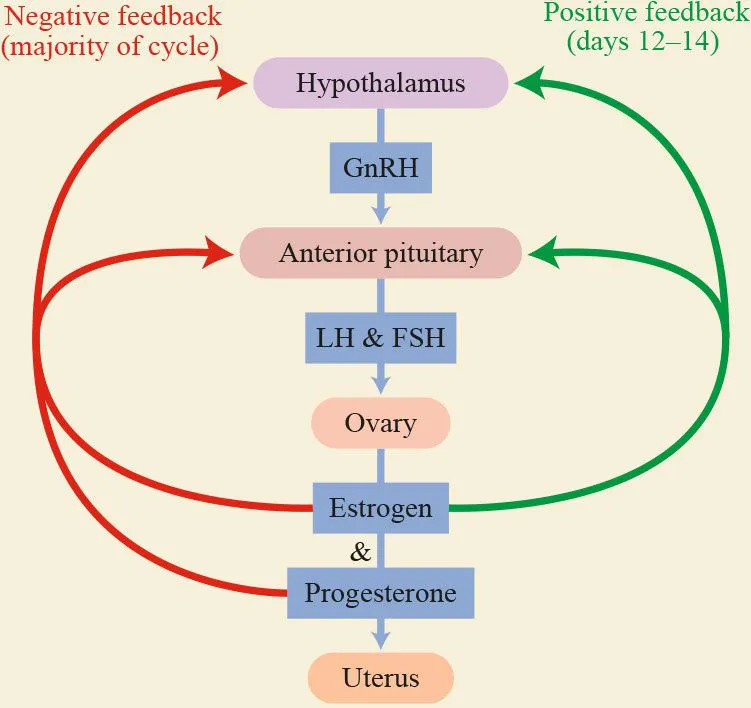
- At puberty, the hypothalamus releases gonadotropin-releasing hormone (GnRH); this stimulates the anterior pituitary to release follicle-stimulating hormone (FSH) and luteinizing hormone (LH)
- FSH and LH (but primarily FSH) trigger ovarian structures called follicles to grow and produce an oocyte (potential egg), as well as estrogen and progesterone
- Estrogen and progesterone have major effects on the morphology and physiology of the uterus in anticipation that ovulation and subsequent sexual intercourse will result in a successful fertilization
Female Reproductive Hormone Pathway
- Ovarian cycle
- Under the stimulation of FSH and LH, some (but not all) follicles grow at different rates (during the follicular phase), with the Graafian follicle maturing the fastest; as the follicles grow, they also produce estrogen, with the Graafian follicle producing the most
- Estrogen has a negative feedback role on the brain (both the hypothalamus and anterior pituitary) for most of the monthly cycle, thereby keeping FSH and LH levels relatively low; however, continually rising levels of estrogen from growing follicles trigger a positive feedback role that causes a temporary surge in FSH and LH, with the latter hormone spiking the most
- This surge in LH triggers ovulation, in which the Graafian follicle bursts at the surface of the ovary and releases a secondary oocyte covered in associated follicular tissues (which will later become a barrier through which sperm must pass to contact the oocyte)
- The remnants of the Graafian follicle now function as a corpus luteum (during the luteal phase), partly to prevent any additional follicles from developing and releasing potential eggs by combining estrogen production with the additional hormone progesterone (many birth control pills use this same hormonal strategy to prevent unwanted pregnancies) E. The corpus luteum will eventually disintegrate, unless fertilization and implantation subsequently occur
- Uterine and menstrual cycle
- Estrogen and progesterone from the ovaries stimulate the uterus to prepare for a potential embryo; specifically, the internal lining of the uterus (endometrium) is partially shed at the beginning of each cycle (menstrual flow phase or “period”) if there is no successful fertilization and subsequent implantation; increasing estrogen (from growing follicles) stimulates a thickening of the endometrium (proliferative phase)
- After ovulation, increasing progesterone levels additionally cause the endometrium to become highly vascularized and to secrete nutrients (secretory phase) for embryo development; the disintegrating corpus luteum, and the concomitant drop in estrogen and progesterone, causes vasoconstriction of endometrial blood vessels, eventually leading to a shedding of ti...
Table of contents
- Basic Concepts
- Evolution
- Cytology: The Study of Cells
- Energy & Life
- Cell Transport
- Cell Reproduction
- Organismal Reproduction & Meiosis
- Genetics & Mendel
- Molecular Genetics
- Population Genetics
Frequently asked questions
- Essential is ideal for learners and professionals who enjoy exploring a wide range of subjects. Access the Essential Library with 800,000+ trusted titles and best-sellers across business, personal growth, and the humanities. Includes unlimited reading time and Standard Read Aloud voice.
- Complete: Perfect for advanced learners and researchers needing full, unrestricted access. Unlock 1.4M+ books across hundreds of subjects, including academic and specialized titles. The Complete Plan also includes advanced features like Premium Read Aloud and Research Assistant.
Please note we cannot support devices running on iOS 13 and Android 7 or earlier. Learn more about using the app