- 176 pages
- English
- ePUB (mobile friendly)
- Available on iOS & Android
eBook - ePub
The Aesthetic Pleasures of Girl Teen Film
About this book
What is 'fun' about the Hollywood version of girlhood? Through re-evaluating notions of pleasure and fun, The Aesthetic Pleasures of Girl Teen Film forms a study of Hollywood girl teen films between 2000-2010. By tracing the aesthetic connections between films such as Mean Girls (Waters, 2004), Hairspray (Shankman, 2007), and Easy A (Gluck, 2010), the book articulates the specific types of pleasure these films offer as a means to understand how Hollywood creates gendered ideas of fun. Rather than condemn these films as 'guilty pleasures' this book sets out to understand how they are designed to create experiences that feel as though they express desires, memories, or fantasies that girls supposedly share in common. Providing a practical model for a new approach to cinematic pleasures The Aesthetic Pleasures of Girl Teen Film proposes that these films offer a limited version of girlhood that feels like potential and promise but is restricted within prescribed parameters.
Information
1
Introduction
You know, I’ve never been to one of these things before. And when I think about how many people wanted this [removing tiara atop her head] and how many people cried over it and stuff … I mean, I think everybody looks like royalty tonight. Look at Jessica Lopez. That dress is amazing. And Emma Gerber, I mean, that hairdo must have taken hours, and you look really pretty.
Cady, Mean Girls (Waters, 2004)
Adapted into fiction from the parental self-help guide, Queen Bees and Wannabees: helping your daughter survive cliques, gossip, boyfriends, and other realities of adolescence (Wiseman, 2002), Mean Girls follows Cady (Lindsay Lohan) who, after being home-schooled throughout her childhood, must navigate the social hierarchies of American high school. After manipulating her way to the top of the social ladder, becoming increasingly scheming and glamorous as she does so, Cady is eventually crowned as spring fling queen at the school dance. She has, however, lost all of her friends along the way and finds herself facing penance in the form of social ostracism as a ‘Mathlete’. When she is crowned as spring fling queen, she stands centre stage in a tiara and her Mathlete uniform (Figure 1.1), personifying the balance of innocence and glamour that the film projects as appropriate for girls. Seeking redemption from her fellow high school students she recites the speech quoted at the beginning of this chapter. This moment of redemption, of taking it all back, feels hollow. All the fun and affective force of the film is in the scenes where Cady is being a mean girl, in the scenes where she struts, dances and makes a spectacle of herself. This final sentimental speech cannot undo the pleasures of the glamour that has come before it. This book explores what those pleasures are.
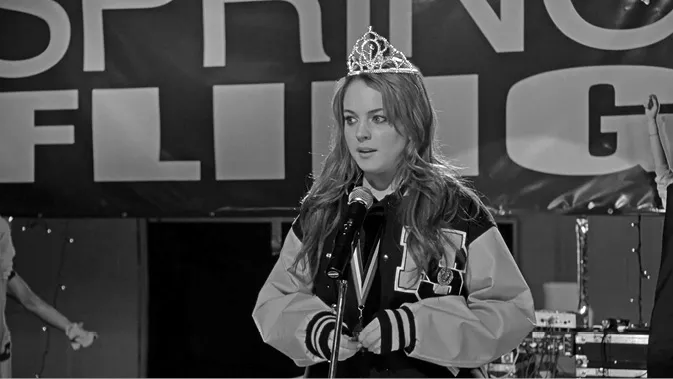
Figure 1.1 Mean Girls (2004), Cady’s redemption.
Teen film, and more especially Hollywood girl teen film, is generally critically dismissed as silly and trivial, the implication being that girl culture is silly and trivial, and in turn that girls are silly and trivial. Instead, this book takes the pleasures of these films seriously and explores how they are designed to create fun for girls.
Girl teen film
Teen films can be defined by their thematic focus: coming-of-age narratives, rites of passage and maturity as a narrative obstacle. The types of teen films that this book examines are mainstream, commercial films in which girls are the protagonists. Not all the films that I refer to are made in Hollywood, but they all follow the Hollywood paradigm. As I will detail throughout, they all present us with the same ‘fun’ version of girlhood, they are all essentially Cinderella stories, they repeat the same moments of fun over and over, and they are designed to create specific affective pleasures.
Within the tradition of film studies the aesthetic and affective pleasures of teen film have gone unexplored. Studies usually focus on what films mean, taking an approach which assumes that teen films play a pedagogic role in the lives of young people – believing that they are good or bad for them (Considine, 1985; Lewis, 1992; Shary, 2002, 2005). Where a less moral approach is taken, the intent is to define teen film through theme and narrative; again the focus remains on what teen films mean and their relation to ideas about adolescence, rather than the films’ appeals (Doherty, 2002; Driscoll, 2011; Martin, 1989). In the film studies context, youth is often implicitly taken as male, but where teen films about girls are explored, methodologies usually ignore aesthetics and instead critique the films, finding them feminist or misogynist, empowering or not for the imagined teen girl audience (Hentges, 2006). Where aesthetics are examined, this tends to be in relation to independent or art-house teen films; the aesthetics of the mainstream are usually taken for granted (Kearney, 2002). A notion of what is ‘typical’ and ostensibly unsuitable for aesthetic analysis goes unquestioned. I want to rectify this gap and explore the aesthetics of mainstream millennial girl teen film.
The millennial focus of this book is in part a response to literature that already exists on the subject of teen film. Film studies often fixes on teen films of the 1950s – the decade to which the teen film is often cited as being created; the 1980s – especially the John Hughes films of that period, and/or the plethora of teen films of the late 1990s that followed the financial success of Clueless (Heckerling, 1995): made for approximately $12 million, the film’s domestic box-office gross was $56, 631, 572, (boxofficemojo.com) (See e.g. Doherty, 2002; Lee, 2010; Lewis, 1992; Kaveney, 2006; Shary, 2002, 2003, 2011). This book addresses the proliferation of girl teen films at the turn of the twenty-first century.
I focus specifically on girl teen films released between 2000 and 2010. It is well documented that, since the 1990s especially, girls are everywhere in the media (Aapola, Gonick and Harris, 2005; Driscoll, 2002; Gonick, 2006; Harris, 2004; Projansky, 2014; Tasker and Negra, 2007). The development of cable television and the growth of channels such as Disney and Nickelodeon in the 1990s produced multimedia girl celebrities (Projansky, 2014: 12–13); this girl thrived at the turn of the century and as part of the digital era. In combination, from the late 1990s onwards, a third wave of feminism that focused on youth – loud, young, sexy, feminine – has been packaged and sold in all facets of the media and commercial culture. At the turn of the twenty-first century, the ubiquity of girls in film and media was unparalleled.
The proliferation of girls in the media means that girls have become a topic for discussion in academia. What has emerged as girls studies over the last twenty years or so combines the traditions of feminist criticism and critical youth studies to explore the construction of girls’ subjectivities in specific social, cultural and historical contexts and locations. Girls studies has articulated, in a number of ways, the contrary depictions of girlhood present in popular culture (Aapola, Gonick and Harris, 2005; Douglas, 1994; Harris, 2004; Nash, 2006; Projansky, 2014; Renold and Ringrose, 2011). Representations coexist whereby girls are simultaneously exalted and abject. These representations express the ways that girls are often objects of curiosity, pleasure and anxiety in culture. The version of girlhood we see in millennial girl teen films is similarly constructed by contradictory qualities. Taking a new approach, this book examines how these contradictions are designed to feel good.
In her article ‘Girl as Affect’ (2011: 3) Monica Swindle asks, ‘What is a girl?’ Girl, she suggests, is a signifier but also a distinct affect in excess of the signifier (4). In its present Western, late capitalist, twenty-first-century incarnation, girl exists as a discernable affect. Rather than focus on what girl means, I seek to describe how girl feels. Or, more specifically, how the late capitalist commercial Hollywood version of girlhood feels. To answer the question very simply: girl feels fun. This book takes a film studies approach to detail how this fun is created and what it feels like.
Because I am dealing with an idea of what adolescence is – the Hollywood version of the teenager – it is not essential to demarcate strict temporal boundaries around who is in, or who watches, these films. Catherine Driscoll (2011b: 2) and Adrian Martin (1994: 66) suggest that the teen in teen film really refers to a mode of behaviour, which can be characterized as a contradiction between maturity and immaturity. Teen film works through contradictory qualities that define ideas of adolescence: immaturity and maturity, independence and belonging, innocence and knowingness, rebellion and conformity, expansion and confinement. The teen I refer to is a figure that embodies these contradictory qualities. The Hollywood version of adolescence is structured by interlinking antinomies that, in their relationship, create tensions, energies and frictions specific to the commercial idea of the teen. The teen figure holds two extremes in balance and at the hinge of their meeting becomes the idea of adolescence and embodies particular feelings specific to ‘the teen’. The appeal of this embodiment of adolescence can be understood in Joseph Roach’s (2007: 8) description of the balance between mutually exclusive extremes in the dance term contrapposto: ‘a pose in which the performer turns in different directions simultaneously at the knees, the hips, the shoulders, and the head, making an interesting line of the body’. The fusion and friction of opposites create intensity: their combination is what makes them interesting. Applied conceptually, contrapposto explains the residual energies created by the combination of and resistance between contradictions. The antiphonal friction held in the idea and embodiment of adolescence is what makes the teen a powerful and intriguing figure, generating feelings of promise, potential, expectation and possibility. These feelings are central to understanding the pleasures of teen film.
Driscoll (2011b: 112) and Martin (1994: 68) describe teen film as fashioned by the notion of liminality. The characters of teen film, they suggest, are recognizable in Victor Turner’s description of the liminal position: ‘Neither here nor there; they are betwixt and between … in the realm of pure possibility’ (1967: 95, 96). Generically, teen films can be described by their focus on transformations, transitions, boundaries and crossing thresholds from childhood into adulthood. I propose, however, that, according to the Hollywood version of the teen, these spaces and times in between are more static than the term liminality suggests. Teen films often create characters and situations that feel like the shift and transition of liminality but fix the teen figure to prescribed sets of contradictory qualities. Therefore, rather than being in the ‘realm of pure possibility’, the Hollywood teen figure is defined by specified, regulated and uniform combinations of contradictory qualities. Where boys must learn to balance their hedonistic desires and sense of responsibility, girls are required to create the ‘appropriate’ combination of innocence and experience: not between, but both. When Cady stands centre stage at the end of Mean Girls to make her speech of redemption, that wraps the narrative of the film up into a neat bow, the character regulates her extrovert impulses and sexuality. She manages to project the ‘appropriate’ balance of innocence and experience to be deemed worthy of forgiveness.
In this book the girl that I refer to is the Hollywood version of girlhood, a fictional figure foremost structured by the contradictory qualities of innocence and experience, expansion and confinement. Girl teen film is a label that consciously identifies the genealogy and embedded relationship with the broader category of teen film and also provides the distinction that recognizes the girl-centred narratives that these films provide. The girl teen film descriptor is an awkward turn of phrase, but it emphasizes the Hollywood notion of girlhood that these films create. The label does not imply that the appeal of these films is only to girls or indeed to people aged thirteen to nineteen but stresses that the films are structured by notions of girlhood. The girlhood that I refer to here is a concept. Girl teen films give us images and ideas of girls; they create a version of girlhood, rather than represent actual female desires, memories or fantasies. Instead, they aim to create affective experiences that feel as though they express desires, memories or fantasies that girls supposedly share in common.
Millennial girl teen films exist in a number of modes that can be understood based on how the subject of female adolescence is treated on screen. In the romantic mode narratives are tragic and handled earnestly, for example: A Walk to Remember (Shankman, 2002) or Twilight (Hardwicke, 2008). In comparison ‘Indie’ girl teen films deal with female adolescence in an overtly political or experimental form, for example: Thirteen (Hardwicke, 2003) or Water Lilies (Sciamma, 2007). This book focuses specifically on girl teen films in the fun mode. In the fun mode films are structured around visibility and performance (dancing, singing and sport) and girlhood is handled comedically, with a lighter touch. Films such as Mean Girls are connected by an emphasis on pleasure and fun and are structured around requisite moments of visibility that make the girl figure the centre of attention. These moments of visibility are presented as key forms of fun for the girl figure.
In girl teen films in the fun mode, ‘fun’ has a distinct character. The kinds of fun that the girl figure is shown to enjoy lead up to or are fundamentally moments of visibility: the makeover and catwalk, girls’ sports, musical or dance performances. It is in these moments that girl teen films are designed to generate their greatest affective force. These moments of ‘fun’ are often rites of passage: the girl figure’s ability to present herself (her body) successfully marks her out as having achieved appropriate levels of maturity. Essentially whether these moments reflect a narrative rite of passage or not, it is here that the girl figure is shown having fun and it is these moments that are designed to be the most affectively loaded. We can observe how these moments are specifically prescribed as ‘girl fun’ as opposed to ‘boy fun’ if we compa re the boy teen film Superbad (Mottola, 2009) with the girl teen film Sleepover (Nussbaum, 2004). Superbad follows three male friends over the course of twenty-four hours. Moving between high school, house parties and the boys’ attempts to buy alcohol, the film charts their misguided quest to have sex with girls for the first time before the two key characters are separated to attend university. Sleepover follows four female friends who celebrate their graduation from junior high with a sleepover party, before one of them moves away. Over the course of the night the friends compete against another group of girls in a scavenger hunt, for which they must be the first to complete a number of set tasks. As a sex comedy Superbad has a UK 15 certificate, compared to Sleepover’s PG rating. Appropriate to its certificate and assumed tween-teen target audience, Sleepover’s romance is presented without any reference to sex or sexuality. In relation to both films what is set forth as fun, therefore, is restricted based on the ages of the characters and the age of the audiences as defined by certification. Nonetheless, the very similar plot devices and narrative time frames make these films’ comparison illustrative of what is deemed fitting as boy fun in juxtaposition to girl fun. Where boy fun centres around rites of passage that are age restricted by law, explicitly aggressive or fundamentally based around male bonding, girl fun (even where it includes female bonding) pivots around visibility. Even in girl teen films that reach a higher certification and include sexual references, girl fun still includes the same moments of visibility. Like Superbad, Easy A (Gluck, 2010), for example, is a UK certificate 15 and includes a number of sexual references, but Olive’s (Emma Stone) fun revolves around a catwalk moment, a musical number and kissing a boy. There are no girl teen film equivalents to Superbad because, regardless of character age or certification, what is created as appropriate as ‘girl fun’ (and ‘boy fun’) is restricted.
As a sex comedy Superbad’s humour revolves around a number of embarrassing and humiliating scenarios, but the film does show the boys having fun. ‘Boy fun’ involves: drinking at a bar, shooting a gun, being praised for bringing alcohol to a party, getting drunk, having sex, orchestrating a scene that shows one of the boys getting arrested and theref...
Table of contents
- Cover
- Half-Title
- Title
- Contents
- Author’s Note and Acknowledgements
- 1 Introduction
- 2 Cinderella’s Pleasures: The Power and Pleasures of Costume
- 3 Celebrity Glamour: Space, Place and Visibility
- 4 Sporting Pleasures: The Body as Aesthetic Surface
- 5 Musical Address: Expansion, Confinement and Kinaesthetic Contagion
- 6 Music Video Aesthetics: The Affects of Spectacle
- 7 Conclusions and Future Research
- Filmography
- Bibliography
- Index
- Copyright
Trusted by 375,005 students
Access to over 1.5 million titles for a fair monthly price.
Study more efficiently using our study tools.
Frequently asked questions
Yes, you can cancel anytime from the Subscription tab in your account settings on the Perlego website. Your subscription will stay active until the end of your current billing period. Learn how to cancel your subscription
No, books cannot be downloaded as external files, such as PDFs, for use outside of Perlego. However, you can download books within the Perlego app for offline reading on mobile or tablet. Learn how to download books offline
Perlego offers two plans: Essential and Complete
- Essential is ideal for learners and professionals who enjoy exploring a wide range of subjects. Access the Essential Library with 800,000+ trusted titles and best-sellers across business, personal growth, and the humanities. Includes unlimited reading time and Standard Read Aloud voice.
- Complete: Perfect for advanced learners and researchers needing full, unrestricted access. Unlock 1.5M+ books across hundreds of subjects, including academic and specialized titles. The Complete Plan also includes advanced features like Premium Read Aloud and Research Assistant.
We are an online textbook subscription service, where you can get access to an entire online library for less than the price of a single book per month. With over 1.5 million books across 990+ topics, we’ve got you covered! Learn about our mission
Look out for the read-aloud symbol on your next book to see if you can listen to it. The read-aloud tool reads text aloud for you, highlighting the text as it is being read. You can pause it, speed it up and slow it down. Learn more about Read Aloud
Yes! You can use the Perlego app on both iOS and Android devices to read anytime, anywhere — even offline. Perfect for commutes or when you’re on the go.
Please note we cannot support devices running on iOS 13 and Android 7 or earlier. Learn more about using the app
Please note we cannot support devices running on iOS 13 and Android 7 or earlier. Learn more about using the app
Yes, you can access The Aesthetic Pleasures of Girl Teen Film by Samantha Colling in PDF and/or ePUB format, as well as other popular books in Social Sciences & Film History & Criticism. We have over 1.5 million books available in our catalogue for you to explore.