Ceramic Membranes
eBook - ePub

Ceramic Membranes

New Opportunities and Practical Applications

  1. English
  2. ePUB (mobile friendly)
  3. Available on iOS & Android
eBook - ePub

Ceramic Membranes

New Opportunities and Practical Applications

About this book

This textbook gives a clear and coherent overview of ceramic membranes, from preparation methods all the way to applications and economics. The authors, who are known for their clear writing style, combine their expertise in environmental engineering and porous materials to cover a wide range of examples, with over 1000 references. Chapters 1, 2 and 3 give a detailed introduction to membrane synthesis, transport mechanisms, and characterisation. Building on this, Chapter 4 outlines the state-of-the-art in ceramic membrane applications, including fuel cells, water purification, gas separation, and the making of cheeses, fruit juice, wine and beer. The final chapter deals with the economics of ceramic membrane processes, using industrial case studies to examine market barriers and opportunities.

Ceramics are known throughout history, but now, after thousands of years, they're making a comeback. Indeed, they may hold the key for addressing three of today's biggest challenges: clean energy, drinking water and air pollution. This book is a must-have for anyone who wants to enter the ceramic membranes field, or keep up-to-date with the latest developments and applications.
This textbook gives a clear and coherent overview of ceramic membranes, from preparation methods all the way to applications and economics. The authors, who are known for their clear writing style, combine their expertise in environmental engineering and porous materials to cover a wide range of examples, with over 1000 references. Chapters 1, 2 and 3 give a detailed introduction to membrane synthesis, transport mechanisms, and characterisation. Building on this, Chapter 4 outlines the state-of-the-art in ceramic membrane applications, including fuel cells, water purification, gas separation, and the making of cheeses, fruit juice, wine and beer. The final chapter deals with the economics of ceramic membrane processes, using industrial case studies to examine market barriers and opportunities.

Ceramics are known throughout history, but now, after thousands of years, they're making a comeback. Indeed, they may hold the key for addressing three of today's biggest challenges: clean energy, drinking water and air pollution. This book is a must-have for anyone who wants to enter the ceramic membranes field, or keep up-to-date with the latest developments and applications.

Frequently asked questions

Yes, you can cancel anytime from the Subscription tab in your account settings on the Perlego website. Your subscription will stay active until the end of your current billing period. Learn how to cancel your subscription.
At the moment all of our mobile-responsive ePub books are available to download via the app. Most of our PDFs are also available to download and we're working on making the final remaining ones downloadable now. Learn more here.
Perlego offers two plans: Essential and Complete
  • Essential is ideal for learners and professionals who enjoy exploring a wide range of subjects. Access the Essential Library with 800,000+ trusted titles and best-sellers across business, personal growth, and the humanities. Includes unlimited reading time and Standard Read Aloud voice.
  • Complete: Perfect for advanced learners and researchers needing full, unrestricted access. Unlock 1.4M+ books across hundreds of subjects, including academic and specialized titles. The Complete Plan also includes advanced features like Premium Read Aloud and Research Assistant.
Both plans are available with monthly, semester, or annual billing cycles.
We are an online textbook subscription service, where you can get access to an entire online library for less than the price of a single book per month. With over 1 million books across 1000+ topics, we’ve got you covered! Learn more here.
Look out for the read-aloud symbol on your next book to see if you can listen to it. The read-aloud tool reads text aloud for you, highlighting the text as it is being read. You can pause it, speed it up and slow it down. Learn more here.
Yes! You can use the Perlego app on both iOS or Android devices to read anytime, anywhere — even offline. Perfect for commutes or when you’re on the go.
Please note we cannot support devices running on iOS 13 and Android 7 or earlier. Learn more about using the app.
Yes, you can access Ceramic Membranes by Vitaly Gitis,Gadi Rothenberg in PDF and/or ePUB format, as well as other popular books in Scienze fisiche & Chimica industriale e tecnica. We have over one million books available in our catalogue for you to explore.

Information

1
The Basics

1.1 General Introduction and Historical Perspective

This chapter covers the basic definitions, main features and engineering and design of ceramic membranes. We give a brief history of the development of ceramic membranes, define key terms in membrane science, outline the popular separation processes (ultrafiltration (UF), nanofiltration (NF), pervaporation and gas separation) and explain the main module designs (plate-and-frame, spiral-wound, tubular, honeycomb and hollow fibres). The historical overview shows how membranes started, when the big breakthrough occurred, where membranes are now and how the near future will look like. The actual making of ceramic membranes is in itself an interesting story, and a good part of the chapter is devoted to the synthesis of various layers of the membrane. We give an overview of the main methods and materials used for preparing such membranes and characterizing them, as well as their key advantages and limitations. The discussion covers both isotropic and anisotropic membranes, prepared from a range of materials (zirconia, titania, alumina, hafnia, tin oxide, mixed oxides, zeolite membranes, silica, hybrid organic–ceramic membranes and metallo-organic frameworks). We analyse in detail the formation of support layer and list some rules of thumb collected by many researchers in numerous trials. A key aspect here is the gradual transition from the support layer through the intermediate layers and ultimately to the top layer. The development of top layer is reviewed through the basics of chemical vapour deposition (CVD), sol–gel technology and zeolite modifications. The chapter concludes with a list of books for further reading, qualitative and quantitative exercises and references.
A membrane is a semipermeable active or passive barrier that permits the passage of one or more components in the initial mix and limits the passage of others. Although Graham in 1848 used a sort of membrane in the development of diffusion law, and although the first membranes were synthesized more than a century ago, the development and implementation of membranes really turned into a scientific discipline in the second half of the twentieth century. Today's membranes, with their modest energy demands and small footprint, have become even more attractive and are often compared favourably with conventional separation processes such as distillation, adsorption, absorption, extraction and crystallization. There are many books on the development, characterization and implementation of polymer membranes. Ceramic membranes are much less in the focus, and this book will hopefully rectify this a little, by shedding light on this important subfield of membrane science.
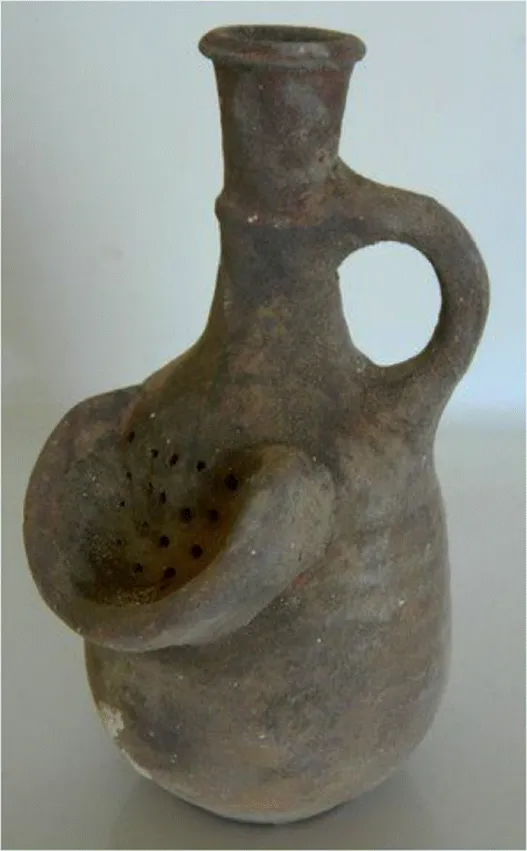
By the layman's definition, ceramics are materials made of pottery (κέραμoζ in Greek) that is then hardened by heat. A more scientific definition (from the Ceramic Tile Institute of America) describes ceramic material as an inorganic, non-metallic solid prepared by the action of heat and subsequent cooling [1]. This definition explores an older Sanskrit meaning of the Greek keramos – to be burned (unlike glass that is amorphous, ceramics are crystalline materials). Ceramics are compounds of metallic and non-metallic elements such as aluminium and oxygen (Al2O3), zirconium and oxygen (ZrO2) or silicon and carbon (SiC). These compounds occur naturally in clays and other minerals and are processed in supported forms. With such available ingredients, simple recipes and long-term robustness, no wonder that archaeologists have found man-made ceramics that date back to at least 24,000 BC [2]. The durability of ceramic artefacts has given them prominence in archaeology [3]. Ceramics were one of the remarkable keystones that marked the transition from Stone to Bronze Age when humans first started using man-made tools instead of sharpened stones. In this sense, ceramics are the oldest of three large classes of solid materials (ceramics, metals and polymers) on the main development route of industrial products. The first ceramics, found in former Czechoslovakia, were made of animal fat and bone mixed with bone ash and clays [4]. The initial mix was hardened at kilns dug in the ground at temperatures between 500 and 800 °C. We do not know how these ceramics were then used. The first use of ceramics as containers for holding and storing grains and other food dates back to 9000 BC. Heating the sand that contained calcium oxide combined with soda resulted in a coloured glaze on ceramic containers in Upper Egypt about 8000 BC [5]. One of the earliest civilizations, the Sumerians who lived in Southern Mesopotamia (modern Iraq) more than 5000 years ago, wrote on ceramic stone plaques. The ceramic amphora, which was invented in Greece, became a standard for the transport and storage of liquids (mostly wine and olive oil) in the Roman Empire. The need to purify the water transported in air-open aqueducts [6] expanded the use of ceramics in the Empire. Figure 1.1 shows one of the first ceramic filters, which dates back to Israel Iron Age II – 800 BC (an artefact from the Israeli National Museum).
Photograph of a clay vessel (one of the first ceramic filters dated back to the second Iron Age, circa 800 BC.)
Figure 1.1 One of the first ceramic filters dated back to the second Iron Age, circa 800 BC. A clay vessel that is probably used for serving beer. (https://www.pinterest.com/pearsonaf/pottery-of-the-past/.)
So ceramics have been with us for thousands of years, but ceramic technology has really developed only in the last century. Today's ceramics are no longer just dinnerware, bricks and toilets. Technical ceramics are used in space shuttles, engines, artificial bones and teeth, computers and other electronic devices and of course membranes. The first modern industrial application of ceramic membranes was in the separation of U-238 and U-235 isotopes for making nuclear weapons and fuels in the 1940s and 1950s [7]. This separation was performed at high temperatures by forcing highly corrosive UF6 through semipermeable membranes. The only membrane materials that could withstand such harsh environments were oxides such as Al2O3, TiO2 and ZrO2. Many aspects of that work, carried out by the Western Bloc during the Second World War (the so-called Manhattan Project), are still classified [8]. The only information on these comes from several patents filed in the 1970s. Trials using the same membranes in purification of liquids met with limited success, mainly due to low separation efficiency and low flux. The idea of dividing a membrane into a skin and a porous substructure, proposed by Loeb and Sourirajan [9] in 1962 for polymer membranes, boosted the development of a new generation of ceramic membranes. It appeared that ceramic membranes could also be made in a number of layers like onions. In this new anisotropic membrane, the skin layer determines the separation and the support layer gives the mechanical strength and uninterrupted flux. Technical questions on fusion of layers made from different materials were significantly facilitated by Burggraaf and Cot [10] who developed in the 1980s a concept and procedures for intermediate membrane layers. This opened the door to applications in food and beverage industries [11,12], gas separation [13,14] and biotechnology [1...

Table of contents

  1. Cover
  2. Series Page
  3. Title Page
  4. Copyright
  5. Dedication
  6. Preface
  7. Chapter 1: The Basics
  8. Chapter 2: Fundamentals of Membrane Separation
  9. Chapter 3: Characterization of Ceramic Membranes
  10. Chapter 4: Applications
  11. Chapter 5: Economics
  12. Index
  13. End User License Agreement