Embryology at a Glance
eBook - ePub

Embryology at a Glance

  1. English
  2. ePUB (mobile friendly)
  3. Available on iOS & Android
eBook - ePub

Embryology at a Glance

About this book

Highly Commended in Obstetrics and gynaecology in the 2017 BMA Medical Book Awards

Embryology at a Glance is a highly illustrated and innovative introduction to key embryological concepts, with concise, memorable descriptions of major embryological developments. This new edition covers the basic principles of human development, from mitosis and meiosis, before exploring the primary formation of each body system, including the development of the musculoskeletal, circulatory, digestive, reproductive, and nervous systems during the foetal and neonatal periods.Ā 

Key features include:

  • New chapters on cell signalling genes, stem cells, and antenatal screening for common congenital and genetic defects
  • Full colour photographs and illustrations
  • Links to clinical practice highlighted throughout
  • Timelines of each developmental stage
  • MCQs and EMQs for revision and review
  • A companion website at www.ataglanceseries.com/embryology featuring 15 brand new animations, and podcasts to help clearly explain the processes that occur during development.Ā An additional instructor resource contains an image bank of all the figures from the book to aid teaching this fascinating area

Embryology at a Glance provides the perfect alternative to the overwhelming detail seen in conventional embryology texts. It provides just the right level of detail on embryology and congenital abnormalities for all medical students and health professionals to develop a thorough understanding of human development and its implications for clinical practice.
Frequently asked questions

Yes, you can cancel anytime from the Subscription tab in your account settings on the Perlego website. Your subscription will stay active until the end of your current billing period. Learn how to cancel your subscription.
No, books cannot be downloaded as external files, such as PDFs, for use outside of Perlego. However, you can download books within the Perlego app for offline reading on mobile or tablet. Learn more here.
Perlego offers two plans: Essential and Complete
  • Essential is ideal for learners and professionals who enjoy exploring a wide range of subjects. Access the Essential Library with 800,000+ trusted titles and best-sellers across business, personal growth, and the humanities. Includes unlimited reading time and Standard Read Aloud voice.
  • Complete: Perfect for advanced learners and researchers needing full, unrestricted access. Unlock 1.4M+ books across hundreds of subjects, including academic and specialized titles. The Complete Plan also includes advanced features like Premium Read Aloud and Research Assistant.
Both plans are available with monthly, semester, or annual billing cycles.
We are an online textbook subscription service, where you can get access to an entire online library for less than the price of a single book per month. With over 1 million books across 1000+ topics, we’ve got you covered! Learn more here.
Look out for the read-aloud symbol on your next book to see if you can listen to it. The read-aloud tool reads text aloud for you, highlighting the text as it is being read. You can pause it, speed it up and slow it down. Learn more here.
Yes! You can use the Perlego app on both iOS or Android devices to read anytime, anywhere — even offline. Perfect for commutes or when you’re on the go.
Please note we cannot support devices running on iOS 13 and Android 7 or earlier. Learn more about using the app.
Yes, you can access Embryology at a Glance by Samuel Webster,Rhiannon de Wreede in PDF and/or ePUB format, as well as other popular books in Medicine & Gynecology, Obstetrics & Midwifery. We have over one million books available in our catalogue for you to explore.

Information

Part 1
Early development

Chapters

1 Embryology in medicine
2 Language of embryology
3 Introduction to development
4 Cell signalling genes
5 Embryonic and foetal periods
6 Mitosis
7 Meiosis
8 Spermatogenesis
9 Oogenesis
10 Fertilisation
11 From zygote to blastocyst
12 Implantation
13 Placenta
14 Gastrulation
15 Germ layers
16 Stem cells
17 Neurulation
18 Neural crest cells
19 Body cavities (embryonic)
20 Folding of the embryo
21 Segmentation
22 Somites

1
Embryology in medicine

What is embryology?

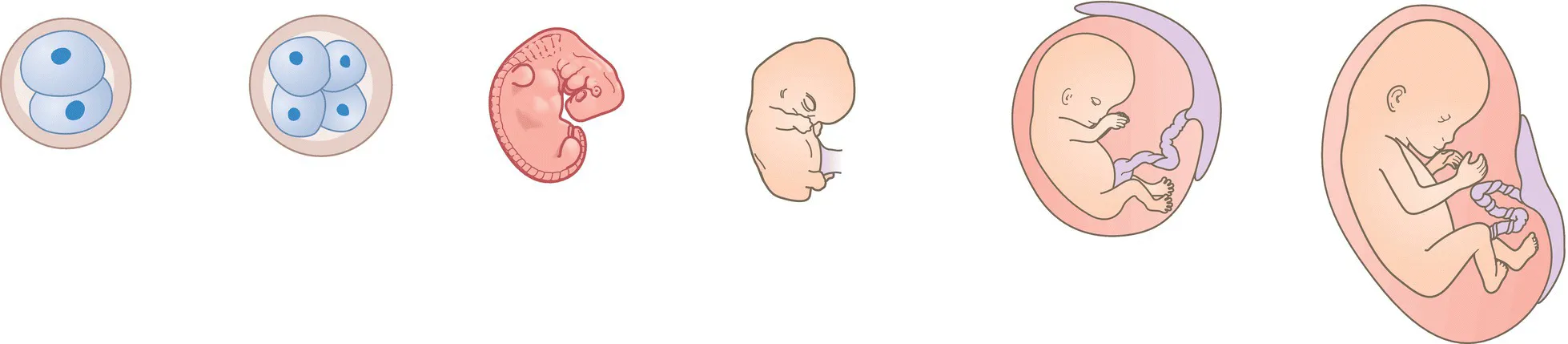
Animals begin life as a single cell. That cell must produce new cells and form increasingly complex structures in an organised and controlled manner to reliably and successfully build a new organism (Figures 1.1 and 1.2). As an adult human may be made up of around 100 trillion cells this must be an impressively well-choreographed compendium of processes.
Illustration of a human embryo developing from a simple group of cells into complex shapes and structures in the early weeks.
Figure 1.1 The early embryo develops from a simple group of cells into complex shapes and structures in the early weeks
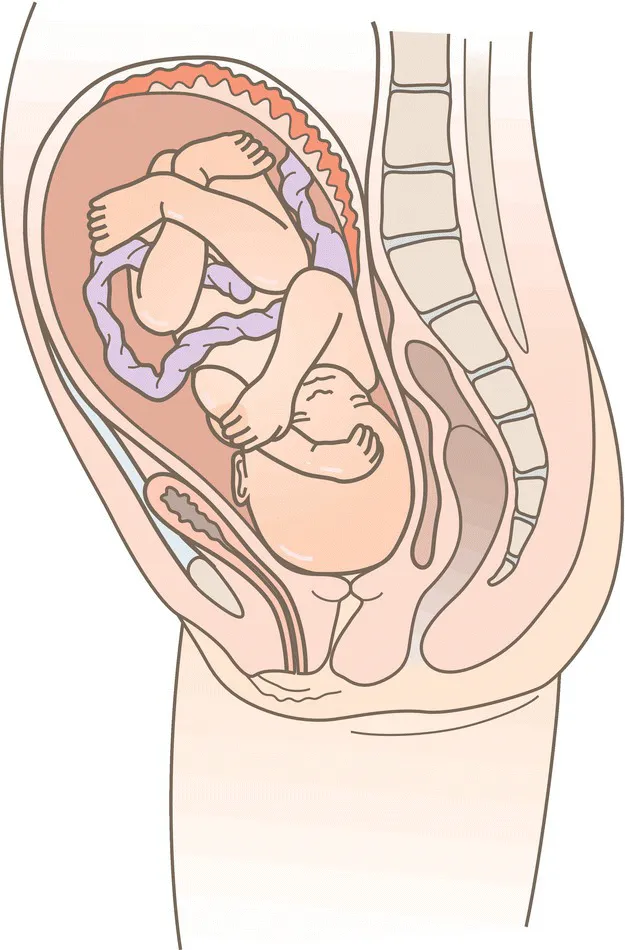
Illustration of human foetus developed beyond embryology as it continues to grow and mature.
Figure 1.2 Development continues beyond embryology and the foetus continues to grow and mature
Embryology is the branch of biology that studies the early formation and development of these organisms. Embryology begins with fertilisation, and we have included the processes that lead to fertilisation in this text. The human embryonic period is completed by week 8, but we follow development of many systems through the foetal stages, birth and, in some cases, describe how changes continue to occur into infancy, adolescence and adult life (Figure 1.3).
Illustration of the human biological structures and systems that continue to develop through childhood, adolescence, and into adulthood.
Figure 1.3 Development of biological structures and systems continues through childhood, adolescence and into adulthood. Changes continue to occur throughout life

Aims and format

This book aims to be concise but readable. We have provided a page of text accompanied by a page of illustrations in each chapter. Be aware that the concise manner of the text means that the topic is not necessarily comprehensive. We aim to be clear in our descriptions and explanations but this book should prepare you to move on to more comprehensive and detailed texts and sources.

Why study embryology?

Our biological development is a fascinating subject deserving study for interest’s sake alone. An understanding of embryological development also helps us answer questions about our adult anatomy, why congenital abnormalities sometimes occur and gives us insights into where we come from. In medicine the importance of an understanding of normal development quickly becomes clear as a student begins to make the same links between embryology, anatomy, physiology and neonatal medicine.
The study of embryology has been documented as far back as the sixth century BC when the chicken egg was noted as a perfect way of studying development. Aristotle (384–322 BC) compared preformationism and epigenetic theories of development. Do animals begin in a preformed way, merely becoming larger, or do they form from something much simpler, developing the structures and systems of the adult in time? From studies of chickens’ eggs of different days of incubation and comparisons with the embryos of other animals Aristotle favoured epigenetic theory, noting similarities between the embryos of humans and other animals in very early stages. In a chicken’s egg, a beating heart can be observed with the naked eye before much else of the chicken has formed.
Aristotle’s views directed the field of embryology until the invention of the light microscope in the late 1500s. From then onwards embryology as a field of study was developed.
A common problem that students face when studying embryology is the apparent complexity of the topic. Cells change names, the vocabulary seems vast, shapes form, are named and renamed, and not only are there structures to be concerned with but also the changes to those structures with time. In anatomy, structures acquire new names as they move to a new place or pass another structure (e.g. the external iliac artery passes deep to the inguinal ligament and becomes the femoral artery). In embryology, cells acquire new names when they differentiate to become more specialised or group together in a new place; structures have new names when they move, change shape or new structures form around them. With time and study students discover these processes, just as they discover anatomical str...

Table of contents

  1. Cover
  2. Title Page
  3. Table of Contents
  4. Preface
  5. Acknowledgements
  6. List of abbreviations
  7. Timeline
  8. About the companion website
  9. Part 1: Early development
  10. Part 2: Systems development
  11. Self-assessment MCQs
  12. Self-assessment MCQ answers
  13. Self-assessment EMQs
  14. Self-assessment EMQ answers
  15. Glossary of medical conditions and terms
  16. Index
  17. End User License Agreement