Biological Sciences

Oncogenic Viruses
Oncogenic viruses are viruses that have the potential to cause cancer in their host cells. They can induce cancer by integrating their genetic material into the host cell's DNA, leading to uncontrolled cell growth and tumor formation. Examples of oncogenic viruses include human papillomavirus (HPV), Epstein-Barr virus (EBV), and hepatitis B virus (HBV).
Written by Perlego with AI-assistance
Related key terms
1 of 5
10 Key excerpts on "Oncogenic Viruses"
 eBook - PDF
- James Jing-hsiung Ou, Benedict Tien-sze Yen(Authors)
- 2009(Publication Date)
- World Scientific(Publisher)
1 Chapter 1 Oncogenic Viruses, Cellular Transformation and Human Cancers Yanyan Zheng* and Jing-hsiung James Ou* Abstract: It has been a century since the initial discovery of the possible link between viruses and tumors. During the past century, extensive studies have been conducted to understand the relationship between viruses and cancers. The early studies were focused on tumor viruses that do not cause cancers in their natural hosts. These studies provided the basis for the sub-sequent studies on the six known human Oncogenic Viruses. These human Oncogenic Viruses, which include hepatitis B virus, hepatitis C virus, human papillomavirus, Epstein-Barr virus, Kaposi’s sarcoma-associated herpesvirus, and human T-cell leukemia virus 1 are associated with nearly 20% of the human cancer cases. In this chapter, we review the historical aspects of oncogenic virus research, human Oncogenic Viruses, and the molecular mechanisms of cellular transformation by viruses. 1. Introduction and Historical Aspects Cancer develops from a succession of genetic changes, which cumu-latively provide growth advantage for the cancerous cells. Despite the heterogeneity of human cancers in cellular origin, etiology and patho-genesis, they more or less share the same characteristics defined by Hanahan and Weinberg (Hanahan & Weinberg, 2000): self-sufficiency *Department of Molecular Microbiology and Immunology, University of Southern California, Keck School of Medicine, Los Angeles, California. in growth stimulation, insensitivity to antigrowth signals, evasion of apoptosis, infinite lifespan, sustained angiogenesis, tissue invasion and metastasis ability, and genetic instability (Hanahan & Weinberg, 2000). These cellular changes may be inherited genetically or acquired as a combinational aftermath of environmental mutagens and infec-tious agents such as viruses. eBook - ePub
Emerging and Reemerging Viral Pathogens
Volume 1: Fundamental and Basic Virology Aspects of Human, Animal and Plant Pathogens
- Moulay Mustapha Ennaji(Author)
- 2019(Publication Date)
- Academic Press(Publisher)
Additional oncogenic hits are necessary for full-blown transformation. The occurrence of mutations impairing expression and function of viral and/or cellular oncogenes is necessary in the carcinogenic process, in line with that, an increased mutation rate of infected over normal cells is frequently observed. In this scenario, latently infected cells by Oncogenic Viruses might be more susceptible targets of additional oncogenic hits, for example, due to smoking, a diet scarce in fruits and vegetables or/and increased exposure to environmental oncogenic agents. All these insults, plus the host genetic component driving inflammatory responses triggered by the infection itself, result in the cell transformation and cancer development (Table 18.1). Table 18.1 Concepts in Cancer Biology Advanced by Viral Carcinogenesis. 1 Cellular origin of viral oncogenes—oncogenes carried by transforming retroviruses are derived from cellular genes 2 Genetic basis of cancer—oncogenes involved in cancer development are aberrant versions of normal cell genes that function in growth control 3 Multistep carcinogenesis—multiple genetic changes are required for tumor development 4 Positive and negative regulatory genes as cancer genes—both proto-oncogenes and tumor suppressor genes are altered in cancer cells 5 Unification of molecular basis of cancer—different classes of carcinogens affect the same regulatory network of cellular growth control pathways Mechanisms of Viral Oncogenesis Direct and Indirect Viral Carcinogenesis Infectious agents can contribute to carcinogenesis by direct and/or indirect mechanisms (Fig. 18.1). The direct-acting carcinogenic agents are generally found in a monoclonal form within the tumor cells. These agents help to keep the tumor phenotype through the expression of either viral or cellular oncogenes eBook - ePub
Understanding Cancer
An Introduction to the Biology, Medicine, and Societal Implications of this Disease
- J. Richard McIntosh(Author)
- 2019(Publication Date)
- Garland Science(Publisher)
tumor viruses. Experiments on animals demonstrated beyond doubt that these infectious agents could cause cancers. Prolonged study of such viruses led to the identification of numerous genes important for oncogenesis. These studies occurred just as the fields of molecular and cellular biology were developing, so some of the experiments with the biggest impact on cancer research were also important in the development of scientific knowledge more generally. Also important were the inventions of technologies that made all this scientific work possible. The work described here represents a remarkable series of achievements in understanding how cells work and how their normal workings can be led astray.LEARNING GOALS
1.Describe how Oncogenic Viruses can bring about inheritable changes in cell behavior.2.Describe the essential features of an oncogene and how a tumor virus can use such a gene to upset the normal pathways for cell cycle control.3.Compare the cancerous transformations achieved by DNA and RNA tumor viruses.4.Specify the differences between proto-oncogenes and oncogenes.5.Explain why there are so many oncogenes.6.Describe the similarities and differences between chemical or radiation-induced carcinogenesis and the cancer-causing ability of an acutely transforming tumor virus. Make the same comparison with a tumor virus that is not acutely transforming.7.Diagram ways by which gain-of-function mutations in genes that control the extracellular matrix can promote cancer.8.Diagram ways by which gain-of-function mutations in genes that control the cell’s ability to undergo apoptosis can promote cancer.9.Specify the cellular behaviors that are necessary for a human somatic cell to become immortal, in the sense that it can grow and divide without limit.CANCER TRANSMISSION BY CERTAIN ANIMAL VIRUSES
At about the time doctors were discovering the ability of specific substances and forms of radiation to increase the likelihood of cancer, a few scientists were exploring the possibility that cancer could be transmitted from one animal to another by infection. In 1908, Vilhelm Ellerman and Olaf Bang, working at the University of Copenhagen in Denmark, demonstrated that leukemia could be transmitted between chickens by taking blood from a diseased animal, removing all the blood cells by forcing the liquid through a very fine filter, and then injecting the resulting filtrate (the liquid that came through the filter) into a healthy chicken. In 1911, Peyton Rous, working at the Rockefeller Institute for Medical Research in New York City, was able to transmit the formation of sarcomas (solid tumors in chicken breast muscle) from one animal to another by injecting a healthy chicken with a cell-free fluid obtained by filtering ground-up muscle from an animal with a breast muscle sarcoma. Experimental evidence for the transmission of cancer from one animal to another by one or more filterable, infectious agents was now unquestionable. However, the mechanism by which this process worked was mysterious. In the early twentieth century, medical science was just beginning to understand the diversity of microorganisms that cause disease. Through the study of viruses that infected plants and bacteria, knowledge about these pathogens grew to the point that their cycles of infection could be understood (SIDEBAR 6.1 eBook - PDF
- G. H. Bourne, J. F. Danielli, G. H. Bourne, J. F. Danielli(Authors)
- 2013(Publication Date)
- Academic Press(Publisher)
INTERNATIONAL REVIEW OF CYTOLOGY. SUPPLEMENT 15 Viral Carcinogenesis F R E D R A P P Department of Microbiology and Cancer Research Center, The Pennsylvania State University College of Medicine, Hershey, Pennsylvania I. Introduction 203 A. Historical Background 203 B. Oncogenic DNA and RNA Viruses 204 C. Molecular Basis of Oncogenic Transformation 207 II. Oncogenic DNA Viruses 211 A. Naturally Occurring Cancers in Animals 211 B. Human Viruses and Their Association with Human Neoplasms. 219 III. Retroviruses 230 A. Avian and Mammalian Retroviruses 232 B. Endogenous Retroviruses 237 C. Retroviruses and Human Cancer 238 References 240 I. Introduction Although the role of viruses in the etiology of cancer has been studied for more than half a century, definitive proof that viruses cause tumors in humans has not been demonstrated. Much information pertaining to the relationship between viruses and cancer has been accumulated, but there are many questions to be answered. It has been clearly demonstrated that certain viruses will produce tumors when inoculated into animals. Several naturally occurring cancers in animals, particularly the Lucké renal adenocarcinoma of frogs, Marek's lympho-matous disease in chickens, and bovine and feline leukemia, are transmitted horizontally from animal to animal by viruses. In humans, some papillomavirus infections produce warts that can become malignant and particles resembling viruses associated with the transmission of leukemia in animals have been found in human cancer patients. There is a correlation between virus infection and disease, and the presence and retention of specific virus nucleic acid sequences and virus proteins in tumor cells in Burkitt lymphoma, nasopharyngeal car-cinoma, human cervical cancer, and hepatocellular carcinoma. A. HISTORICAL BACKGROUND The discovery of viruses as infectious agents led to speculation that cancer might be caused by viruses. eBook - ePub
Oncogenic Viruses Volume 1
Fundamentals of Oncoviruses
- Moulay Mustapha Ennaji(Author)
- 2022(Publication Date)
- Academic Press(Publisher)
Chapter 3General principals and mechanisms of viral oncogenic and associated cancers (cytomegalovirus, papillomaviruses, and RNA oncogenic virus)
Ikram Tiabi1 , Said Abdallah Nabil1 , Berjas Abumsimir1 , 2 , Mohammed Nabil Benchekroun1 and Moulay Mustapha Ennaji1 ,1 Group Research Leader Team of Virology, Oncology, and Biotechnologies, Head of Laboratory of Virology, Oncology, Biosciences, Environment and New Energies (LVO-BEEN), Faculty of Sciences and Techniques Mohammedia, University Hassan II of Casablanca, Casablanca, Morocco,2 Pharmacological and Diagnostic Research Centre (PDRC), Department of Medical Laboratory Sciences, Faculty of Allied Medical Sciences, Al-Ahliyya Amman University (AAU), Amman, JordanAbstract
Infections of tumors of the reproductive organs of both sexes have increased sharply worldwide; these include cervical cancer and other gynecomammary cancers in women and prostate cancer in men. Among the main risk factors for these types of tumors, viral infection has been found in the cervix, uterus, and prostate. Among viruses, infections with human papillomavirus (HPV), cytomegalovirus, oncogenic RNA virus, and Merkel cell polyomavirus as well as cervical and other congenital tumors have been found in many populations, as have HPV infections in men with prostate tumors. In this chapter we will highlight the viral etiology of genitourinary tumors and the role of viruses in these congenital tumors. All types of cancers are caused by changes in the DNA sequence of the tumor cell genome. Over the past quarter of a century, we have learned a great deal about these mutations and the abnormal genes that operate in cancers, the mechanisms by which viruses promote disease, the mutual adaptation of viruses and hosts, and the eventual evolution in the absence and presence of public health interventions designed to target them. This issue shows the current evolution of tissue- and animal-based experimental devices, evolutionary approaches, and mathematical models for understanding oncovirus DNA. Our overall goal is to provide insights into the current interface and interactions between the virus and the host as well as explanations of the value of these interactions and the evolutionary pathways that have led to the current malignant phenotype of oncoviral infections. eBook - PDF
Carcinogenesis
Proceedings of a Symposium on the Biology of Skin Held at the University of Oregon Medical School, 1965
- William Montagna, Richard L. Dobson(Authors)
- 2017(Publication Date)
- Pergamon(Publisher)
(Monod et al., 1963, with permission of Academic Press (London) Ltd.) that the same principles of control are operative in mammalian cells, at least in tissue culture. Although the experimental possibilities have been somewhat limited, no results have been significantly at variance with the models derived from bacterial studies, and it appears desirable and safe to proceed on the assumption that these models have general biological significance. It is, then, pertinent to inquire in what way oncogenic viral materials may alter the pattern of cellular protein synthesis. What new elements of control are introduced and how do they operate ? It is necessary to know first if all parts of a virus are essential for oncogenesis. As noted above, the DNA alone, chemically extracted and purified, has been shown to be fully capable of causing infection, and tumors, as in the cases of SV-40 and papilloma, and TUMOR VIRUSES 143 polyoma (DiMayorca et al., 1959; Orth et al, 1964). The RNA of Rous virus has been shown to be capable of stimulating intracellular production of cellular transformation and specific antigens in cultures of chick cells but not as yet complete infectious virus (Rabotti and Cook, 1964). As in the case of bacteriophage, it seems likely that the protein coats of Oncogenic Viruses serve only for the protection of the nucleic acid and the facilitation of attachment to and entry through the cell membrane. The sufficiency of viral DNA is fully in accord with the hypothesis of total genetic coding in DNA. The case of the RNA viruses is somewhat anomalous and will be discussed separately. Several possible mechanisms for the action of nucleic acid from Oncogenic Viruses have been widely discussed; three of these will be briefly examined here with reference to recent experimental findings. A. DNA Viruses: Integrating Genetic Mechanism The sufficiency of oncogenic viral DNA suggests immediately that it may be permanently and physically incorporated into the host genome. eBook - ePub
Principles of Virology, Volume 2
Pathogenesis and Control
- S. Jane Flint, Vincent R. Racaniello, Glenn F. Rall, Anna Marie Skalka, Theodora Hatziioannou(Authors)
- 2020(Publication Date)
- ASM Press(Publisher)
The second class, nontransducing oncogenic retroviruses, are less carcinogenic agents. Not all animals infected with these viruses develop tumors, which appear only weeks or months after infection. In the late 1980s, a third type of oncogenic retrovirus that caused tumorigenesis very rarely months or even years after infection was identified in humans. This group comprises two lentiviruses, human T-cell lymphotropic virus type 1 and 2. Infection by each group of oncogenic retroviruses induces tumors by a distinct mechanism. As their name implies, the genomes of transducing retroviruses contain cellular genes that become oncogenes when expressed in the viral context. The virally transduced versions of these cellular genes are called v-oncogenes, and their cellular counterparts, which are not normally transforming, c-oncogenes or proto-oncogenes. The genomes of the nontransducing retroviruses do not encode cell-derived oncogenes. Rather, the transcription of proto-oncogenes is activated inappropriately as a consequence of the nearby integration of a provirus in the host cell genome. In either situation, the oncogene products ordinarily play no role in the reproductive cycle of the retroviruses themselves. With the notable exception of the reproductive cycle of certain epsilonretroviruses (Box 6.5), the oncogenic potential of retroviruses is an accident of their infectious cycles. Nevertheless, the study of v-oncogenes and proto-oncogenes that are affected by retroviruses has been of great importance in advancing our understanding of the origins of cancer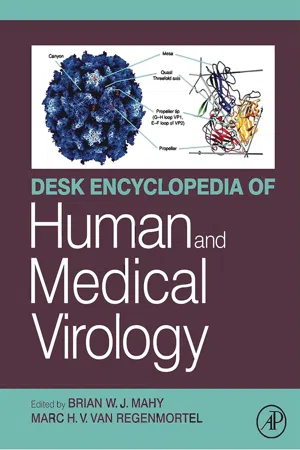
- Brian W.J. Mahy, Marc H.V. van Regenmortel(Authors)
- 2010(Publication Date)
- Academic Press(Publisher)
The discovery that all retroviral oncogenes are derived from cellular information has greatly expanded the significance of these genes. Originally seen as viral pathogenicity genes, they have become universal effectors of oncogenicity. Viruses have been demoted to just one of several instruments that can activate these genes; muta-tion, overexpression, and amplification are some of the others. The study of oncogenes, initially a somewhat esoteric part of virology, has grown to determine the course of cancer research during the past three decades and has contributed immensely to our understanding of cancer in general. As targets of specific inhibitors, oncoproteins are now revolutionizing cancer treatment. eBook - PDF
- Frank J. Fenner, B. R. McAuslan, C. A. Mims(Authors)
- 2013(Publication Date)
- Academic Press(Publisher)
Of course, the hypothesis does not bear on the fact that some tumors are transmissible by viruses in an orthodox way, or on the artificial pro-duction of cancers by tumor viruses in the laboratory. In summary, the data so far accumulated on the biology of the C-type viruses show a very close association between viral and cellular genomes; although hardly any of the details of this association are understood, the general observa-tions fit quite well with the oncogene hypothesis. Perhaps the key question still to be resolved is whether the viruses induced from normal animals and normal cells are tumorigenic (i.e., whether they carry the oncogene). Proviruses and Protoviruses Huebner and Todaro's hypothesis is by no means the only one that has been put forward to explain the behavior of the C-type viruses. We shall close this chapter by considering briefly two ideas put forward by Temin. The Provirus Hypothesis. The provirus is defined as the intracellular form of a tumor virus that is passed from parent to daughter cells at mitosis and con-tains the information for the production of new virus and for the maintenance of the cells in a transformed state (Temin, 1961, 1962). It is implied that proviral DNA is integrated into the genome of the transformed cell as a consequence of infection of the cell with a tumor virus. In this sense the provirus hypothesis is different from the oncogene hypothesis which postulates that the information for viral production is part of the genetic make up of the cell and behaves as a cellular gene. The provirus theory, then, is concerned with events which occur when 540 14. Viral Oncogenesis: RNA Viruses viruses infect cells, and it seems to be correct only in certain limited situations, for instance, during the transformation of rodent cells by avian RNA tumor viruses where hybridization experiments show the addition of viral DNA se-quences into the cell genome (Baluda, 1972).
- Edouard Kurstak(Author)
- 2012(Publication Date)
- Academic Press(Publisher)
translated from virus-specific messenger R N A , but no complete virus particles are present. V. Role of the Herpesvirus Genome in Oncogenicity During productive infection cycles, herpesviruses rapidly suppress host macromolecular synthesis (Kaplan, 1973) and replicate with an-nihilation of infected cells. Consequently, the extensive cytopathology in a given cell culture would preclude detection of a chance transforma-tional event. Thus, a prerequisite for oncogenicity is the establishment of a stable relationship between the virus and its host (Table V). To effect this, genetic information coding for transformation, notably stimulation of cell D N A synthesis, must be independent of that coding for host shut-down. Accordingly, reports that EBV (Gerber and Hoyer, 1971), M D V (Lee, 1972), and C M V (St. Jeor et al., 1973) can stimulate the induction of host cell D N A synthesis add significant support to the contention that these may be Oncogenic Viruses. Although mature virus particles can be detected in some herpesvirus-transformed neoplastic cells (Table VI), virus expression is generally restricted by unknown mechanisms to early functions (pre-DNA synthe-sis). A variety of techniques have been used to localize and potentially identify virus functions expressed in transformed cells. 196 FRED RAPP AND ROGER W. KOMENT TABLE V Postulated Herpesvirus-Cell Interactions Event Replication Latency Transformation Early virus RNA and Yes Limited Limited protein synthesis Host DNA synthesis Inhibited Not affected Stimulated Virus genome Yes May be associated with May be associated with replication chromosomes (intact) chromosomes (fragment) Virus release Yes No No A. Synthesis of Antigens The herpesvirus genome is endowed with the potential of about 250 gene products (Fenner, 1970) derived from a molecular weight of 10 8 daltons.
Index pages curate the most relevant extracts from our library of academic textbooks. They’ve been created using an in-house natural language model (NLM), each adding context and meaning to key research topics.

