Biological Sciences

Viral Diseases
Viral diseases are caused by viruses that infect living organisms, including humans, animals, and plants. These diseases can range from mild, such as the common cold, to severe, such as Ebola and HIV. Viruses can spread rapidly and cause epidemics or pandemics, making them a significant public health concern.
Written by Perlego with AI-assistance
Related key terms
1 of 5
8 Key excerpts on "Viral Diseases"
 eBook - PDF
- Dave Wessner, Christine Dupont, Trevor Charles, Josh Neufeld(Authors)
- 2020(Publication Date)
- Wiley(Publisher)
Like the bac- terial pathogens that we examined in Chapter 21, viral patho- gens, and the diseases associated with them, exhibit remarkable diversity. Of course, the diseases caused by viruses can be quite devastating. Initially, the myxoma virus that we introduced in the opening story certainly had a devastating effect on its host, the European rabbit. The outbreak of Ebola virus disease that began in 2014 provides another example. By the end of March 2016, when the World Health Organization (WHO) declared that the outbreak no longer was a public health emergency of global concern, there were 28,646 suspected or confirmed cases of Ebola virus infection reported, which resulted in 11,323 deaths. Most of the infections occurred in three countries: Libe- ria, Sierra Leone, and Guinea. Often, death occurred within days of the infected person experiencing symptoms of disease. Then there is COVID-19. The first cases of this disease, caused by the novel coronavirus SARS-CoV-2, were reported to the World Health Organization in December 2019. A month later the WHO declared a Public Health Emergency of Interna- tional Concern (PHEIC). On March 11, 2020, COVID-19 was classified as a pandemic. By the middle of April, over 2 million people worldwide had been infected, over 150,000 people had died, and the global economy had virtually ground to a halt. Of course, other viruses have less dramatic effects. Some viruses cause chronic or persistent infections in which the virus may never be completely eliminated from the host and disease occurs long after the initial infection. Still other viruses may cause latent infections, in which viral replication ceases after an initial acute infection, only to resume replicat- ing later, perhaps years after the initial period of replication. In still other cases, the infection does not result in any overt clinical symptoms in the host. eBook - PDF
- Steven H. Weisbroth, Ronald E. Flatt, Alan L. Kraus, Steven H. Weisbroth, Ronald E. Flatt, Alan L. Kraus(Authors)
- 2013(Publication Date)
- Academic Press(Publisher)
CHAPTER 10 Viral Diseases C. J. Mare I. Introduction 237 II. DNA Virus Infections 238 A. Poxvirus Infections 238 B. Herpesvirus Infections · · · ·. 250 C. Papovavirus Infections 252 D. Adenovirus Infections 255 III. Diseases Caused by RNA Viruses 255 A. Picornavirus Infections 255 B. Reovirus Infections 256 C. Orthomyxovirus Infections 256 D. Paramyxovirus Infections 256 E. Rhabdovirus Infections 256 F. Togavirus (Arbovirus) Infections 256 IV. Diseases Possibly of Viral Origin 257 Infectious Vesicular Stomatitis 257 References 257 I. INTRODUCTION The science of animal virology has been through an era of phenomenal growth during the past two decades. The ex-plosion of knowledge which has occurred during this time can be attributed largely to a single technical advance, namely the application of cell culture techniques to the study of animal viruses. The wide-spread adoption of cell cultures as the host system of choice in diagnostic and experimental virology has resulted in the isolation and characterization of many new viruses of man and animals. It has also led to a more fundamental understanding of the viruses themselves and of virus-host interrelationships. The recognition of the stable physical and chemical cha-racteristics of the viruses has been followed by several at-tempts at viral classification based on the fundamental properties of the virus particle rather than on the tissue affinity or the disease-producing characteristics of the agent. Several extremely practical classification schemes have been proposed but as yet general agreement has not been reached on which system should become universally adopted. The state of flux which exists in the area of virus taxonomy and nomenclature encourages confusion and thus every effort will be made in this review to use the viral terminology which is most widely accepted. eBook - PDF
- Carlos Tello Lacal(Author)
- 2019(Publication Date)
- Delve Publishing(Publisher)
Beijerinck did a study and revealed that the infectious agent was could actually multiply in tissues of living plants and not in the sap of a plant and he championed for this view giving the class of these agents the name “contagious living fluid” or “contagium vivum fluidum”. From the information gained from these studies, shortly afterward the first animal viruses were discovered and these were a flavivirus—the yellow fever virus—and a picornavirus—a foot Principles of Molecular Virology 182 and mouth virus. The foot and mouth disease is very contagious and can be fatal at times. It affects swine and cattle and was a very serious problem to farmers in Germany. 7.3 LINK BETWEEN VIRUS INFECTION AND DISEASE A viral infection does not necessarily mean there is going to be a disease. Occurrence of an infection happens when viruses enter the body of a victim and start multiplying. A disease appears when the body cells of the infected victim get damaged because of the infection and so signs and symptoms of the disease start to appear. Occurrences of diseases among the victims who get infected vary depending on the susceptibility of the individual and the type of virus. While responding to infection, the immune system of the infected individual gets into action. The antibodies, white blood cells, and other body mechanisms get into work to eliminate the foreign intruder. It is in fact many symptoms that result from the work of the immune system which leads to a disease. These include rash, headache, malaise, and fever. Viruses lead to a disease by just killing the cells of the victims’ body or by altering the functioning of its components. In most cases, the body of the victim responds with fever (viruses become inactive during fever because of the heat produced) with interferon secretion (this is a chemical that bars viruses from multiplying) or by marshaling antibodies of the immune system and other cells with the aim of targeting the foreign intruder. eBook - PDF
- Frederick A. Murphy, E. Paul J. Gibbs, Marian C. Horzinek, Michael J. Studdert(Authors)
- 1999(Publication Date)
- Academic Press(Publisher)
PART I Principles of Virology This Page Intentionally Left Blank CHAPTER 1 The Nature of Viruses as Etiologic Agents of Veterinary and 9 Q Zoonot c D seases Veterinary and Zoonotic Virology as Infectious Disease Sciences ................. 3 Viruses, At the Edge of Life ...................................................................... 6 Viral Morphology .......................................................................................... 7 Chemical Composition of Virions ................................................................. 15 Stability of Viral Infectivity ........................................................................... 19 Further Reading ............................................................................................. 20 Veterinary and Zoonotic Virology as Infectious Disease Sciences Infectious disease is one of the few genuine adven- tures left in the world. The dragons are all dead and the lance grows rusty in the chimney corner.. 9 . About the only sporting proposition that remains unimpaired by the relentless domestication of a once free-living human speciesis the war against those ferocious little fellow creatures, which lurk in the dark corners and stalk us in the bodies of rats, mice, and all kinds of domestic animals; which fly and crawl with the insects, and waylay us in our food and drink and even in our love. This quote is taken from the book Rats, Lice and His- tory, written in 1935 by the great microbiologist Hans Zinsser as he reflected on his life in infectious disease science. Zinsser's thought has challenged generations of students and professionals ever since, and now it chal- lenges those who use this book, those who, by their own clinical and scholarly experiences, understand that the infectious diseases of today are as demanding as those that faced Zinsser. eBook - PDF
Respiratory Disease and Infection
A New Insight
- Bassam H. Mahboub(Author)
- 2013(Publication Date)
- IntechOpen(Publisher)
Thus, the immunopathology vi‐ ral respiratory infection is a frequent consequence of the immune response against many of respiratory pathogens. Furthermore, if the infection is established, the factors or viral viru‐ lence determinants and physiological conditions of the host cell will determine which direc‐ tion the infection will take. A virus is pathogenic when it is able to infect and cause disease in a host, while it is virulent when it causes more severe disease than another virus of a dif‐ ferent strain, although both remain pathogens. Each virus can cause different cytopathic ef‐ fects in the host cell, which may lead to several symptoms and disease. In addition, developing a disease reflects the existence of an abnormality of the host, either structural or functional, induced by the invading virus. © 2013 Manjarrez-Zavala et al.; licensee InTech. This is an open access article distributed under the terms of the Creative Commons Attribution License (http://creativecommons.org/licenses/by/3.0), which permits unrestricted use, distribution, and reproduction in any medium, provided the original work is properly cited. © 2013 The Author(s). Licensee InTech. This chapter is distributed under the terms of the Creative Commons Attribution License http://creativecommons.org/licenses/by/3.0), which permits unrestricted use, distribution, and reproduction in any medium, provided the original work is properly cited. 2. Viral pathogenesis The term “pathogenesis” refers to the processes or mechanisms to generate an injury or ill‐ ness, in this case induced by a viral infection. The results of a viral infection depend on fac‐ tors related to the nature of the virus, the host and the environment. They include: number of infectious particles, the way to reach the target tissue, the rate of multiplication, the effect of virus on cell functions and the host’s immune response. eBook - PDF
- A. O. Betts, C. J. York, A. O. Betts, C. J. York(Authors)
- 2013(Publication Date)
- Academic Press(Publisher)
CHAPTER 9 Epidemiology of Virus Diseases W. I. B. BEVERIDGE I. Introduction 335 II. The Parasite (Virus) 336 A. Characters 336 B. Sources 338 III. The Host (Animal) 343 A. Host Range 343 B. Physiological and Environmental Factors 343 G. Acquired Immunity 344 D. Population Structure 345 IV. Transmission 348 A. In Utero 348 B. Direct Contact 349 C. Indirect Contact 349 D. Ingestion 350 E. Inhalation 350 F. Injection 353 V. Epidemics 355 A. Origin of Epidemics 355 B. Analysis of Epidemics 358 VI. Control 360 References 362 I. INTRODUCTION In this chapter the intention is to outline the general principles underlying the epidemiology of virus diseases, taking the viewpoint that basically this is a study of the natural history of these diseases, or, in other terms, the ecology of the viruses as parasites. Most people involved in this field are interested primarily with the control of the diseases, but even this practical purpose may best be served by the biological outlook. Disease agents have evolved ways of life that have ensured their continual survival for a very long time under variable conditions. Eradication of a parasite often proves more difficult than anticipated, owing to survival mechanisms that were not at first suspected. The wide variation in the biological and physical properties of viruses allows many different types of epidemic behavior among the diseases they cause. Nevertheless, the epidemiological possibilities of Viral Diseases are slightly more restricted than those of some bacterial diseases since viruses 335 336 W. I. B. Beveridge lack the capability of forming resistant spores or of multiplying inde-pendently of a living host. It is proposed to discuss the parasite, the host, the means of transmission, and then the result of the interaction of these factors, that is, the disease as it occurs. eBook - PDF
- N A Khan(Author)
- 2008(Publication Date)
- CRC Press(Publisher)
These, transformed cells, have reduced requirement for growth factors and become cancerous, i.e., grow forever. 5.3.4 Progressive Infections These infections take years to show any clinical symptoms. They normally begin with influenza-like symptoms and become latent. During the latent period, they propagate infectious particles. Once reactivated, they overwhelm the immune system, e.g., HIV. 6. VIRAL PATHOGENESIS The process of viral infection leading to disease is called viral pathogenesis. Our ability to understand the basic pathogenic mechanisms associated with Viral Diseases both at the cellular and molecular level are crucial for identifying therapeutic targets. As indicated above, there are hundreds of human viruses causing diverse diseases. The description of each virus with their mode of action is beyond the scope of this book. Here, HIV has 94 been used as a model virus to describe various features associated with its clinical and non-clinical aspects. 7. CONTROL OF VIRAL INFECTIONS Infections due to viruses vary from acute fatal infections that last for a few days to chronic infections that last for years with varied severity. There is no single parameter that could be used to control all viral infections and each virus requires a different set of measures to help control its infection. Below, the most widely, known measures are indicated for the control of viral infections. It is important to note that since viruses depend on the host cells for their survival, it is unlikely that host killing is the objective, and host death is most likely a result of the side effects. Thus, viruses usually produce mild infections with the obvious exceptions of HIV, ebola virus, rabies virus, hanta virus, etc. However, the extremely close association of the virus and its host means that any consideration of treatment of therapeutic interventions must be viewed with this in mind.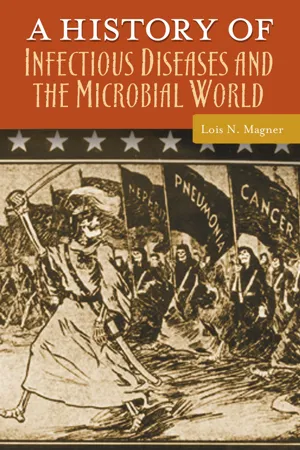
- Lois N. Magner(Author)
- 2009(Publication Date)
- Praeger(Publisher)
Epidemiological studies of other cancers suggest that viruses may be associated with about 15 to 20 percent of the global burden of cancer. As in the case of cancers linked to EBV, the incidence of other cancers associated with infectious agents seems to vary in their geographic distribution. Many different direct and indirect pathways—from chronic inflammation and inhibition of cellular repair mechanisms to immunosuppression and oxidative stress—seem to link infectious agents and the development of cancer. Researchers are increasingly interested in studying the complex problem of how viruses establish latent infections that may eventually cause serious diseases, including cancer. Such studies have been extremely difficult and the results ambiguous. Despite intensive efforts to deal with major and minor Viral Diseases, from influenza to AIDS, Viral Diseases have no specific cure, although antiviral agents are improving the treatment and prognosis for some Viral Diseases. Preventive vaccines remain the most important means of controlling Viral Diseases, but safe and effective vaccines are not available for all Viral Diseases. Many public health experts have become very pessimistic about the possibility of developing a vaccine for certain intractable Viral Diseases such as AIDS. (For a more detailed discussion of AIDS, see Chapter 7, “Emerging Infectious Diseases.”) Certain viruses, such as HIV, the virus that causes AIDS, and the influenza virus, are constantly changing because of their high mutation rate. Understanding viruses and finding ways to prevent and cure viral infections are vital to dealing with Viral Diseases, especially as viruses increasingly becoming suspects in complex chronic diseases—as causes or contributing factors—such as multiple sclerosis, Epstein-Barr syndrome, chronic fatigue syndrome, autoimmune diseases, diabetes, cancers, heart disease, degenerative brain disorders in the elderly, and so forth.
Index pages curate the most relevant extracts from our library of academic textbooks. They’ve been created using an in-house natural language model (NLM), each adding context and meaning to key research topics.

