Biological Sciences

Infectious Disease
Infectious diseases are caused by pathogenic microorganisms such as bacteria, viruses, parasites, or fungi. These diseases can spread from person to person, through contact with contaminated surfaces, or via vectors like mosquitoes. Common examples include influenza, tuberculosis, and COVID-19. Understanding the transmission, prevention, and treatment of infectious diseases is crucial for public health and medicine.
Written by Perlego with AI-assistance
Related key terms
1 of 5
12 Key excerpts on "Infectious Disease"
 eBook - ePub
- J. Alastair Innes(Author)
- 2020(Publication Date)
- Elsevier(Publisher)
5: Infectious Disease
‘Infection’ occurs when infectious agents become established in the host’s tissues, replicate, cause harm and induce a host response. If a microorganism survives and replicates on a mucosal surface without causing illness, the host is said to be ‘colonised’. If a microorganism lies dormant after invading host tissues, the infection is said to be ‘latent’. When the infectious agent, or the host response to it, is sufficient to cause illness, then the process is termed an ‘Infectious Disease’. Not all infections are ‘infectious’, that is, transmissible from person to person. Infectious Diseases transmitted between hosts are called communicable diseases, whereas those caused by organisms that are already colonising the host are described as endogenous.Principles of Infectious Disease
Infectious agents are divided into the following categories:- • Viruses—RNA- or DNA-containing pathogens that rely on host cells for replication.
- • Prokaryotes: bacteria—capable of independent replication but lacking a nucleus.
- • Eukaryotes—fungi, protozoa and helminths.
- • Prions—not microorganisms but misfolded proteins without nucleic acids; cause transmissible encephalopathies (see p. 694).
The human body is colonised by large numbers of bacteria (termed the human microbiota or normal flora), which have a profound influence on human health. Some benefit the host (e.g. gut flora producing vitamins K and B12 ). In contrast, disease results when pathogenic organisms produce virulence factors that damage host cells. Primary pathogens cause disease in healthy hosts, whereas opportunistic pathogens cause disease only in the immune-compromised host.Clinical examination of patients with Infectious Disease
Detection of infection
A variety of methods are used:-
Direct detection of organisms:
 No longer available |Learn more
- (Author)
- 2014(Publication Date)
- Research World(Publisher)
________________________ WORLD TECHNOLOGIES ________________________ Chapter- 1 Infectious Disease Infectious Disease A false-colored electron micrograph shows a malaria sporozoite migrating through the midgut epithelia. ICD-10 A00.-B99. ICD-9 001-139 MeSH D003141 Infectious Diseases , also known as communicable diseases , or transmissible diseases comprise clinically evident illness (i.e., characteristic medical signs and/or symptoms of disease) resulting from the infection, presence and growth of pathogenic biological agents ________________________ WORLD TECHNOLOGIES ________________________ in an individual host organism. In certain cases, Infectious Diseases may be asymtomatic for much or all of their course. Infectious pathogens include some viruses, bacteria, fungi, protozoa, multicellular parasites, and aberrant proteins known as prions. These pathogens are the cause of disease epidemics, in the sense that without the pathogen, no infectious epidemic occurs. Transmission of pathogen can occur in various ways including physical contact, contaminated food, body fluids, objects, airborne inhalation, or through vector organisms. Infectious Diseases that are especially infective are sometimes called contagious and can be easily transmitted by contact with an ill person or their secretions. Infectious Diseases with more specialized routes of infection, such as vector transmission, sexual transmission, are usually not regarded as contagious so do not require medical quarantine of victims. The term infectivity describes the ability of an organism to enter, survive and multiply in the host, while the infectiousness of a disease indicates the comparative ease with which the disease is transmitted to other hosts. An infection is not synonymous with an Infectious Disease, as some infections do not cause illness in a host. Classification Among the almost infinite varieties of microorganisms, relatively few cause disease in otherwise healthy individuals. eBook - ePub
- Britannica Educational Publishing, Kara Rogers(Authors)
- 2010(Publication Date)
- Britannica Educational Publishing(Publisher)
EFINING HEALTH AND DISEASE: COMMUNICABLE DISEASEC ommunicable disease involves the transmission of a disease-causing agent. This process may entail the transmission of the agent from an environmental source, such as the soil or an animal, to a human, as well as transmission from one person to another. Because of the contagious, or infectious, nature of these conditions, they are frequently described as Infectious Diseases.There are many different agents that can give rise to communicable disease. These include viruses, such as influenza virus and HIV, as well as bacteria, fungi, and protozoans. The human body has several lines of defense against infection, including the skin, which acts as a barrier, and the immune system, which deals with agents once they have entered the body. Defense against infection is sometimes the result of sophisticated mechanisms of resistance employed by cells. Understanding patterns of infection and resistance are fundamental to stopping the spread of infectious agents within communities. When an agent becomes widespread, causing illness in many people within a confined region, it is described as epidemic. When it spreads across countries and becomes a global disease, it is described as pandemic.DISEASES OF BIOTIC ORIGIN
Biotic agents include life-forms that range in size from the smallest virus, measuring approximately 20 nm (0.0000008 inch) in diameter, to tapeworms that achieve lengths of 10 metres (33 feet). These agents are commonly grouped as viruses, rickettsiae, bacteria, fungi, and parasites. The disease that these organisms cause is only incidental to their struggle for survival. Most of these agents do not require a human host for their life cycles. Many survive readily in soil, water, or lower animal species and are harmless to humans. Other living organisms, which require the temperature range of endothermic (warm-blooded) animals, may flourish on the skin or in the secretions of fluids of the mouth or intestinal tract but do not invade tissue or cause disease under normal conditions. Thus there is a distinction to be made between infection and disease. No longer available |Learn more
- (Author)
- 2014(Publication Date)
- Research World(Publisher)
________________________ WORLD TECHNOLOGIES ________________________ Chapter- 2 Infectious Disease Infectious Disease A false-colored electron micrograph shows a malaria sporozoite migrating through the midgut epithelia. ICD-10 A00.-B99. ICD-9 001-139 MeSH D003141 ________________________ WORLD TECHNOLOGIES ________________________ Infectious Diseases , also known as communicable diseases , or transmissible diseases comprise clinically evident illness (i.e., characteristic medical signs and/or symptoms of disease) resulting from the infection, presence and growth of pathogenic biological agents in an individual host organism. In certain cases, Infectious Diseases may be asymtomatic for much or all of their course. Infectious pathogens include some viruses, bacteria, fungi, protozoa, multicellular parasites, and aberrant proteins known as prions. These pathogens are the cause of disease epidemics, in the sense that without the pathogen, no infectious epidemic occurs. Transmission of pathogen can occur in various ways including physical contact, contaminated food, body fluids, objects, airborne inhalation, or through vector organisms. Infectious Diseases that are especially infective are sometimes called contagious and can be easily transmitted by contact with an ill person or their secretions. Infectious Diseases with more specialized routes of infection, such as vector transmission, sexual transmission, are usually not regarded as contagious so do not require medical quarantine of victims. The term infectivity describes the ability of an organism to enter, survive and multiply in the host, while the infectiousness of a disease indicates the comparative ease with which the disease is transmitted to other hosts. An infection is not synonymous with an Infectious Disease, as some infections do not cause illness in a host. Classification Among the almost infinite varieties of microorganisms, relatively few cause disease in otherwise healthy individuals. No longer available |Learn more
- (Author)
- 2014(Publication Date)
- College Publishing House(Publisher)
________________________ WORLD TECHNOLOGIES ________________________ Chapter 8 Infectious Disease Infectious Disease A false-colored electron micrograph shows a malaria sporozoite migrating through the midgut epithelia. ICD-10 A00.-B99. ICD-9 001-139 MeSH D003141 Infectious Diseases , also known as communicable diseases , or transmissible diseases comprise clinically evident illness (i.e., characteristic medical signs and/or symptoms of disease) resulting from the infection, presence and growth of pathogenic biological agents in an individual host organism. In certain cases, Infectious Diseases may be asymtomatic for much or all of their course. Infectious pathogens include some viruses, bacteria, fungi, protozoa, multicellular parasites, and aberrant proteins known as prions. These pathogens are the cause of disease epidemics, in the sense that without the pathogen, no infectious epidemic occurs. ________________________ WORLD TECHNOLOGIES ________________________ Transmission of pathogen can occur in various ways including physical contact, conta-minated food, body fluids, objects, airborne inhalation, or through vector organisms. Infectious Diseases that are especially infective are sometimes called contagious and can be easily transmitted by contact with an ill person or their secretions. Infectious Diseases with more specialized routes of infection, such as vector transmission, sexual trans-mission, are usually not regarded as contagious so do not require medical quarantine of victims. The term infectivity describes the ability of an organism to enter, survive and multiply in the host, while the infectiousness of a disease indicates the comparative ease with which the disease is transmitted to other hosts. An infection is not synonymous with an Infectious Disease, as some infections do not cause illness in a host. Classification Among the almost infinite varieties of microorganisms, relatively few cause disease in otherwise healthy individuals. eBook - ePub
Biology Trending
A Contemporary Issues Approach
- Eli Minkoff, Jennifer K. Hood-DeGrenier(Authors)
- 2023(Publication Date)
- CRC Press(Publisher)
CHAPTER 16 New Infectious ThreatsDOI: 10.1201/9781003391159-16CHAPTER OUTLINE
- PATHOGENS ARE INFECTIOUS AGENTS THAT CAUSE DISEASE
- SOME DISEASES THAT SPREAD BY DIRECT CONTACT ARE INCREASING IN PREVALENCE
- FOODBORNE DISEASE PATTERNS REFLECT CHANGES IN FOOD DISTRIBUTION
- WATERBORNE DISEASES REFLECT CHANGES IN LIFESTYLE AND CLIMATE
- ECOLOGICAL FACTORS ESPECIALLY AFFECT PATTERNS OF VECTOR-BORNE DISEASES
- CONCLUDING REMARKS
- CHAPTER SUMMARY
- BIBLIOGRAPHIC REFERENCES
ISSUES- What factors have led to changes in the global patterns of Infectious Disease?
- What can be done to reduce the spread of diseases?
- How may microorganisms be used as bioweapons?
BIOLOGICAL CONCEPTS- Health and disease (pathogens and response, routes of transmission, behavior)
- Evolution (virulence, host–pathogen co-evolution)
- Diversity (viral, bacterial, protist, prion, fungi, parasite)
In Chapter 15 , we saw how a new disease, HIV/AIDS, quickly spread around the globe, but many other diseases have also seen major changes in patterns of infection worldwide. Some of these Infectious Diseases are caused by bacteria instead of viruses. Unlike viral diseases, bacterial diseases can generally be treated by antibiotics. For the last half of the twentieth century, people thought that antibiotics would make widespread bacterial disease a thing of the past. Over time, however, many species of bacteria have become resistant to antibiotics.In this chapter, we will mainly focus on human diseases. Keep in mind, however, that all organisms can suffer from disease. Production of disease-resistant strains of plants has been a major goal of both traditional plant breeding and of genetic engineering of plants (see Chapter 17 eBook - ePub
- Raschel Larsen(Author)
- 2022(Publication Date)
- Chemeketa Press(Publisher)
Irina and her friend Rachel stop for lunch after a morning workout. Irina orders a cobb salad and Rachel orders a kale salad that looks like something only a rabbit would eat. Rachel’s always trying to persuade Irina to love kale, and today she makes yet another attempt: “Here, take a bite. Just taste it. It won’t hurt you—it’s good for you!” Little does she know that it’s not Irina’s aversion to the popular leafy superfood that’s causing her to hesitate; it’s the residue on Rachel’s fork. Rachel thinks she’s offering her friend some healthy food, but Irina sees it as a microscopic threat. All she can think about are the millions of bacteria that could be crawling around on Rachel’s silverware. And so, Irina politely declines.Rachel and her fork may have been germ free, but Irina has every right to be cautious. Infections are nothing to sneeze at. An Infectious Disease is a disorder resulting from a disease-causing agent invading your body. Dangers from infection are everywhere, but most Infectious Diseases can be prevented with healthy strategies including engaging in good hygiene, protecting yourself against pathogens, and practicing safer sexual activity.This chapter introduces the basics of infection and Infectious Diseases and how most of them can be prevented. It then turns to the dangers of sexually transmitted infections (STIs) and the importance of practicing safer sexual activity.Defining Infectious Disease
No one goes through life without “catching a bug,” not even Irina’s friend who eats kale salads. Infectious Diseases accounted for over $120 billion in economic costs in 2014.1 As Infectious Diseases spread and new forms of them arise—and they do—the United States feels the burden physically and financially. Consider the common flu. In a typical year, 5–20% of the US population contracts influenza (flu). Tens of thousands are hospitalized, and thousands die from flu-related illness. This costs an estimated $10.4 billion in direct medical expenses and an additional $16.3 billion in lost earnings annually.2But those numbers are for a typical year. Consider a pandemic, such as COVID-19, the novel coronavirus that spread around the globe. Preliminary numbers suggest that COVID-19 will cause Infectious Disease to jump to the United States’ third leading cause of death in 2020 and 2021. There were over 800,000 deaths between 2020 and 2021 due to COVID-19. The Congressional Budget Office estimates the gross domestic product (GDP) loss for the US economy as a result of the virus will be nearly $4 trillion in 2020–2021.3 That’s in addition to the $2.59 trillion the government already paid out to US citizens for financial relief in the wake of lost personal income, health care expenses, and business closures.4 eBook - ePub
- Bruce Budowle, Steven E. Schutzer, Roger G. Breeze(Authors)
- 2005(Publication Date)
- Academic Press(Publisher)
CHAPTER 2Infectious Diseases: Not Just a Health Matter Anymore
ROGER G. BREEZE, Centaur Science Group, Washington, DC, USAPublisher Summary
This chapter focuses on the development of preparations for uncommon Infectious Diseases. Biological agents developed as weapons pose different threats than naturally occurring diseases. Nation states, organized groups, and individuals are aware about the irrevocable damage caused by such diseases. The intelligence community and the Departments of Homeland Security, Justice, and State have joined the traditional agencies—Agriculture, Defense, and Health and Human Services (HHS)—as significant players in studies of Infectious Diseases of humans, animals, and plants. Biological warfare—the use of disease-spreading microorganisms, toxins, and pests against enemy armed forces or civilians—as historically intended or conducted by nation states for military purposes, generally focused on infectious but noncontagious agents. The goal of health professionals is to identify the properties of the virus and host that can be useful for diagnosis, treatment, and prevention. The biological community needs specific new tools to achieve a balance between adequately monitoring certain biological agents and toxins and not obstructing legitimate research and development involving those agents and toxins. Advisable steps in this direction are: a reappraisal of the biological agents, a proper Bio-security Risk Assessment starting with a definition of the facility’s biological inventory and evaluating the consequences of its loss: a step that enables the pathogens to be prioritized based on those consequences. The volume elaborates upon the needs of Federal Bureau of Investigation (FBI) specifying the usage of biological information with other evidence to investigate and correctly attribute and prosecute criminal activity, and the standards that courts will demand for the scientific evidence. eBook - ePub
Health, Disease and Society
A Critical Medical Geography
- Kelvyn Jones, Graham Moon(Authors)
- 2022(Publication Date)
- Routledge(Publisher)
This chapter is concerned with diseases that are capable of being transmitted from someone who is infected (the host) to someone who has not yet had the disease (the susceptible); they are variously known as contagious, infectious and communicable diseases. In the industrialised countries, despite the recent threat of AIDS, they are generally of low importance; even in childhood, communicable diseases are a minor cause of suffering and morbidity and now cause less than 5 per cent of all childhood deaths in Britain. Historically, they have been of much greater importance; only forty years ago tuberculosis was the disease of civilisation, and in the economically backward countries they remain the major killers today. Communicable diseases are given a separate chapter here because of this worldwide importance (two-thirds of all human illness is attributed to such causes), and because their fundamentally different disease processes, when compared to chronic and degenerative diseases, require different modes of analysis. The discussion begins with a brief introduction to the biology of the diseases and then the different research traditions of ‘disease ecology’ and ‘diffusion’ studies are outlined and illustrated. As the discussion proceeds we move away from the biomedical model towards a social, and arguably deeper, understanding of communicable diseases.The biology of Infectious Diseases
Communicable diseases have a bewildering diversity and it is wise at the outset to offer a classification. It is possible to produce a classification on a number of criteria (for example, portal of entry and exit of infectious agent) but a classification based on the various types of organisms and their differing means of transmission is most appropriate for our purposes.Organisms
There are six basic groups of organisms (Open University, 1985b ).- Viruses are chains of nucleic acid surrounded by a protein coat; they cannot reproduce themselves without entering the cells of plants or animals. They produce such diseases as influenza, measles (rubella), rabies, herpes, smallpox, encephalitis, yellow fever, dengue fever and German measles.
- Bacteria are true cells but have no nucleus. One example is tetanus which secretes a toxin which is taken up by the nerve endings and disrupts the nerves to the spinal cord and the brain, thereby producing an intense muscular spasm; hence the term ‘lockjaw’. Other bacterial diseases include diphtheria, pneumonia, sinusitis, botulism, gonorrhoea, typhoid, cholera, whooping cough (pertussis), yaws, syphilis and dental caries.
- Fungi produce diseases such as ‘thrush’ which results in an intense itching in the vagina, and ringworm, a skin disease which is most prevalent among children.
- Protozoa are single-celled organisms which are able to change their shape and are generally bigger than bacteria. Plasmodia produce malaria, while Trypanasoma results in sleeping sickness which currently affects an estimated 40 million people.
- Insects such as ticks and mites are multicellular organisms.
- Helminths are also multicellular organisms and they often have a complicated lifecycle. Examples include hookworms, which attack the wall of the intestine and feed off blood, thereby producing anaemia in the host, and the Ascaris
 eBook - ePub
- Merrill Singer(Author)
- 2016(Publication Date)
- Routledge(Publisher)
CHAPTER ONE Defining the Anthropology of Infectious Disease Toward a Biocultural/Biosocial Understanding I believe that there is no dichotomy between the natural world and the human environmentJuliet Clutton-Brock (1994:23)HUMANS AND PATHOGENSThe human species evolved in a world already populated by pathogens. Surviving bone material of our distant hominid ancestors dating to over a million years ago shows evidence of Infectious Diseases. Our attempts to understand infection and the human relationship with Infectious Disease systematically is far younger. Younger still is anthropological work on the topic, which dates only to the mid-twentieth century. In this short time, however, we have learned some key lessons about the biocultural and biosocial nature of Infectious Disease. This chapter explores these lessons as well as core concepts in the anthropology of infection, the special contributions of anthropology to our understanding of Infectious Diseases, and the biosocial/biocultural and political ecological vision the discipline brings to this domain of research and practice. It underlines the importance of understanding Infectious Disease as a multistranded intersection of biology—both our own and that of pathogens—and human social and cultural systems in a globalizing and environmentally disrupted world. The chapter then identifies some of the research methods anthropology brings to the study of Infectious Diseases and concludes with several questions for further discussion.DEVELOPING AN ANTHROPOLOGY OF Infectious DiseaseMost anthropological research on Infectious Disease occurs within the subfield of medical anthropology, a domain concerned with health in social and cultural context. Marcia Inhorn and Peter Brown, whose volume The Anthropology of Infectious Disease was a benchmark for the new field, define it as “the broad area which emphasizes the interaction between sociocultural, biological, and ecological variables relating to the etiology and prevalence of Infectious Disease” (1990:91). This definition can usefully be broadened to read: the anthropology of Infectious Disease is the arena of applied and basic anthropological research that focuses on the interaction among sociocultural, biological, political, economic, and ecological variables involved in the etiology, prevalence, experience, impact, cultural understanding, prevention, and treatment of Infectious Diseases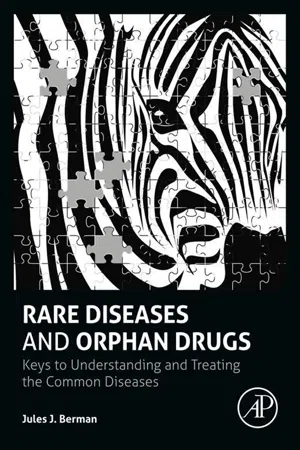 eBook - ePub
Rare Diseases and Orphan Drugs
Keys to Understanding and Treating the Common Diseases
- Jules J. Berman(Author)
- 2014(Publication Date)
- Academic Press(Publisher)
Chapter 6Infectious Diseases and Immune Deficiencies
Abstract
Worldwide, about one-third of human deaths are attributable to infections. In addition, the so-called non-infectious causes of death often have a cryptic infectious etiology. For example, it is estimated that about one-fifth of cancers are caused by infections, and that many heart attacks are caused by vascular infections. Infectious Diseases, like the common diseases, obey Pareto’s principle. Hence, a small number of Infectious Diseases account for the bulk of human morbidity and mortality. Much of what we know about treating and controlling Infectious Diseases has come from studying rare Infectious Diseases, and from successfully delineating the many different organisms that can produce diseases that have a common clinical presentation.Keywords
Infections; Parasites; Host response; Taxonomy; Commensal; Diseases of unknown etiology6.1 The burden of Infectious Diseases in humans
“We are just ‘a volume of diseases bound together’.” —John DonneHow many of the world’s 56.4 million annual deaths can be attributed to Infectious Diseases? According to the World Health Organization, in 1996, about 33% of human deaths were attributable to infections [1] . Of course, the numbers vary depending on how you count causes of death. Infection is often the final blow capping any chronic and debilitating disease.To gain a perspective on the toll engendered by Infectious Diseases, it is useful to consider the damage inflicted by just a few of the organisms that infect humans. Malaria infects up to 500 million people, killing about 2 million people each year [1] . About 2 billion people are infected with Mycobacterium tuberculosis . Most of these infected individuals will not develop active disease, but about 3 million people die of tuberculosis annually [1] . Each year, about 4 million children die from lung infections, and about 3 million children die from infectious diarrheal diseases [1] . The grouped rotaviruses are one of many causes of diarrheal disease (Group III viruses). In 2004, rotaviruses were responsible for about half a million deaths, mostly in developing countries [2] eBook - PDF
Human Biology
A Text Book of Human Anatomy, Physiology and Hygiene
- C. J. Wallis(Author)
- 2014(Publication Date)
- Butterworth-Heinemann(Publisher)
Chapter XXV MICRO-ORGANISMS AND Infectious DiseaseS Excluding natural causes and apart from wars, accidents and starvation due to famine, the chief cause of death is disease. Un-fortunately much of this came with civilisation. There are many diseases, several of them mentioned at the end of the chapters on the various systems of the body, to which no attributable cause may yet have been discovered and which cannot be conveyed to other people by the person suffering from them. But there is a very large number of communicable or Infectious Disease known to be caused by micro-organisms which gain entry into the body and it is this type of disease and the organisms—germs or microbes as they are popularly called—which cause them to which we shall now turn our attention. In the latter part of the 17th century a Dutch draper, Anthony van Leeuwenhoek, who was interested in the making and use of lenses succeeded in magnifying drops of dirty water and scrapings from teeth up to some 270 times with a simple microscope and so discovered the existence of microbes. These were, in fact, bacteria though he described them as tiny animalcules. THE CAUSES OF COMMUNICABLE DISEASES Although it had been known for a very long time that some diseases could be caught it was not until the second half of the 19th century that the germ-origin of these diseases became known. For this the world is indebted to Louis Pasteur who was born in 1822 in the small town of Dole, some 50 km. south-west of Dijon in the French Jura. The house is now a museum where some interesting specimens and records of his experiments can be seen. Pasteur held a Degree in Chemistry and at first his interest lay in crystallography but later turned to the study of fermentation. This arose from an investigation into the souring of wines which were threatening the industry in France. Formerly it had been believed that organisms seen in fermenting and putrefying material had developed from that material i.e.
Index pages curate the most relevant extracts from our library of academic textbooks. They’ve been created using an in-house natural language model (NLM), each adding context and meaning to key research topics.

