Biological Sciences

Prion Disease
Prion diseases, also known as transmissible spongiform encephalopathies, are a group of rare and fatal neurodegenerative disorders. They are caused by abnormal, infectious proteins called prions, which can induce normal proteins in the brain to become misfolded and form toxic aggregates. This leads to progressive damage to the brain, resulting in a range of symptoms including dementia, muscle stiffness, and loss of coordination.
Written by Perlego with AI-assistance
Related key terms
1 of 5
11 Key excerpts on "Prion Disease"
 eBook - PDF
Creating Life from Life
Biotechnology and Science Fiction
- Rosalyn W. Berne(Author)
- 2014(Publication Date)
- Jenny Stanford Publishing(Publisher)
Crea Ɵ ng Life from Life: Biotechnology and Science Fic Ɵ on Edited by Rosalyn W. Berne Copyright © 2015 Pan Stanford Publishing Pte. Ltd. ISBN 978-981-4463-58-4 (Hardcover), 978-981-4463-59-1 (eBook) www.panstanford.com Chapter 4 Prion Diseases Joel A. Pedersen Univeristy of Wisconsin, 1525 Observatory Drive, Madison, WI 53706, USA [email protected] Prion Diseases, or transmissible spongiform encephalopathies (TSEs), are a family of insidious brain-wasting diseases that infect humans and other mammals. Human Prion Diseases include kuru, Creutzfeldt–Jakob disease (CJD), Gerstmann–Sträussler– Scheinker (GSS) disease, and fatal insomnia (FI). Prion Diseases in nonhuman mammals include bovine spongiform encephalopathy (BSE), or “mad cow” disease, in cattle, chronic wasting disease (CWD) in North American members of the deer family, scrapie in sheep and goats, and transmissible mink encephalopathy (TME) in farmed mink. Prion Diseases are characterized by a long incubation period (years to decades in humans) during which the infected individual does not display symptoms. Once clinical symptoms manifest, the disease progresses inexorably to death, often within six months. Prion Disease symptoms in humans include dementia, memory loss, speech impairment, loss of motor control, personality changes, hallucinations, and 58 Prion Diseases seizures. The brains of infected individuals are characterized by the death of nerve cells, leading to a spongy appearance (hence “spongiform” encephalopathies) and accumulation of an abnormally folded form of the prion protein (PrP). Prion Diseases are caused by an enigmatic infectious agent that, unlike all other known pathogens, lacks genetic material (i.e., DNA, RNA). The infectious agent in these diseases is referred to as the prion and is composed primarily, if not solely, of misfolded forms of a normal cell surface protein. eBook - PDF
Neurogenetics
A Guide for Clinicians
- Nicholas Wood(Author)
- 2012(Publication Date)
- Cambridge University Press(Publisher)
Chapter 8 Prion Diseases Simon Mead and John Collinge Introduction and history The Prion Diseases are a closely related group of neurodegenerative conditions that affect both humans and animals. The prototypic disease is scrapie, a naturally occurring disease affecting sheep and goats, which has been recognized in Europe for over 200 years [1] and is present in many countries worldwide. Since the 1980s, a new animal prion dis- ease, bovine spongiform encephalopathy (BSE), has been described in the United Kingdom and is now recognized in most European Union countries, Japan, Canada, and the United States. The human prion dis- eases have traditionally been classified into Creutzfeldt– Jakob disease (CJD), Gerstmann–Sträussler syndrome (GSS) (also known as Gerstmann–Sträussler–Scheinker disease), and kuru. Although these are rare neuro- degenerative disorders, affecting about one to two persons per million worldwide per annum, remark- able attention has recently been focused on these diseases. This is because of the unique biology of the transmissible agent or prion, and also because of the fears that an epidemic of BSE could pose a threat to public health through dietary exposure to infected tissues. The distinctive feature of Prion Diseases is their transmissibility, first demonstrated by the transmis- sion of scrapie by inoculation between sheep (and goats) with prolonged incubation periods [2]. Both the animal and human conditions share common histopathological features: the classical triad of spongiform vacuolation (affecting any part of the cerebral gray matter), neuronal loss, and astrocytic proliferation that may be accompanied by amyloid plaques [3]. In 1959, Hadlow drew attention to simi- larities between kuru and scrapie at the neuropatho- logical, clinical, and epidemiological levels, leading to the suggestion that the human diseases may also be transmissible [4,5]. eBook - PDF
Brain Damage
Bridging Between Basic Research and Clinics
- Alina Gonz and #225;lez-Quevedo(Author)
- 2012(Publication Date)
- IntechOpen(Publisher)
Brief list of well characterized neurodegenerative diseases (not inclusive, and diseases can present in ways in which they have not been listed). Protein conformational disorders are highlighted in bold. PNS = peripheral nervous system. Transmissible Spongiform Encephalopathies 189 The most unique feature of the Prion Diseases is that they present both hereditary and transmissible forms and, as we will present further in this chapter, the identification of proteins as transmissible disease agents represents a breakthrough in the concepts of modern biology. Prion Diseases are generally characterized by the aggregation of prions, also referred to PrP Sc , into large plaques that are associated with the rapid loss of neurons in specific areas of the brain and corresponds to the onset of neurological and behavioral symptoms. The PrP Sc protein is the abnormal isoform of the cellular prion protein (PrP C ) that is normally present in all tissues of the body and whose expression is particularly high in neurons. A change in the three-dimensional structure of PrP C renders it into the highly insoluble PrP Sc , which is resistant to degradation and proteinase digestion. The presence of PrP Sc can alter the conformation of PrP C in the cell, thus making it a productive infection. The unusual properties of prion propagation have presented challenges to researchers seeking to understand the pathogenic mechanisms of these diseases and have slowed the development of effective diagnostic tools and therapeutic strategies (Soto, 2003;Shastry, 2003;Aguzzi and O'Connor, 2010). This chapter will focus on human prion disorders, their history, etiology, symptoms, and the therapeutic strategies tried so far. eBook - PDF
- Roger Kurlan(Author)
- 2006(Publication Date)
- CRC Press(Publisher)
3 Dementia in Prion Disorders Simon Hawke Brain and Mind Research Institute, University of Sydney, Sydney, New South Wales, Australia INTRODUCTION Prion Diseases or transmissible spongiform encephalopathies are the most feared and fulminant of the dementias. Often rapidly fatal and without effective therapy, the disorders are also transmissible by exposure to infectious tissues or body fluids, raising major public health concerns. The Prion Diseases comprise sporadic, inherited, and iatrogenic subtypes (for reviews see Refs. 1–4) and include Creutzfeldt-Jakob disease (CJD), the most common of the human Prion Diseases, and animal diseases, such as scrapie of sheep and goats, and bovine spongiform encephalopathy (BSE or mad cow disease) (reviewed in 5). Scrapie is endemic in many countries and has been recognized for over 200 years (reviewed in 6). Other prion disorders, such as BSE, variant CJD, and the so-called exotic ungulate encephalopathies have only recently emerged as disease entities. Other rarer human Prion Diseases include Kuru, which is confined to the Fore tribe in the highlands of New Guinea, Gerstmann-Straussler-Scheinker (GSS) disease, and fatal familial (FFI) and sporadic fatal insomnia (FI) (Table 1). Prion Diseases have characteristic neuropathology, with spongiform degeneration of neurones and a marked astrocytic reaction in the brains of affected humans and animals, the extent of which varies between the disease sub-types. A hallmark of Prion Diseases is the deposition of an abnormally folded isoform (designated PrP Sc or PrP res ) of a cell-surface sialoglycoprotein, cellular prion protein or PrP C . PrP C is expressed to high levels in neurones and glia and also outside the central nervous system (CNS) on diverse cell types. It is 57 largely alpha helical and detergent soluble without a well characterized function, and refolds without post-translational modification into the pathogenic isoform, PrP Sc . eBook - PDF
Neurogenetics
Scientific and Clinical Advances
- David R. Lynch(Author)
- 2005(Publication Date)
- CRC Press(Publisher)
28 Prion Diseases William S. Baek and James A. Mastrianni Department of Neurology, University of Chicago Hospitals, Chicago, Illinois, U.S.A. INTRODUCTION Also known as transmissible spongiform encephalopathies (TSEs), and previously considered to result from a ‘‘slow virus,’’ this unique family of transmissible neurodegenerative disorders results from the accumulation within the brain of misfolded prion protein (PrP). Prion Disease (PrD) is typified by its most common phenotype, Creutzfeldt–Jakob disease (CJD), which presents as a rapidly progressive dementia associated with ataxia and myoclonus; however, at least four other phenotypes are recognized, namely Gerstmann–Stra ¨ussler–Scheinker disease (GSS), fatal insomnia (FI), new variant (v) CJD, and kuru. While the majority of cases occur on a sporadic basis, approximately 15% are associated with an autosomal dominant mutation within the PrP gene ( PRNP ), and a susceptibility poly-morphism at codon 129 within PRNP appears to play a role in both. This chapter will review PrD, with special attention to the genetic aspects of disease. HISTORICAL BACKGROUND Human PrD was first described by Creutzfeldt and then Jakob in 1929 (1–3), as a progressive dementia with associated gait abnormalities and with histo-pathology consisting of extensive vacuolation and astrocytic gliosis of the brain. Later, in the mid-1950s, Gajdusek described kuru, a disease endemic to the natives living in the highlands of New Guinea. Kuru, translated as 729 ‘‘abnormal gait,’’ is characterized as a progressive gait ataxia in conjunction with behavioral abnormalities, myoclonus, and a progressive course to death. The pathologic features of kuru and CJD overlap with scrapie, a natural disease of sheep, also known to be transmissible. Each produced extensive vacuolation of the neuropil, also referred to as ‘‘spongiform change’’ (4). eBook - PDF
- Dongyou Liu(Author)
- 2016(Publication Date)
- CRC Press(Publisher)
1095 97.1 INTRODUCTION 97.1.1 C LASSIFICATION , M ORPHOLOGY , AND B IOLOGY Prion Diseases or transmissible spongiform encephalopa-thies (TSEs) are fatal neurological disorders that include Creutzfeldt-Jakob disease (CJD) in humans, scrapie in sheep and goats, bovine spongiform encephalopathy (BSE) in cat-tle, and chronic wasting disease (CWD) in cervids. A key event in Prion Diseases is the conversion of the cellular, host-encoded prion protein (PrP C ) to its abnormal isoform (PrP Sc ) predominantly in the central nervous system of the infected host [1]. There is increasing evidence that the major—and possibly only—component of the infectious agent is PrP Sc or a prion protein (PrP) folding intermediate [2]. PrP C is a cell surface-anchored glycoprotein whose function is not well characterized [3]. PrP Sc is derived from PrP C in a posttransla-tional process that appears to involve PrP C –PrP Sc molecular interactions [4]. The crucial role of PrP C expression in prion infection and PrP Sc formation has been demonstrated in trans-genic mice with an ablated PrP murine gene [5]. Transgenic animals have since been used extensively to unravel the influ-ence of specific PrP amino acid residues or domains on prion susceptibility [6–11]. Kuru and the transmissible agents in dementias have been classified in a group of virus-induced slow infections that we have described as subacute spongiform virus encephal-opathies because of the strikingly similar histopathological lesions they induce (Table 97.1) Slow virus diseases that we have been variously desig-nated as subacute spongiform encephalopathies, transmissible amyloidoses of the brain, or transmissible cerebral amyloi-doses (TCA) will be discussed individually below.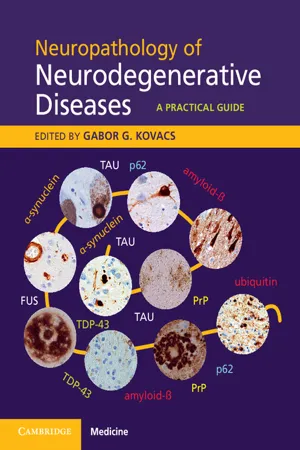 eBook - PDF
Neuropathology of Neurodegenerative Diseases
A Practical Guide
- Gabor G. Kovacs(Author)
- 0(Publication Date)
- Cambridge University Press(Publisher)
This has led to a fuller understanding of the mechanisms of many of these diseases, but has not so far been accompanied by major improvements in diag- nostic tests or treatments for these disorders. How- ever, it is possible that some of the novel diagnostic approaches developed for Prion Diseases, such as the in vitro amplification of misfolded proteins, may in the future be modified for use in other neurodegenerative diseases such as Alzheimer’s disease (amyloid- and tau) and Parkinson’s disease (-synuclein). The prion hypothesis is in the process of being further expanded beyond the transmissible spongi- form encephalopathies, to account for aspects of the molecular pathology associated with misfolded pro- teins such as amyloid-, tau, -synuclein, copper/zinc superoxide dismutase (SOD-1) and TAR DNA- binding protein 43 (TDP-43) [41]. Hence knowledge acquired when investigating Prion Diseases (once regarded as biological curiosities) is now being used to explore the fundamental mechanisms involved in some of the most prevalent neurodegenerative diseases. References 1. S. B. Prusiner. Novel proteinaceous infectious particles cause scrapie. Science 1982; 216: 136–44. 2. J. W. Ironside, B. Ghetti, M. W. Head, P. Piccardo, R. G. Will. Prion Diseases. In: S. Love, D. N. Louis, D. W. Ellison (eds). Greenfield’s Neuropathology, 8th edn. London, Hodder Arnold, 2008; 1197–273. 3. M. W. Head, J. W. Ironside. Creutzfeldt–Jakob disease: prion protein type, disease phenotype and agent strain. Neuropathol Appl Neurobiol 2012; 83: 296– 310. 4. J. E. Bell, S. M. Gentleman, J. W. Ironside, et al. Prion protein immunocytochemistry-UK five centre consensus report. Neuropathol Appl Neurobiol 1997; 23: 26–35. 5. M. W. Head, H. M. Yull, D. L. Ritchie, et al. Variably protease-sensitive prionopathy in the UK: a retrospective review 1991–2008. Brain 2013; 136: 1102–15. 6. M. W. Head MW, D. Ritchie, N.
- M.P. Mattson(Author)
- 2000(Publication Date)
- Elsevier Science(Publisher)
. . . . . . . . . . . . . . . . . . . . . . . 170 New Variant of Creutzfeldt-Jakob Disease . . . . . . . . . . . . . . . . . . . . . . 171 Sporadic Creutzfeldt-JakobDisease . . . . . . . . . . . . . . . . . . . . . . . . . 172 Molecular Classification of Sporadic Creutzfeldt-Jakob Disease . . . . . . . . . . 172 Current View of the Etiology of Sporadic Creutzfeldt-Jakob Disease . . . . . . . . 173 Advances in Cell Aging and Gerontology Volume 3. pages 135-187 Copyright Q 1999 by JAI Press Inc . All rights of reproduction in any form reserved . ISBN: 0-7623-0405-7 135 136 BERNARDINO GHETTI and PlERLUlGl CAMBETTI lNTRODUCTlON Prion Diseases are fatal neurodegenerative disorders that affect humans and animals. They represent a heterogeneous group that is unique among neurological diseases as it includes genetic, transmitted, and sporadic forms, and displays a wide spectrum of clinical phenotypes and histopathological patterns. It is now evident that the prion protein (PrP) is central to the pathogenesis of these disorders whether inherited, infectious, or idiopathic (referred to as sporadic in the literature). In humans, Prion Diseases include Creutzfeldt-Jakob disease (CJD), Gerstmann-Straussler- Scheinker syndrome (GSS), kuru, fatal familial insomnia (FFI), and prion protein cerebral amyloid angiopathy (PrP-CAA). In animals, the most notable forms are scrapie in sheep and bovine spongiform encephalopathy in cattle. The sporadic, the infectious, and many of the genetically determined forms of human Prion Diseases as well as the animal diseases can be transmitted across and within animal species. Pathogenetically they all appear to share a mechanism previously unrecognized, which differs from the established mechanisms of infectivity. The central principle involves changes in conformation of the normal PrP that generate a pathogenic PrP conformer, which is capable of converting other normal PrP molecules into the abnormal form. eBook - PDF
- John Morris, James E. Galvin, David M. Holtzman, John Morris, James E. Galvin, David M. Holtzman(Authors)
- 2006(Publication Date)
- CRC Press(Publisher)
15 Prion Diseases and Dementia James A. Mastrianni Center for Comprehensive Care and Research on Memory Disorder and Department of Neurology, University of Chicago, Chicago, Illinois, U.S.A. INTRODUCTION The Prion Diseases (PrD) are a group of unusual neurodegenerative disorders that affect both humans and animals, are associated with a variety of phenotypes, and are transmissible. The earliest description of PrD was that of Creutzfeldt and then Jakob in the early 1900s (1,2) as a progressive dementia associated with gait abnormalities and extensive vacuolation and astrocytic gliosis of the brain. In the mid-1950s, while studying primitive cultures in the Highlands of New Guinea, Carleton Gajdusek recognized and described a disease the Fore people, living in this region, called “kuru.” Sufferers of kuru developed a progressive gait ataxia, unusual behavior, and a relatively rapid progression to death. Gajdusek’s studies suggested that this disease was the result of a transmissible agent carried within the brain of the affected individual that was horizontally transmitted during rituals that involved cannibalism. Women and children were most affected by the disease, likely due to their greater contact with infectious tissue during both the preparation of the feast and the ritualistic ceremony. Pathologic examination of the kuru brain revealed the same pattern of vacuolation (also called spongiform change) that was observed in the disease described by Creutzfeldt and Jakob. Most importantly, however, this same pathology was astutely recognized by the veterinarian William Hadlow as the same pathology present in scrapie, a known transmissible disease of sheep associated with similar features of gait dysfunction, behavioral changes, and a rapid progression to death. It was natural to speculate that Creutzfeldt-Jakob disease (CJD) and kuru were similarly transmissible, which was confirmed in the mid-1960s (3,4). eBook - PDF
Prion
An Overview
- Yusuf Tutar(Author)
- 2017(Publication Date)
- IntechOpen(Publisher)
Importantly, strategies that work for treating Prion Diseases may also be effective when applied to other neurodegenerative diseases that involve protein misfolding, such as Alzheimer's dis‐ ease and Huntington's chorea. There is increasing evidence of underlying similarities in the pathogenesis of protein misfolding neurodegenerative diseases. Hence, similar cure strate‐ gies may be feasible. 8. Conclusion In conclusion, an ever‐expanding understanding of basic prion pathogenesis, combined with the rapidly ever‐expanding development of new biotechnologies, combined with existing strategies to treat Prion Diseases, will likely to lead to a feasible and effective treatment for Prion Diseases in the near future. Already, innovations such as genome editing, inhibitory RNAs, and improved gene therapy vectors are being applied to and advancing treatment strategies to create improved treatments. In addition, strategies that show efficacy that target separate components of disease pathogenesis can be combined. Thus, in the coming years, the outlook is very promising for the development of an effective treatment and potential cure for individuals with Prion Diseases. Furthermore, strategies used to treat Prion Diseases might be broadly applicable and effective when applied to other protein misfolding diseases. The increasing awareness of the role of protein misfolding in many neurodegenerative pro‐ cesses makes the development of an effective treatment strategy for Prion Diseases a high priority. Prion - An Overview 36 Abbreviations and acronyms Author details Pamela J. Skinner 1 * and Davis M. Seelig 2 *Address all correspondence to: [email protected] 1 University of Minnesota, Department of Veterinary and Biomedical Sciences , Saint Paul, MN, USA 2 University of Minnesota, Department of Veterinary Clinical Sciences, Saint Paul, MN, USA References [1] Valleron AJ, Boelle PY, Will R, Cesbron JY. eBook - PDF
- Dana M. Santos(Author)
- 2011(Publication Date)
- Apple Academic Press(Publisher)
Chapter 5 Prion Disease Pathogenesis Ajay Singh, Maradumane L. Mohan, Alfred Orina Isaac, Xiu Luo, Jiri Petrak, Daniel Vyoral, and Neena Singh INTRODUCTION Converging evidence leaves little doubt that a change in the conformation of prion protein (PrP C ) from a mainly α -helical to a β -sheet rich PrP-scrapie (PrP Sc ) form is the main event responsible for Prion Disease associated neurotoxicity. However, neither the mechanism of toxicity by PrP Sc , nor the normal function of PrP C is entirely clear. Recent reports suggest that imbalance of iron homeostasis is a common feature of prion infected cells and mouse models, implicating redox-iron in Prion Disease patho-genesis. In this report, we provide evidence that PrP C mediates cellular iron uptake and transport, and mutant PrP forms alter cellular iron levels differentially. Using human neuroblastoma cells as models, we demonstrate that over-expression of PrP C increases intracellular iron relative to non-transfected controls as indicated by an increase in total cellular iron, the cellular labile iron pool (LIP), and iron content of ferritin. As a result, the levels of iron uptake proteins transferrin (Tf) and transferrin receptor (TfR) are decreased, and expression of iron storage protein ferritin is increased. The positive effect of PrP C on ferritin iron content is enhanced by stimulating PrP C endo-cytosis, and reversed by cross-linking PrP C on the plasma membrane. Expression of mutant PrP forms lacking the octapeptide-repeats, the membrane anchor, or carrying the pathogenic mutation PrP 102L decreases ferritin iron content significantly relative to PrP C expressing cells, but the effect on cellular LIP and levels of Tf, TfR, and ferritin is complex, varying with the mutation.
Index pages curate the most relevant extracts from our library of academic textbooks. They’ve been created using an in-house natural language model (NLM), each adding context and meaning to key research topics.

