Chemistry

Particulate Model
The particulate model is a conceptual framework used to explain the behavior of matter at the particle level. It describes how particles are arranged, move, and interact in different states of matter. This model helps to understand phenomena such as diffusion, phase changes, and the behavior of gases, liquids, and solids.
Written by Perlego with AI-assistance
Related key terms
1 of 5

5 Key excerpts on "Particulate Model"
 eBook - PDF
- SachchidaNand Shukla(Author)
- 2023(Publication Date)
- Arcler Press(Publisher)
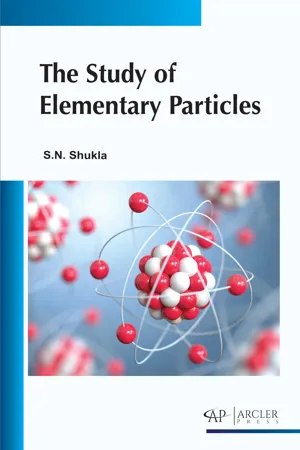
In this state, they behave like a single super atom. This enables one to conduct fundamental checks of their quantum mechanical behavior. 1.4. PARTICLES According to physical sciences, particles are defined as small localized objects that have been ascribed various chemical or physical properties. Some of these properties include mass, density, or volume. Particles may vary in quantity or size. There are subatomic particles which include the electron, microscopic particles such as molecules and atoms, macroscopic particles such as powders and granular materials (Amsler et al., 2008). Particles have been used in several experiments to create scientific models of large objects. Particles used in creating these models are chosen depending of their density. The term particle is generally used in various though its definition is refined according to the scientific field. The term particulate is used to refer to any object made up of particles (Figure 1.8). Basic Constituents of Matter 13 Figure 1.8. Particles are formed through combination of subatomic particles. Source: https://www.livescience.com/65427-fundamental-elementary-particles. html. Fundamental particle or elementary particle is a term used in particle physics to refer to a subatomic particle that is not composed of other particles. Some of the particles assumed to be elementary include antimatter particles, fundamental bosons, matter particles and fundament fermions. Examples of fundamental fermions include leptons, antileptons, quarks, and antiquarks. Higgs boson and gauge bosons are fundamental bosons and are force particles involved in the mediation of interactions between fermions. A composite particle is on that has two or more elementary particles. Naturally, matter contains atoms. The atoms were once presumed to be elementary particles. The Greek term atomos was used to mean that it is unable to cut. eBook - ePub
Science Learning and Instruction
Taking Advantage of Technology to Promote Knowledge Integration
- Marcia C. Linn, Bat-Sheva Eylon(Authors)
- 2011(Publication Date)
- Routledge(Publisher)
4
PARTICULATE STRUCTURE OF MATTER
A Case Study
Introduction
In this chapter we discuss a case study of curriculum reform that revealed some promising patterns for high school physical science. The case study involves helping students understand the structure of matter and was conducted by Eylon and her colleagues in Israel (Ben-Zvi, Eylon, & Silberstein, 1986a, 1988; Linn, Songer, & Eylon, 1996; Margel, Eylon, & Scherz, 2008).Structure of Matter
Materials has always been a central topic in junior high school science studies and usually includes the following topics: the particulate nature of matter; states of matter; changes in the state of matter; atoms and molecules; elements, compounds, and mixtures; the structure of the atom; and the relationship between the structure and properties of materials. Many of the traditional curriculum approaches (Dory et al., 1989; Zilag et al., 1980) are based on declarative definitions of the scientific concepts and on confirmatory experiments. In particular, in many textbooks the ideas about the particulate nature of matter are presented as postulates: that matter consists of particles that are too small to be seen; that particles are in intrinsic motion; that there is empty space between the particles. The structure of matter is one of the most fundamental topics in science. A meaningful understanding of this topic is essential for developing a solid basis for further scientific studies. It is revisited in high school chemistry courses but not all students take these courses so middle school physical science is often the first and last time that students encounter this topic. No longer available |Learn more
- Anthony J. Hickey, Timothy M. Crowder, Margaret D. Louey, Norman Orr(Authors)
- 2003(Publication Date)
- CRC Press(Publisher)
Particulate Systems: Manufacture and Characterization 9 2 Particulate Systems: Manufacture and Characterization 9 As an introduction to the methods of particle production, a brief review of the fundamentals of the states of matter and crystal sys-tems may be helpful. States of Matter The three states of matter—gas, liquid, and solid—each represent a different degree of molecular mobility. Gibbs first described the na-ture of states of matter according to the principles of thermodynam-ics (Rukeyser 1992; Gibbs 1993). Despite developments in the fields of quantum physics and chemistry, Gibbs’ observations remain a valid description of the nature of matter. Gas molecules are in constant vigorous, random motion accord-ing to the classical ideal gas theory of Bernoulli. Consequently, they take the shape of the container, are readily compressed, and exhibit low viscosity. 10 A Guide to Pharmaceutical Particulate Science Liquids exhibit restricted random motion; the volume occupied is limited by their condensed nature resulting from intermolecular forces. Thus, liquids take the shape of a portion of the container. The liquid properties of water are within everyone’s daily experi-ence. However, to illustrate the extreme, other commonly experi-enced substances such as wax, pitch, and glass are highly viscous liquids, and not, as they appear to be, solids. The last state of matter is highly constrained and is the result of a variety of forces. Solids are of great significance in the way we experience the world and are a dominant theme in the preparation of pharmaceuticals. In broad terms, solids may be found in amorphous or crystal-line states (Mullin 1993; Glusker, Lewis, and Rossi 1994). Crystal-linity involves the regular arrangement of molecules or atoms into a fixed, rigid, three-dimensional pattern or lattice. Many amorphous materials exhibit some degree of crystallinity.
- Boris M. Smirnov(Author)
- 2012(Publication Date)
- De Gruyter(Publisher)
Part I Properties of small particles and their behavior in gases Chapter 2 Nanoclusters and microparticles in gases 2.1 Gas with small particles as physical object The object of our analysis is gases with located in them small isolated particles in the liquid or solid state. From the physical standpoint this system is metastable since joining of individual particles into a compact system is thermodynamically favorable. This means that this system is non-equilibrium, and therefore the pro-cesses in gases involving small particles are of importance, an these processes es-tablish a current state of this system and are responsible for this evolution. More-over, this non-equilibrium system is created as a result of external actions, and hence processes involving small particles in gases are responsible not only for de-velopment of this system, but also for its formation, and these processes will be considered. Systems consisting of gases with small particles are of practical interest. The best known example of such systems is the Earth atmosphere in which small par-ticles are injected as a result of evaporation of water and other components (sea salt etc.), eruption of volcanoes, forest combustion, sand storm and so on. On the other hand, these systems result from the man production activity. It is necessary in each certain case to understand the character of processes and the methods to act upon them. The object of this consideration are uniform isolate particles of nanometer and micrometer sizes, and hence we set aside some related objects and processes, as biological clusters [1], and also colloid solutions [2, 3, 4] which contain a disperse phase with particle sizes of 5–200 nm, since the specific properties of these and other related systems can be of principle. In this context, it is of importance that the basic concepts and terms for gaseous systems with small particles were ob-tained firstly in studies of colloid solutions. eBook - ePub
Developments in Surface Contamination and Cleaning, Vol. 1
Fundamentals and Applied Aspects
- Rajiv Kohli, Kashmiri L. Mittal(Authors)
- 2015(Publication Date)
- William Andrew(Publisher)
A particle in the size range below about 5 nm comprises a relatively small number of molecules. So it is no longer appropriate to think of the particle as an entity which exhibits the properties of the bulk material from which it is derived. Now we cannot speak of it in terms of a volume or a surface which derives from the assumption that the structure of the particle is a continuum. As has been stated more than once, the nature of the particle, unlike for large particles, cannot be regarded as that of either the liquid or the solid state. The nanoparticle is therefore a molecular cluster which must be regarded as an entirely distinct phase of matter, the nanophase. In this phase, the character of the particle is governed by the properties of the individual atoms and molecules: their configuration, their individual, combined, and mutually influenced electronic states. Therefore, considerations of particle behavior and the way the particle interacts with other entities must be based on both quantum mechanics and classical kinetic theory.The dynamic properties of the nanophase are extremely important. Nanoparticles are formed in very large numbers during nucleation. But coagulation of such particles occurs very rapidly even at very low mass concentrations. So the lifetime of such particles under normal conditions is very short. This in turn imposes constraints on the kinetics of how such particles interact with other entities—physically, chemically, or biologically.Currently, only simple interactions are well understood. But we are now beginning to anticipate significant scientific advances based on the very special nature of nanoparticles. It is expected that during the years ahead, kinetic theory, quantum mechanics, and aerosol dynamics, together with applications arising from advancing knowledge of these fundamental disciplines, will enable us to predict the interactions in much more complicated systems. Such basic understanding of the different molecular configurations, their orientation, their Brownian rotation, and their chemical interactions will change our perception of atmospheric and gas chemistry. This will also force us to think about new approaches in the development of chemical reactors toward the production of new and more advanced materials.One particularly important aspect of small particles is the way in which they might interact with cells in biological systems. In relation to air pollution, for example, there is increasing concern about the role of small atmospheric particles in the observed increases in disease and mortality in the human populations (e.g. Seaton et al.20 ). In this regard, it seems relevant that Donaldson et al.6 have demonstrated in vitro
Index pages curate the most relevant extracts from our library of academic textbooks. They’ve been created using an in-house natural language model (NLM), each adding context and meaning to key research topics.

