Geography

One Belt One Road
"One Belt One Road" is a Chinese initiative aimed at enhancing connectivity and cooperation among countries in Asia, Africa, and Europe. It consists of the Silk Road Economic Belt and the 21st Century Maritime Silk Road, focusing on infrastructure development, trade, and investment. The initiative seeks to promote economic integration and cultural exchange along the ancient trade routes.
Written by Perlego with AI-assistance
Related key terms
1 of 5

10 Key excerpts on "One Belt One Road"
- Khee Giap Tan, Trieu Duong Luu Nguyen;Hui Yin Chuah(Authors)
- 2018(Publication Date)
- WSPC(Publisher)
Chapter 5One Belt One Road Initiative: Global and Geo-economic Perspectives5.1Introductory NotesThe origin of the One Belt One Road (OBOR) initiative can be traced back to the speech by President Xi Jinping when the idea of building an economic belt along the ancient Silk Route was proposed during his state visit to Kazakhstan in September 2013. The idea was reiterated a month later when President Xi visited Indonesia and put forward another initiative of 21st Century Maritime Silk Road.1 The proposal which was officially termed OBOR or the Belt and Road Initiative (BRI) took off rapidly with concrete steps being taken subsequently. The commitment of the Chinese government in promoting the initiative is also reflected in the enshrinement of the initiative in the party’s constitution during the 19th National Congress of the Chinese Communist Party.2Inspired by the ancient Silk Route which connected the East and the West and allowed the exchange of goods, culture and knowledge, OBOR will be covering the continents of Africa, Asia and Europe, which account for more than 60 percent of world population and 30 percent of world GDP.3 It took almost two years since President Xi’s 2013 speech for an action plan detailing the structure and mechanism of OBOR to be announced at the Boao Forum in March 2015. The multilateral cooperation which laid out five cooperation priorities, namely (i) Policy coordination; (ii) Facilities connectivity; (iii) Unimpeded trade; (iv) Financial integration; and (v) People-to-people bonds,4 aim to go beyond building economic synergy and incorporates the importance of sharing mutual social, political and cultural interests. These are to be achieved through connectivity enhancement.The main feature of OBOR which envisions a common prosperity future augmented by an efficient and integrated network of land, sea and air connectivity has distinguished the initiative from other forms of multilateral cooperation. While some sceptics view this as China’s move to exert its influence on the international scene, the formulation of OBOR is well received as illustrated in the establishment of Asian Infrastructure Investment Bank (AIIB), an initiative in line with OBOR which has received endorsement from 57 founding members.5 Indeed, OBOR has come in a timely manner amid great infrastructure investment needs in Asia. For instance, the Asian Development Bank Institute (ADBI) has estimated that the overall infrastructure financing need for Asia from 2010 to 2020 amount to approximately 8 trillion US dollars, or an average of 730 million US dollars annually.6 No longer available |Learn more
Chinas One Belt One Road
Initiative, Challenges and Prospects
- B K Sharma, Dr. Nivedita Das Kundu, B K Sharma, Nivedita Das Kundu(Authors)
- 2016(Publication Date)
- VIJ Books (India) Pty Ltd(Publisher)
Section IIOne Belt One Road: India’s Perspective3Continental Aspect of the ‘One Belt One Road: India's PerspectiveNivedita Das KunduThe ‘One Belt One Road’, (OBOR) is an omnibus word for a series of Transport Corridor initiatives made by China primarily, but not limited to China, but to the Eurasian, South Asian and South East Asian region too as well as, towards the Indian Ocean region, connecting East with the West trying to revive the ancient silk road connectivity. Like other Chinese projects in recent times, this is also a gigantic proposal initiated by China. The “One Belt One Road,” (OBOR) initiative has enabled China to become the epicentre of regional as well as global economics and geopolitics. This initiative has two major elements the initiatives on ‘Land’ and initiatives at ‘Sea’ called the ‘Silk Road Economic Belt’ and the ‘Maritime Silk Road’, respectively. These transport connectivity and transport corridors aim to connect the nations increasing communication and network system. In today’s international environment, commonality of the key national interest and good economic relations creates possibility for cooperation. The debate on China’s ‘One Belt One Road’ in China is mainly to improve the linkages and increase the regional cooperation and develop trade and economic relations. Nonetheless, with the OBOR initiatives China is also seen using commerce as a tool to expand its geopolitical and geostrategic influence. This chapter tries to highlight various aspects on “One Belt One Road “giving India’s perspective. The chapter would try to bring forth the insights, which helps in understanding the debates on new geo-political reality and trade and economic development through possible regional cooperation.OBOR may be conceptualized as interplay of at least two competing discourses i.e. discourse of initiating new regionalism and discourse of increasing connectivity and economic cooperation reflecting different discursive practices. The argument given is that “One Belt One Road”, has got the capacity to become modern transportation and communication road, increasing trade as well as people to people contact. The idea is to bring forth the insights, which helps in understanding the debate on potential regional cooperation. The questions that were essentially addressed while working on this chapter is on the present discourse on OBOR. Whether OBOR is only Economic or Strategic initiative? What are the geostrategic implication and challenges that need to be addressed? Can security concerns dampen the prospect for the OBOR projects? What factors are working in favour & what are the constrains while India-China working jointly on OBOR project? eBook - ePub
China's Power in Africa
A New Global Order
- Olayiwola Abegunrin, Charity Manyeruke(Authors)
- 2019(Publication Date)
- Palgrave Macmillan(Publisher)
Ethiopia are also of strategic importance to the success of China’s latest economic undertaking.OBOR Initiative in Perspective
The One Belt One Road (OBOR) initiative championed by China’s President Xi Jinping is an extensive long-term infrastructure initiative, which has been seen by many as the rebirth of the original Silk Road trading routes. The initiative comprises two core components. The first component is the Economic land belt, which links countries by road along the ancient Silk Road through Central Asia, the Middle East , West Africa , and Europe. The second component of the belt is the Maritime Road, which links countries by sea along the Eastern coast of Africa pushing up through the Suez Canal into the Mediterranean Sea. The World Bank states that China has entered into cooperation agreements with 71 countries and international organizations, which, China included, make up sixty-five percent of the world’s population and about thirty-four percent of the world’s GDP .10 The total population of all countries connected through this initiative is around 4.4 billion, covering sixty-five percent of the world’s inhabitants and accounts for nearly one third of worldwide GDP and about twenty-nine percent of the global economy ,11 The OBOR initiative could result in investment worth about $6 trillion being invested in the coming years and having the effect of reshaping global trade. The introduction of the OBOR initiative in 2013 has further put Africa on China’s radar and has resulted in a special relationship between the two.12 Ehizuelen and Abdi note that the OBOR initiative represents the linchpin of China’s foreign policy as envisioned by its leadership.13 The initiative aims to set a new path for nations of Asia, Oceania, Europe, and Africa to promote improved growth and human development through infrastructural linkages, improved trade, and investment
- Andrew W.H. Ip, Lianne K.W. Lam, Andrew W.H. Ip, Lianne K.W. Lam(Authors)
- 2023(Publication Date)
- CRC Press(Publisher)
10Geo-Economic and Geo-Political Aspects of One Belt One Road (OBOR)Muhammad Fahim Khan University of Peshawar, Pakistan Aamer Raza Department of Political Science, University of Peshawar, PakistanDOI: 10.1201/9781003198147-10Contents
10.1 China’s Belt and Road Initiative (BRI)/OBOR 10.1.1 Physical Infrastructure 10.2 Corridors in Belt and Road Initiative/OBOR 10.3 Container Port Traffic of European Union and South Asia 10.3.1 Silk Road Economic Belt (SREB) 10.3.2 Maritime Silk Road (MSR) 10.3.3 The New Eurasia Land Bridge (NELB) 10.3.4 The China–Mongolia–Russia Economic Corridor (CMREC) 10.3.5 China–Central Asia–West Asia Economic Corridor (CCWAEC) 10.3.6 China–Indo-China Peninsular Economic Corridor (CICPEC) 10.3.7 China–Pakistan Economic Corridor (CPEC) 10.3.8 Bangladesh–China–India–Myanmar Economic Corridor (BCIMEC) 10.4 Multiple Perceptions on Developing BRI 10.5 CPEC: Forging a Common Destiny 10.5.1 Special Economic Zones (SEZs) 10.5.2 Roadway Projects 10.5.3 Eastern Alignment 10.5.4 The Central Route 10.6 Karakorum Highway 10.7 Railway Projects 10.7.1 Main Line-1 10.7.2 Main Line-2 10.7.3 Main Line-3 10.8 Orange Line Train (OLT) 10.9 Khunjerab Railway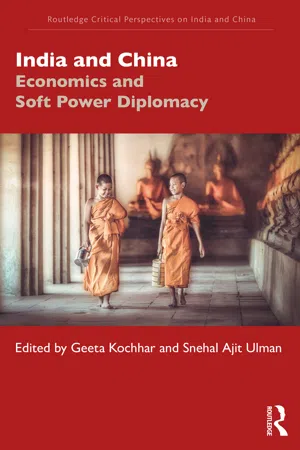 eBook - ePub
India and China
Economics and Soft Power Diplomacy
- Geeta Kochhar, Snehal Ajit Ulman(Authors)
- 2020(Publication Date)
- Routledge India(Publisher)
7 THE SAGARMALA PROJECT AND THE One Belt One Road PROJECT The convergence of India-China national interestsProsper MalangmeiBackground
In 2013, Xi Jinping, the president of China, on his visit to Central Asia and Southeast Asia announced his intention to revive the old Silk Road and start the 21st-century Maritime Silk Route. Subsequently, these projects came to be known as China’s One Belt One Road (OBOR) Initiative or the Belt and Road Initiative (BRI). In March 2015, the National Development and Reform Commission (NDRC) of China officially published a document entitled “Vision and Actions on Jointly Building Silk Road Economic Belt and 21st-Century Maritime Silk Road”. This report gives a bird’s eye view of China’s OBOR Project. The OBOR broadly consists of six routes: China-Mongolia-Russia, Eurasian Land Bridge, China-Central Asia-West Asia, China-Indochina Peninsula, China-Pakistan Economic Corridor (CPEC) and the Bangladesh-China-India-Myanmar Economic Corridor (BCIM-EC). The 21st-century Maritime Silk Road envisions China connecting with Asia, Europe and Africa from China’s coast encompassing the East Asia economic zone from the South China Sea to Europe and in another through the Indian Ocean and South Pacific. The document also categorically mentioned Five Principles of Peaceful Coexistence: mutual respect for each other’s sovereignty and territorial integrity, mutual non-aggression, mutual non-interference in each other’s internal affairs, equality and mutual benefit, and peaceful coexistence (National Development and Reform Commission, 2015).India, on the other hand, operationalised the Sagarmala Project in 2015 that would enable port-led development. The idea was conceived back in 2003 by the then Prime Minister Atal Bihari Vajpayee, but the successive government was lukewarm about the project. The aim of Sagarmala Project is to incorporate port-induced direct and indirect development and to provide infrastructure to transport goods to and from ports quickly, efficiently and cost effectively. Hence, the project envisages to develop major and non-major ports of India. The project focuses on the three pillars of development, namely (1) supporting and enabling port-led development through appropriate policy and institutional interventions and providing for an institutional framework for ensuring inter-agency and ministries/departments/states’ collaboration for integrated development, (2) enhancement, including modernisation and setting up of new ports, and (3) efficient evacuation to and from hinterland (Press Information Bureau, 2015).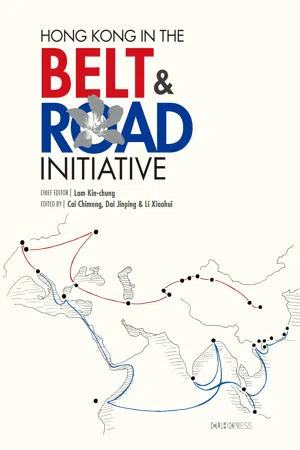 eBook - PDF
- Lam Kin-chung, Cai Chimeng, Dai Jinping and Li Xiaohui(Authors)
- 2020(Publication Date)
- The Chinese University of Hong Kong(Publisher)
Chapter 2 Framework and Inherent Characteristics of the Belt and Road Initiative The Belt and Road is a major strategic deployment that China has made in line with changes in international and domestic situations, in order to foster a new environment in all-round opening up and to promote a long-term and healthy economic development. It is a cross-regional mode of cooperation to facilitate policy coordination, unimpeded trade, facilities connectivity, financial integration, and people-to-people bonds among Asia, Africa, and Europe. The Belt and Road Initiative is intended to promote the connectivity between China and countries along the routes, to align and coordinate the development strategies of different countries, to tap market potential in the region, to promote investment and consumption, to create demands and job opportunities, to enhance cultural exchanges, as well as to realize win-win results and collaborative development. Internationally, the Initiative is intended to expand cooperation with Asian, African, and European markets and to jointly create an open, inclusive, and balanced regional economic cooperation architecture that benefits all. Domestically, it is intended to optimize China’s pattern of regional opening up and to deepen a new round of opening up in coastal, inland, and border areas. The Belt and Road is a strategy with far-reaching impact showcasing China’s active exploration of new patterns of international and regional economic cooperation and global governance. The Belt and Road is an abbreviation of the Silk Road Economic Belt and the 21st Century Maritime Silk Road initiatives. The Belt and Road cooperation initiative was put forward by Chinese President Xi Jinping in September and October 2013. The “Vision and Proposed Actions Outlined on Jointly Building the Silk Road Economic Belt and the 21st Century Maritime Silk Road” (the “Vision and Actions”) was issued in March 2015. 1 The Belt and Road Initiative has evolved from a Overview
- Christopher Findlay, Somkiat Tangkitvanich, Christopher Findlay, Somkiat Tangkitvanich(Authors)
- 2021(Publication Date)
- ANU Press(Publisher)
41 2 China’s Belt and Road Initiative: Contributions to connectivity Pelagia Karpathiotaki, Yunhua Tian, Yanping Zhou and Xiaohao Huang Introduction The first signs of China’s desire to go abroad in a coordinated manner can be found in the first speech of Xi Jinping on 15 November 2012 in Beijing, when he emerged as general secretary of the Chinese Communist Party and, among others, highlighted the priority of national rejuvenation and China’s role in world affairs: Our responsibility is to unite and lead people of the entire party and of all ethnic groups around the country while accepting the baton of history and continuing to work for realizing the great revival of the Chinese nation in order to let the Chinese nation stand more firmly and powerfully among all nations around the world and make a greater contribution to mankind. (BBC News 2012) That day marked a turning point, as it changed the way China viewed the rest of the world and upgraded its role as a global player. About a year later, in September 2013, during a visit to Kazakhstan, President Xi made a speech titled ‘Promote People-to-People Friendship and Create a Better Future’ and introduced the Silk Road Economic NEW DIMENSIONS OF CONNECTIVITY IN THE ASIA-PACIFIC 42 Belt (SREB) (an overland route), which, along with the 21st Century Maritime Silk Road (MSR) (a maritime route), announced a month later in Indonesia, came to be collectively known today as the Belt and Road Initiative (BRI). The first geographical presentation of the BRI was made in a map published by Xinhua News Agency on 8 May 2014. According to this map, the SREB would begin in Xi’an, whereas the MSR would start in Quanzhou’s harbour in Fujian Province. eBook - PDF
International Strategic Relations And China's National Security: World At The Crossroads
World at the Crossroads
- Dapeng Qi, Pla National Defense University China(Authors)
- 2016(Publication Date)
- World Scientific(Publisher)
On Sino-Indian relations, the Belt and Road reaches the Indian Ocean and Africa through Southeast Asia, thus involving India’s geopolitical interests. In recent years, China’s rapid rise and “going global” have evoked serious concern in New Delhi. 6 There are still territorial disputes between China and India, but if the problems are properly handled, the two coun-tries will be able to overcome disputes over geopolitical interests. During the course of implementing the Belt and Road Initiative, if China can consider India’s geopolitical interests, there will be huge room for coopera-tion between the two countries. On China–EU relations, the Belt and Road Initiative extends from Asia to Europe. There is no geopolitical conflict between China and European countries, and economic and trade relations are the mainstay of the China–EU relationship. Currently, European countries are faced with a weak economic recovery and have attached more importance to China. Thus, these countries have generally welcomed China’s Belt and Road Initiative. In March 2015, 17 European countries, including the United Kingdom (UK), France, Germany, and Italy, joined the Asian Infrastructure Investment Bank (AIIB) sponsored by China. On September 28, the European Commission issued a statement, which welcomed the docking and integration of the Belt and Road Initiative and the European 5 新华网: “ 中华人民共和国与俄罗斯联邦关于丝绸之路经济带建设和欧亚经济联盟 建设对接合作的联合声明 ( 全文) ”, 2015 年 5 月 9 日。 (Xinhua Net, “Joint Statement Between the People’s Republic of China and the Russian Federation on Cooperation of Connection Between the Silk Road Economic Belt and the Eurasian Economic Union (full text)”, May 9, 2015.) Available at http://news.xinhuanet.com/world/2015-05/09/c_127780866.htm. eBook - ePub
The Belt & Road Initiative in the Global Arena
Chinese and European Perspectives
- Yu Cheng, Lilei Song, Lihe Huang, Yu Cheng, Lilei Song, Lihe Huang(Authors)
- 2017(Publication Date)
- Palgrave Macmillan(Publisher)
http://theconwaybulletin.com/blog/2016/05/06/kazakh-president-scraps-land-reforms-protests-spread/ .Xinhua. (2013, September 7). Xi suggests China, C. Asia build Silk Road economic belt. Xinhuanet . Retrieved from http://news.xinhuanet.com/english/china/2013-09/07/c_132700695.htm .Xinhua. (2015, May 7). China, Kazakhstan to align development strategies for common prosperity. Xinhuanet . Retrieved from http://news.xinhuanet.com/english/2015-05/08/c_134219458.htm .Footnotes1The OBOR project consists of two distinct, yet intertwined routes: a territorial belt cutting through the territory of Eurasia and a maritime route passing through the Indian Ocean.2For the purpose of this paper, Central Asia refers to the five republics of Kazakhstan , Kyrgyzstan, Tajikistan , Turkmenistan , and Uzbekistan . Also‚ this paper was written when the late Uzbek President Islam Karimov was still alive. Under the new leadership of Shavkat Mirziyoyev, Uzbekistan’s attitude towards regional aspects of OBOR-related projects may change.3This is directly pertinent to the realization of the OBOR project. The official narrative on the project does not see it as a product of good-neighborly relations between the republics, but rather as the source of them: “The Belt and Road Initiative is in line with the purposes and principles of the UN Charter. It upholds the Five Principles of Peaceful Coexistence: mutual respect for each other’s sovereignty and territorial integrity, mutual non-aggression, mutual non-interference in each other’s internal affairs, equality and mutual benefit, and peaceful coexistence.” (NRDC et al. 2015 eBook - PDF
Korea, the Iron Silk Road and the Belt and Road Initiative
Soft Power and Hard Power Approaches
- Ralph M. Wrobel, Bernhard Seliger, Ralph Michael Wrobel(Authors)
- 2022(Publication Date)
- Peter Lang Group(Publisher)
Part I: Geopolitics of the Belt and Road Initiative Hans-Ulrich Seidt Korea and Germany as endpoints of the New Silk Road: Opportunities for cooperation 1. Introduction Thirty years after the end of the cold war the world now realizes that it has entered a new era. It is characterized by great power competition, conflicting grand strat- egies and disruptive events. Three weeks ago, we witnessed such a disruptive moment when the Suez Canal was blocked by a huge container ship. According to the German tabloid “Bild Zeitung” ordinary citizens suddenly realized that they were directly affected. The headline “Our summer is in danger!” Bild (2021) demonstrated that Western consumers will become interested in geopolitics and strategic infrastructure when their supply of garden equipment is under attack. This conference will look far beyond individual interests. Your objective is to analyze and better understand the political dynamics and strategic risks the world is facing. Together you want to identify the prerequisites for a peaceful and prosperous future – not only for Korea and Germany as endpoints of Eurasian infrastructure, but for the whole international community. Let me at the start of the conference share with you some thoughts that came to my mind when I read your program and reflected on previous experiences. I remembered observations of transformation and change during my years in Korea. These souvenirs were followed by concerns about competing strategies in Beijing and Washington. But in the end a rather bleak outlook on increasing risks and current threat assessments was balanced by positive perspectives of Korean-German cooperation. 2. Experience of transformation The decline and fall of the former Soviet Union and the rise of the People’s Republic of China fundamentally changed during the last thirty years the equation of power on the Eurasian landmass.
Index pages curate the most relevant extracts from our library of academic textbooks. They’ve been created using an in-house natural language model (NLM), each adding context and meaning to key research topics.

