History

Pandemic
A pandemic is an outbreak of a disease that occurs over a wide geographic area and affects an exceptionally high proportion of the population. Pandemics have occurred throughout history, with notable examples including the Black Death in the 14th century and the Spanish flu in the early 20th century. These events have had significant social, economic, and political impacts.
Written by Perlego with AI-assistance
Related key terms
1 of 5

12 Key excerpts on "Pandemic"
 eBook - ePub
Banking, Risk and Crises in Europe
From the Global Financial Crisis to COVID-19
- Renata Karkowska, Zbigniew Korzeb, Anna Matysek-Jędrych, Paweł Niedziółka(Authors)
- 2023(Publication Date)
- Routledge(Publisher)
2 COVID-19 versus historical Pandemics Economic, social, and political impactDOI: 10.4324/9781003351160-2Introductory remarks
Like financial crises and other sociopolitical shifts, contagious diseases have changed the economics and sociopolitics of the world throughout history. The world has witnessed many such challenging situations so far. In this chapter, we chronologically present selected epidemics that affected humanity. At the same time, we set two goals for such a comparative analysis. The first is to show that specific mechanisms, behaviors, and stereotypes do not change over time, and that Pandemics are similar in some ways. This may, in turn, provide meaningful guidance for efforts to find alternative routes out of the COVID-19 Pandemic crisis. The second objective is to highlight the strictly economic, social, and political effects of the Pandemics that occurred in the past.Epidemic versus Pandemic
Modern definitions of Pandemic include among other the following: extensively epidemic (Stedman’s Medical Dictionary, 2006 ), epidemic … over a very wide area and usually affecting a large proportion of the population (Last, 1988 , 94), or distributed or occurring widely throughout a region, country, continent or globally (University of Maryland, 2009 ). The principal, intuitive differences between an epidemic and a Pandemic are that in the case of an epidemic, the disease develops in a particular area (rather than worldwide or in a significant number of countries) and is periodic (it appears at certain times of the year and dies out after a few weeks or so). A Pandemic (from Greek: pan – all; demos – people) is, therefore, a particular type of epidemic characterized by widespread impact and a relatively long duration. Pandemics with varying frequency, extent of occurrence, and duration have accompanied humanity since its inception. Therefore, they cannot be treated as unexpected and unpredictable events like the famous black swans, about which Popper (1934 ) wrote in the 20th century, and which concept was propagated during the Global Financial Crisis by Taleb (2007 ). The international community should be prepared for periodic outbreaks of infectious diseases; hence, epidemics and Pandemics are rather called gray rhinos (Wucker, 2016
- Arpit Jain, Abhinav Sharma, Jianwu Wang, Mangey Ram(Authors)
- 2022(Publication Date)
- River Publishers(Publisher)
Ailments and illness have tormented humankind since the earliest days of our mortal flaw. Yet, moving to aggregarion, communities augmented the spread drastically. The more edified the people became with exotic trading avenues with augmented commerce with various populaces of individuals, faunae, and ecosystems, the more probable Pandemics became. There have been numerous critical ailment outbursts and Pandemics chronicled, including Spanish Flu, Hong Kong Flu, SARS, COVID-19, Ebola, Zika, etc. The expression “Pandemic” has barely been characterized by numerous clinical writings; however, there are some significant attributes of a Pandemic, including varied geographic reach, illness development, novelty, brutality, high mortality rates and instability, reduce populace immunity, and contagious and infectious, which assist to comprehend the problem better in the event that we analyze similitudes and contrasts amongst them. The Pandemic-related causalities can be correlated to tremendous adverse effects on wellbeing, financial system, civilization, and safety of national and worldwide publics. Also, they have instigated noteworthy political and societal disturbance. However, the healthcare improvements have been powerful assets in mitigating the impacts.1.2 Definition Of Pandemics
Pandemic is derived from two Greek words: pan meaning “all” and demos meaning “the individuals” [2 ]. A Pandemic is a wide-reaching spread of a novel disease. A Pandemic happens when a novel infection shows up and spreads the world over and the vast majority does not have the obligatory immunity. Infections that have instigated past Pandemics normally originated from animals. Studies suggest that Pandemic strains experience vital genomic transmutations called antigenic shift. For WHO to articulate a level-VI Pandemic strain alert, there must be a sustained spread in minimum two regions simultaneously.Pandemics have been extensively utilized to define ailments that are novel or are at least related to the novel alternatives of existing viruses. Yet, its relative idea expresses that seven cholera Pandemics occurred during the past 200 years, presumably, all triggered by alternates of same virus. Pandemics are non-infectious or non-transmissible such as obesity risk behavior or infectious and transmissible like SARS and COVID-19.1.3 History Of Pandemics
A portion of the history’s most destructive Pandemics beginning from Antonine Plague to the COVID-19 are as per the following [3 , 4 ].1.3.1 Prehistoric Epidemic
- Circa: 3000 BC
Around 5000 years back, an epidemic cleared out an ancient town in China. Skeletons of infants and middle-aged individuals were discovered inside the houses. All age groups were affected and the preserved archaeological location is now called “Hamin Mangha.”
- Plague of Athens: 430 BC After the war amid Athens and Sparta, an epidemic emaciated Athens for almost 5 years. The symptoms of the epidemic were debatable, yet some suggested it like a typhoid fever.
 eBook - ePub
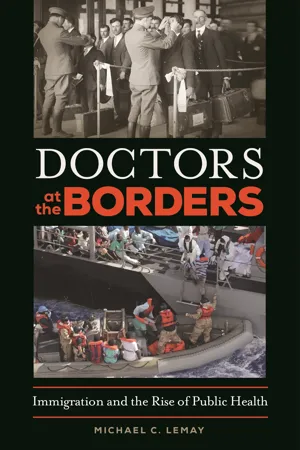
Doctors at the Borders
Immigration and the Rise of Public Health
- Michael C. LeMay(Author)
- 2015(Publication Date)
- Praeger(Publisher)
Epidemics are like waves: they rise and fall. Sometimes they seem to be spaced at fairly regular intervals of time. Measles may rise to a peak every second or third year. . . . Topography and climate seem to have something to do with both epidemics and endemics. . . . Ophthalmia is traditionally associated with Egypt, malaria with the Mediterranean shores, plague with the East, yellow fever with the tropics of America. Moreover[,] some diseases spread and become threatening at one season of the year, some at another. Pneumonia is a winter disease, measles seem to reach its peak in the spring, babies die of diarrhea in the hot summer months, and one fears poliomyelitis most in the late summer. Some diseases, again, fall upon people of all ages, some upon children, some most severely on the old. (1946: 122)A Pandemic refers to when an epidemic spreads to entire countries, or regions, and becomes multinational, even global, in scope. Pandemics have been called “plagues,” “contagions,” and “pestilences.” Plague typically refers to conditions causing very high morbidity or mortality and is accompanied by social dislocation. The historic outbreaks of plagues, like the Black Death of the thirteenth and fourteenth centuries in Europe, the recurrences of cholera spreading globally, and the 1918–1919 influenza epidemic (also known as the Spanish flu), are reminders that these periodic outbreaks of horrific disease are akin to nature’s holding a sword over the heads of mankind—suggesting a battle or warfare.Epidemiology is the study of epidemic and Pandemic disease, but, as Omran notes:Despite its name, epidemiology is not just the study of epidemics, although it has a great deal to do with epidemics and infectious diseases, its province is rather the broad mass phenomena of health and disease: how these are distributed in groups of people, the causes and consequences of diseases, and how they can be prevented and controlled. (3)As modern medicine developed, medical scientists and then practitioners increasingly understood, controlled, managed, and began to prevent incidences of the most dreaded epidemic diseases. The old world epidemics have come to be replaced by chronic and degenerative diseases, by disease resulting from stress or manmade causes. Typhoid, tuberculosis, cholera, diphtheria, plague, and smallpox declined as the leading diseases and causes of death, replaced by heart diseases, cancer, strokes, diabetes, gastric ulcers, and the like (Omran: 4).Five exemplary epidemic diseases, each of which caused especially deadly Pandemics in the nineteenth and early twentieth centuries, are yellow fever, smallpox, cholera, the bubonic plague, and influenza. Another nondeadly but highly contagious disease was trachoma. In its severe stage, trachoma causes blindness; it still is a leading cause of blindness worldwide. It was considered “loathsome,” a leading cause for exclusion from entrance and permanent residence status in the United States, especially at Angel Island and at Ellis Island but also at New Orleans. Several doctors and medical scientists played key roles in discovering the causes of the diseases or in developing important protocols for mitigating their morbidity or mortality rates. These doctors at the borders were instrumental in the development of public health in the United States. No longer available |Learn more
- (Author)
- 2014(Publication Date)
- University Publications(Publisher)
________________________ WORLD TECHNOLOGIES ________________________ Chapter- 1 Introduction to Pandemic A Pandemic (from Greek π ᾶ ν pan all + δ ῆ μος demos people) is an epidemic of infectious disease that is spreading through human populations across a large region; for instance a continent, or even worldwide. A widespread endemic disease that is stable in terms of how many people are getting sick from it is not a Pandemic. Further, flu Pandemics exclude seasonal flu, unless the flu of the season is a Pandemic. Throughout history there have been a number of Pandemics, such as smallpox and tuberculosis. More recent Pandemics include the HIV Pandemic and the 2009 flu Pandemic. Definition and stages The World Health Organization (WHO) has produced a six-stage classification that describes the process by which a novel influenza virus moves from the first few infections in humans through to a Pandemic. This starts with the virus mostly infecting animals, with a few cases where animals infect people, then moves through the stage where the virus begins to spread directly between people, and ends with a Pandemic when infections from the new virus have spread worldwide. A disease or condition is not a Pandemic merely because it is widespread or kills many people; it must also be infectious. For instance, cancer is responsible for many deaths but is not considered a Pandemic because the disease is not infectious or contagious. In a virtual press conference in May 2009 on the influenza Pandemic Dr Keiji Fukuda, Assistant Director-General ad Interim for Health Security and Environment, WHO said An easy way to think about Pandemic ... is to say: a Pandemic is a global outbreak. Then you might ask yourself: “What is a global outbreak”? Global outbreak means that we see both spread of the agent ... and then we see disease activities in addition to the spread of the virus. No longer available |Learn more
- (Author)
- 2014(Publication Date)
- University Publications(Publisher)
________________________ WORLD TECHNOLOGIES ________________________ Chapter- 3 Pandemic A Pandemic (from Greek π ᾶ ν pan all + δ ῆ μος demos people) is an epidemic of infectious disease that is spreading through human populations across a large region; for instance a continent, or even worldwide. A widespread endemic disease that is stable in terms of how many people are getting sick from it is not a Pandemic. Further, flu Pandemics exclude seasonal flu, unless the flu of the season is a Pandemic. Throughout history there have been a number of Pandemics, such as smallpox and tuberculosis. More recent Pandemics include the HIV Pandemic and the 2009 flu Pandemic. Definition and stages The World Health Organization (WHO) has produced a six-stage classification that describes the process by which a novel influenza virus moves from the first few infections in humans through to a Pandemic. This starts with the virus mostly infecting animals, with a few cases where animals infect people, then moves through the stage where the virus begins to spread directly between people, and ends with a Pandemic when infections from the new virus have spread worldwide. A disease or condition is not a Pandemic merely because it is widespread or kills many people; it must also be infectious. For instance, cancer is responsible for many deaths but is not considered a Pandemic because the disease is not infectious or contagious. In a virtual press conference in May 2009 on the influenza Pandemic Dr Keiji Fukuda, Assistant Director-General ad Interim for Health Security and Environment, WHO said An easy way to think about Pandemic ... is to say: a Pandemic is a global outbreak. Then you might ask yourself: “What is a global outbreak”? Global outbreak means that we see both spread of the agent ... and then we see disease activities in addition to the spread of the virus. No longer available |Learn more
- (Author)
- 2014(Publication Date)
- University Publications(Publisher)
________________________ WORLD TECHNOLOGIES ________________________ Chapter- 2 Pandemic A Pandemic (from Greek π ᾶ ν pan all + δ ῆ μος demos people) is an epidemic of infectious disease that is spreading through human populations across a large region; for instance a continent, or even worldwide. A widespread endemic disease that is stable in terms of how many people are getting sick from it is not a Pandemic. Further, flu Pandemics exclude seasonal flu, unless the flu of the season is a Pandemic. Throughout history there have been a number of Pandemics, such as smallpox and tuberculosis. More recent Pandemics include the HIV Pandemic and the 2009 flu Pandemic. Definition and stages The World Health Organization (WHO) has produced a six-stage classification that describes the process by which a novel influenza virus moves from the first few infections in humans through to a Pandemic. This starts with the virus mostly infecting animals, with a few cases where animals infect people, then moves through the stage where the virus begins to spread directly between people, and ends with a Pandemic when infections from the new virus have spread worldwide. A disease or condition is not a Pandemic merely because it is widespread or kills many people; it must also be infectious. For instance, cancer is responsible for many deaths but is not considered a Pandemic because the disease is not infectious or contagious. In a virtual press conference in May 2009 on the influenza Pandemic Dr Keiji Fukuda, Assistant Director-General ad Interim for Health Security and Environment, WHO said An easy way to think about Pandemic ... is to say: a Pandemic is a global outbreak. Then you might ask yourself: “What is a global outbreak”? Global outbreak means that we see both spread of the agent ... and then we see disease activities in addition to the spread of the virus.
- George Auma Kararach(Author)
- 2022(Publication Date)
- Routledge(Publisher)
7 Pandemics and diseases as forces of dislocation – a post-COVID-19 viewDOI: 10.4324/9781003153467-77.1 Introduction
Pandemics are large-scale world infectious disease outbreaks that increase morbidity and mortality, resulting into severe economic, social and political disruptions. Infectious disease outbreaks date back in history and have kept on emerging and re-emerging over decades now. Well known pathogens like cholera, malaria and tuberculosis have always caused disruptions since the 1960s and beyond, including the “Black Death” of the mid-1300s. However, institutional memories of these earlier outbreaks got long lost, making new Pandemic reappearances seem like just new afflictions with new threats and shocks and no history on how to make quick responses.In the recent past, these Pandemics have increased due to the rise in globalisation, urbanisation and population increase, travel and integration, environmental degradation and exploitation of natural resources (Jones et al., 2008 ). These trends are likely to continue and even intensify over time. These infectious disease outbreaks, if not well mitigated, can pose severe human health risks, thus impacting on the societal, economic and political prospects of the affected countries.The COVID-19 of 2020, for instance, caught the world unprepared, caused a lot of deaths and massive illness, and drained economies of their resources in significant ways. The lockdowns imposed to stem the tide of infections resulted in loss of employment, psychological stress due to anxiety, straining of the healthcare infrastructure, family breakups, political instability, inter-regional trade disruptions and even interference with socio-cultural norms. However, due to new global communication technologies, faster information spread to a wider audience accelerated the containment measures to curb the spread and save lives and economies. eBook - ePub
- Kevin Gray, Barry K. Gills, Kevin Gray, Barry K. Gills(Authors)
- 2022(Publication Date)
- Routledge(Publisher)
Pandemics in global and historical perspective
Robert A. DenemarkABSTRACT
Attempts to understand global processes during and after Pandemics will benefit from an analysis of historical examples. This work offers a brief review of the impact of various Pandemics from about 400 BCE to the present by focusing on (1) states and state strength, (2) class conflict, and (3) global political competition. States are unevenly affected, with capable political units growing in strength and weak units suffering retrenchment. Class conflict increases overall and evidences a multigenerational cycle as labour shortages generate wage pressures. Pandemics alter the global political system given their impact on military conflict, the rise and fall of empires, colonialism, and alterations in power across various regions. A technical note to this work considers challenges in the way we see disease and offers some quick and useful specialized information.Introduction
Pandemics have been a persistent part of human history, providing evidence of the process of globalization long before it was recognized otherwise. This work identifies 3 areas of human interaction whose developmental paths have been fundamentally affected by Pandemics at various points in time: state strength, class conflict, and global political competition. Each provides insights into what we may see during and after our interaction with Covid-19. In a technical note both perceptual challenges relative to disease and useful specialized information are presented. We have faced Pandemics before and there are lessons to be learned about relevant social processes.States and Pandemics
The impact of Pandemics on states is acute and uneven. In general, a polity with a capable government grows in strength both through the extension of its reach in response to serious challenges, and given the positive impact of successfully managing crisis. Alternatively, polities that are already suffering from decline, have maladaptive leadership, or are corrupt or repressive, will see many of these conditions reinforced. This is especially true in areas like colonies where tenuous legitimacy may be further eroded by Pandemics. The role of important actors in commerce or religion may confound state authority. eBook - PDF
After the Virus
Lessons from the Past for a Better Future
- Hilary Cooper, Simon Szreter(Authors)
- 2021(Publication Date)
- Cambridge University Press(Publisher)
Despite this, the WHO issued a report in 2019, A World At Risk, warning that most countries were simply not making appropriate preparations for this near certain event. How Pandemics Spread Dramatic and deadly diseases threaten most where a population has not previously encountered the infecting organism. The most extraordinary of sudden, mass death events in history are closely associated with moments of contact between two previously separated civilisations, where each plays host to a range of endemic pathogens to which they have adapted over generations. As two such civilisations come into contact, one population’s endem- ic micro-organism may assume epidemic lethality when it encounters the other ‘virgin’ human population for the first time. The classic and well-documented example is that of the Spanish conquistadors arriving in the Americas in the late fifteenth century. 15 The smallpox virus, in particular, was 30 1. THE EXTRAORDINARY HISTORY OF Pandemic CONTROL new to the Incas and Aztecs and indeed to all indigenous peoples in South and North America. The invading and settling Europeans hailed the devastation wrought as nov- el diseases felled those opposing their incursion as their Christian God’s handiwork. Less celebrated in their history books of course is that the Europeans in turn took back with them the spirochaete Treponema pallidum pallidum, the source of the scourge of syphilis that spread across Europe in the sixteenth century and which European travellers then introduced to the rest of the planet. 16 Pandemic diseases are an eclectic mix, some caused by bacteria, like Yersinia pestis (the plague), Vibrio cholerae (cholera) and Mycobacterium tuberculosis (TB); others by vi- ruses, as with influenza, smallpox, coronavirus and HIV/ AIDS; and still others by tiny animal parasites, such as the Plasmodium protozoa injected into the human bloodstream by the mosquito bites that produce malaria.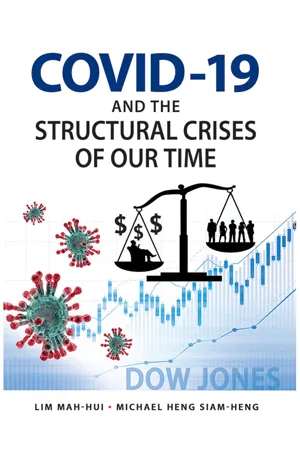
- Lim Mah-Hui, Michael Siam-Heng(Authors)
- 2021(Publication Date)
- ISEAS – Yusof Ishak Institute(Publisher)
2 PandemicS Unsurprising but Governments Unprepared? INTRODUCTION This chapter sets out to answer the following questions. Is the present Pandemic an out-of-the-ordinary event or something that could have been expected, given past history, but for which we were not prepared? What are the basic causes of Pandemics? How are these causes related to the way humans interact with nature and environment? These are addressed in Section 1. Section 2 of the chapter asks: what are the different ways societies have responded to the Pandemic crisis? What factors explain why some are doing better than others? What lessons can be learned to prepare for the next Pandemic? With hindsight, a global Pandemic was inevitable. History is peppered with Pandemics including in recent times, and today’s globally connected world could hardly be better optimized to breed new outbreaks and allow them to spread. High population densities, intensive farming and deforestation all make the emergence of novel viruses and pathogens more likely; trade and modern travel make their transmission inevitable. What was not inevitable though was our collective response to the threat. We begin with a brief tour of the history of Pandemics from ancient to modern times, focusing on the latter and in particular on the present Pandemic—the COVID-19 Pandemic. We will look at influenza and coronavirus Pandemics in turn, but we will also include a few Pandemics that do not neatly fall under these headings and attempt to balance this loose categorization with a historical chronology. SECTION 1: A BRIEF HISTORY OF PandemicS Historical Background: Plague Pandemics There have been three major bacterial Pandemics since the sixth century AD: the Justinian plague, the bubonic plague (or Black Death), and the third 24 covid-19 and the structural crises of our time plague Pandemic (we will also briefly look at the Manchurian plague).
- Angela L. Williams(Author)
- 2020(Publication Date)
- Omnigraphics(Publisher)
If the pathogen is introduced into one of these subgroups, an outbreak may occur. 31 Chapter 5 Deadliest Outbreaks and Pandemics in History The terms “epidemics” and “Pandemics” are used to describe the spread of infectious diseases over a relatively large geographical area at a rapid pace. When the spread of disease is confined to a particular country or region, it is considered an “epidemic.” But, when it goes beyond national boundaries involving multiple continents or worldwide, it is called a “Pandemic.” Widespread outbreaks of infectious diseases have proven to be disastrous throughout the history of humankind. Outbreaks of these diseases have caused millions of deaths and some continue to pose a threat to human life. This chapter identifies some of the deadliest epidemics and Pandemics in human history. Smallpox Smallpox is an old disease whose origin dates back to ancient Egypt. In the 16th century, the disease was introduced to colonial America by European settlers—some of whom engaged in early biological warfare by giving smallpox-infested blankets and handkerchiefs to native American dignitaries as gifts. Since Native Americans had not developed a natural immunity to this foreign disease, smallpox wiped out almost the entire “Deadliest Outbreaks and Pandemics in History,” © 2020 Omnigraphics. Reviewed January 2020. | Global Pandemics and Epidemics, First Edition 32 population of indigenous people. The death toll is estimated to be around 90 million. The European continent also had an outbreak of smallpox in the 18th century with an estimated death of 60 million people. The smallpox vaccine was developed by Edward Jenner in 1796. Typhus Typhus is also called “camp fever.” This disease typically spreads among people living in close quarters. The speed at which it spreads is attributed to unsanitary living conditions. eBook - ePub
Thinking in a Pandemic
The Crisis of Science and Policy in the Age of COVID-19
- Boston Review(Author)
- 2020(Publication Date)
- Verso(Publisher)
We also know a good deal about beginnings—those first cases of pneumonia in Guangdong marking the SARS outbreak of 2002–3, the earliest instances of influenza in Veracruz leading to the H1N1 influenza Pandemic of 2009–10, the outbreak of hemorrhagic fever in Guinea sparking the Ebola Pandemic of 2014–16. But these stories of rising action and a dramatic denouement only get us so far in coming to terms with the global crisis of COVID-19. The coronavirus Pandemic has blown past many efforts at containment, snapped the reins of case detection and surveillance across the world, and saturated all inhabited continents. To understand possible endings for this epidemic, we must look elsewhere than the neat pattern of beginning and end—and reconsider what we mean by the talk of “ending” epidemics to begin with. Historians have long been fascinated by epidemics in part because, even where they differ in details, they exhibit a typical pattern of social choreography recognizable across vast reaches of time and space. Even though the biological agents of the sixth-century Plague of Justinian, the fourteenth-century Black Death, and the early twentieth-century Manchurian Plague were almost certainly not identical, the epidemics themselves share common features that link historical actors to present experience. “As a social phenomenon,” historian Charles Rosenberg has argued, “an epidemic has a dramaturgic form. Epidemics start at a moment in time, proceed on a stage limited in space and duration, following a plot line of increasing and revelatory tension, move to a crisis of individual and collective character, then drift towards closure.” And yet not all diseases fit so neatly into this typological structure. Rosenberg wrote these words in 1989, nearly a decade into the North American HIV/AIDS epidemic
Index pages curate the most relevant extracts from our library of academic textbooks. They’ve been created using an in-house natural language model (NLM), each adding context and meaning to key research topics.
