History

Simnel Rebellion
The Simnel Rebellion was a 1487 uprising in England led by Lambert Simnel, who claimed to be the Earl of Warwick, a potential rival to King Henry VII. The rebellion was supported by Yorkist sympathizers who opposed Henry VII's rule. It culminated in the Battle of Stoke, where the rebels were defeated, and Simnel was captured and later pardoned by the king.
Written by Perlego with AI-assistance
Related key terms
1 of 5
4 Key excerpts on "Simnel Rebellion"
 eBook - PDF
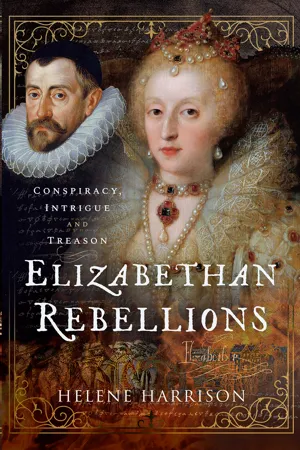
Elizabethan Rebellions
Conspiracy, Intrigue and Treason
- Helene Harrison(Author)
- 2023(Publication Date)
- Pen and Sword History(Publisher)
Elizabethan Rebellions 4 in 1471. Tewkesbury marked the defeat of the Lancastrian dynasty and the restoration of the Yorkist Edward IV to the English throne. It also marked the beginning of fourteen years of exile for the future Henry VII. Why is Henry VII’s exile important to the rebellions he struggled with during his reign? The English people did not really know much about him because he had not been in the country and the two major rebellions he had to tackle were to do with the succession and promoting candidates who were more well known in England: namely Richard, Duke of York, younger of the Princes in the Tower, and Edward Plantagenet, 17th Earl of Warwick. Lambert Simnel was a pretender. The surviving Yorkists believed that, if no Yorkist claimant to the throne existed, one had to be created. 2 Simnel was the son of an Oxford man who pretended to be Edward, Earl of Warwick, son of George, 1st Duke of Clarence, and nephew to both Edward IV and Richard III. The real Warwick was born in 1475 so was aged 12 in 1487, and Simnel was said to be around aged ten. This would not necessarily have been a problem if Simnel looked older than his years, or it could be claimed that Warwick looked younger than his years due to his imprisonment in the Tower. Polydore Vergil reported that rumours spread of Warwick’s death in prison in 1487 and when the priest Richard Simons learned this, he changed Simnel’s name to Edward and crossed to Ireland, where many disaffected Yorkists had fled to after Bosworth. 3 Simons spread a rumour that Warwick had escaped from the Tower and was under his guardianship. Yorkists claimed rather that they had rescued Warwick from the Tower themselves and brought him to Ireland. 4 It is unlikely that it was intended for Simnel to remain on the throne once Henry VII had been overthrown. It seems probable that John de la Pole, 1st Earl of Lincoln, would rule and that Simnel was just a figurehead for the rebellion; essentially expendable. eBook - ePub
Elizabethan Rebellions
Conspiracy, Intrigue and Treason
- Helene Harrison(Author)
- 2023(Publication Date)
- Pen & Sword History(Publisher)
An understanding of these earlier Tudor rebellions can help us to understand Elizabeth’s reactions to the rebellions that she had to deal with during her reign. Elizabeth herself was rumoured to be involved in the Wyatt Rebellion under her half-sister, Mary I, though nothing was ever proven. She was imprisoned in the Tower of London as a result and came close to execution. Her early experiences of rebellion shaped her own reactions when she had to deal with revolts against her own claim to the throne and controversial decisions she made.*The first major rebellion of the Tudor dynasty was under Henry VII in 1487 and concerned a young boy by the name of Lambert Simnel. Henry VII had only been on the throne for two years; and the Wars of the Roses were not known to be over as Henry VII could have just been another king who took the throne by force and could be overthrown at any moment. It is only with hindsight that we can see that the Wars of the Roses were effectively over, and that Henry VII had founded a dynasty that would reign for over a hundred years. There would not be another violent change of ruler until the English Civil War in the seventeenth century when England changed, temporarily, from a monarchy to a republic under Oliver Cromwell and Charles I was executed.The English people did not really know Henry VII. He had grown up in exile in France in the Duchy of Brittany where he had escaped to with his uncle, Jasper Tudor, Earl of Pembroke, and later 1st Duke of Bedford, in the aftermath of the Battle of Tewkesbury in 1471. Tewkesbury marked the defeat of the Lancastrian dynasty and the restoration of the Yorkist Edward IV to the English throne. It also marked the beginning of fourteen years of exile for the future Henry VII. Why is Henry VII’s exile important to the rebellions he struggled with during his reign? The English people did not really know much about him because he had not been in the country and the two major rebellions he had to tackle were to do with the succession and promoting candidates who were more well known in England: namely Richard, Duke of York, younger of the Princes in the Tower, and Edward Plantagenet, 17th Earl of Warwick.Lambert Simnel was a pretender. The surviving Yorkists believed that, if no Yorkist claimant to the throne existed, one had to be created.2 Simnel was the son of an Oxford man who pretended to be Edward, Earl of Warwick, son of George, 1st Duke of Clarence, and nephew to both Edward IV and Richard III. The real Warwick was born in 1475 so was aged 12 in 1487, and Simnel was said to be around aged ten. This would not necessarily have been a problem if Simnel looked older than his years, or it could be claimed that Warwick looked younger than his years due to his imprisonment in the Tower. Polydore Vergil reported that rumours spread of Warwick’s death in prison in 1487 and when the priest Richard Simons learned this, he changed Simnel’s name to Edward and crossed to Ireland, where many disaffected Yorkists had fled to after Bosworth.3 Simons spread a rumour that Warwick had escaped from the Tower and was under his guardianship. Yorkists claimed rather that they had rescued Warwick from the Tower themselves and brought him to Ireland.4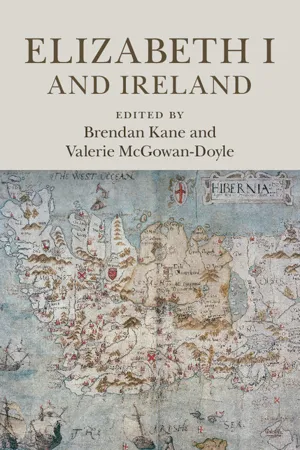 eBook - PDF
- Brendan Kane, Valerie McGowan-Doyle(Authors)
- 2014(Publication Date)
- Cambridge University Press(Publisher)
12 Elizabeth on rebellion in Ireland and England: semper eadem? Brendan Kane On the 13th of November 1569, the earl of Sussex issued a proclamation against rebels to the crown. The leaders, he declared, had ‘conspired to levy war against her Majesty’. Their motivations were, he noted, confused and changing: at times they claimed they were rising on the queen’s orders to rid her court of evil counsellors; at other times that they acted in the name of religion; at still others in defence of the nobility against arriviste commoners at court. Sussex believed none of it. Rather than carrying out the queen’s wishes, he declared, the rebels were attempting ‘to bring the realm under the slavery of foreign powers’. As for religion, he thundered that most of those in the field had ‘never respected any religion, but continued a dissolute life until driven to pretend to popish holiness, to put some false colour upon their treasons’. Nor did the claims about defending the nobility convince, for Sussex argued that ‘not one of that stock has perished’ under Elizabeth’s reign. The rebel’s true goals, he declared, were to sow sedition and threaten regime change through foreign assistance – an insidious set of treasons that required them to publish false declarations in order to trick the ‘ignorant people’ into joining them. 1 For the student of Elizabethan English–Irish relations, Sussex’s procla- mation stands out for two reasons. The first is that the rebellion in ques- tion, the so-called Northern Rebellion of 1569, occurred in England. By the earl’s description, the rising he was charged with suppressing bore all the chief characteristics familiar to historians of rebellion in Ireland: the raising of war, efforts at restoring Catholicism, threat of foreign invasion, and fear of new-made men undercutting traditional privilege. That Sussex himself served as lord lieutenant in Ireland lends this docu- ment further Irish resonance.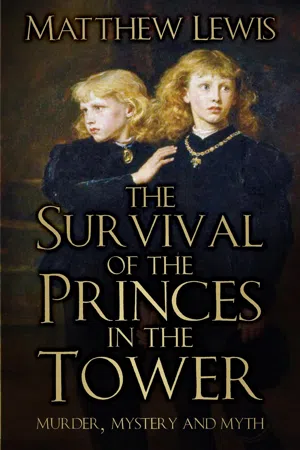 eBook - ePub
The Survival of the Princes in the Tower
Murder, Mystery and Myth
- Matthew Lewis(Author)
- 2017(Publication Date)
- The History Press(Publisher)
Whichever explanation, or combination of explanations, caused Margaret and Richard to arrive at this version of events, it is clear that Edward V had to be out of the picture to galvanise support, but that there should be no sense of the Yorkist plotters at the heart of this project having already failed once before. The next part of Richard’s tale is equally unsatisfactory. He was apparently abandoned at the cusp of adulthood by a man charged with his care who must surely have had some sense of who he was, the second man tasked with protecting him having died. Finding himself in Portugal, the young man happened, as a servant to a merchant, to land in Ireland where he was almost immediately recognised as the younger son of Edward IV. The remainder of the tale is more authentic but was also the public portion of Richard’s career to this date. He was invited to France and received as a true prince, then ejected and entered Margaret’s court where he could vicariously draw upon the support of the Hapsburg Holy Roman Emperor and his son the Archduke Philip which Margaret enjoyed, adding the kings of Denmark and Scotland to the list of those supporting his enterprise. In the end, this letter is a pleading one that wants to win the support of the last major monarchy in Europe outside England yet to openly declare a belief in Richard’s candidature. Such support was vital, but it would not in itself win Richard a throne. He needed backing from within England, he needed men and he needed money. To date, he had made a promising start, but there was a long way to go.The greatest and most marked difference between the Yorkist invasion of 1487 and the plot that continued to take form around the persona of Richard, Duke of York is the time taken. What is remembered as the Lambert Simnel Affair has the air of a rush job, trying to slide a new king from his throne before he had time to make himself comfortable and more difficult to dislodge. It is interesting that the invasion came before Henry VII’s reign had reached the length of Richard III’s, as though that might offer some measure of time within which such an enterprise might hope to succeed and after which it would necessarily become more difficult as old ties slipped, replaced by new, firm knots lashing self-interest to the mast of the Tudor dynasty’s ship. If allowed to find calm waters, those aboard would come to trust their captain. The headlong rush to Stoke Field, barely a year in the making, was not now to be repeated. Henry VII had a firmer hand on the tiller and that must be accounted for. Every scrap of time required was taken to help ensure the success of Margaret’s plans this time, not least because, whether this lad was truly her nephew or not, it would be her last real chance. She had now painted Edward V as dead and this young man as the last hope of the House of York. He was a card not to be played lightly, a piece on the chessboard that represented their king; he was to be protected as far as possible until the very end of the game.The campaigning season of 1494 passed with little threat to England, mainly because Richard was on a charm offensive on the continent. Richard’s cause took a healthy step forward on 24 August 1494 when Maximilian, the Holy Roman Emperor, and his son Archduke Philip rode to church on St Bartholomew’s Day with Richard, who was dressed in royal cloth of gold and flanked by thirty halberdiers wearing the Yorkist murrey and blue. Maximilian now gave a very public endorsement to the world of Richard as the son of Edward IV. This episode can, and has traditionally, been passed off as an act of disingenuous politicking. Henry’s peace with France had thwarted the long-established co-operation between England and Burgundy that helped maintain that duchy’s independence. Maximilian had little personal control over great portions of his territories. As Henry grew more secure and increasingly wealthy and as his interests began to grow more distant from those of Flanders, and therefore Maximilian and his son Philip, propping up an attempt to unsettle the English king, whether Richard was who he claimed to be or not, had appeal for Maximilian.
Index pages curate the most relevant extracts from our library of academic textbooks. They’ve been created using an in-house natural language model (NLM), each adding context and meaning to key research topics.

