History

Uthman ibn Affan
Uthman ibn Affan was the third caliph of the Islamic world, succeeding Caliph Umar. He is known for compiling the Quran into a standardized written format and for his efforts in expanding the Islamic empire. Uthman's reign was marked by internal conflicts and ultimately led to his assassination, which had significant repercussions in Islamic history.
Written by Perlego with AI-assistance
Related key terms
1 of 5
4 Key excerpts on "Uthman ibn Affan"
 eBook - ePub
Medieval Islamic Historiography
Remembering Rebellion
- Heather N. Keaney(Author)
- 2013(Publication Date)
- Routledge(Publisher)
naṣṣ, or designation, only became prominent in pro-ʿAlid discourse in the mid-ninth century, at which point proto-Sunnis had to refute it or co-opt it. All of these themes, Afsaruddin argues, predated the emphasis on kinship that became the pillar of Shiʿi ideology.Many of these criteria for evaluating the Companions are clearly in evidence in the third/ninth-century narratives of ʿUthman. Prominent are his early conversion and generosity toward the community. Accounts that place the first three caliphs (in the order of their caliphates) in close relationships with Muhammad outnumber those that depict Muhammad delegating authority to a Companion. Nevertheless, ʿUthman’s ties to Muhammad through marriage are acknowledged but not developed. Al-Baladhuri presents a complex picture of ʿUthman by juxtaposing praise of his character and behavior as a Companion with his character and behavior as caliph. Al-Tabari juxtaposes two different interpretations of ʿUthman’s character and behavior while caliph, one praiseworthy and the other critical, both of which prioritize historical context. These later works are more complex and critical than earlier extant sources, and clearly engage with, and indeed frequently refute, the image of ʿUthman developed in hadith-based fadāʾil works.In addition to the preceding themes, the sources also present a spectrum from hadith-based hagiography to more historically and personally complex biographies and chronicles. Since Ibn Saʿd emphasizes the importance of sābiqa in the organization of his Tabaqat, it should occasion no surprise that the first section of ʿUthman’s biography is dedicated to his conversion. In it Ibn Saʿd transmits the account from al-Waqidi that will appear in many later histories, including al-Baladhuri’s; namely, that ʿUthman, along with Talha b. Ubaydallah, converted to Islam when they heard Muhammad recite the Qurʾan. Afterward ʿUthman told Muhammad that when they were in Syria, their sleep was disturbed when a caller (munād) called to them. When they awoke, they immediately set out for Mecca, where they heard Muhammad. The account concludes, “ʿUthman’s conversion to Islam was old, before Muhammad’s entry into dār al-arqam.”28 A key part of the merit bestowed on early converts was that it meant they shared in the persecution of the early community. Ibn Saʿd relates that ʿUthman’s conversion was public and that he was pressured by his uncle to give up this new religion but refused to do so.29 Ibn Saʿd also relates that ʿUthman, along with his wife Ruqayya (who happened to be the Prophet’s daughter), participated in the first hijra to Abyssinia. This first hijra was one of the most tangible signs of the early persecution of the community and a marker of precedence in Islam, a fact that Ibn Saʿd highlights with his report that Muhammad stated that ʿUthman and Ruqayya were the first to emigrate to God since the days of Lot.30 eBook - ePub
The Crisis of Muslim History
Religion and Politics in Early Islam
- Mahmoud M. Ayoub(Author)
- 2014(Publication Date)
- Oneworld Publications(Publisher)
This is the view of the modern Islamic historian M. A. Sha‘bān, who characterizes ‘Uthmān’s turbulent rule as “the breakdown of the Madinan regime.” 61 In his judgment, the breakdown happened as a result of the conflict between Makkan and Madinan interests and orientations. ‘Uthmān was “Makkan to the core,” Sha‘bān argues, while ‘Alī, who could only remember the Prophet’s days of hardship and struggle in Makkah, was Madinan in both interests and support. ‘Umar’s shūrā committee was a Makkan body that failed to see clearly the clash between the interests of the two communities and the necessity, within a large empire, to harmonize those interests. 62 Sha‘bān’s “new interpretation” of classical Islamic history is plausible, but only if understood in the context of many religious, social, and economic factors. That ‘Uthmān may have wished to change the administration of the Islamic state – from the model of Arab tribal federation to one more suited to a vast multi-ethnic and multicultural empire – does not sufficiently explain the break with tradition and the fracturing of the community. In fact, ‘Uthmān was continuing a process that had already begun with ‘Umar; it was ‘Uthmān’s particular manner of effecting the transition, not the change itself, that angered his contemporaries. Perhaps the point is best clarified through a contrasting example, one that shows ‘Uthmān working successfully within the overarching religious and social values of the community. An important aspect of the radical reorganization of the Muslim ummah was ‘Uthmān’s sponsorship of the production of an official rescension (mu ṣ ḥ af) of the Qur’ān, a procedure that involved the destruction of all other private copies of the sacred Book. Although some Qur’ān bearers and reciters, such as ‘Abd Allāh b. Mas‘ūd, objected to losing their high status as oral transmitters of a recited Qur’ān, the majority welcomed ‘Uthmān’s initiative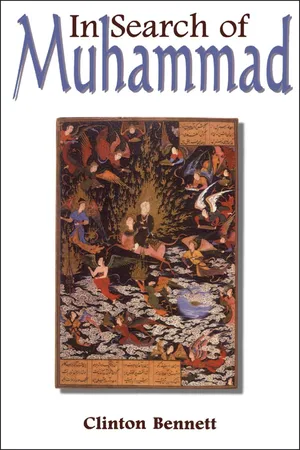 eBook - PDF
- Clinton Bennett(Author)
- 1998(Publication Date)
- Continuum(Publisher)
Finally, however, he did become leader of the Muslims. As he had himself anticipated, his greatest challenge was trying to unite the community. His reign was in fact marked by civil war and was short-lived (as noted above). He was universally respected as a soldier (having played a vital role in the early battles against the Makkans) as well as for his piety and learning. His Nahjul Balaaghah, compiled by as-Sayyid ar-Raddhi (I have cited from the 1996 Ahlul-Bayt Assembly of America translation) is regarded by Shi'a as 'the greatest literary and theological composition ... after the Holy Qur'an and the Sunnah'. 'AH remains an important figure within Sunni as well as Shfa Islam. For the former, he was the fourth 'rightly guided' Khalif; although all four 'rightly guided' Khalifs were virtuous, the first, Abu Bakr, was the most virtuous (see Ibn Hanbal's creed which places the Companions in 'order of excellence' -Abu Bakr, eBook - PDF
The History of al-Ṭabarī Vol. 15
The Crisis of the Early Caliphate: The Reign of ʿUthmān A.D. 644-656/A.H. 24-35
- R. Stephen Humphreys(Author)
- 2015(Publication Date)
- SUNY Press(Publisher)
(‘Ali) said, Why, 0 Commander of the Faithful, have the Banu Umayyah drawn round you like a belt?” They responded, 0 ‘Ali, you have destroyed us and have brought ill to the Com mander of the Faithful. Yea, by God, if you achieve your aims, then this world will surely become a bitter place for you. Then ‘Ali rose up full of anger. In this year, ‘Uthmin b. “Affan was killed. The Account of the Murder [of 'Uthman] According to Abu Ia‘far (al-Tabari): In this year, ‘Uthman b. ‘Affan was killed. We have mentioned many of the reasons that his murderers cited as an excuse for killing him, and we have avoided mentioning many others that should not be included here. We will now describe how he was killed, how and through whom it began, and who was the first to treat him audaciously before he was murdered. According to Muhammad b. rUmz'ir al-Wéqidi—‘Abdallah b. Ia'far—Umm Bakr bt. al-Miswar b. Makhramah—her father: 323. A variant version of Qur’an 6:160. The text is usually read “thou [that is, Muhammad] art not of them in anything.” (2980 182 The Crisis of the Early Caliphate [2981] Some camels were brought to 'Uthmin as legal alms (sadaqah), and he made a gift of them to one of the Bani'i al-Hakam.324 Having learned of this, ‘Abd al-Rahmin b. ‘Awf sent to al-Miswar b. Makhramah and 'Abd al-Rahman b. al-Aswad b. ‘Abd Yaghi'ith. They took the camels, and ‘Abd al-Rahman (b. 'Awf) then dis tributed them among the people while ‘Uthman stayed at home. According to Muhammad b. ‘Umar (al-Waqidi)—Muhammad b. Salih—‘Ubaydallah b. Rafi‘ b. Naqakhah325—‘Uthman b. al Sharid: ‘Uthman passed Iabalah b. ‘Amr al-Sa'idi as he sat in his courtyard holding a rope. )abalah said, You hyena. By God, I shall kill you. I shall carry you off on a scab-covered camel and send you to blazing fire. Another time, when 'Uthman was standing on the pulpit, )abalah forced him to get off. It was related to me by Muhammad (al-Waqidi)326-—Abi'i Bakr b.
Index pages curate the most relevant extracts from our library of academic textbooks. They’ve been created using an in-house natural language model (NLM), each adding context and meaning to key research topics.

