Literature

Literary Modernism
Literary Modernism was a movement in the early 20th century that sought to break away from traditional forms and styles of writing. It emphasized experimentation, individualism, and a departure from conventional narrative structures. Modernist literature often reflected the fragmented, disillusioned, and complex nature of modern life, and it had a significant impact on the development of literary techniques and themes.
Written by Perlego with AI-assistance
Related key terms
1 of 5

8 Key excerpts on "Literary Modernism"
 eBook - PDF
- Debra A. Moddelmog, Suzanne del Gizzo(Authors)
- 2012(Publication Date)
- Cambridge University Press(Publisher)
Literary movements are always less unified, structurally and temporally, than casual critical usage would suggest, but modernism is so notoriously difficult to define that it has become traditional to speak of modernisms in the plural. 2 Noted for its avant-garde proliferation of manifestos and – isms – cubism, futurism, imagism, vorticism, dadaism, surrealism, expressionism, and so on – modernism, in its various manifestations, was nevertheless united by its artists’ self-conscious urge to, in Ezra Pound’s phrase, “make it new.” The very term modernism implies a sense of rup- ture with the immediate past, predating but exacerbated by World War I and its attendant cultural changes. But the modernists’ penchant for apocalyptic proclamations – witness Virginia Woolf’s famous declaration that “on or about December 1910 human character changed” 3 or Pound’s assertion that “the Christian era came definitely to an END” with the completion of James Joyce’s Ulysses 4 – clearly overstates the degree of this eby 174 rupture. As Edmund Wilson noted long ago, Hemingway’s brand of modernism – like the modernism of Joyce, Eliot, Pound, and Yeats – was strongly rooted in the literary movements of his immediate past – in the uneasy fusion of two opposing currents dominating Anglo-American and French literature at the turn of the century: realism and naturalism on one hand, and the symbolist and decadent movements on the other. 5 Although realism is often used as a straw man to help define what mod- ernism was not (content-driven instead of obsessed with form, directed at mimesis rather than artistic play, etc.), 6 Hemingway certainly thought of himself as both a realist and a modernist. In his classic memoir of mod- ernist Paris, Being Geniuses Together, Robert McAlmon remembers travel- ing through Spain with Hemingway in 1923: [O]n the way to Madrid, our train stopped at a wayside station for a time. eBook - PDF
On the Margins of Modernism
Decentering Literary Dynamics
- Chana Kronfeld(Author)
- 2023(Publication Date)
- University of California Press(Publisher)
C H A P T E R 1 Modernism through the Margins From Definitions to Prototypes The term "modernism," though highly equivocal, com- monly refers to a cluster of international movements and trends in literature and the arts. Beyond this rudimentary labeling, however, there is little agreement about the term's meaning and scope. In some cultural centers one talks of modernism as early as the 1880s; in oth- ers, as late as the 1950s. Although there seems to be some consensus that modernism's "high points"—itself a charged and problematic description—were reached during the first thirty years of this cen- tury, critical opinions are as divergent about the meaning of modern- ism now as they were fifty years ago, despite the massive literature devoted to the subject in recent years. Three logically distinct sets of difficulties seem to have led to this impasse, each at a different level of discourse: the sense of the term itself, the nature of the category modernism constitutes, and the gen- eral conceptual map of literary groupings of which it is part. Distin- guishing among these three levels of discussion is only a preliminary methodological gesture but—it seems to me—quite a necessary one given the conceptual fog in which the debate over modernism is often conducted. (a) The term. "Modernism" remains a complex and contradictory literary label which, in the very process of naming, provokes some fundamental questions: Is modernism by any other name ("moder- nity," "avant-garde") still the same? How does the meaning of the label change when it is applied across media (literature, art, architec- ture, music); across genres within the same medium; and, still more 21 eBook - PDF
- Chris Forster(Author)
- 2021(Publication Date)
- Bloomsbury Academic(Publisher)
[Modernism] is the one art that responds to the scenario of our chaos. It is the art consequent on Heisenberg’s ‘Uncertainty principle,’ of the destruction of civilization and reason in the First World War, of the world changed and reinterpreted by Marx, Freud, and Darwin, of capitalism and constant industrial acceleration, of existential exposure to meaninglessness or absurdity. It is the literature of technology. It is the art consequent on the dis-establishing of communal reality and conventional notions of causality, on the destruction of traditional notions of the wholeness of individual character, on the linguistic chaos that ensues when public notions of language have been discredited and when all realities have become subjective fictions. Modernism is then the art of modernization. (Bradbury and MacFarlane 27) ART AND LITERATURE IN AN AGE OF MEDIA 3 Modernism is the “art of modernization,” which means, among other things, the “literature of technology.” Technology here is a future-oriented force that breaks with the past and inaugurates the new as surely as the psychoanalysis of Freud or the physics of Heisenberg. Already we have here two diametrically opposed definitions: modernism as the literature of technology, or modernism as cultural defense against technology. Rather than attempt broadly to determine the nature of modernism’s relationship to technology, we might approach this relationship in more local ways. eBook - PDF
- Gail McDonald(Author)
- 2008(Publication Date)
- Wiley-Blackwell(Publisher)
“Modernism” can describe works of conventional genre and straightforward style, as well, because of either the subject matter, the intended audience, or the authorship. The writing of the Harlem Renaissance, for example, was “new” and modern but not always as a result of experimentation. Although Jean Toomer, Langston Hughes, and Zora Neale Hurston employed experimental forms, their work would have been considered new even had they not done so; their poetry and fiction arose from the historical contexts of the Harlem Renaissance, that is, an educated and vocal gathering of African Amer-ican writers who confronted, as Hughes expressed it, “the racial moun-tain” (“The Negro Artist and the Racial Mountain”). Depiction of other marginalized cultures also contributed to the making of a new N EW 129 American literature. Mourning Dove’s Cogewea the Half-Blood (1927) was innovative because of the people to whom she had access and the anthropological perspective she brought to her work. Carlos Bulosan or D’Arcy McNickle, writing memoirs and fiction depicting Filipino and Native American experience in the USA, were also innovators. The sense of renaissance, rebirth, and discovery emanated from these new perspectives and from the sound of new voices. Defining a “canon” of American literature has been an interest of literary historians from the beginning of the nation. Early proponents of a national literature were concerned to establish American writing as serious art deserving recognition. In the 1920s and 1930s, as Amer-ican writing gained attention in Europe and became an acceptable subject for academic study, literary critics sought to define the particular characteristics that made American literature American, and the work continued through the entire period covered by this text. Works like V. L. Parrington’s Main Currents in American Thought (1927–30), F.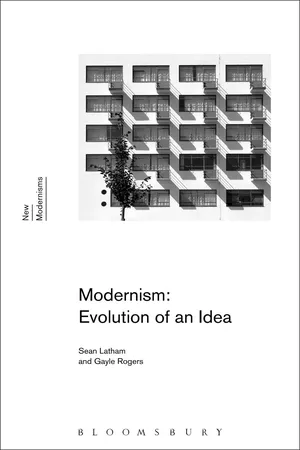 eBook - PDF
- Sean Latham, Gayle Rogers(Authors)
- 2015(Publication Date)
- Bloomsbury Academic(Publisher)
According to Ransom, modernism, though rooted in a clear tradition, had cut itself off from some essential aesthetic force and was thus dead on arrival. Despite their suspicions and disagreements, Woolf, Read, Kazin, and Ransom all clearly believed that modernism must be understood as part of a tradition; however radical its aesthetic experiments, it nevertheless cohered as a single movement, a presiding spirit, with a historical trajectory of its own. The culmination of this mode of thinking can be seen in two very different figures: Edmund Wilson and F. R. Leavis. Prior to Wilson, Arthur Symons in his The Symbolist Movement in Literature (1899) had introduced Anglophone readers to the French tradition that many writers who sought to identify themselves as modern or modernist claimed to have inherited. Yeats, Pound, and Eliot all read and appreciated the book greatly. Symons pointed to a “revolt against exteriority, against rhetoric, against a materialistic tradition” in French Symbolism, which he claimed had led to the liberation and autonomy of “literature” by way of its attaining its “authentic speech” (8–9). “Without symbolism,” he declared boldly, “there can be no literature; indeed, not even language” (1). Extending and deepening this French-English connection, one of the first literary-historical studies of Anglophone modernist authors was Wilson’s still lively and accessible book, Axel’s Castle (1931). Wilson argued that Yeats, Joyce, Eliot, Stein, Marcel Proust, and Paul Valéry were all part of a tradition derived from French Symbolism. These English-language authors were indeed, for Wilson, carrying on a “literary revolution which occurred outside English literature” and representing “the culmination of a self-conscious . . . literary movement” (1, 23). But he believed that literary historians who attempted to understand them through the lens of national histories found little success. eBook - PDF
Translation and the Languages of Modernism
Gender, Politics, Language
- S. Yao(Author)
- 2016(Publication Date)
- Palgrave Macmillan(Publisher)
Rather, it constituted an integral part of the Modernist program of cultural renewal, a crucially impor- tant mode of writing distinct from, yet fundamentally interconnected with, the more traditionally esteemed modes of poetry and prose fiction. As I will show over the course of this study, during the Modernist period translation Modernis t Translation Prac tice 7 served as a specific compositional practice by which different writers sought solutions to the various problems and issues that have come to be under- stood as the primary thematic concerns of Modernism, concerns about the disappearance of any stable religious or moral values by which to ground a viable society, the staggering realities of world conflict and economic col- lapse, the perceived radical inability of established artistic forms and genres to confront and accurately represent the new realities of the world as it existed, and, consequently, the need to develop new formal and representational possibilities more in tune with the demands of the expressly modern world. Throughout the period, translation as a literary mode functioned, and was recognized, as a kind of dynamic procedural lens through which the Mod- ernists could at once view both the past as well as other cultures and, perhaps even more importantly, focus their images of these traditions in their own times and in ways that could serve their individual ideological and aesthetic purposes. eBook - PDF
- Ryszard Nycz, Tulsi Bhambry(Authors)
- 2017(Publication Date)
- Peter Lang Group(Publisher)
17 characterizes the position of literature (by which I mean especially its models, the way it circulates and communicates, its functions and properties) within the framework of the modern stratification of culture that was emerging at the time, we must see it as a manifestation of the artistic Modernist formation� I do not intend this as a challenge to the broadly accepted periodization of twentieth-century Polish literature� What I have in mind is an entirely different dimension of the literary historical process� The literature of the twentieth century has been ‘sliced up’ into micro-periods of five to seven years, and this operation may seem rational, as it allows us to categorize and explain some of its aspects� But it presumes that historical and political changes determine how literature evolves and mutates� Literature does not change this rapidly of its own accord� But when we consider literary history through the categories of the meandering stages of political changes, we risk losing sight of its unity, as well as its continuity and the essential character and meaning of its transformations� This is, therefore, a myopic perspective; it lacks both a temporal cognitive perspective (nineteenth-century traditions of modernity) and a spatial cognitive perspective (relations to other lit- eratures and other types of cultural discourse)� But this naming decision is not simply arbitrary or imposed from outside� For a long time now, research on Young Poland literature and its legacy in the twenti- eth century has augmented the list of problems and phenomena that elude those narrow periodical schemas� But there is another consideration that demands a broader perspective� This consideration is undeniably rooted in the fascinating problem of Postmodernism, whose ambiguity and polymorphism is generally seen as a consequence of different definitions of its founding eBook - PDF
The Turn of the Century/Le tournant du siècle
Modernism and Modernity in Literature and the Arts/Le modernisme et la modernité dans la littérature et les arts
- Christian Berg, Frank Durieux, Geert Lernout(Authors)
- 2012(Publication Date)
- De Gruyter(Publisher)
20 Certainly after the authoritative analysis made by Benjamin: Charles Baudelaire. Ein Lyri-ker im Zeitalter des Hochkapitalismus. Gesammelte Schriften vol. 1.2, pp. 509-690. 21 Cf. Ackroyd: Notes for a New Culture , p. 20. 8 Terminological and Theoretical Issues figuration of modernity, a notion which even constitutes the leitmotiv in Oc-tavio Paz' Los hijos del limo. However, the meaning of the terms may be narrowed down, as I said be-fore, towards the sense of a specifically Anglo-American 'modernism' around Eliot, Woolf, Pound and Joyce (as does for example, Faulkner), or even to-wards a European modernist movement in the novel, in which Proust and Gide, Mann and Musil can also be included (as does for example, Fokkema). In so doing, of course, the starting-dates are moved towards the early 20th century, although we find that even then the generation of the 'poètes mau-dits' sometimes continues to be considered as the precursor. In this way we are given a rich choice of starting points, ranging from 1850 to 1915. In addi-tion to this the uncertainty is equally great with regard to the end-date, as it is situated somewhere between 1914 and 1950. For even though there is a con-sensus that the period of modernism proper is now closed, 22 the precise mo-ment and especially the causes, the modalities (rupture or continuity?) and the symptoms of this new turn once again enjoy far less unanimity. 23 This is made abundantly clear if we turn to the already impressive amount of literature on postmodernism, 24 but fortunately that even thornier issue is not the one at stake here. 3. Clearly, under the circumstances it is an almost hopeless task to try and work out a plausible definition, particularly of modernism. And indeed, Ihab Has-san, whose own contribution to a generally acceptable elucidation can hardly be said to be helpful any way, labels such an attempt superlatively naive.
Index pages curate the most relevant extracts from our library of academic textbooks. They’ve been created using an in-house natural language model (NLM), each adding context and meaning to key research topics.

