Politics & International Relations

Martin Delany
Martin Delany was an African-American abolitionist, journalist, and physician who advocated for the resettlement of African Americans in Africa. He believed that African Americans could never achieve true equality in the United States and that they should establish their own nation in Africa. Delany's ideas influenced the Back-to-Africa movement and the founding of Liberia.
Written by Perlego with AI-assistance
Related key terms
1 of 5


3 Key excerpts on "Martin Delany"
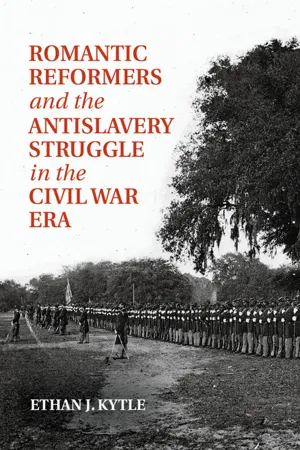
- Ethan J. Kytle(Author)
- 2014(Publication Date)
- Cambridge University Press(Publisher)
On Delany as an elitist or politically conservative figure, see Nell Irvin Painter, “Martin Delany, A Black Nationalist in Two Kinds of Time,” New England Journal of Black Studies 8 (Nov. 1989): 37–47; Painter, “Martin R. Delany: Elitism and Black Nationalism,” in Black Leaders of the Nineteenth Century, ed. Leon Litwack and August Meier (Urbana: University of Illinois Press, 1988), 149–171; Wilson Jeremiah Moses, The Golden Age of Black Nationalism, 1850–1925 (New York: Oxford University Press, 1978); Dean E. Robinson, Black Nationalism in American Politics and Thought (New York: Cambridge University Press, 2011); and Tunde Adeleke, Without Regard to Race: The Other Martin Robison Delany (Jackson: University of Mississippi Press, 2003). 14 Levine, Introduction to MDR, 6–7; Walt Whitman, Walt Whitman’s Leaves of Grass (1855; rpt., New York; Oxford University Press, 2005), 43. For scholars who read Delany as inconsistent or ideologically malleable, see Levine, Martin Delany, Frederick Douglass; Martin Robison Delany 165 What was new – at least among this group of antebellum reformers – was the idea that American prejudice was so deeply engrained in the 1850s that the only future for blacks was to leave the country. Delany, then, seemed to be moving in exactly the opposite direction of Douglass, Parker, Higginson and Stowe, in the decade leading up to the Civil War. While they mounted barricades within the United States, Delany took the antislavery fight abroad. Nevertheless, the black emigrationist worked from much the same intellectual toolbox as these allies. Despite the mis- givings of his former co-editor, Delany’s black colony was every bit the product of a romantic imagination as the Boston Vigilance Committee, the North Star, or Uncle Tom’s Cabin. By Any Effective Means The youngest of five children, Martin Robison Delany was born on May 6, 1812 in Charles Town, a hamlet in northwestern Virginia. eBook - PDF
UnAfrican Americans
Nineteenth-Century Black Nationalists and the Civilizing Mission
- Tunde Adeleke(Author)
- 2014(Publication Date)
- The University Press of Kentucky(Publisher)
• 3 • Martin Robison Delany: The Economic and Cultural Contexts of Imperialism T he ideal personality to begin this study with is Martin Delany (1812-85), described as the father of black American national-ism, the ideological godfather of black radicalism, one who unequivo-cally and uncompromisingly stood in defense of black American and African interests. 1 To his nineteenth-century peers, Delany embod-ied the quintessence of black nationalist thought. Frederick Douglass once described him as the intensest embodiment of black national-ity to be met with outside of the valley of the Niger. 2 Indeed, few black American nationalists of the epoch articulated black national-ist and Pan-African ideologies as forcefully and as effectively as Delany. Little wonder then that few disputed his characterization as the Father of black nationalism. Delany undoubtedly deserved the accolades showered on him. Few nineteenth-century nationalists matched the vehemence and conviction with which he pursued the realization of his nationalist convictions. But Delany did not begin his career as a black nationalist. A firm believer in the American Dream, Delany spent the early, and, in fact, the greater, part of his career in the pursuit of integration. He was born to a free mother in 1812 in Charlestown, Virginia (now in West Virginia), and consequently inherited the free status of his mother. Freedom, however, made fundamentally little difference for Delany, and early in life he discerned the ubiquitous character of racism. Growing up a free black in Jeffersonian Virginia was quite an enlightening experience. He saw the deep cut on his fathers face, inflicted by slaveholders bent on destroying the fathers sense of manhood. He could not have missed the fright and horror in his mother's face as she spirited him and his brothers to safety in Chambersburg, Pennsylvania, to secure them from the clutches of eBook - ePub
- Gene Andrew Jarrett(Author)
- 2014(Publication Date)
- Wiley-Blackwell(Publisher)
Martin Robison Delany (1812–1885)Of the various Back-to-Africa schemes developed in the decades before the American Civil War, Martin R. Delany’s Niger River Valley experiment was the only one that earned a hearing before Britain’s Royal Geographical Society. Although the Abbeokuta settlement for former African American slaves in present-day Nigeria never materialized, and indeed many of his visionary ambitions came to naught, Delany’s ringing assertion of African American self-determination and nationhood inspired generations of black nationalists.Martin Robison Delany was born free in present-day West Virginia. After neighbors threatened to imprison Delany’s mother for hiring a Yankee peddler to teach her children how to read, the family fled to Chambersburg, Pennsylvania. As a young man in Pittsburgh, he attended night school at the local African Methodist Episcopal Church, and studied medicine with a doctor while working as an officer in the Pittsburgh Anti-Slavery Society. In addition to his medical practice, Delany began publishing a weekly newspaper, The Mystery , in 1843. His bold writing on race brought him to the attention of Frederick Douglass, who hired him as co-editor of The North Star in 1847. The partnership lasted two years, before Delany’s increasingly apocalyptic tone and various quarrels drove them apart. In 1850, Delany was admitted to Harvard’s medical school, but student protests and university pressure forced him to withdraw shortly thereafter. Enraged, Delany returned to Pittsburgh, where he came to re- evaluate his commitment to racial integration. He decided to throw himself into the emigration movement. In 1854, two years after publishing The Condition, Elevation, Emigration, and Destiny of the Colored People of the United States
Index pages curate the most relevant extracts from our library of academic textbooks. They’ve been created using an in-house natural language model (NLM), each adding context and meaning to key research topics.

