Psychology

Risk Factors for Addiction
Risk factors for addiction include genetic predisposition, environmental influences, mental health disorders, and early exposure to substances. Genetic factors can increase susceptibility to addiction, while environmental influences such as peer pressure and trauma can also contribute. Mental health disorders like depression and anxiety can heighten the risk, and early exposure to substances can impact brain development, increasing vulnerability to addiction.
Written by Perlego with AI-assistance
Related key terms
1 of 5
10 Key excerpts on "Risk Factors for Addiction"
 eBook - ePub
Alcohol, Drugs, Genes and the Clinical Laboratory
An Overview for Healthcare and Safety Professionals
- Amitava Dasgupta(Author)
- 2016(Publication Date)
- Academic Press(Publisher)
5Link between environmental factors, personality factors, and addiction
Abstract
Scientists have determined that certain personality traits such as novelty-seeking behavior and low harm-avoidance increase the risk of alcohol and drug abuse. On the other hand a person with a good social network has a much lower risk of alcohol dependence. It has been speculated that environmental factors are more important in making an individual susceptible to alcohol and drug abuse. Childhood neglect or abuse is a major risk factor for drug and alcohol abuse. Peer pressure experienced by teenagers contributes significantly to their first underage experiments with alcohol. The attitude of adult parents and relatives towards alcohol plays an important role in determining risk of underage drinking behavior.Keywords
Underage drinking; childhood neglect; social network; personality type and alcohol abuse; antisocial personality disorderIntroduction
Behavioral addiction is defined as an intense desire to repeat some action that is pleasurable, or perceived to improve well-being, or capable of alleviating some personal distress, despite the awareness that such an action may have negative consequences. From a psychological, neurological, and social standpoint such repeated patterns of actions which are characterized as “addictive behavior” include drug as well as alcohol addiction. In the new “Diagnostics and Statistical Manual of Mental Disorders” (DSM-5; 5th edition, published by American Psychiatric Association), gambling disorder is included in the “Substance Related and Addictive Disorder” chapter because such behavior produces similar activations in the brain as seen with alcohol or substance use disorder [1] .Clinicians used DSM-IV criteria, through a structured interview, for many years for diagnosis of psychiatric illnesses including alcohol and substance use disorders—which are themselves psychiatric illnesses. There are significant overlaps between DSM-5 and DSM-IV criteria, except DSM-IV describes two distinct disorders: alcohol abuse and alcohol dependence, with specific criteria for each disorder. However, in DSM-5, both disorders are integrated into one disorder termed as alcohol use disorder (AUD) with subclassification of mild, moderate, and severe disorder. There are 11 symptoms in DSM-5 and using this guideline, the presence of at least 2 of the 11 criteria in past 12 months in a patient indicates the patient is suffering from AUD. If only two to three criteria are present the diagnosis is mild, if four to five criteria are present then it is moderate AUD and if six or more criteria are present then the diagnosis is severe AUD. In one study using DSM-5 criteria, the prevalence of AUD was 10.8% among 34,653 surveyed participants. According to DSM-IV criteria, 9.7% in the same population would have AUD diagnosis [2] eBook - PDF
- Katherine van Wormer, Diane Davis(Authors)
- 2017(Publication Date)
- Cengage Learning EMEA(Publisher)
May not be copied, scanned, or duplicated, in whole or in part. WCN 02-300 254 CHAPTER 6 Psychological Risk Factors Because people drink and use drugs for different reasons, and because there is no one addic- tive personality type, it is difficult to predict from early childhood characteristics which children will later develop an alcohol or drug use disorder. Longitudinal studies that follow children through to adulthood offer the best evidence of traits that can be seen, using hind- sight, to have been a forerunner of addiction problems.In their review of the literature on personality and environmental factors associated with the later development of alcohol and other drug problems by youth, Conrod, O’Leary, et al. (2013), listed: impulsivity, hopeless- ness, sensation-seeking, and/or peer group influences as primary. This personality profile was validated by empirically based studies in the United States and United Kingdom. Risk-taking is a psychological trait with both a positive and negative aspect. Among adults a willingness to take risks, such as invest in real estate or certain enterprises, can make a person rich. Also people who take risks are considered interesting and adventur - ous. On the negative side, risk-takers are apt to get into trouble from time to time and to experiment with substances including illicit drugs. Teens who try one unhealthy or prob- lematic activity are likely to try something else. Researchers in a study from the Centers for Disease Control and Prevention (CDC), for example, found that among youth who engaged in indoor tanning, boys were more likely to take steroids without a prescription, smoke or attempt suicide (Mozes, 2014). Girls were more likely to take illegal drugs, or have multiple sexual partners. And both boys and girls were more likely to maintain unhealthy weight-control habits or binge drink, the study found. In other words, many of these risky behaviors are associated with each other. eBook - ePub
Principles of Addiction
Comprehensive Addictive Behaviors and Disorders, Volume 1
- (Author)
- 2013(Publication Date)
- Academic Press(Publisher)
Researchers have discovered consistent predictors of drug use initiation and subsequent use across multiple substances of abuse, including personality variables, learning factors, and higher-order cognitive processes. Substance abuse is highly comorbid with affective disorders and other psychiatric diagnoses, although some psychiatric problems (e.g. depression and anxiety) may be effects of the substance use as well as causal factors. Many (but not all) substance abusers have a history of antisocial behavior, nonconformity, deviance, acting out, impulsivity, and low self-esteem; however, these also can be the effects of substance misuse. Research establishing the role of psychosocial factors in the development of addictive behaviors provides evidence that addiction is a multifactorial problem, not a disease solely caused by a measureable underlying physiological abnormality or deficit, and provides support for the biopsychosocial model of addiction.Risk Factors in Children
Much research has been conducted on childhood variables that increase the risk for alcohol dependence and substance use disorders. Consistently found in the literature is evidence for an increased likelihood of addiction among children who are victims of abuse and who exhibit externalizing behaviors such as those seen in conduct disorder, attention deficit/hyperactivity disorder, and oppositional defiance. In particular, antisocial and deviant behaviors such as aggression, hostility, vandalism, sadistic behavior, rebelliousness, and association with deviant peer groups place one at risk for substance use disorders later in life. One study found that problem drinkers exhibited more externalizing behaviors in childhood than did moderate drinkers, and moderate drinkers exhibited more of these behaviors than did light drinkers. Other research has found that tolerance of deviance in adolescence is a strong predictor of alcohol and other substance abuse in adulthood. Antisocial personality disorder is highly comorbid with substance abuse and dependence, and antisocial behaviors in childhood are strong predictors of substance problems in adulthood, independent of a family history of substance abuse. eBook - PDF
- Nick Heather, Rudy E. Vuchinich(Authors)
- 2003(Publication Date)
- Pergamon(Publisher)
Environmental factors thus determine who (and how many) will develop an addiction. For instance, in relation to alcohol, it is well documented that the availability of the substance has an impact on aggregate consumption, as well as on the prevalence of heavy consumption and problem rates (Edwards et al. 1994). Secondly, drug taking behaviour is typically conformist behaviour: The likelihood that any given individual will engage in this sort of behaviour and the extent to which he is doing so very much depends on what other individuals are doing.^ Hence, a theory of addiction should not restrict itself to the agent's level of socializing, as Rachlin's theory does; it also need to take into consideration who the agent is socializing with, and in particular the drug-taking habits of these individuals. Just as loneliness under certain circumstances may foster addiction, so may strong integration into a heavy consuming sub-culture. Notes 1. This is not a reductionistic thesis, since I do not claim that we could replace all mentalistic concepts, such as values, preferences, feelings, motivations and intentions, with a purely physicalistic terminology. 2. Edwards et al. (1982) prefer the term neuro-adaption instead of physical dependence. 3. A realistic version of simultaneous inconsistency could be the following. The agent has good and noble reasons for abstaining, but stronger and less noble (in his own hierarchy) reasons for indulging. He may feel that indulgence is morally wrong, say by inflicting harm on significant others, and he may wish that he did not have the appetite (a secondary preference for abstention), but still he gives in to his lower, selfish motives. 4. Certain allergies offer an example: the clinician needs to provoke the patient's body in order to reach a definitive diagnosis. eBook - PDF
Drugs of Abuse and Addiction
Neurobehavioral Toxicology
- Raymond Niesink, R.M.A. Jaspers, L.M.W. Kornet, J.M. van Ree, Raymond Niesink, R.M.A. Jaspers, L.M.W. Kornet, J.M. van Ree(Authors)
- 1998(Publication Date)
- CRC Press(Publisher)
Based upon this information, treatment strategies for alcoholism and substance abuse disorders should therefore include a consideration of both positive and negative impacts on both the direct reinforcing effects of drugs, as well as motivational factors that can lead to sustained use and relapse. For example, if a treatment strategy is to remove access to a drug which is positively reinforcing, it would be prudent to provide an alternative positive reinforcer to take the place of the drug. This approach is found in community programs where alternative positive activities are provided, such as sports programs for adolescents. Hopefully, through an integrated approach to treatment combining pharmacotherapies based upon an understanding of the biological and genetic contributors to substance abuse disorders with psychosocial interventions based upon an understanding of both sociocultural and biological risk factors, we may bet-ter treat the difficult biological, behavioral, and social problems associated with alcoholism and substance abuse disorders. 114 Chapter 4 Genetic factors in addiction 3 Human genetic studies of alcoholism and substance abuse The world is composed of many different populations of humans that show a diverse array of alcohol drinking patterns. Concomitant with these geographic or cultural drinking differences is a wide variation in the etiology of alcohol drinking problems. Some cultures show high rates of drinking associated with high rates of alcohol abuse, while other cultures with similarly high alcohol in-takes show less severity of alcohol-related problems, perhaps related to differences in patterns of drinking and social values surrounding alcohol drinking. While it is difficult to separate specific genetic factors from environmental factors in these population analyses, other studies using more rigorous genetic designs have done so.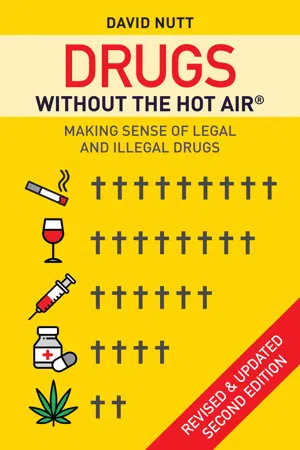 No longer available |Learn more
Drugs without the hot air
Making sense of legal and illegal drugs
- David Nutt(Author)
- 2020(Publication Date)
- UIT Cambridge(Publisher)
Chapter 9. What is addiction? Is there an “addictive personality”?
Using substances from outside the body to change our brain chemistry is something humans have always done, and the psychoactive effects created are similar to the changes we experience when we eat nice food or take exercise. For the majority of people the majority of the time, this doesn’t lead to compulsive behaviour – we remain in control, and pretty soon our brains return to their prior state. For a minority, however, drug use leads to drug abuse and addiction, just as a minority of people become addicted to food, gambling or sex. For these people, satisfying their cravings for whatever it is they’re addicted to becomes the most powerful source of motivation in their lives, overpowering every other need and often leading them to harm themselves and others.There are three elements that affect whether a person becomes addicted to a particular drug (Figure 9.1 ):Figure 9.1: The three elements that affect whether a person becomes addicted to a particular drug.1. Drug-related factors include how the drug reaches the brain, and what it does when it gets there. Tolerance and withdrawal also affect its addictiveness.2. Social factors include the availability and acceptability of using the drug, the prevalence of advertising, how the drug makes groups behave, and the economic and social costs.3. Personal and biological factors are those such as age, gender and genetics.In this chapter we look at the mechanisms of addiction, tolerance and withdrawal, and why certain people seem to have “addictive personalities”. (Chapter 4 has already examined some of the drug-related factors, which we explore in more detail in chapter 11 , and we cover the social factors in chapter 12 .)Addiction in history
Our understanding of addiction has increased as more drugs have become available, and as their role in society has changed. Until the 19th century, heavy drinking or use of other drugs wasn’t seen as a special category of behaviour, but as a sin of excess, similar to overeating – gluttony was a problem because you were eating too much , not because food itself was a bad thing. Although excessive use of drugs was seen as problematic, the majority of people usually didn’t have access to enough potent substances to have that problem. An exception was the † Gin Craze of the 18th eBook - PDF
Drugs without the hot air
Making sense of legal and illegal drugs
- David Nutt(Author)
- 2020(Publication Date)
- UIT Cambridge Ltd.(Publisher)
168 Chapter 9. What is addiction? Is there an “addictive personality”? Using substances from outside the body to change our brain chem- istry is something humans have always done, and the psychoactive effects created are similar to the changes we experience when we eat nice food or take exercise. For the majority of people the majority of the time, this doesn’t lead to compulsive behaviour – we remain in control, and pretty soon our brains return to their prior state. For a minority, however, drug use leads to drug abuse and addiction, just as a minority of people become addicted to food, gambling or sex. For these people, satisfying their cravings for whatever it is they’re addicted to becomes the most powerful source of motivation in their lives, overpowering every other need and often leading them to harm themselves and others. There are three elements that affect whether a person becomes addicted to a particular drug (Figure 9.1): Figure 9.1: The three elements that affect whether a person becomes addict- ed to a particular drug. 1. Drug-related factors include how the drug reaches the brain, and what it does when it gets there. Tolerance and withdrawal also affect its addictiveness. 2. Social factors include the availability and acceptability of using the drug, the prevalence of advertising, how the drug makes groups behave, and the economic and social costs. Chapter 9. What is addiction? Is there an “addictive personality”? 169 3. Personal and biological factors are those such as age, gender and genetics. In this chapter we look at the mechanisms of addiction, tolerance and withdrawal, and why certain people seem to have “addictive per- sonalities”. (Chapter 4 has already examined some of the drug-related factors, which we explore in more detail in chapter 11, and we cover the social factors in chapter 12.) Addiction in history Our understanding of addiction has increased as more drugs have become available, and as their role in society has changed. eBook - PDF
- Philip James, Catriona Kearns, Ann Campbell, Bobby nP. Smyth(Authors)
- 2013(Publication Date)
- CRC Press(Publisher)
73 CHAPTER 5 Why do some teenagers abuse substances? Risk and protective factors In previous chapters we presented the idea that teenagers can be considered ‘apprentice adults’. During adolescence, their task is to pick up the social skills to equip them for adulthood. Like any group of apprentices some will do bet-ter than others. Teenagers vary a great deal in the pace at which they master the skills necessary for adulthood. Some teenagers arrive into adolescence with highly developed skills and then rapidly and easily add to these. Others are less fortunate and may enter adolescence with poorer than average ability to manage frustration or have limited communication abilities, for example. The mentoring that a teenager receives during their adolescence, from parents, teachers and other important adults in their lives will also have a bearing on the ease with which they move through their teenage years. Lastly, the envi-ronment they find themselves learning within will clearly influence their skills development. Researchers have identified a myriad of factors that increase the risk that adolescents run into problems during their teenage years. Experimentation with drugs and alcohol and the subsequent development of significant prob-lems around these substances represent one of many potential hazards that teenagers encounter. Historically, research has focused on risk factors, seeking to identify the individual, family, peer, school and community characteristics associated with increased risk of developing problems such as substance use. More recently, there have been efforts to understand the variability in outcomes among teenagers by focusing on resilience or protective factors. This strengths-based approach facilitates a more positive dialogue with both teenagers and families. 74 ADOLESCENTS AND SUBSTANCE USE It causes those who work with such teenagers to identify their pre-existing tal-ents and positive protective factors. No longer available |Learn more
- Dennis M. Donovan, G. Alan Marlatt, Dennis M. Donovan, G. Alan Marlatt(Authors)
- 2013(Publication Date)
- The Guilford Press(Publisher)
Beattie and Longabaugh (1999) concluded that knowing how different types of social support affect drinking behavior at different intervals following treatment may help treatment providers better prepare their clients for the posttreatment social environment. CONCLUSIONS Addictive behaviors are complex disorders, with clear contributions of genetic predispositions; psychological vulnerabilities; personality traits and tempera- ments; cognitive expectations about the anticipated benefits derived from drinking, drug use, or engaging in other addictive behaviors; and lack of ade- quate coping skills and an attendant low level of self-efficacy. This vulnerabil- 32 ASSESSMENT OF ADDICTIVE BEHAVIORS ity appears to be actuated in a social context in which family and friends serve as models. These factors appear to interact and covary dynamically across time, exerting differential influence at different points along the developmen- tal path in the development, maintenance, and treatment–cessation of the par- ticular addictive behavior. Relapse is also a complex process. Models that focus exclusively on dis- tal, intermediate, or proximal factors are likely to be inadequate in predicting relapse. Rather, relapse is best understood as having multiple and interactive determinants that vary in temporal proximity and relative influence on re- lapse. An adequate assessment model must be sufficiently comprehensive to include theoretically relevant variables from each of the multiple domains and different levels of potential predictors. The recently revised model of relapse (Witkiewitz & Marlatt, 2004) has incorporated and elaborated on the dy- namic interplay of factors from the biopsychosocial model, from distal to proximal. eBook - ePub
Fighting the Opioid Epidemic
The Role of Providers and the Clinical Laboratory in Understanding Who is Vulnerable
- Amitava Dasgupta(Author)
- 2020(Publication Date)
- Elsevier(Publisher)
Children of alcoholics are considered to be at high risk because there is a greater likelihood that they will develop alcoholism compared with a randomly selected child from the same community. Children of alcoholics and children of drug-abusing parents are especially vulnerable to the risk of maladaptive behavior because they have combinations of many risk factors present in their lives. However, the most important risk factor is their parent's substance-abusing behavior that may put children of substance abusers at biologic, psychological, and environmental risk. A series of studies measured mortality, physiology, and general health in the offspring of alcoholic parents and concluded that when mothers stopped drinking during gestation, their children were healthier. Today, research can be classified into studies of fetal alcohol syndrome, the transmission of alcoholism, psychobiologic markers of vulnerability, and psychosocial characteristics. Each of these studies hypothesizes that differences between children of alcoholics and children of nonalcoholics influence maladaptive behaviors later in life, such as academic failure or alcoholism. In contrast, relatively little is known about children of heroin addicts, cocaine abusers, or polydrug abusers. Nonetheless, many researchers suggest that the children of addicted parents are at greater risk for later dysfunctional behaviors including substance use disorder [ 51 ]. Many environmental household factors are linked with the risk of substance abuse in adolescent years. Jurich et al. concluded that nine family factors that have an impact on drug abuse include parental absence, discipline, scapegoating, hypocritical morality, parent-child communication gap, parental divorce, mother-father conflicts, family breakups, and the use of “psychological crutches” to cope with stress. A psychological crutch in parallel to a physical crutch is anything a person relies on during a vulnerable situation
Index pages curate the most relevant extracts from our library of academic textbooks. They’ve been created using an in-house natural language model (NLM), each adding context and meaning to key research topics.

