Psychology

Sexual Selection
Sexual selection refers to the process by which certain traits or behaviors in a species evolve due to their role in increasing mating success. This can include traits that enhance attractiveness to potential mates or behaviors that improve the chances of successful reproduction. It is a key concept in understanding the evolution of mating strategies and sexual dimorphism in species.
Written by Perlego with AI-assistance
Related key terms
1 of 5

11 Key excerpts on "Sexual Selection"
 eBook - PDF
- Todd K. Shackelford(Author)
- 2022(Publication Date)
- Cambridge University Press(Publisher)
Therefore, females can shape the nature of modifications in the males of a population. In principle, however, interSexual Selection includes both female choice of a male mate, as well as male choice of a female mate. Many mating systems involve mutual mate choice, with both sexes being selective in their choice of partners (Bergstrom & Real, 2000). In humans, the psychology of mate preferences has attracted substantial research attention, especially since the late-1980s. Mate preferences are defined as the outputs of psychological mechanisms which motivate people to pursue potential mates who possess certain traits. Preferred traits in humans range widely and may include morphological (e.g., body shape), behavioral (e.g., dominance), or social (e.g., status) attributes. Mate preferences can vary between the sexes, within individuals (i.e., within-person variation across time), and across cultures and immediate situations (Conroy-Beam & Buss, 2016). Sexual Selection 35 Mating is central to differential reproduction, which is the engine of evolu- tion by natural selection. All living humans are descendants of an unbroken chain of ancestors, each of whom mated successfully (Conroy-Beam & Buss, 2016). Therefore, the psychological study of mate preferences has been a cornerstone of evolutionary psychology, which has resulted in a large body of work addressing the content of mate preferences across cultures, sexes, individuals, and situations. Buss and Schmitt (1993) extended Trivers’ (1972) theory by proposing the Sexual Strategies Theory. According to the Sexual Strategies Theory, men and women have evolved a complex menu of mating strategies. One strategy is “long-term” mating marked by extended courtship, heavy investment, pair- bonding, the emotion of love, and the dedication of resources over a long temporal span to the mating relationship and any offspring that are produced. Another strategy is “short-term” mating, a fleeting sexual encounter.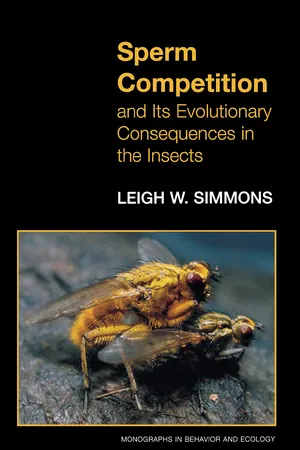
- Leigh W. Simmons(Author)
- 2019(Publication Date)
- Princeton University Press(Publisher)
1 Sexual Selection and Sperm Competition 1.1 Sexual Selection In his first major treatise on organic evolution, Darwin (1859) made a clear distinction between natural and Sexual Selection. He argued that natural se-lection favored traits in individuals that enhanced their viability, while Sexual Selection favored traits that enhanced their success in reproduction. Darwin was seeking to explain the evolution of extravagant secondary sexual traits that appeared counter to his theories of natural selection. By their nature, extravagant secondary sexual traits can prove detrimental to the survival of individuals possessing them and so should be removed by natural selection. However, Darwin recognized that the process of evolutionary change would be facilitated by the differential transmission of parental characteristics to future generations through successful reproduction, so that traits that en-hanced reproduction, even at the expense of decreased survival, would be favored. Darwin (1871) thus defined Sexual Selection as the advantage some individuals have over others of the same sex and species in exclusive rela-tion to reproduction. He recognized that Sexual Selection could operate through two distinct, although not necessarily mutually exclusive, processes. On the one hand selection would favor traits that enhanced an individual’s success in competition with members of the same sex for mating oppor-tunities, while on the other there would be an advantage bestowed on those individuals that were more attractive to members of the opposite sex. Mating competition (intraSexual Selection) can act on what might otherwise be con-sidered naturally selected traits, such as visual acuity, which allow some individuals to locate mates more rapidly than their competitors. Moreover, selection can favour the evolution of elaborate secondary sexual traits such as weaponry used in competitive interactions over members of the opposite sex.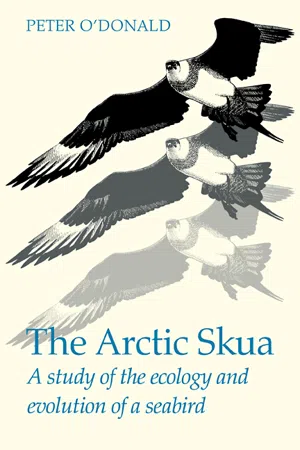 eBook - PDF
The Arctic Skua
A study of the ecology and evolution of a seabird
- Peter O'Donald, Robert Gillmor(Authors)
- 2009(Publication Date)
- Cambridge University Press(Publisher)
8 Sexual Selection 8.1 Darwin's theory of Sexual Selection Sexual Selection occurs when some individuals are more successful in finding mates than others. Like other characteristics of animals, sexual behaviour varies. Some males will defend their territories more fiercely than others, or court the females more vigorously, or display more attractive plumage. These characteristics will be selected if they increase the chances of mating. This is Sexual Selection as Darwin defined it in The Origin of Species: This depends, not on a struggle for existence, but on a struggle between the males for possession of the females; the result is not death to the unsuccessful competitor, but few or no offspring. Sexual Selection is, therefore, less rigorous than natural selection. Generally, the most vigorous males, those which are best fitted for their places in nature, will leave most progeny. But in many cases, victory depends not on general vigour, but on having special weapons, confined to the male sex. A hornless stag or spurless cock would have a poor chance of leaving offspring'. And Darwin thought that Sexual Selection would be the cause of the evolution of many of the differences in structure and coloration of the sexes: Thus it is, as I believe, that when the males and females of any animal have the same general habits of life, but differ in structure, colour, or ornament, such differences have been mainly caused by Sexual Selection; that is, individual males have had, in successive generations, some slight advantage over other males, in their weapons, means of defence, or charms; and have transmitted these advantages to their male offspring'. Darwin infers that Sexual Selection has taken place only if the sexes have the same habits of life. If the males and females lived part of their lives in different habitats or engaged in different activities, then natural selection, differing between the sexes, would be sufficient to explain their different structures. eBook - ePub
- Charles Crawford, Dennis Krebs(Authors)
- 2012(Publication Date)
- Psychology Press(Publisher)
This is because Sexual Selection involves individuals within one sex evolving traits that facilitate the winning of intrasexual competition to meet the mate preferences of the opposite sex and so, through interSexual Selection, to be chosen as mates over same-sex rivals. Anatomical examples of such traits include men’s greater body size and muscle mass (Geary, 1998) and women’s continually swollen breasts and greater fat deposits around the buttocks, thighs, and hips (Buss, 2004). The psychological traits that have been sexually selected in this way are the sex-specific mating strategies that facilitate the sexes in meeting the mate preferences of the opposite sex. Moreover, since the reproductive goals of the sexes are often in conflict, Sexual Selection has led to the evolution of additional sex-specific traits that facilitate the winning of intersexual competition, in which individuals within one sex attempt to impede the mating strategies of the opposite sex. A physiological example of such traits is the tendency for the size of the ejaculate deposited by a man into his partner to be directly related to his perception of the likelihood that his partner has recently been sexually unfaithful to him to reduce the probability that his partner will be successful in her attempt to be impregnated by another man (for a review, see Shackelford, Pound, & Goetz, 2005). Sexually selected psychological traits that have evolved in the context of intersexual competition consist of additional sex-specific mating strategies through which one sex attempts to impede the mating strategies of the other. The foregoing indicates that the different sex roles related to mating led to the evolution of sex-differentiated psychological traits eBook - PDF
Evolutionary Psychology
An Introduction
- Lance Workman, Will Reader(Authors)
- 2021(Publication Date)
- Cambridge University Press(Publisher)
In addition to drawing attention from predators, the time and energy that many males spend in making courtship calls might otherwise have been spent on foraging and on other ben- eficial activities such as preening. This means that being attractive to females and spending time attempting to attract them must have real and potential costs. Despite these costs Darwin realised that traits which helped males to attract females would increase their chances of mating and thereby of passing on such features. So Darwin argued that features which helped you to breed might par- adoxically sometimes be selected for, even up to the point of shortening your life. In 1871 with the publication of The Descent of Man, and Selection in Relation to Sex he developed a new selective force, Sexual Selection. Sexual Selection applies to those characteristics that provide individuals with advantages in gaining access to mates (Prum, 2012; 2018). Hence if natural selection is sur- vival of the fittest then we can think of Sexual Selection as ‘survival of the sexiest’. Evolutionary 3 Sexual Selection Key Concepts Sexual Selection • female choice • parental investment • handicap hypothesis • parasite theory • Muller’s ratchet • tangled bank • the Red Queen • arms race • androphilia • gynephilia 56 Sexual Selection psychologists have suggested that this is as true of our species as it is of others (Barkow, 1989). A number of surveys of human mate preference, for example, demonstrate how men from a wide range of cultures find the classic hour-glass shape of young women particularly attractive (Buss, 2019; Buss and Schmidt, 2019). This makes sense when applying Sexual Selection theory since this shape is an indicator of fertility in women (human mate preferences will be discussed further in Chapter 4). Intrasexual and InterSexual Selection Having introduced Sexual Selection in The Descent of Man, Darwin went on to outline how this competition for mates might take two different forms. eBook - PDF
Minder Brain, The: How Your Brain Keeps You Alive, Protects You From Danger, And Ensures That You Reproduce
How Your Brain Keeps You Alive, Protects You from Danger, and Ensures that You Reproduce
- Joe Herbert(Author)
- 2007(Publication Date)
- World Scientific(Publisher)
And Sexual Selection (who mates with whom), the second Darwinian mechanism, relies totally on the brain. That means we need a brain that not only makes us breed, but makes the ‘right’ choice about with whom we breed. The Sexual Brain 201 Sexual Selection and Competition This form of selection (Sexual Selection) depends not on the struggle for existence in relation to other organic beings or external conditions, but on a struggle between the individuals of one sex, generally the males, for the possession of the other sex. The result is not death to the unsuccessful competitor, but few or no offspring. Sexual Selection is, therefore, less rigorous than natural selection. Generally, the most vigorous males, those which are best fitted for their places in nature, will leave most progeny. But in many cases victory depends not so much on general vigour as on having special weapons confined to the male sex. A hornless stag or spurless cock would have a poor chance of leaving numerous offspring. Sexual Selection, by always allowing the victor to breed, might surely give indomitable courage, length to the spur, and strength to the wing to strike with the spurred leg, in nearly the same manner as does the brutal cockfighter by the careful selection of his best cocks. Charles Darwin. (1872) The origin of species . Sixth ed. Ed. R E Leakey. (Hill and Wang, New York.) . . . The success which really counts is reproductive success. Those animals that leave relatively more offspring than others are ‘fitter’ or more successful. The ‘fittest’ animals are not necessarily the biggest, strongest, fastest, or sexually most attractive; merely those that leave the most progeny. D Pilbeam. (1970) The evolution of man . (Thames and Hudson, London.) Sex is an antisocial force in evolution. Bonds are formed between individuals in spite of sex and not because of it. . . . Societies that lack conflict. . . are most likely to evolve where all of the members are genetically identical. eBook - ePub
- John H. Cartwright(Author)
- 2002(Publication Date)
- Routledge(Publisher)
3: Sexual Selection
Natural selection and Sexual Selection compared Inter- and intraSexual Selection Parental investment Potential reproductive rates: humans and other animals The operational sex ratio Consequences of Sexual Selection SummaryNatural selection and Sexual Selection compared
Darwin’s idea of natural selection was that animals should end up with physical and behavioural characteristics that allow them to perform well in the ordinary processes of life such as competing with their rivals, finding food, avoiding predators and finding a mate. Most features of plants and animals should, therefore, have some adaptive function in the struggle for existence. As noted earlier in relation to Figure 1.1 , the life and death of thousands of our ancestors should have ensured that by now our characteristics are finely tuned to growth, survival and reproduction. Nature should allow no extravagance or waste. So what about, for example, the spectacular train of the peacock? It does not help a peacock fly any faster or better. Neither is it used to fight rivals or deter predators—in fact, the main predator of peafowl, the tiger, seems particularly adept at pulling down peacocks by their tails. It would seem to be an irrelevance, a magnificent one to be sure, but nevertheless an encumbrance that should have been eliminated by natural selection long before now. Nor is the peacock’s tail an exception: many species of animals are characterised by one sex (usually the male) possessing some colourful adornment that serves no apparent function (or even seems dysfunctional), while the other sex, like the peahen, seems much more sensibly designed. Such features seem, at first glance, to challenge the power of natural selection to explain the behaviour of animals.When males and females differ like this in some physical characteristic, they are said to be sexually dimorphic eBook - ePub
Sexual Selection and the Descent of Man
The Darwinian Pivot
- Bernard Campbell(Author)
- 2017(Publication Date)
- Routledge(Publisher)
11Sexual Selection in Human Evolution Ernst Caspari University of RochesterIntroduction
The nature and consequences of Sexual Selection have been thoroughly discussed in the preceding chapters. Even the topic of this chapter, the role which Sexual Selection may have played in human evolution, has been touched upon from different points of view earlier in this volume. If I attempt in this chapter to focus on the evolution of man, I shall have to refer to many facts and ideas mentioned and covered in the earlier papers. In order to avoid unnecessary redundancy, I shall frequently refer to papers in this volume rather than to the original literature, since much of the material pertinent to this discussion has already been quoted earlier. Only when specific problems are discussed will the original literature be referred to.I shall start out by discussing Sexual Selection in the Darwinian sense in its relation to the concept of “components of fitness” developed in modern population genetics. Then the evidence concerning mating patterns in man and in prehominids will be presented and discussed with respect to Sexual Selection. Finally, the possible roles of selection at the individual and the population level in the evolution of the social characters of man will be given some attention.Sexual Selection and Components of Fitness
The relation of Sexual Selection and natural selection has been discussed by Mayr in Chapter 5 of this volume. He points out that the evidence for the existence of Sexual Selection in the Darwinian sense has become over-whelming. On the other hand, numerous cases are quoted in which it is not clear whether they should be regarded as examples of natural or of Sexual Selection. In many cases, the superior vigor of males of one genotype is decisive for their reproductive success, as was shown for Drosophila by Sturtevant in 1915; but a role of the female in the choice of the male has been demonstrated in many instances, for example in the “rare male” effect mentioned by Mayr (Chapter 5 ) and by Ehrman (Chapter 6 ), again in Drosophila . In this organism, reproductive success of individual males may thus be determined both by sexual and by natural selection, and these two components of reproductive fitness are hard to disentangle by observation. Faugères, Petit & Thibout (1971) have shown that in certain crosses of Drosophila
- Lance Workman, Will Reader, Jerome H. Barkow(Authors)
- 2020(Publication Date)
- Cambridge University Press(Publisher)
Whichever mating system is in operation, there is an area of a woman’s life that is ruthlessly subject to selection: the production and survival of children. In examining this, we need to step back a little and consider the rather male- centered conceptualization of reproductive success and Sexual Selection. In some studies, male reproductive suc- cess has been equated with number of copulations. This occurred historically in primate studies because DNA ana- lysis to establish paternity was not readily available (Ellis, 1995) and because in humans the use of contraception interrupts the usual relationship between intercourse and pregnancy so that frequency of the former has some- times been used as a proxy for the latter (e.g., Perusse, 1993). At a conceptual level, the equation of intercourse with reproductive success is likely attributable to a selective reading of Darwin (1859), who defined Sexual Selection as “a struggle between the males for possession of the females” (van Wyhe, 2002). However, he later offered a more inclusive definition (Darwin, 1871): “the advantage which certain individuals have over others of the same sex and species solely in respect of reproduction” (van Wyhe, 2002). In this definition, Sexual Selection encompasses the entire reproductive process and so includes the contribution made by women to the survival of their offspring. As Hrdy (1999, p. 81) bluntly put it: “Unless mating results in the production of offspring who themselves survive infancy and the juvenile years and position themselves so as to reproduce, sex is only so 314 ANNE CAMPBELL much sound and undulation signifying nothing.” The action of Sexual Selection on women means that women who gestated, birthed, nursed, fed, and protected a greater number of offspring left more copies of their genes in future generations than less capable mothers. We are the recipients of those successful maternal genes. eBook - ePub
- Lance Workman, Will Reader(Authors)
- 2015(Publication Date)
- Routledge(Publisher)
3 Darwin’s second selective force Sexual Selection What this chapter will teach you How Darwin’s second evolutionary force–Sexual Selection–has been refined. The advantages and disadvantages of sexual and asexual reproduction. The Red Queen hypothesis to explain why sexual reproduction can be superior to asexual reproduction. How Sexual Selection has been used to help explain human intelligence and sex differences in aggression. In this chapter we return to Darwin’s second selective force– Sexual Selection –and consider why it is that many organisms use the bizarre form of reproduction that we call sex. We also present and explain the Darwinian lexicon of Sexual Selection theory. We then consider an influential hypothesis that relates Sexual Selection to the evolution of human language and intelligence. Finally, we consider how Sexual Selection theory has been used to help explain sex differences in aggressive behavior. Sexual Selection–From Darwin to the present You may recall from Chapter 1 that when Darwin considered the gaudy features of many male birds and mammals, such as the tail feathers of the peacock or the red face and “mane” of the male mandrill, he was not convinced that these augmentations could have arisen from natural selection. This is also true of the fact that the males of many species engage in more physical displays than the females (Darwin, 1871). The problem was that because natural selection was believed to lead to features that aid survival (see Chapter 1), how could characteristics that make individuals stand out so vividly to predators be sustained in a population? Surely, more drab males would have an advantage over the colorful, exhibitionist males in avoiding predators? In fact, while the notion that these features form an encumbrance to survival was mere (educated) speculation on Darwin’s part, today it is known that he was certainly right eBook - PDF
Charles Darwin
The Shaping of Evolutionary Thinking
- Lance Workman(Author)
- 2017(Publication Date)
- Red Globe Press(Publisher)
In The Evolution of Human Sexuality Symons went back to Darwin’s notion of Sexual Selection and integrated into this Trivers’ development of asymmetrical parental investment to suggest that the differing mating strategies of men and women can be seen as adapta- tions that evolved since we moved onto the open savannah. In this way physical and behavioural differences between the sexes came about due to the preferences of each sex for specific characteristics in the opposite sex. A physical example of this would be the notion that men are taller than women because ancestral women chose taller men (for protection or because this might make them better hunters – see Chapter 3). Likewise ancestral men might have chosen more hour-glass-shaped women because enlarged breasts and ‘child bearing hips’ were seen as signs of fertility. Such examples of sexual dimorphism are relatively uncontentious. The more psychological ones that Symonds suggests arose from Sexual Selection, such as greater risk-taking behaviour in men than in women (in order for the former to impress the latter – note that men might also be seen as more ‘expendable’), and are more debatable since cultural relativists can always argue that such differences are culturally endowed. Note that Symonds arguments here may sound rather like the ideas of pop ethologist Desmond Morris as discussed in Chapter 5 – but differs in that Symons did not resort to ‘group selectionism’ type of explanation, but rather focused more on individual psychological developments. It also differs in that Darwin’s much favoured concept of female choice figures prominently. Evolutionary Psychology 139 Unlike Morris, Symons realised the importance of choosy females to the evolution of male characteristics. In drawing on Robert Trivers’ concept of asymmetrical parental investment, Symons argued that during the EEA female choice of male characteristics was vital for infant survival.
Index pages curate the most relevant extracts from our library of academic textbooks. They’ve been created using an in-house natural language model (NLM), each adding context and meaning to key research topics.
