Psychology

Twin Studies Gottesman
Twin studies conducted by Gottesman have been instrumental in understanding the role of genetics in psychological traits and disorders. By comparing the similarities between identical and fraternal twins, these studies have provided evidence for the heritability of various psychological characteristics, such as intelligence, personality, and mental illnesses. Gottesman's work has significantly contributed to the nature-nurture debate in psychology.
Written by Perlego with AI-assistance
Related key terms
1 of 5
9 Key excerpts on "Twin Studies Gottesman"
 eBook - PDF
Exploring Twins
Towards a Social Analysis of Twinship
- E. Stewart(Author)
- 2016(Publication Date)
- Palgrave Macmillan(Publisher)
In Twin Methods: a Sceptical View, Goldberger concludes: ‘we are left with data which show monozygotic twins more highly correlated on observed variables than dizygotic twins, but have no basis for allocating these differ- ences between genetic and environmental factors’ (1977, p. 315). Or, more eloquently stated in a book called Genetic Prophecy,’ The interaction between them [genetics and environment] depends upon the relationships among all sorts of traits, pressures and responses. It is, in short, a microcosm of human society itself, a composite of individual elements and groups, all of whom together, paint the final picture’ (Harsanyi and Hutton, 1983, p. 136). Finally, let us reiterate that the twin method assumes that the degree of environmental similarity is about the same for both types of twins (Plomin et al., 1980, p. 295). While the evidence presented above does not quite bear this out, there is other evidence which would allow one to conclude that the environment is the same for both types of same-sex twins because each twin, monozygotic or dizygotic, has another person directly or immediately in his or her environment, virtually from the moment of conception. Both share the ‘twin factor’ so that it could be argued that the twin situation is another vital variable joining the nature/nurture axis in shaping the world of the twin. Heredity and Environment 49 5 Measuring Twinship: Psychologists on Twins Psychologists have long been interested in understanding behav- iourial similarities among and differences between individuals, and twins have provided them with a rich vein of subjects for such study. A range of this psychological research seeks to specify twin- ship in terms of individual characteristics. Many studies have con- centrated on such areas as temperament, personality, behaviour and cognitive abilities. eBook - ePub
Genes, Culture, and Personality
An Empirical Approach
- Bozzano G Luisa(Author)
- 2014(Publication Date)
- Academic Press(Publisher)
The exploitation of the twin method only began seriously in the 1920s and 1930s with the early development of behavioral measurements. Foremost among these investigations was the classic study of Newman, Freeman and Holzinger (1937), which supplemented a sample of twins reared together with 19 pairs of monozygotic twins who had been reared apart. This study, and the many other studies of family resemblance for cognitive abilities, have been reviewed frequently (e.g. Fuller and Thompson, 1978). 3.2 ANALYZING TWIN DATA: THE CLASSICAL APPROACH The conventional approach to the analysis of twin data addresses two issues: (1) do genetic factors contribute significantly to individual differences? And (2) what are the relative contributions of genetic and environmental effects to variation within twin pairs? These two questions deal with the related statistical issues of hypothesis testing (Are genetic effects statistically significant?) and estimation (What is our best estimate of the contribution of genetic factors to variation?). Traditional analyses of twin data focus only on estimating and testing the significance of the genetic component. Our subsequent treatment will illustrate the estimation of genetic and non-genetic parameters and testing of complex hypotheses concerning the joint effects of genes and environment. 3.2.1 Analysis of variance The starting point for the genetic interpretation of twin data is a data summary derived from the pairs of observations made on large numbers of MZ and DZ twin pairs. One convenient approach starts with the nested analysis of variance of each group of twins (see Snedecor and Cochran, 1980) which divides the total variation into that between pairs and within pairs
- H. James Birx(Author)
- 2010(Publication Date)
- SAGE Publications, Inc(Publisher)
Theories in Twin Studies: An Overview To understand the place of twin studies over time and across national and cultural boundaries, it helps to under-stand the philosophies driving the fashions in research focus and study design as well as the sociopolitical con-texts that determined funding, support, and ethical stan-dards of the research itself. What kind of research were twin studies used for? What are the experiences of twin studies’ subjects in such research? The theories that predominantly influenced twin studies during the 20th and the beginning of the 21st centuries are eugenics, phenogenetics, behaviorism, and genomics. A rough survey of their popularity breaks up into three time periods: from 1876, when Galton published his twin study method, to the end of World War I; from the end of World War I to the end of World War II; and from 1948, when B. F. Skinner published his theory of behaviorism, to 1985 when DNA “fingerprinting” made it possible to actually see twins’ identical genomes. Eugenics Sir Francis Galton (1876) coined the term eugenics. It was his belief that scientists could breed a better kind of human, eliminating illness and disease by controlling reproduction. This required determining the heritability of specific characteristics. It would be over 100 years before this could be done by looking at the actual genome. Galton’s solution to this mystery was to study the variabil-ity or consistency of characteristics in monozygotic and dizygotic twins and make generalizations based on statis-tical computations. The eugenicist ambition troubles us today because of the corollary belief that there were inferior human “species” or races, a belief possible at a time when the mutability—the ability to change over generations—of all phenotypes was improperly understood. eBook - ePub
Identical Twins
The Social Construction and Performance of Identity in Culture and Society
- Mvikeli Ncube(Author)
- 2018(Publication Date)
- Routledge(Publisher)
2 Traditional psychological research on twinsThis chapter offers a critique of traditional psychological studies of twins and anticipated key issues. It highlights the limitations of mainstream psychological research, for example in the way in which twins are used as objects to explore other questions rather than consider their own experiences. Assumptions are made about the nature of twins, which are then confirmed in the way studies are carried out and reinforce the conventional stereotyped image of them as individuals locked in a relationship with another individual. This chapter argues that twin research in psychology has invariably treated the subjects of studies as objects and as vehicles to promote social inequalities. Mainstream twin studies reinforce conventional stereotypes of a supposed ‘twin similarity’, thereby undermining personal uniqueness and authentic individual differences. Findings from these studies imply that this similarity is ‘natural’ for identical twins and so differences are ‘artificial’. The studies make assumptions about heredity, and seem to over-generalise claims based on ostensibly ‘separated’ twins, though very few of these have actually been studied. In these studies intelligence, personality and happiness are treated as innate givens, predetermined by inheritance, and social factors are routinely neglected or side-lined. The study of ‘intelligence’ in psychological research has perpetuated a discourse of ‘twin inferiority’, and thereby possibly reinforced notions of pathology, prejudice and stigma. Twins are represented in the psychological literature on personality and social relationships as having problems with independent activity, as being socially incompetent and as struggling in their relationships with fellow twins positioned as victims or bullies. eBook - PDF
- Jennifer Hudson, Ron Rapee(Authors)
- 2005(Publication Date)
- Elsevier Science(Publisher)
It has long been recognised that family mem- bers resemble one another for a wide variety of characteristics ranging from cognitive abil- ity or personality to emotional and behavioural symptoms. This resemblance may be due to shared genetic influence, and thus can be taken as a maximum level of potential genetic effect. However, this resemblance can also be due to the shared environment that family member’s experience, but the family method is unable to distinguish between these two. This limitation means that results from family studies are best considered in combination with other behavioural genetic designs. Twin studies make use of the natural experiment provided by the existence of two types of twins: monozygotic (MZ) twins who share all their genes and dizygotic (DZ) twins who Psychopathology and the Family Edited by J. L. Hudson and R. M. Rapee Copyright 0 2005 by Elsevier Ltd. All rights of reproduction in any form reserved ISBN: 0-08-044449-0 4 Thalia C. Eley and Jennifer I: E Lau share on average half their segregating genes (those that vary in the human population: A). As with other family members they share their family environment. Aspects of this envi- ronment that make twins (and other family members) resemble one another are defined as shared environment (0. Aspects of the environment (including family and non-family influences) that make family members different from one another are termed non-shared environment (E). MZ twins therefore share all their genes and all their shared environment (i.e. rMZ = A + 0. In contrast, DZ twins share just half their genes, but again all of the effects of shared environment (i.e. rDZ = ‘/z A + 0. The difference in correlation between a group of MZ and DZ twins therefore provides a rough estimate of heritability (i.e. A = 2(rMZ - rDZ)). Shared environment is the difference between MZ resemblance and heritability (i.e. C = rMZ -A).
- Oliver Wilhelm, Randall W. Engle, Oliver Wilhelm, Randall W. Engle(Authors)
- 2004(Publication Date)
- SAGE Publications, Inc(Publisher)
10 B EHAVIORAL G ENETICS AND I NTELLIGENCE S TEPHEN A. P ETRILL F or decades, theories of intelligence and cognitive development have swung wildly between eras of strict nativism, followed by eras of strict environmentalism. Over the past 30 years, a more balanced view has emerged recognizing that both nature and nurture are important. Quantitative genetic studies have suggested that genes account for a substantial portion of the variance in cognitive ability throughout the life span but have also suggested that the environment is also essential to under-standing intelligence. The purpose of this chapter is to examine the ways in which behav-ioral genetics methods may be used to better understand intelligence and its development. In particular, the chapter addresses the following topics: univariate genetic analyses of cognitive ability, multivariate genetic analyses of cogni-tive ability, longitudinal genetic analyses, and gene-environment processes on intelligence. The chapter explores the implications of the behavioral genetic literature with respect to molecular genetics, theories of intelligence, and the assessment of intelligence. U NIVARIATE G ENETIC A NALYSES Identical twins (monozygotic, MZ) share 100% of the same genes, whereas fraternal twins (dizygotic, DZ) share 50% of the same genes, on average. If identical twins are more similar than fraternal twins on a particular outcome, then genetic influences are assumed. Similarly, if adopted children are more similar to their bio-logical parents and siblings than their adoptive parents and siblings, then genetic influences are also implicated. Heritability (h 2 ) measures the extent to which individual differences on an out-come measure are influenced by genetic differ-ences in the sample.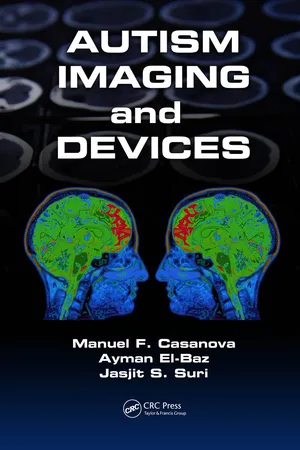 eBook - PDF
- Manuel F. Casanova, Ayman El-Baz, Jasjit S. Suri, Manuel F. Casanova, Ayman El-Baz, Jasjit S. Suri(Authors)
- 2017(Publication Date)
- CRC Press(Publisher)
. . . . . . . . . . . . . . . . . . . . . . . . . . . . 25 2.2.4 Twin studies of ASD symptoms in toddlers . . . . . . . . . . 26 2.2.5 Discordant MZ twin pair design in ASD research . . . . . 26 2.2.6 Twin studies in ASD and comorbidity . . . . . . . . . . . . . . 28 2.2.7 Etiological overlap between different domains of symptoms . . . . . . . . . . . . . . . . . . . . . . . . . . . . . . . . . . 29 2.2.8 Limitations of twin designs within ASD research . . . . . 30 2.3 Summary and directions for future research . . . . . . . . . . . . . . . 31 References . . . . . . . . . . . . . . . . . . . . . . . . . . . . . . . . . . . . . . . . . . . . . . 32 16 Autism imaging and devices heritability estimates between 80% and 90%. However, recent twin studies have suggested a stronger environmental influence on ASD etiologies. This chapter gives a short theoretical background on the basics of behavioral genetics and twin designs, summarizes the con- tribution of twin research to the knowledge of ASD etiologies, and discusses areas of interest for future twin research within the field of ASD. 21 Behavior genetics: Why conduct research on twins? Behavior genetics assumes that individuals in a population differ for both genetic and nongenetic reasons. Different family-based studies are used to answer questions about the relative contributions of genes and envi- ronment. The underlying notion of these approaches is that if a trait or a disorder is heritable, individuals that are more genetically similar should also be more similar regarding that trait or disorder status. The two major designs in human behavioral genetics are adoption and twin studies. While studies applying the former design have decreased, the latter has increased during the last decades. The same is true for the number and quality of nationwide twin registries. eBook - PDF
Obesity
Genomics and Postgenomics
- Karine Clement, Thorkild I. A. Sorensen(Authors)
- 2007(Publication Date)
- CRC Press(Publisher)
2.3 Twin Studies Jaakko Kaprio Department of Public Health, University of Helsinki and Department of Mental Health and Alcohol Research, National Public Health Institute, Helsinki, Finland Jennifer R. Harris Department of Genes and Environment, Division of Epidemiology, Norwegian Institute of Public Health, Oslo, Norway THE TWIN METHOD AND ASPECTS SPECIAL TO OBESITY STUDIES Family, twin, and adoption studies have provided evidence for cultural and biological inheritance in human behavior and health (1). Because currently known genes account for only a fraction of the estimated genetic variance of obesity-related traits, more knowledge of the dynamics of gene action and of specific environmental conditions is needed. Longitudinal twin and twin-family studies with multiple measurements can permit a more detailed assessment of the develop-mental aspects of obesity-related factors and how the relative roles of genes and environment unfold over time. A Brief Overview of the Analysis of Twin Data We briefly describe the general principles of genetic data analysis for variance components, which is a first step in the exploration of the genetic architecture of a trait or disease. That is, the goal is to establish whether familial, in particular genetic factors are of relevance for the trait, and to what degree genetic variation accounts for the total variance of a trait (2). The total variance in a behavior, trait or liability to disease can be divided into additive genetic (A), nonadditive genetic (D), common environmental (C), and unique environmental (E) variance (1,3). Additive genetic effects occur when the effects of each gene are adding up to affect the phenotype, whereas nonaddi-tive (dominance) genetic effects denote interactions between the alleles at a genetic locus. These interactions produce deviations between the expected, additive genotypic value and actual genotypic value in the heterozygote. eBook - PDF
Constitutional Psychophysiology
Research in Review
- Michael Myrtek(Author)
- 2012(Publication Date)
- Academic Press(Publisher)
If a given population observed under very similar environmen-tal conditions differs greatly as to its genetic make up, then it may be safely assumed that the component of variance due to genetic factors will be larger than that of a population where the inverse is the case, that is, genetically similar, situationally different (see Heckhausen, 1976; Merz & Stelzl, 1977). This sam-ple dependency in determining the variance components may well be the under-lying factor producing the discrepant results found in the literature. · 1 6 DEFINITIONS AND MODELS Twin studies have played a decisive role in the research on the influence of heredity and will, therefore, be dealt with more thoroughly. The basic assump-tion underlying this research is that the difference observed between genetically identical twins (monozygotic, MZ) must be due to environmental influences, whereas differences between fraternal twins (dizygotic, DZ) can be accounted for by both genetic and environmental factors. Arguments have been raised as to the validity of such assumptions, as discussed by Mittler (1971). 2.1.1. ZYGOSITY DETERMINATION After blood grouping (serology) methods and finger and palm prints analysis improved, earlier investigations of twins were subjected to considerable crit-icism. The accuracy of these newer methods, although rather high, is not essen-tially better than the methods applied earlier, which suggests the inability of these more recent methods to detect sources of error in the earlier studies. Furthermore, a spurious diagnosis may attenuate the relative contribution of genetically determined variance. 2.1.2. THE GENETIC IDENTITY OF MONOZYGOTIC TWINS Some geneticists maintain that MZ twins are not necessarily exactly identical. Differences could arise at the nuclear stage (for example, gene mutation or chromosome errors at mitosis) or from differences in the cytoplasma. Such differences are also sources of attenuation of variance that is genetically deter-mined.
Index pages curate the most relevant extracts from our library of academic textbooks. They’ve been created using an in-house natural language model (NLM), each adding context and meaning to key research topics.

