Social Sciences

Racial Politics
Racial politics refers to the ways in which race and ethnicity intersect with political power, policies, and decision-making. It encompasses the dynamics of racial discrimination, representation, and the pursuit of racial equity within political systems. Racial politics also involves the mobilization of racial identity and the impact of race on political ideologies and voting behavior.
Written by Perlego with AI-assistance
Related key terms
1 of 5


7 Key excerpts on "Racial Politics"
 eBook - PDF
- Daniel Martinez HoSang, Oneka LaBennett, Laura Pulido, Daniel Martinez HoSang, Oneka LaBennett, Laura Pulido(Authors)
- 2012(Publication Date)
- University of California Press(Publisher)
racial dynamics and their implications. After that, we present our own take on new patterns of race and racism. In “Racial Classification and Its Discontents,” we examine the ongoing conclusion • 303 instability and changing meaning of the race concept and discuss such matters as census politics, the “new racial science,” and concepts of race in popular culture. In “The Racial Regime and Its Discontents,” we con-sider such issues as “colorblind” racial ideology, the U.S. demographic shift toward a “majority-minority” population, the role of race in electoral politics, race and empire, immigrant rights and resurgent nativism, and the racial dimensions of neoliberalism. As this long list of topics indicates, we continue to see race and racism as fundamental dimensions of U.S. politics and society—deeply structuring social life at both macro and micro levels and profoundly shaping politi-cal discourse and ideology. Our concluding subsection, “Reconstructing Race,” looks at U.S. racial prospects: a combination of chronic racial crisis and glimmers of hope for an expanding and deeper democracy. the origins of racial formation theory Our concept of racial formation emerged in the 1980 s as a reaction to the then-dominant modes of theorizing about race in mainstream social science. We were trained in the social sciences; we were experienced anti-racist activists. We had come to reject the way race was conceptualized and operationalized, both in social science research and in left anti-racist thought and political practice. In mainstream social science, scholars failed to address the changing meaning of race over his-torical time and in distinct social settings. Race was ubiquitous, but the changing meaning of race and the “content” of racial identity went largely unnoticed. Conceiving race in a fixed and static way meant that research-ers did not have to engage the very category of race itself and its social determinants. eBook - PDF
Cultures, Communities, Identities
Cultural Strategies for Participation and Empowerment
- M. Mayo, Kenneth A. Loparo, Jo Campling(Authors)
- 2000(Publication Date)
- Palgrave Macmillan(Publisher)
This would seem to be clearly the case where the notion of ‘race’ is perceived as being about lending spurious scientific credibility to the systematically unequal treatment of one social group by another, on the grounds of their supposed biological and/or cultural difference. In practice, however, as it has already been suggested in the previous chapter, identity politics have been developed in the context of challenges to precisely such notions – challenging negative stereotypes and replacing supposedly spoilt identities with their positive alternatives – black is beautiful, just as gay is good. Black, in this context, can become a political rather than a biological, or even a culturally based definition, a powerful political definition based upon black self-identification and self- organisation to confront the negative definitions of racist societies, and the racist oppressions which such negative definitions have sought to rationalise. In the context of the upsurge of black self-organisation and mili- tancy in North America and in Britain, in the sixties and seventies, such political definitions may have seemed relatively unproblematic. There was a black liberation movement with which to identify (without suggesting that there were no differences of perspective, in that period, either). There are, perhaps, parallels here with other social movements, such as feminism and environmentalism, in terms of initially appearing more homogeneous in their political challenges than subsequently proved to be the case. Scott, for example, has demonstrated these points in relation to new social movements such as environmentalism as well as anti-racism, as the previous chapter suggested (Scott, 1990). Segal made similar arguments about femi- nism, showing how, by the late eighties, the women’s liberation movement had become more fragmented (Segal, 1987). eBook - PDF
The Politics of Race
Canada, the United States, and Australia
- Jill Vickers, Annette Isaac(Authors)
- 2019(Publication Date)
- University of Toronto Press(Publisher)
Introduction In this chapter we discuss the main concepts used in the book. The definitions often differ from those in dictionaries, which are written from the perspective of those in power. In studying the politics of race, you learn there are no simple definitions, nor do ordinary dictionaries or encyclopedias help. There are specialized encyclopedias specifically about race issues, but the concepts related to the politics of race are hotly contested; also, the meanings vary in different countries and change over time as groups struggle to control what words used to describe or categorize them mean. So to understand what the words used in this book mean, you need to know when and where the words were used (their context ), as well as who used them, in order to understand which frame was used that shaped their meaning. This entries in this chapter are in alphabetical order. Many concepts are complex, with multiple and contested meanings that change over time and place. Some concepts, such as ‘race regime,’ are original to this book. The book has explored the following race regimes: internal colo-nialism, slavery, Whites-only nationalism, segregation, and democratic racism. Affirmative action This term relates to policies aimed at reversing the effects of historical patterns of oppression experienced by disadvantaged race minorities, as well as other groups, such as women and people with disabilities. For example, because the former race regimes of slavery and segregation 8 Basic Concepts for Understanding the Politics of Race 252 The Politics of Race excluded African Americans from citizenship and did not create a level playing field, affirmative action policies provide an advantage – a ‘leg up’ – to compensate for those currently disadvantaged because of those historic exclusions. An example would be providing qualified members of disadvantaged race minority groups some preference in employment or education. eBook - PDF
- Donald S. Moore, Jake Kosek, Anand Pandian, Donald S. Moore, Jake Kosek, Anand Pandian(Authors)
- 2003(Publication Date)
- Duke University Press Books(Publisher)
Competing regimes of truth have linked the cultural politics of race, na-ture, and nation to social movements waged in the name of democracy, freedom, and liberation. In the early 1960s, with the Civil Rights movement rendering the cultural politics of race highly visible, the American Anthropo-logical Association passed a resolution repudiating statements of racial in-feriority: ‘‘there is no scientifically established evidence to justify the exclu-sion of any race from the rights guaranteed by the Constitution of the United States.’’ ∞≠∑ Such pronouncements echoed the anthropologist and public intel-lectual Franz Boas’s earlier call for democratic nonracialism. Forty years later, at the United Nations’ 2001 World Conference Against Racism, Racial Discrimination, Xenophobia, and Related Intolerance in Durban, fierce de-bates surrounded the specific wording of racial discrimination and the politi-cal boundaries of ‘‘racism.’’ These contentious disputes pivoted on defini-tions of ‘‘culture’’ and deployments of difference. Cultural politics, rather than a singular scientific consensus, formatively shaped pronouncements on 24 Moore, Pandian, and Kosek restitution for transatlantic slavery, on Zionism’s relationship to forms of ethnic absolutism, and on Palestinian national determination. The contentious volatility of these political positions animates recent de-bates while highlighting the historical salience of competing legacies of race and nation, science and sentiment, managerial expertise and popular democ-racy. Who is capable of managing what nature on whose behalf? How do these acts of improvement racialize their targets and with what exclusionary effects? Each of the three chapters in this section explores different means by which natures are managed and races nurtured. Paul Gilroy, Zine Magubane, and Diane Nelson each investigate colonial and postcolonial arenas where national welfare has been articulated through idioms of racial progress.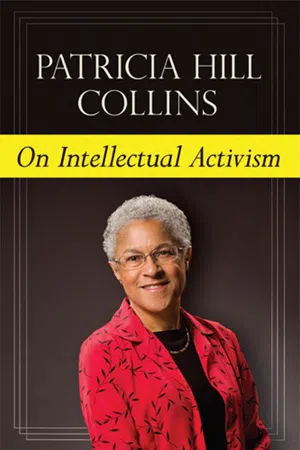 eBook - PDF
- Patricia Hill Collins(Author)
- 2012(Publication Date)
- Temple University Press(Publisher)
In this context, we need analyses that will help us see the contradictions raised by this in-between space. Toward this end, I propose a framework for how we might think about power relations that, in this case, might be used to help us think through racism as a system of power. I focus on colorblind racism during the post–Civil Rights era because it constitutes an especially deeply entrenched version of America’s struggle with social inequality. Although the contours will differ, the frame-work that I discuss here, as well as the strategies for practicing resistance that it might catalyze, can be applied to any form of social inequality. In addition to race, gender, ethnicity, class, religion, sexuality, and ability all have distinctive structures of power with their own individual histories. By analyzing race, I do not privilege it as the most fundamental or the most important type of inequal- Are We Living in a Post-Racial World? 181 ity. Rather, these systems of power draw strength from one another, both in structuring social inequalities and in fashioning strategies for change. Racism as a system of power is organized via four domains: (1) A structural domain of power that shows how racial practices are organized through social institutions, such as banks, insurance companies, police departments, the real estate industry, schools, stores, restaurants, hospitals, and governmental agen-cies. This is the structure of racism as a system of power, the way it’s organized without anybody doing anything. This is the structure we’re all born into. And these would be the structures left after us when we die. (2) A disciplinary do-main of power where people use the rules and regulations of everyday life to uphold the racial hierarchy or challenge it. The disciplinary domain is often or-ganized through bureaucracies that rely on practices of surveillance, but it need not be.
- K. Smith(Author)
- 2012(Publication Date)
- Palgrave Macmillan(Publisher)
7 Exploring Racism(s) through the Politic of Fairness John Hodge (1990: 90) explained rather simplistically that ‘when a group is identified by race and its members are oppressed because of their race, we have racism’. However, the groups we come to know as ‘races’ are not formed exclusively by the power of racial discourses (Gilroy 1990: 265). The confounding difficulties of theorizing about race cannot be allowed to obscure the fact that ‘the play of differ- ence in which racial categorization appears has extra-discursive referents’ (Gilroy 1990: 264). Thus, races are not the simple expression of either biological or ‘cultural’ sameness or simple constructions of the ‘good’ or the ‘bad’ (see Hodge 1990). Paul Gilroy, among many others (see, e.g., Memmi 2000: 18; Outlaw 1990: 77; Werbner 1997b: 230) has argued that races are imagined, socially and politically constructed, thus contributing to other socially constructed factors such as ‘class’ and ‘capitalism’ (broadly speaking) (see Gilroy 1990: 264). Therefore, Gilroy (1990) proposed that ‘races’ be seen as ideological constructions. While ideas about race may ‘articulate political and economic relations in a particular group or “society” that go beyond the distinct experiences or interests of racial groups to symbolize wider identities and conflicts’ (Gilroy 1990: 264), I argue here that the experiences of ‘races’ and racism in Halleigh, by every individual (Frankenberg 2005 [1993]: 6), are defined within particular historical and social contexts where past racial ideologies can be used alongside new elements (Fanon 1967; Hall 1992) 1 ; thus, there is not one type of racism but numerous histori- cally situated racisms that allow for ‘new ways of being political’ (Gilroy 1991: 133; see also Back 1996: 9; Hall 1978: 35). eBook - PDF
America on the Edge
Henry Giroux on Politics, Culture, and Education
- H. Giroux(Author)
- 2006(Publication Date)
- Palgrave Macmillan(Publisher)
Part IV Race, Surveillance, and Social Justice 10 Racial Politics, Individualism, and the Collapse of the Social Race relations in the United States have changed considerably since W.E.B. Du Bois famously predicted in The Souls of Black Folks that “the problem of the 20th century is the problem of the color line.” 1 This is not to suggest that race has declined in significance, or that the racial conditions, ideologies, and practices that provided the context for Du Bois’s prophecy have been overcome; rather the point is that they have been transformed, mutated, recycled, and have taken on new and, in many instances, more covert modes of expression. 2 Du Bois recognized that the color line was not fixed—its forms of expression changed over time, as a response to different contexts and struggles—and that one of the great challenges facing future generations would be not only to engage the complex structural legacy of race, but also to take note of the plethora of forms in which it was expressed and experienced in everyday life. For Du Bois, race fused power and ideology, and was deeply woven into both the public pedagogy of American culture and its geography, economics, politics, and institutions. The great challenge Du Bois presents to this generation of students, educators, and citizens is to acknowledge that the future of democracy in the United States is inextricably linked “to the outcomes of Racial Politics and policies, as they develop both in various national societies and the world at large.” 3 In part, this observation implies that how we experience democracy in the future will depend on how we name, think about, experience, and transform the interrelated modalities of race, racism, and social justice.
Index pages curate the most relevant extracts from our library of academic textbooks. They’ve been created using an in-house natural language model (NLM), each adding context and meaning to key research topics.

