Technology & Engineering

Leshan Giant Buddha
The Leshan Giant Buddha is a 71-meter-tall stone statue located in Sichuan, China, carved out of a cliff face during the Tang Dynasty. It is the largest stone Buddha statue in the world and is a UNESCO World Heritage site. The construction of the statue was an engineering marvel of its time, showcasing ancient Chinese architectural and sculptural expertise.
Written by Perlego with AI-assistance
Related key terms
1 of 5

2 Key excerpts on "Leshan Giant Buddha"
 No longer available |Learn more
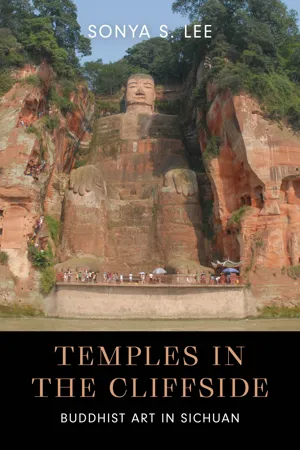
Temples in the Cliffside
Buddhist Art in Sichuan
- Sonya S. Lee(Author)
- 2022(Publication Date)
- University of Washington Press(Publisher)
Instead of aiming to alter nature aggressively—as in the case of the construction of the sixty-two-meter-tall Leshan Buddha (chapter 1)—the Dazu artisans faced the never-ending task of preserving the stone carvings from the slow violence of rainfall and humidity. In the contemporary case of the Thousand-Armed Avalokiteshvara at Baodingshan, the State Administration of Cultural Heritage invested ¥60 million (US$9.7 million) into the project over the years, ¥15 million (US$2.4 million) for the research and ¥45 million (US$7.3 million) for the restoration. 10 Although the bodhisattva is one of the largest and most complex at the site, the same or somewhat less funding will be needed to restore each of the remaining thirty compositions. How willing will the authorities at the state, provincial, and local levels be to continue such enormous investment in heritage conservation in the future? For the short term at least, the central government has shown no sign of slowing down, as the State Administration of Cultural Heritage approved another major restoration at Baodingshan in 2016: that of the thirty-one-meter-long reclining Buddha (fig. 5.2). After completing the first phase of the project in 2019, which focused on a water seepage problem in the surrounding cliff faces and ground layers, the restorers then turned their attention to the documentation and research of the sculpted images, with the aim to develop repair plans that will be implemented in the final phase of the project. Meanwhile, the Dazu Rock Carvings Academy has hired many young professionals to join the permanent staff in its conservation and repair department as well as acquired more advanced equipment. Clearly, the local management is readying itself to carry out more work at the many sites under its jurisdiction in the foreseeable future. Figure 5.2 Buddha’s Nirvana, Large Buddha Bend, Baodingshan. Stone relief sculpture, 7 × 31 m. 1174–1252; repaired in 2016–19
- Emilio Bilotta, Alessandro Flora, Stefania Lirer, Carlo Viggiani(Authors)
- 2013(Publication Date)
- CRC Press(Publisher)
279 Geotechnical Engineering for the Preservation of Monuments and Historic Sites – Bilotta, Flora, Lirer & Viggiani (eds) © 2013 Taylor & Francis Group, London, ISBN 978-1-138-00055-1 Afghanistan, Buddhas of Bamiyan: Emergency consolidation of the cliffs and niches C. Crippa & R. Granata Trevi S.p.A., Cesena, Italy C. Margottini ISPRA, Italian Geological Survey & UNESCO Expert, Italy ABSTRACT: The statues of the Buddhas of Bamiyan, carved around the VI century into the calcare-ous cliff of the Bamiyan valley, are the largest Buddhist monuments in the world. These monuments were almost destroyed by the bombing perpetrated by Talebans in March 2001. Since then, UNESCO is active in the Bamiyan area with the aim to preserve the remaining parts of the Buddha statues and to recuperate the artistic remains. The complex of Bamiyan has been inscribed in 2003 in the World Heritage List of UNESCO as “cultural landscape”. Among the most urgent operations required for the structural reha-bilitation of the area there was the stabilization of the rock face in the vicinities and within the niches, deteriorated both by the explosions and the natural processes. The emergency measures were also aimed to consent to the archaeologist to catalogue and remove the Buddhas’ rock remains safely. The special-ized engineering works were designed by Prof. C. Margottini and implemented by the Italian company Trevi Spa. The site operations, which are described in this paper, were carried out in three separate phases between 2003 and 2006. the cliff. The second one (Eastern Giant Buddha, 35 m high), was in a niche (41 m high), at the east side (Figure 1). All along the cliff, between the two niches host-ing the giant sculptures, there are hundreds of caves of various size, which were used as chapels, ambulatories and stairways. Most of this rock-carved chapels and ambulatories were decorated with a rich variety of murals.
Index pages curate the most relevant extracts from our library of academic textbooks. They’ve been created using an in-house natural language model (NLM), each adding context and meaning to key research topics.

